Evacuation Go Bag Checklist: What to Grab When You Have 10 Minutes
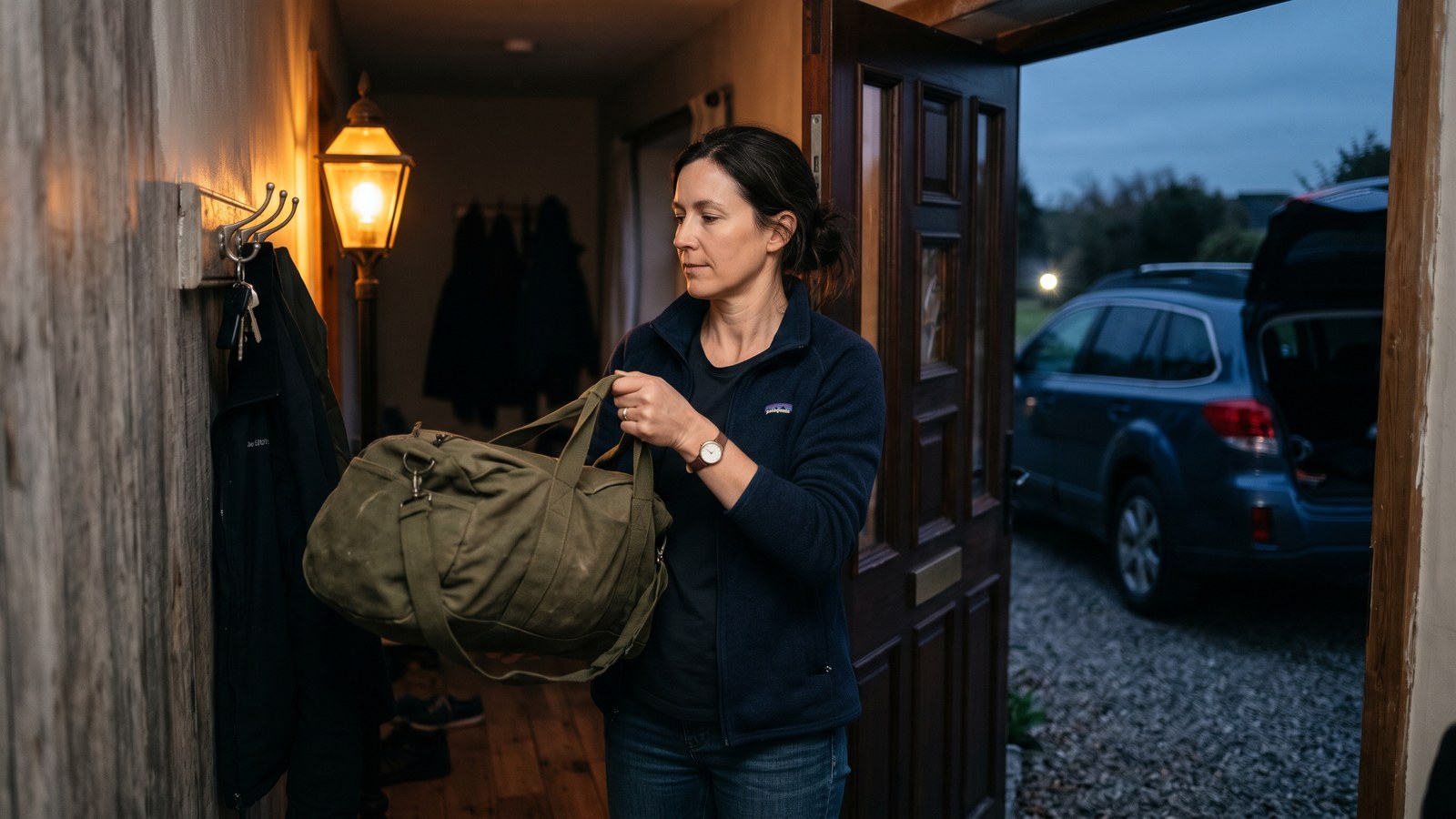
When an evacuation order comes, you rarely get to think it through. A wildfire shifts, a river crests, a gas leak is reported on your street, and the instruction is simple: leave now. This evacuation go bag checklist is built for that moment. It covers what to pack ahead of time, what to grab if you have only ten minutes, and how to keep the bag ready so you are not hunting for a phone charger while the clock runs.
Evacuation Go Bag Checklist: The 10-Minute Version
A go bag is not a 72-hour kit. It is smaller and built to be carried out of the house in one hand. Our 72 hour emergency kit checklist covers the larger stockpile you keep for sheltering at home. The go bag is the part of that plan you can pick up and walk out with.
Here is the core list. Each item is explained in the sections below.
- Copies of key documents and a list of medications
- Cash in small bills and your cards
- Phone charger, backup battery, and a battery or hand-crank radio
- Medications, glasses, and a basic first aid kit
- Water, snacks, and a change of clothes with sturdy shoes
- Flashlight, whistle, mask, and a printed local map
What Goes in an Evacuation Go Bag: Documents, Cash, and Your Phone
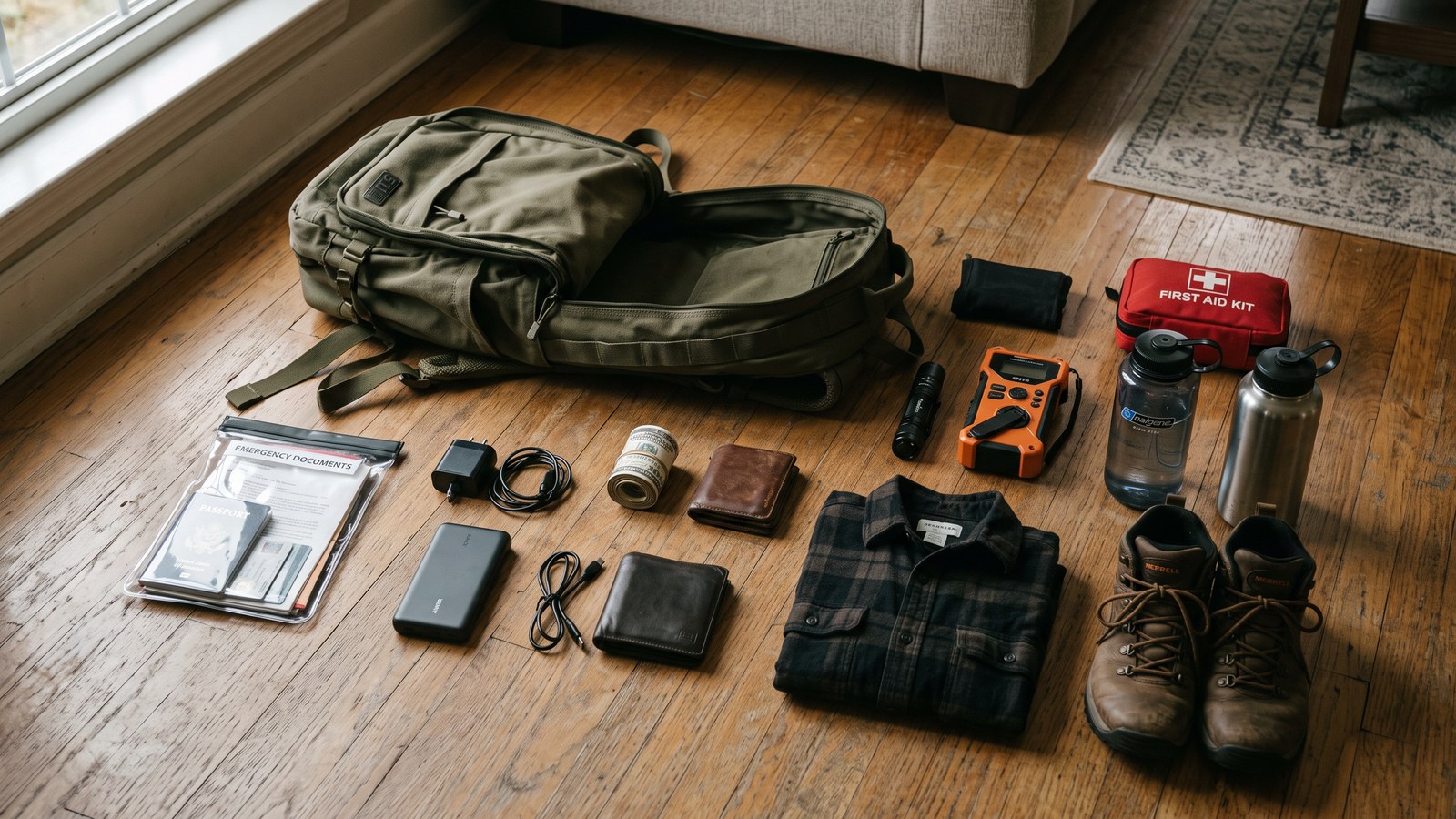
The American Red Cross lists documents near the top of its go-kit guidance. According to the Red Cross evacuation guide, that means personal, financial, and medical records, a medication list, proof of address, and insurance policies, kept as hard copies or securely backed up.
In practice, put these in a zip-top bag or waterproof pouch: photo ID, insurance cards and policy numbers, a copy of your lease or deed, and a list of emergency phone numbers written on paper. Phones die and contacts vanish. Paper does not.
Add cash. The Red Cross specifically suggests extra cash in case ATMs are not working, and gas stations and shelters may not take cards during an outage. A few hundred dollars in small bills goes a long way.
Then power. A fully charged backup battery and the right charging cables keep your phone alive for alerts, maps, and calls. A battery-powered or hand-crank radio is worth the small space it takes, because cell service often fails first. If someone in your home depends on a device like a CPAP, pack its charger too.
Medications, Glasses, and First Aid
Ready.gov advises including prescription and over-the-counter medications, eyeglasses, and a first aid kit in your supplies. For a go bag, aim for a week of any daily medication, stored in the original bottles, plus a typed or handwritten list of each drug, dose, and your doctor's name. Rotate those medications when you refill so they stay current.
Add a spare pair of glasses or contact lenses and solution, and the basic hygiene items you would be miserable without. A compact kit with bandages, gauze, tape, and gloves handles most minor injuries on the road. Our home first aid kit checklist shows what to include, and if you want something that handles serious bleeding, see the bleeding control kit checklist.
Water, Food, and Clothing
Ready.gov recommends one gallon of water per person per day for drinking and sanitation in a full emergency kit, which is too heavy for most go bags. A practical compromise is two or three bottles per person in the bag, with a larger case of water in the trunk. If you run out, our guide to how to purify water in an emergency explains the methods that work.
For food, pack items that need no cooking and no can opener: energy bars, nuts, dried fruit, peanut butter packets. They will not win any awards. They will keep you steady through a long drive and an uncertain night.
Clothing is the item people forget. Pack one full change per person that suits your climate, a hat, socks, and sturdy closed shoes. If the evacuation is for a wildfire or flood, you may be walking through debris. Flip-flops will not do. A warm layer or a light blanket matters in cold weather, since a car can turn into a cold box fast.
Safety and Navigation Gear
Ready.gov also lists a flashlight with extra batteries, a whistle, dust masks, and local maps. Take the map seriously. When roads close, your phone may route you straight into a blocked highway. A printed map of your area lets you pick another way out. Mark two routes in advance, and read our family emergency plan guide to agree on a meeting point before you need one.
An N95 or similar mask helps when smoke is in the air. A whistle carries farther than your voice if you need to signal for help. A small multi-tool or wrench for turning off utilities is also on the Ready.gov list.
If You Only Have 10 Minutes: The Grab Order
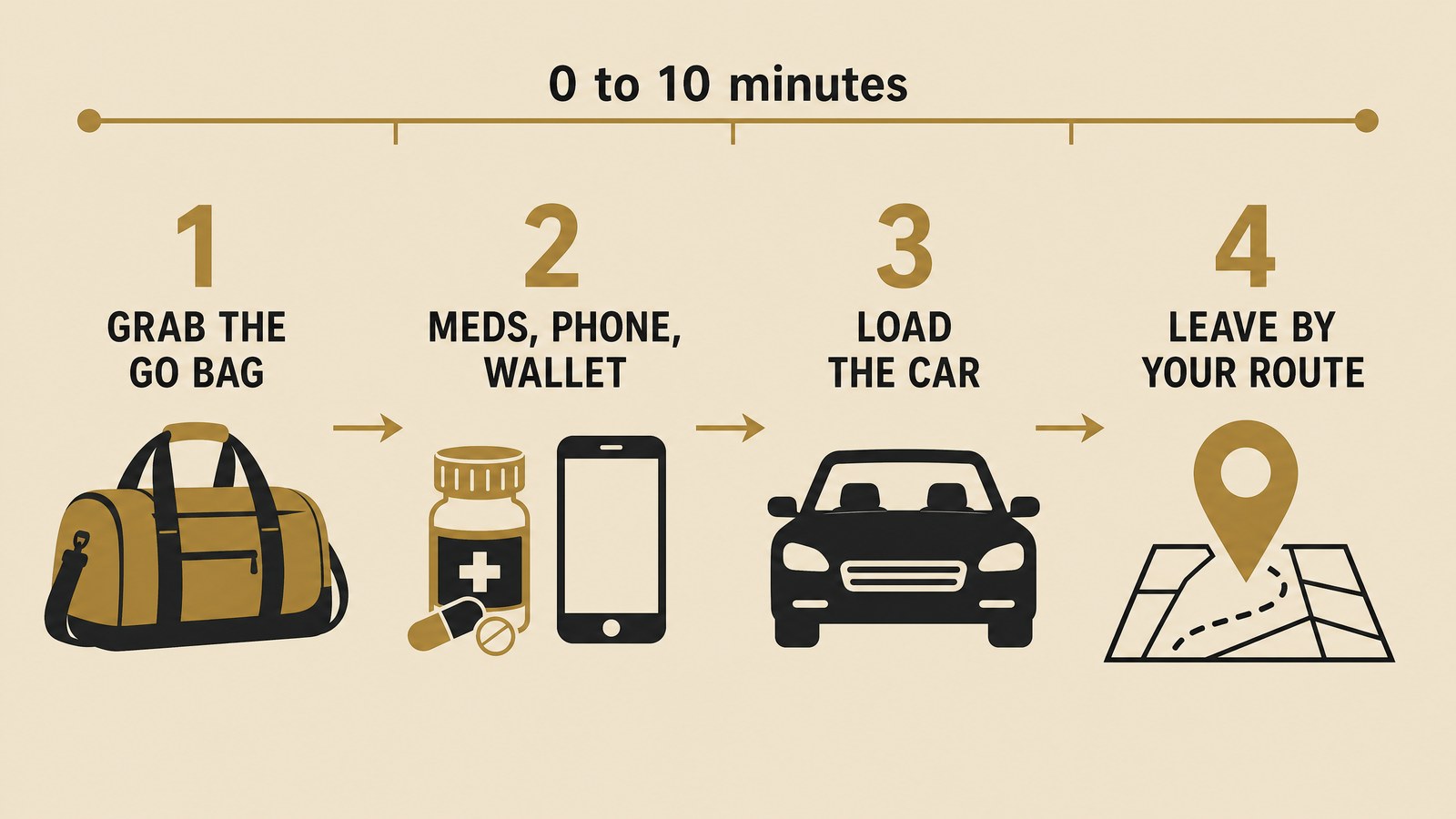
A pre-packed bag is the goal. On the day, the order you move matters. Here is a simple sequence to rehearse.
- Minutes 0 to 2. Get everyone together and confirm the evacuation order from official sources. Pick up the go bag.
- Minutes 2 to 5. Grab what lives outside the bag: medications you take daily, your phone and charger, wallet, keys, and glasses.
- Minutes 5 to 8. Collect pets and their supplies, then any items for babies or older relatives. Add a few bottles of water.
- Minutes 8 to 10. Load the car, turn off what officials tell you to turn off, lock up, and leave by your planned route.
Practice it once. A real run-through exposes what you forgot, and it makes ten minutes feel longer than it sounds.
Extras for Babies, Pets, and Older Family Members
The Red Cross guidance includes bottles, formula, and diapers for babies, and leashes, carriers, food, and bowls for pets, along with a photo of you with your pet in case you are separated. If you care for an older relative, pack a few days of their medications, a copy of their medical history, and any mobility or hearing aids with spare batteries.
Keep a separate smaller pouch for each person with special needs, so the right items are easy to find in the dark.
Where to Keep Your Go Bag and When to Check It
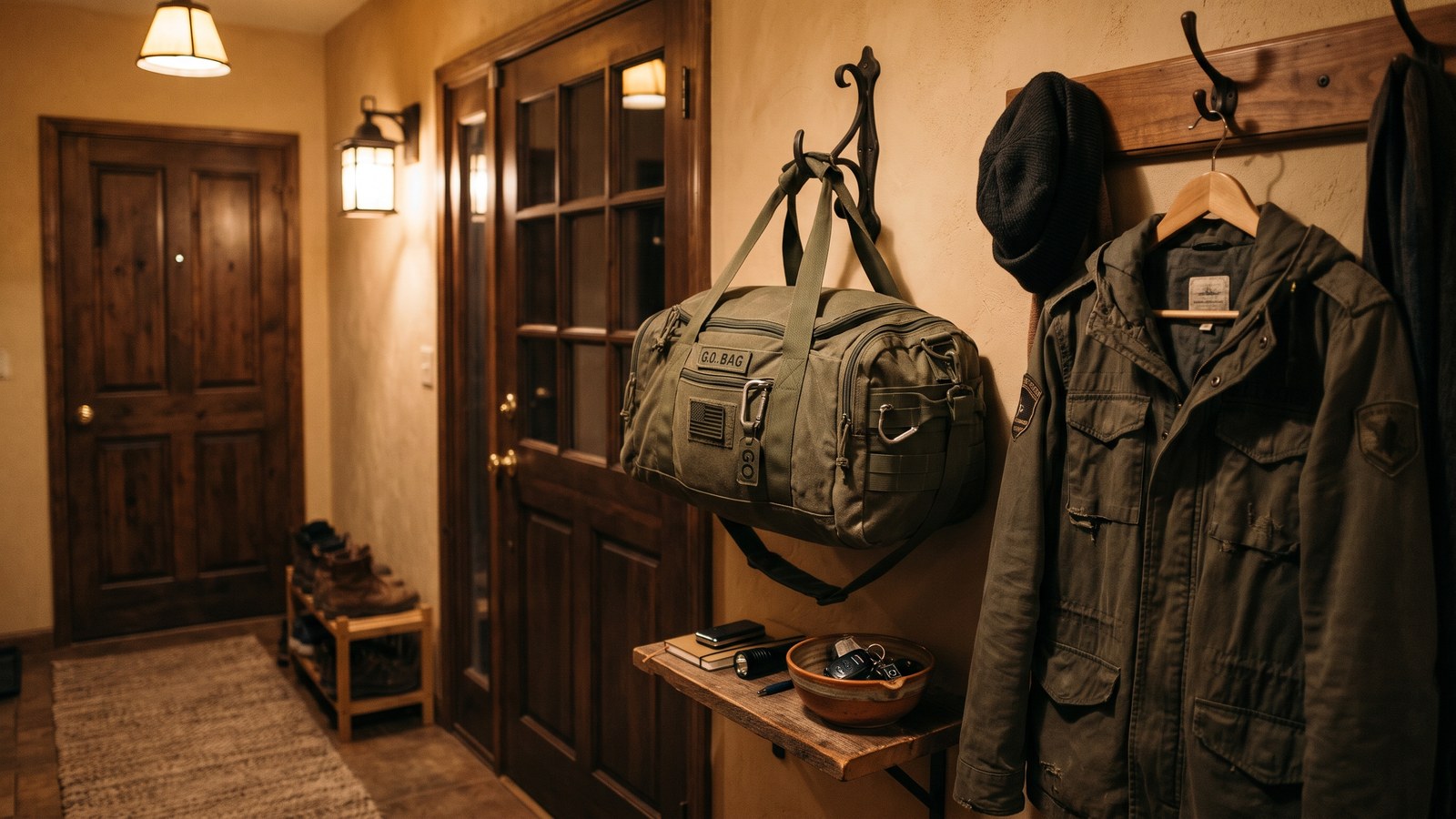
Store the bag where you can reach it in under a minute: a front closet, a hook by the garage door, or the back of a car. Ready.gov suggests keeping kits at home, at work, and in your car, since you may not be home when an order comes. Tell everyone in your household where the bag lives.
Ready.gov recommends reviewing your kit every year and replacing anything expired. Pick a memorable date, such as the day the clocks change, and run through the same routine: swap the water, check food dates, refresh cash and documents, test batteries, and update the medication list. If you live in a wildfire or hurricane zone, check it again before the season starts. Our guides to wildfire evacuation planning and hurricane preparation cover the planning side, and the power outage emergency plan is a good companion if you may be sheltering at home instead.
A bag in the closet is a start. A bag you have opened, handled, and updated this year is the one that works when the order comes.
When you have only minutes to leave, a ready kit saves the scramble. See what's inside The 1stHour Trauma Kit, built to ride in your go bag for the moments before help arrives.
This content is for informational purposes only and does not constitute medical advice. If an evacuation order has been issued for your area, follow the instructions of local officials. In a medical emergency, call 911 immediately.


