Power Outage Emergency Plan: What to Do in the First Hour When the Lights Go Out
The power drops and the house goes quiet in a way you don't notice until it's gone. No hum from the fridge, no blinking clock, just the sound of your own house settling in the dark. Most outages are boring. A tree branch takes down a line, a transformer trips, the power's back in an hour. But the ones that aren't boring are the ones nobody planned for, and a real power outage emergency plan is really just a plan for that first sixty minutes, the window where you find out which kind you're dealing with. Here's what to actually do, in order, so you're not improvising while standing in a dark kitchen.
The First 5 Minutes of Any Power Outage Emergency Plan
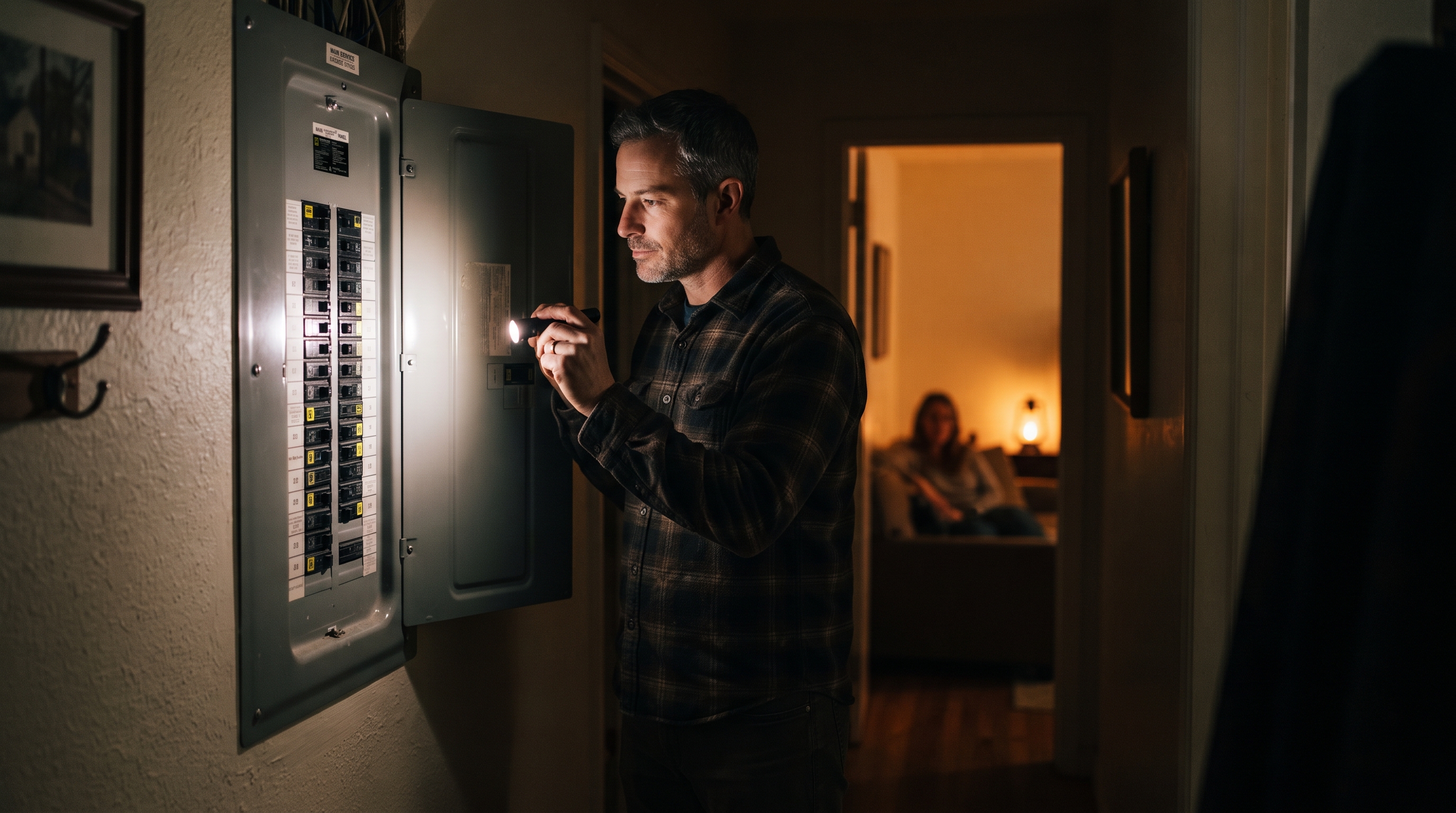
Start by figuring out how big this is. Look out the window. Are your neighbors' lights on? If your house is dark and theirs aren't, the problem might be your breaker box, not the grid. Check your main panel before you assume the worst.
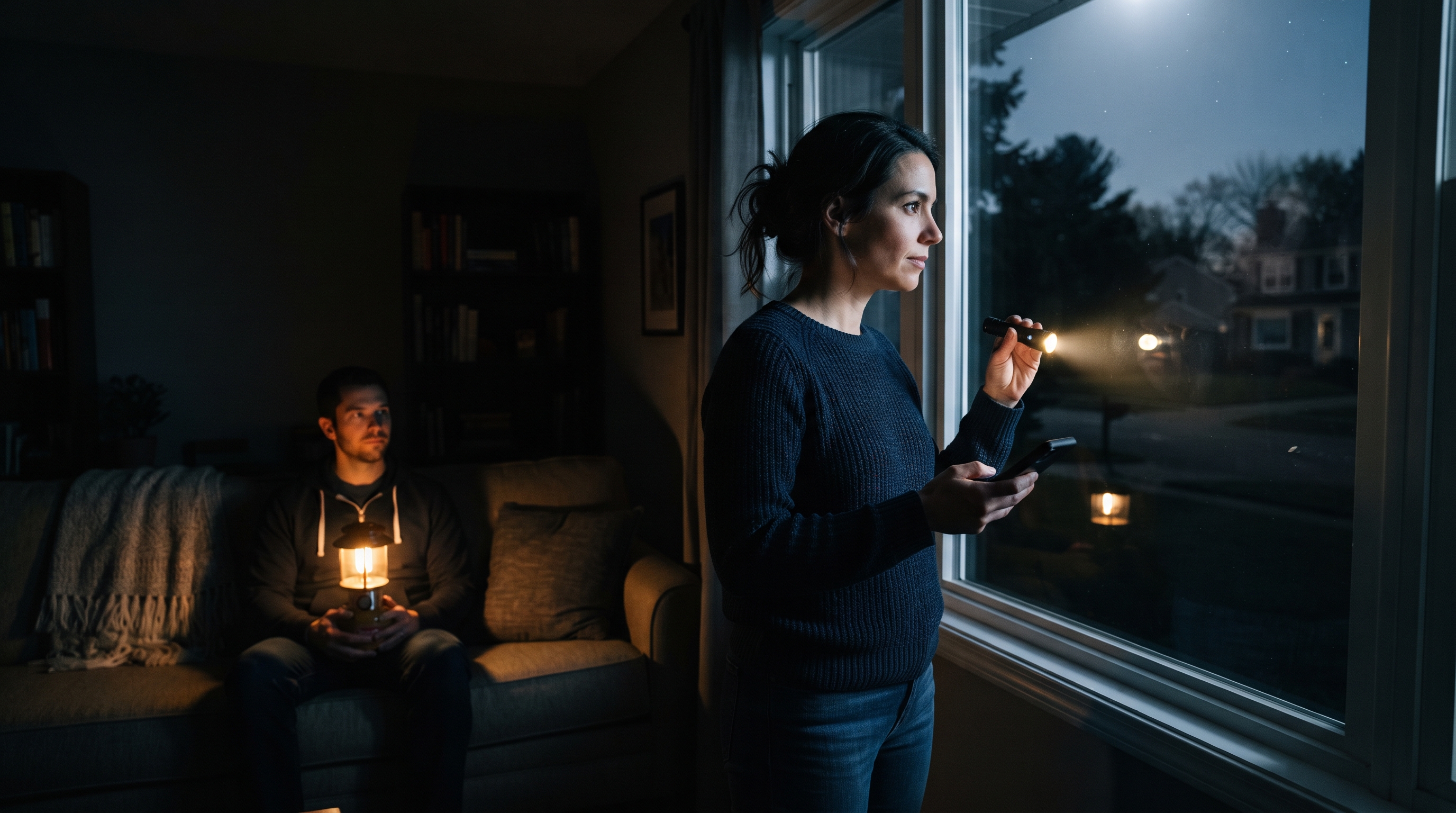
If it's clearly a wider outage, your next move is accounting for people, not gadgets. Get everyone in one room, especially kids and anyone elderly, so you're not searching a dark house room by room later. Grab a flashlight instead of relying on your phone's light. Your phone is about to become your only line to the outside world and to a working outage map, so its battery matters more right now than it did an hour ago.
Keep the refrigerator and freezer doors shut. Every time you open one "just to check," you're bleeding cold air you can't get back. Report the outage to your utility if you haven't already. This isn't just for your benefit. Crews often prioritize based on the volume and location of reports coming in.
Room-by-Room Safety Check
Once the immediate scramble is over, walk the house with a flashlight and look for anything that turned dangerous the moment the power died. Anyone on a CPAP machine, home oxygen, or a powered mobility device needs a plan for battery backup right now, not in an hour. If that's a possibility in your home, it belongs on a checklist before an outage ever happens, not during one.
Unplug or turn off high-wattage electronics and appliances, things like window AC units, space heaters, and computers. When power comes back, it sometimes comes back as a surge, and that surge can fry equipment that was fine a minute ago. A cheap surge protector strip helps, but unplugging is free and instant.
If you smell gas anywhere in the house, that's not a power outage problem anymore. Get everyone outside and call your gas utility or 911 from a safe distance. Same goes for downed power lines outside. Treat every line on the ground as live, stay at least the length of a school bus away, and call it in rather than moving it or driving over it. If someone nearby has been shocked or is showing signs of electrical injury, our electrical shock first aid guide covers the safe first response.
Generator and Carbon Monoxide Safety
This is the section that actually kills people, so it gets the most direct language in this whole post. Carbon monoxide poisoning from portable generators sends people to the hospital and, in an average year, kills close to 100 Americans, mostly during storm-related outages when people are running generators indoors, in garages, or too close to the house. You cannot smell, see, or taste it building up in the air. By the time someone feels dizzy or sick, they're already in trouble. If you want the fuller picture of what CO poisoning looks like and how it's treated, our carbon monoxide poisoning guide covers it in depth.
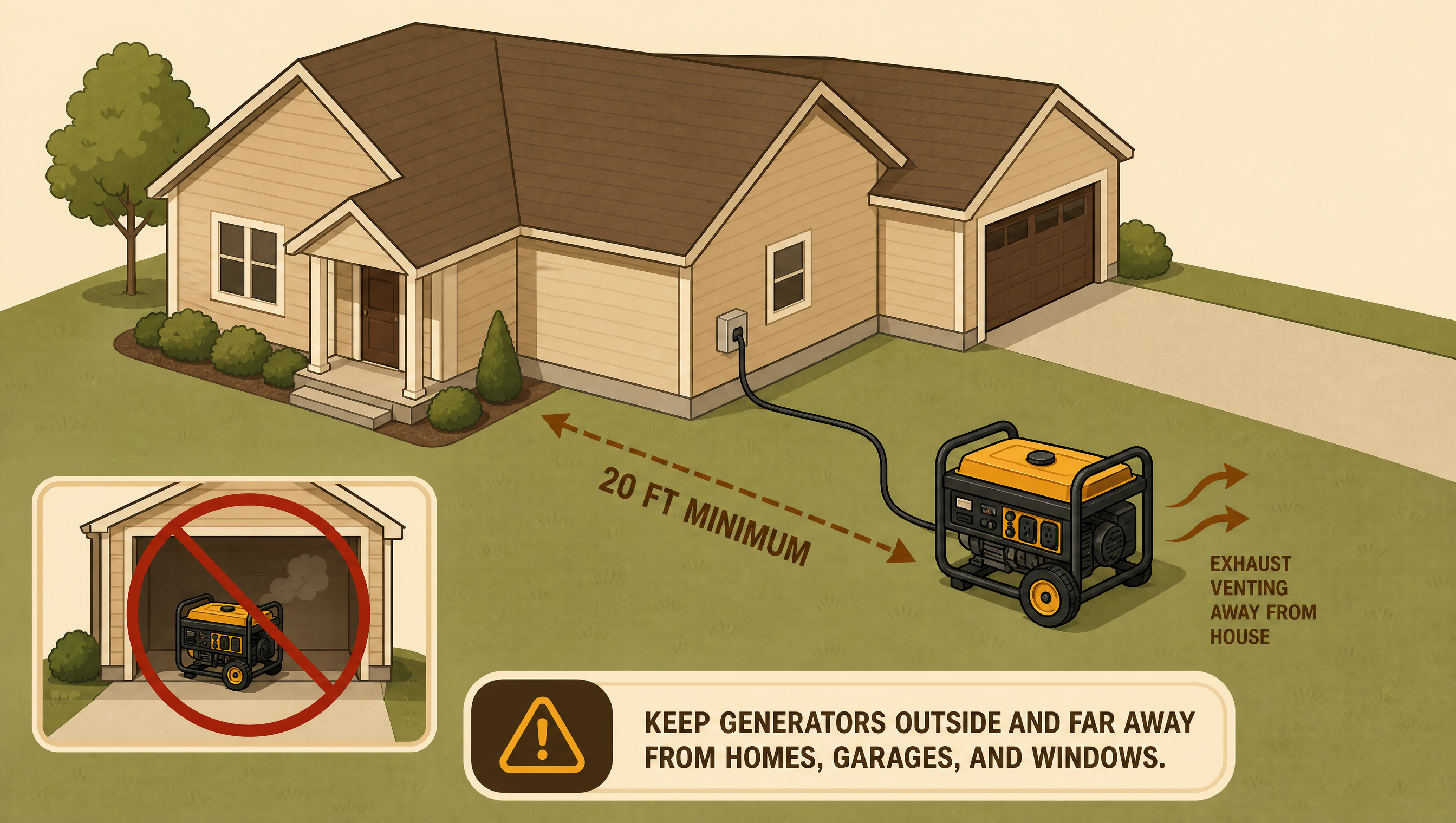
The rule is simple and non-negotiable: generators run outside, full stop. Not in the garage with the door open. Not on a covered porch. Ready.gov and the CDC both put the safe distance at a minimum of 20 feet from your home, with the exhaust pointed away from windows, doors, and vents. Never run one in a basement, crawlspace, or shed, even with ventilation. If you own a generator, install battery-powered CO alarms on every level of your home, especially near sleeping areas, and test them before storm season hits, not during it.
Skip the idea of running a gas stove or oven to heat the house, too. It's a common workaround during winter outages and it raises your carbon monoxide risk the same way an indoor generator does.
Food Safety: How Long Your Fridge and Freezer Actually Last
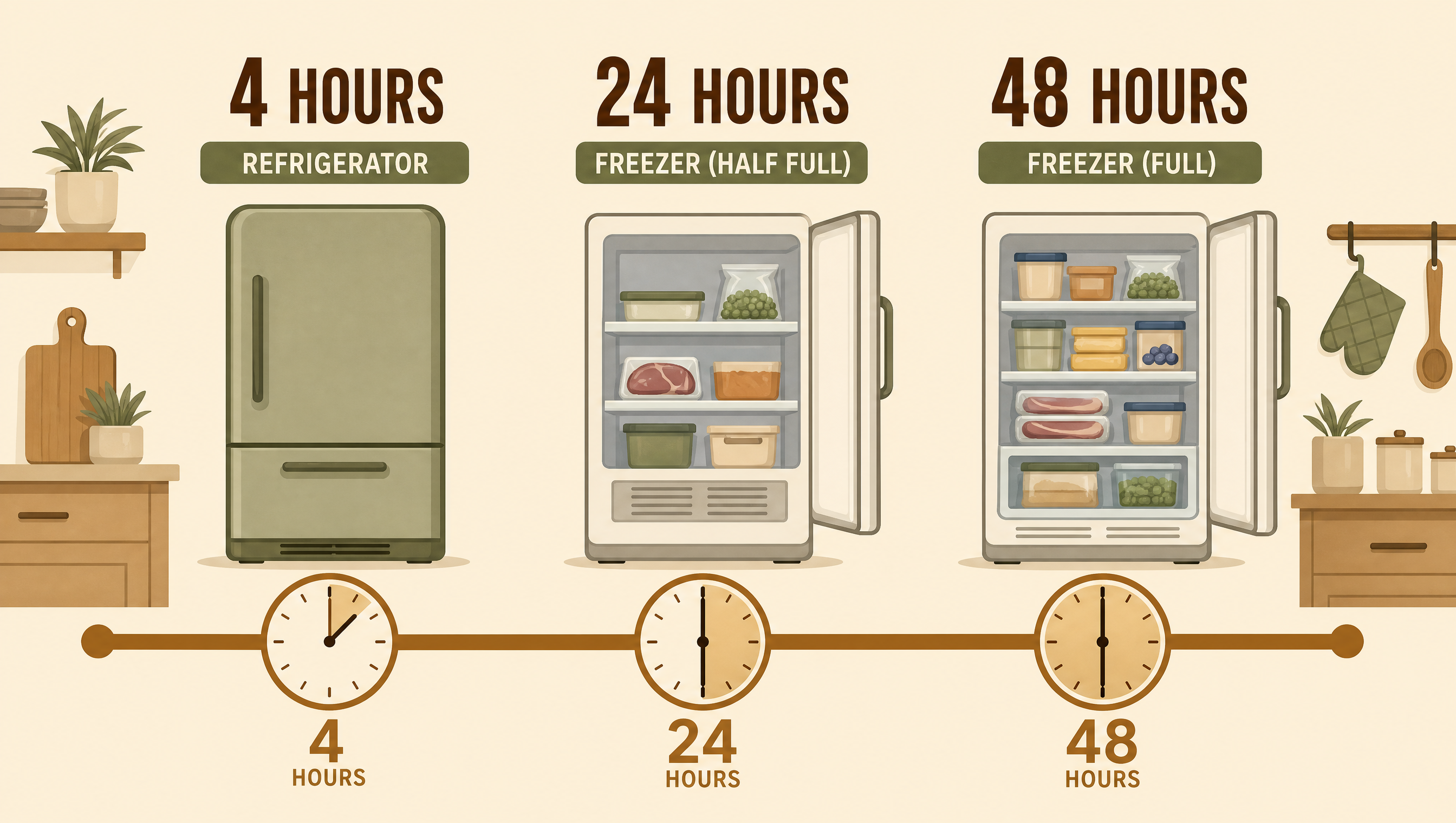
Once the immediate hazards are handled, food safety becomes the next practical question, usually within the first couple hours. A full freezer holds a safe temperature for about 48 hours if you keep the door shut. A half-full freezer is closer to 24 hours. The refrigerator itself is a shorter window: about 4 hours before things you'd normally trust start becoming a food safety question.
Keep a thermometer in both if you can, and when the power does come back, don't just eyeball whether food "seems fine." Anything that was above 40°F for more than 2 hours, meat, dairy, leftovers, should go. When in doubt, throw it out is not a cliché here, it's the actual safest call.
Building Your Power Outage Emergency Kit
A lot of "emergency kit" checklists online are padded with stuff that sounds useful and never gets touched. Here's what actually earns a spot in a real kit, based on what people reach for in the first hour of an outage:
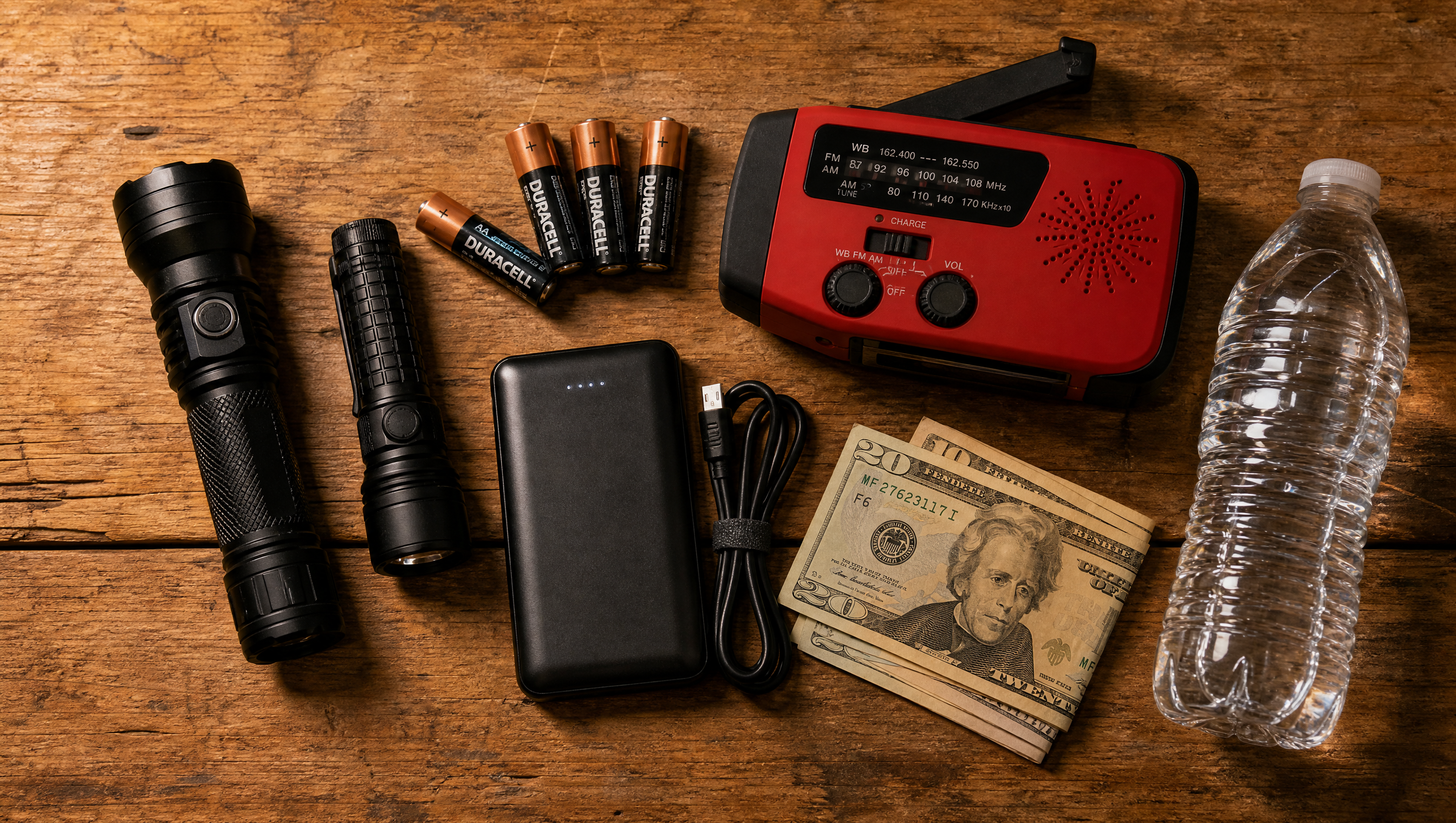
Flashlights and headlamps with fresh batteries, not the ones that have been sitting in a drawer since last year. A battery-powered or hand-crank radio, since cell towers can go down along with the grid in a bad enough storm. A portable phone charger, charged and ready, not plugged into the wall you're about to lose power to. Bottled water and shelf-stable food that doesn't need cooking. Cash, since card readers and ATMs need power too. A list of important phone numbers written on paper, because your phone contacts don't help you if the battery dies.
If your household includes anyone who needs a working furnace, a well pump, or medical equipment, a portable generator and a plan for using it safely, per the section above, is worth the investment. If you haven't put together a broader home first aid kit yet, that's worth doing at the same time you're building this one. Our home first aid kit checklist and family emergency plan guides are good companions to this one. Most emergencies don't announce themselves in advance, and outages are frequently the first domino in a longer chain of problems.
When Your Power Outage Emergency Plan Should Call for Help
Most outages resolve within a few hours and don't require anything beyond patience and a flashlight. But there are moments in that first hour where the right call is to get help moving, not just wait.
Call 911 immediately for any medical emergency, a downed line touching a car or person, a gas smell, or a fire. Call your utility's outage line for anything else, even if it feels minor, since your report helps crews map the scope of the problem. If the outage stretches past 24 hours during extreme heat or cold, that's the point to consider relocating vulnerable family members, elderly relatives, infants, anyone with a chronic condition, to somewhere with working climate control rather than waiting it out at home. If your area is facing a broader storm event on top of the outage, our hurricane prep checklist covers the wider picture.
A power outage by itself is rarely the emergency. What happens in the hour after it, the carbon monoxide risk, the medical device that runs out of battery, the food that quietly goes bad, is usually where the real danger lives. Having a plan for that hour, before you need it, is the whole point.
If you found this useful, TacticalBox's guide to prepping for a power outage covers the gear side of this in more depth, from backup power options to what belongs in a grab-and-go bag.
Being ready for the first hour of any emergency, not just a power outage, comes down to having the right supplies within reach before you need them. The 1stHour Trauma Kit is built around that same idea: 82 pieces chosen for the moments that matter most, so you're not searching a dark house for supplies when someone actually needs them.
This content is for informational purposes only and does not constitute medical advice. In a medical emergency, call 911 immediately.


