Before the Storm Hits: Your 1-Hour Hurricane Prep Checklist
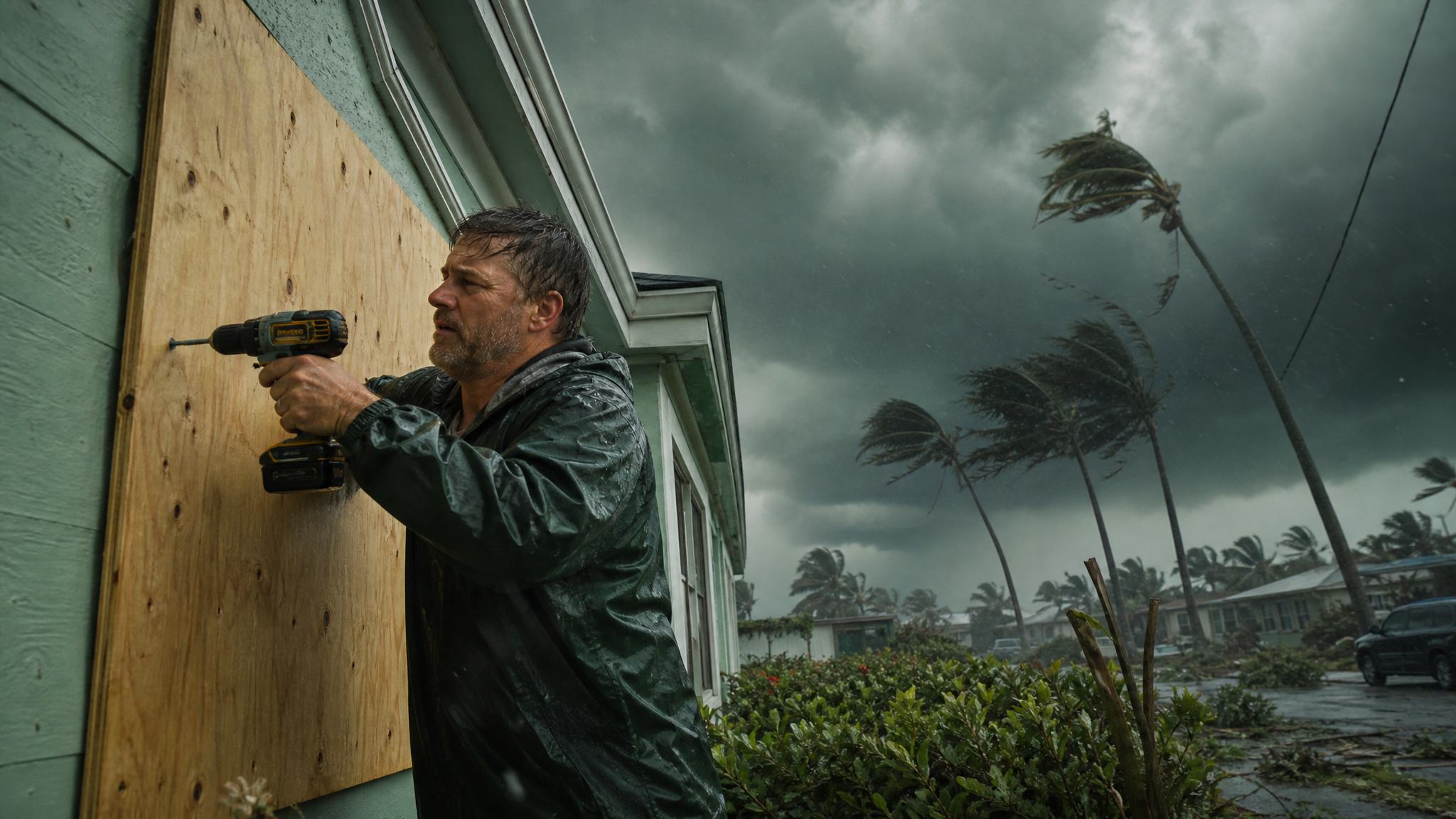
If you're reading this because a storm just got named and it's pointed at your coastline, skip the backstory. You've got hours, maybe a day or two, and every hour you spend deciding what to do is an hour you're not doing it. Stores near the coast sell out of water and gas within hours once a storm sits inside that 72-hour window. This is the order that actually works, based on what emergency managers and the National Hurricane Center tell people to do when time is short.
What to Do the Moment a Hurricane Warning Hits Your Area
The first hour matters more than people think. Here's what to knock out immediately, in this order:
Check your evacuation zone. Most coastal counties have a zone lookup on their emergency management website. If you don't already know yours, find it now, before the roads get busy. Zone A or 1 usually means storm surge risk, not just wind, and that changes your decision.
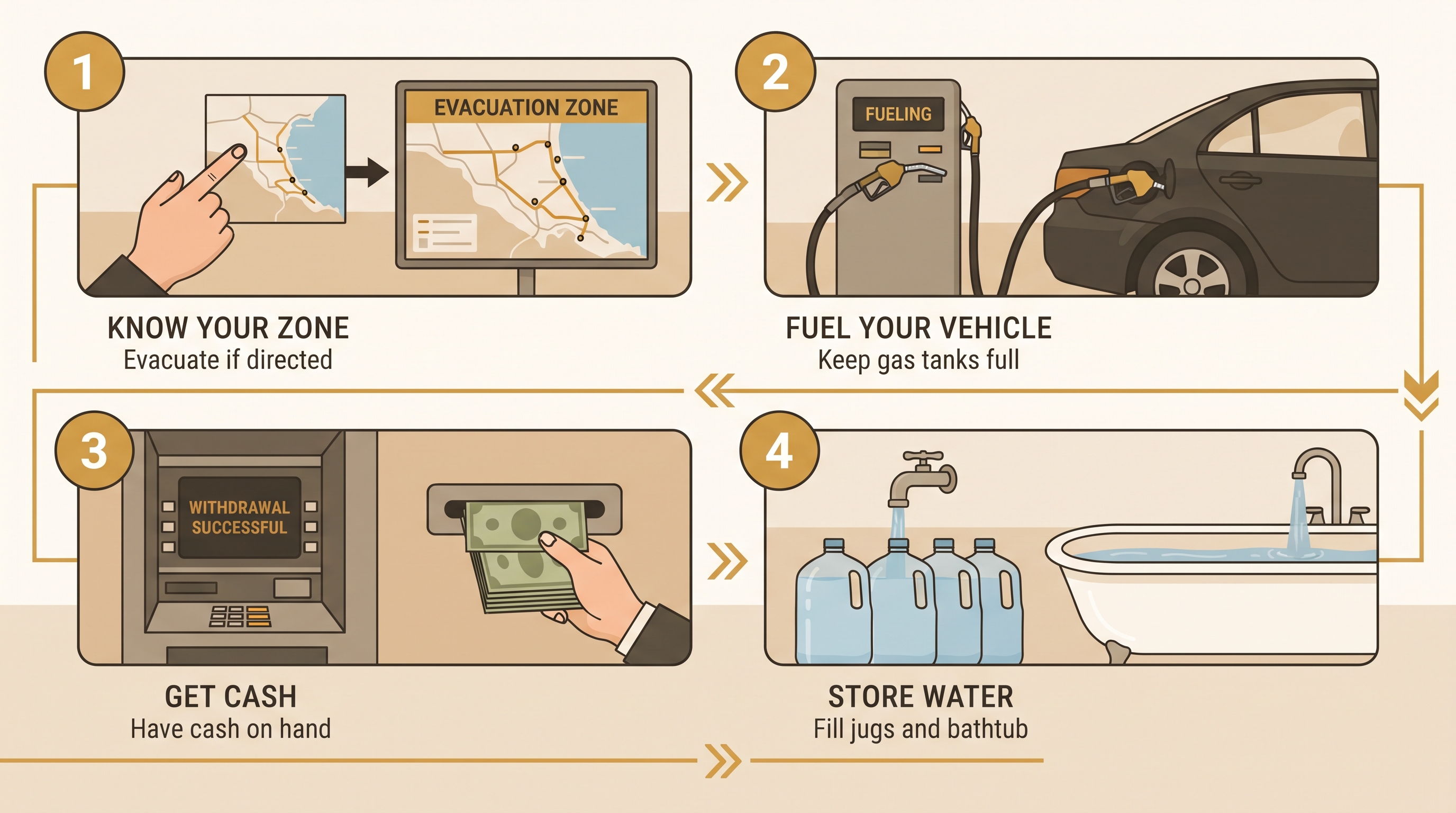
Fill your gas tank. Gas stations run dry fast once evacuation orders drop, and a full tank matters whether you're driving inland or just want backup power for a generator. Do this before you do anything else that requires driving.
Pull cash. ATMs and card readers don't work without power, and after a storm, plenty of places only take cash for a while. A few hundred dollars in small bills covers gas, food, and supplies when the grid's down.
Start filling water containers. Fill your bathtub, any clean buckets, and every water bottle in the house. Aim for one gallon per person per day, for at least three days, more if you can manage it. Tap water stops flowing or gets contaminated faster than most people expect.
Building Your Hurricane Emergency Kit (What Actually Matters)
A hurricane kit doesn't need to be complicated. It needs to cover the things you can't easily replace once the power's out and the roads are flooded.
Water and food. Three days minimum, seven is better if you have the space. Canned goods, protein bars, anything that doesn't need refrigeration or cooking. Don't forget a manual can opener; it's the item people forget until they're standing in front of a can of beans with no way in.
Medications. A week's supply of anything you take regularly, plus a printed list of dosages in case you end up at a shelter or hospital and can't access your phone.
Light and power. Flashlights over candles, always, since open flame is its own hazard during a storm. A battery-powered or hand-crank radio keeps you connected to official updates when cell towers go down. Charge every phone and power bank to 100% before the storm arrives, not during.
First aid. This is the part people skip until they need it. Storms create injuries that have nothing to do with wind, cuts from debris cleanup, falls in the dark, burns from generators run wrong. A kit built for real trauma, not just band-aids and aspirin, is worth having in the house before you ever need to reach for it. That's exactly the gap The 1stHour Trauma Kit is built to close, and it's worth having ready long before hurricane season, not scrambled together the night a storm gets named.
Documents. Copies of ID, insurance policies, and medical records in a waterproof bag or on a USB drive. If your home floods, these are the things you can't just print again the next day.
If you haven't put together a broader plan for your household yet, our family emergency plan guide walks through the parts most people miss, like where to meet if you get separated and who your out-of-state contact is.
Protecting Your Home Before You Leave (or Hunker Down)
Whether you're evacuating or riding it out, your house needs a few hours of work before the wind picks up.
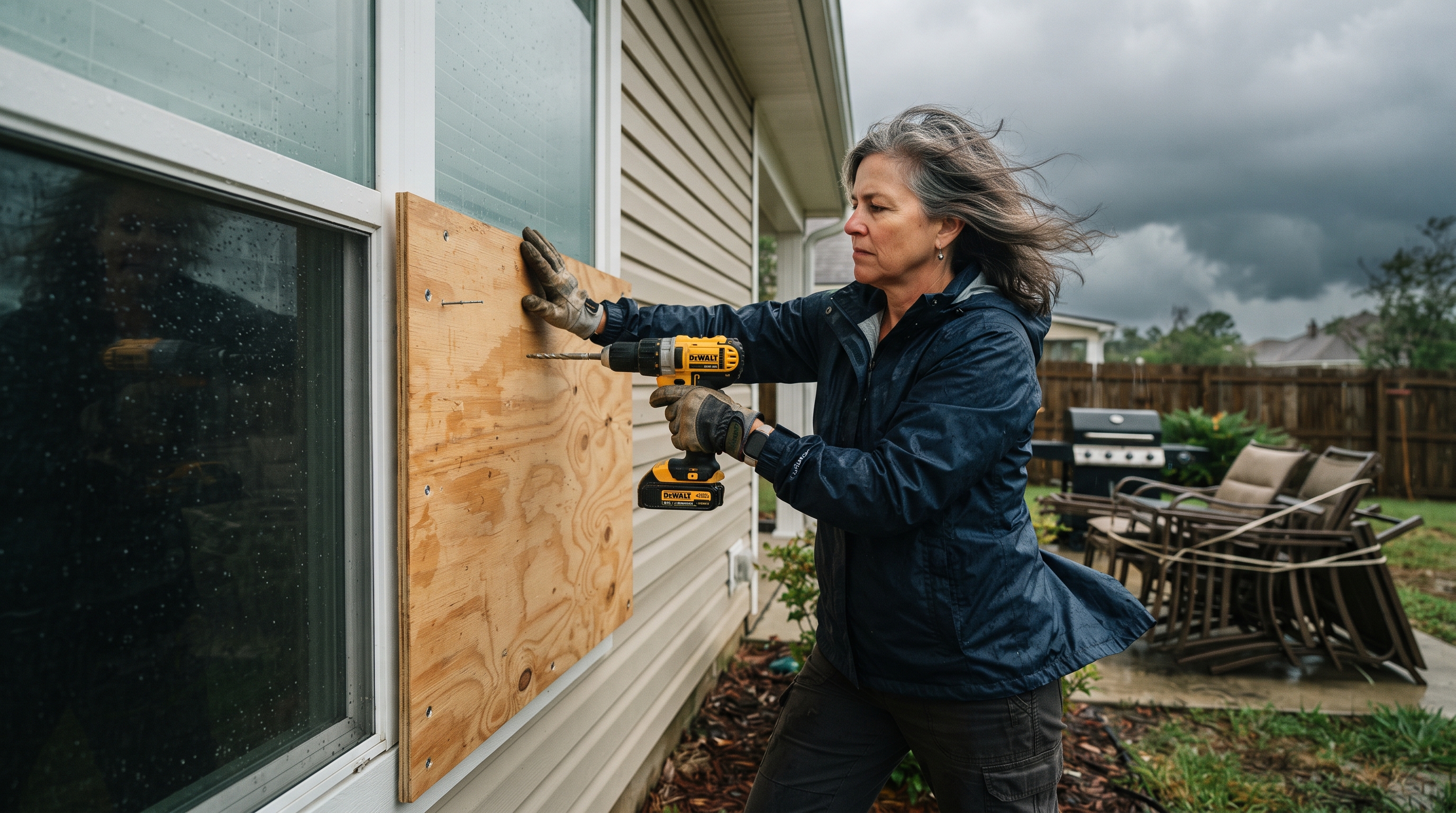
Board or shutter your windows. Pre-cut plywood is faster than doing it from scratch under pressure, so if you're in a hurricane-prone area, cut it now and store it for next time. Tape doesn't stop windows from shattering; it's a myth that refuses to die.
Bring in anything that can become a projectile. Patio furniture, planters, grills, anything loose in the yard turns into a hazard in 80+ mph wind. If it can't come inside, tie it down or lay it flat.
Unplug non-essential electronics. Power surges during and after a storm are common, and a surge protector isn't a guarantee. Unplugging the TV and computer takes thirty seconds and saves you a repair bill.
Know your flood risk, not just your wind risk. Most home insurance doesn't cover flood damage. If you're not already covered and you're in a flood zone, that's a conversation to have well before hurricane season starts, since new flood policies can take up to 30 days to kick in.
Should You Evacuate or Shelter in Place?
This is the decision people agonize over, and it shouldn't take long if you know two things: your evacuation zone and the storm's projected surge.
If local officials issue a mandatory evacuation order for your zone, go. Storm surge kills more people than wind does, and a two-story house doesn't help you if the water's coming in ten feet high. Staying to "protect the house" is a bet most people lose.
If you're not in an evacuation zone and the storm is primarily a wind event for your area, sheltering in place with a stocked kit and a plan for the room you'll ride it out in (interior, no windows, ground floor) is usually reasonable. Check your local emergency management updates regularly since the plan can change as the forecast tightens.
Whatever you decide, tell someone outside the storm's path. A text to an out-of-state contact with your plan takes ten seconds and matters if things go sideways.
The Hour Before Landfall: Final Checklist
By the time landfall is an hour or two out, you're not prepping anymore, you're finishing. Run through this fast:
- Devices and power banks charged to 100%
- Water containers filled, including the bathtub
- Gas tank full, cash in hand
- Kit staged near the door or already in the car
- Loose outdoor items secured or brought inside
- Family knows the plan and the meeting point
- Pets accounted for, with their own food and water
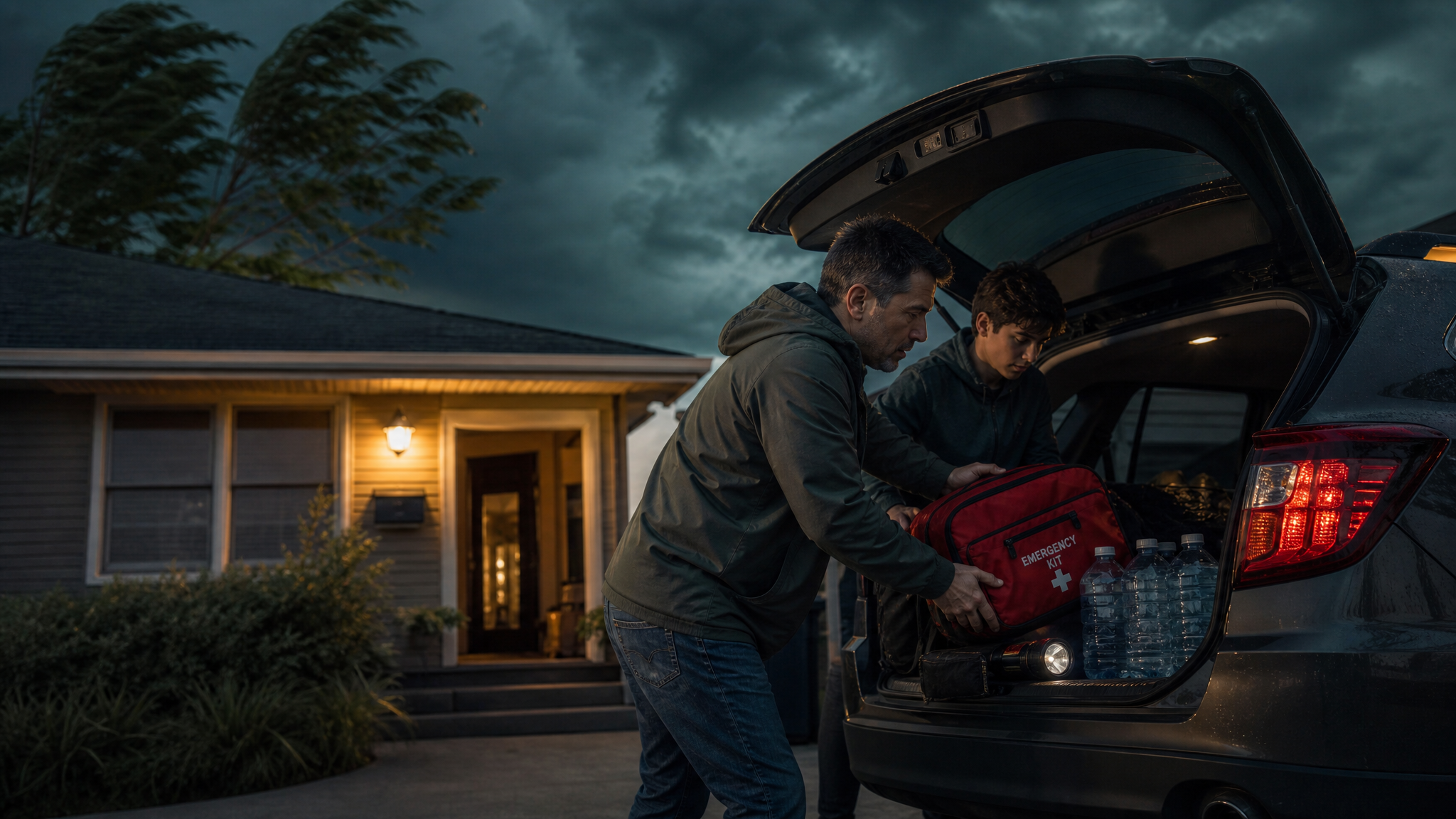
If you haven't looked at what belongs in a home kit before now, our home first aid kit checklist is worth a fast read, since a surprising number of "complete" kits are missing the items you'd actually reach for during a storm-related injury.
After the Storm Passes
The hour after landfall carries its own risks, and they catch people off guard.
Stay away from downed power lines. Assume every line is live until a utility crew confirms otherwise. Water and electricity together are a fast way to turn a storm survival story into a tragedy.
Don't drive through flood water. Six inches of moving water can knock over an adult, and a foot of water can float most cars. "It doesn't look that deep" has ended a lot of otherwise fine days.
Run generators outside, always. Carbon monoxide from a generator running in a garage or near a window kills people every single hurricane season, and it's completely preventable. Twenty feet from the house, minimum, pointed away from windows and doors. If the storm knocks out power for days, TacticalBox's power outage prep guide covers keeping food safe and running a generator safely.
Check on neighbors, especially older adults. A lot of post-storm injuries and medical emergencies happen in the days after, not during. A five-minute knock on the door can catch a problem early.
If you're on the road for the drive home or a supply run and something happens, the basics from our car emergency kit essentials post are worth having staged before you head out.
Get This Checklist as a Printable PDF
Everything above, condensed to one page you can print and keep with your hurricane kit — first hour, kit list, and after-the-storm steps included.
Download the Checklist (PDF)None of this replaces having the right gear on hand before the wind starts. The 1stHour Trauma Kit covers the injuries that actually happen during storm prep and cleanup, cuts, punctures, and worse, so you're not improvising with a dish towel when it counts. Check out The 1stHour Trauma Kit here.
This content is for informational purposes only and does not constitute medical advice. Always follow official evacuation orders and guidance from local emergency management and the National Hurricane Center.


