Home First Aid Kit Checklist: What You Actually Need vs. What Collects Dust
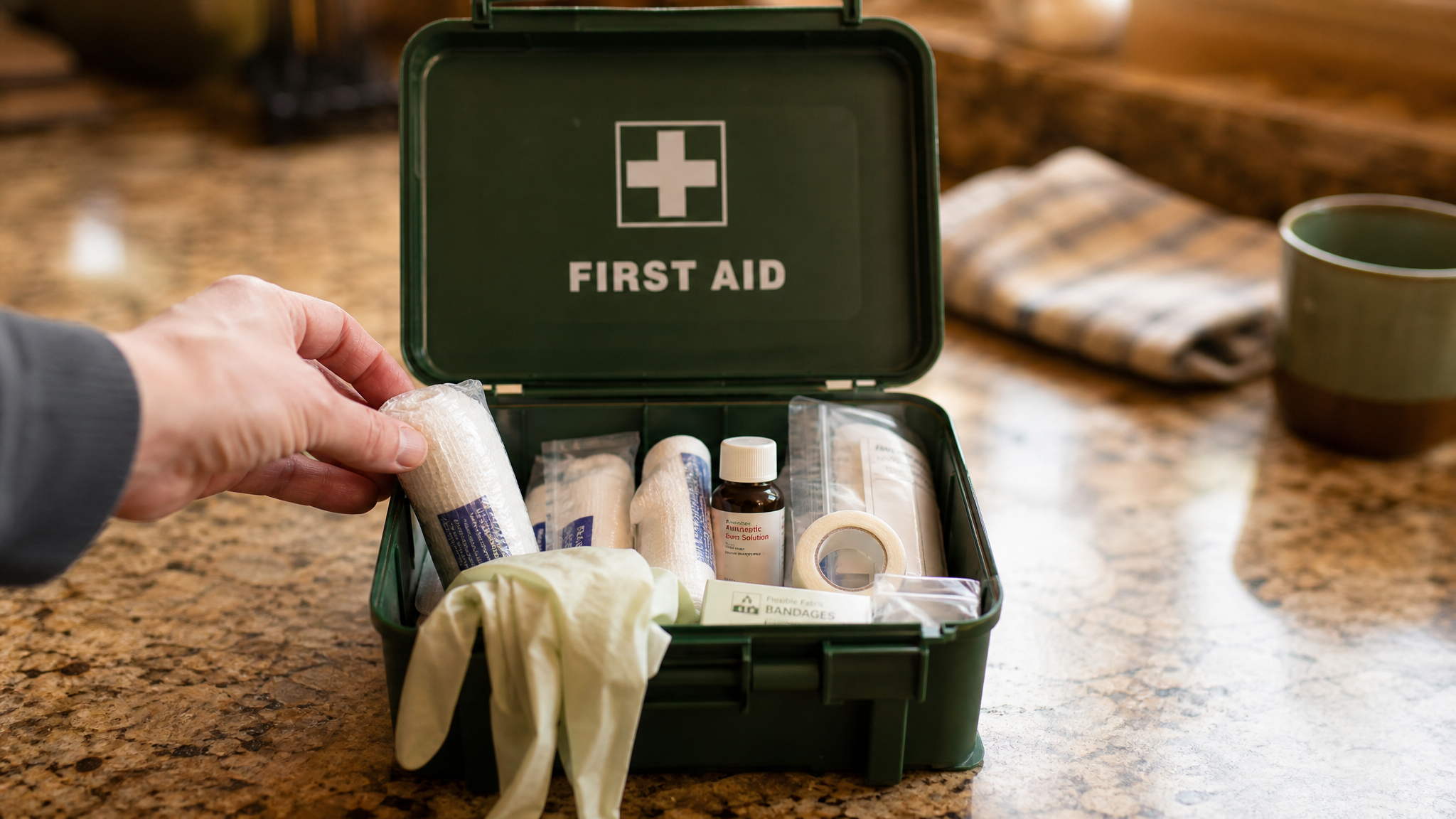
Most homes have a first aid kit somewhere. A drawer in the bathroom, a bin in the garage, that plastic case that came with the house. Open it up and you'll usually find the same thing: forty band-aids in three sizes nobody uses, a roll of tape fused to itself, and an ointment tube from four presidents ago. Meanwhile the one thing you actually needed, a real gauze pad big enough to cover something, isn't in there at all. This is what happens when a kit gets bought once and never looked at again. Here's what to actually stock, what most pre-made kits waste space on, and how to keep the thing useful instead of just present.
What a Home First Aid Kit Checklist Actually Needs
Start with wound care, since that's what most home injuries actually require.
- Sterile gauze pads, several sizes, including at least a few large enough to cover more than a fingertip
- Adhesive bandages, a reasonable assortment, not fifty of the smallest size
- Medical tape, cloth-based holds up better than plastic
- Antiseptic wipes for cleaning a wound before covering it
- Antibiotic ointment, a couple of packets is plenty
- Nonlatex disposable gloves, at least two pairs
- Tweezers for splinters and debris
- Trauma shears for cutting clothing or tape cleanly, a real upgrade over kitchen scissors
- An instant cold pack for sprains and swelling
- A CPR breathing barrier, small, cheap, and worth having if you ever need to perform rescue breaths
Round it out with a short medication list: acetaminophen and ibuprofen, an antihistamine like diphenhydramine for allergic reactions, and any topical hydrocortisone for rashes and bites. The American Red Cross's kit guidance lands on roughly the same 15 to 20 items, and it's a good baseline if you want a second source before you shop.
That's the whole core list. It fits in a shoebox. It doesn't need to be more complicated than that, and if severe bleeding is ever the situation you're facing, knowing how to stop it matters more than anything sitting in the kit.
The Items Pre-Made Kits Pad Out With (But You Won't Use)
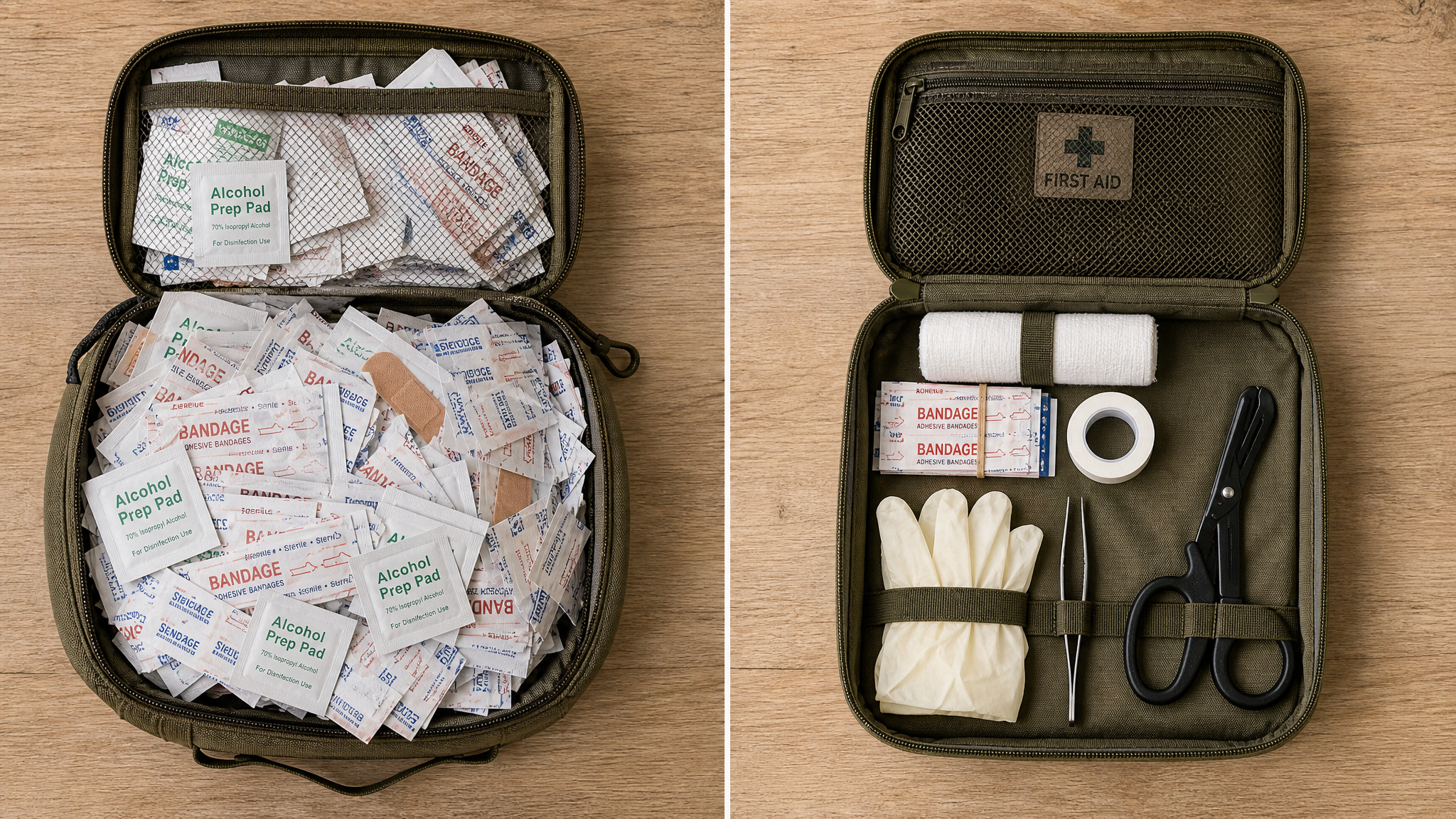
Most store-bought kits are sold by piece count. "300-piece first aid kit" sounds thorough on the box. In practice it usually means 150 tiny adhesive bandages, a dozen alcohol prep pads you'll never touch, and packaging that takes up more room than the actual supplies.
A few things worth downgrading or skipping outright: bulk quantities of the smallest bandage size. You need a handful, not eighty. Generic "wound closure strips" that come in most kits but expire and get replaced by better options if you ever actually need one. Mystery ointment tubes with vague labeling that most people won't trust enough to use on a real wound anyway. Paper tape, which peels and loses stick within a year sitting in a drawer.
None of this is dangerous to have. It's just dead weight that makes the kit harder to search through when you're moving fast. A first aid kit you have to dig through to find the one gauze pad you need is worse than a smaller kit that's actually organized.
What to Add for Your Specific Household
The core list above covers general use. Your actual household probably needs a few additions on top of it.
If you have young kids: children's-dose pain relievers and antihistamines, a handful of fun bandages (seriously, this affects whether they'll let you treat a scrape without a fight), and a thermometer if you don't already have one elsewhere in the house.
If you have older adults or anyone managing a chronic condition: a spare blood pressure cuff isn't unreasonable, a magnifying glass for reading small print on medication labels, and a written list of current medications and dosages kept with the kit, not just in someone's memory.
If you have pets: a separate small kit works better than mixing pet supplies into the household one, but at minimum know that your gauze and tape work fine for a dog's paw in a pinch.
If anyone in the house has a serious allergy: an epinephrine auto-injector, if prescribed, needs to live somewhere obvious and known to every adult in the house, not buried in the first aid kit itself. Speed matters more than tidiness there.
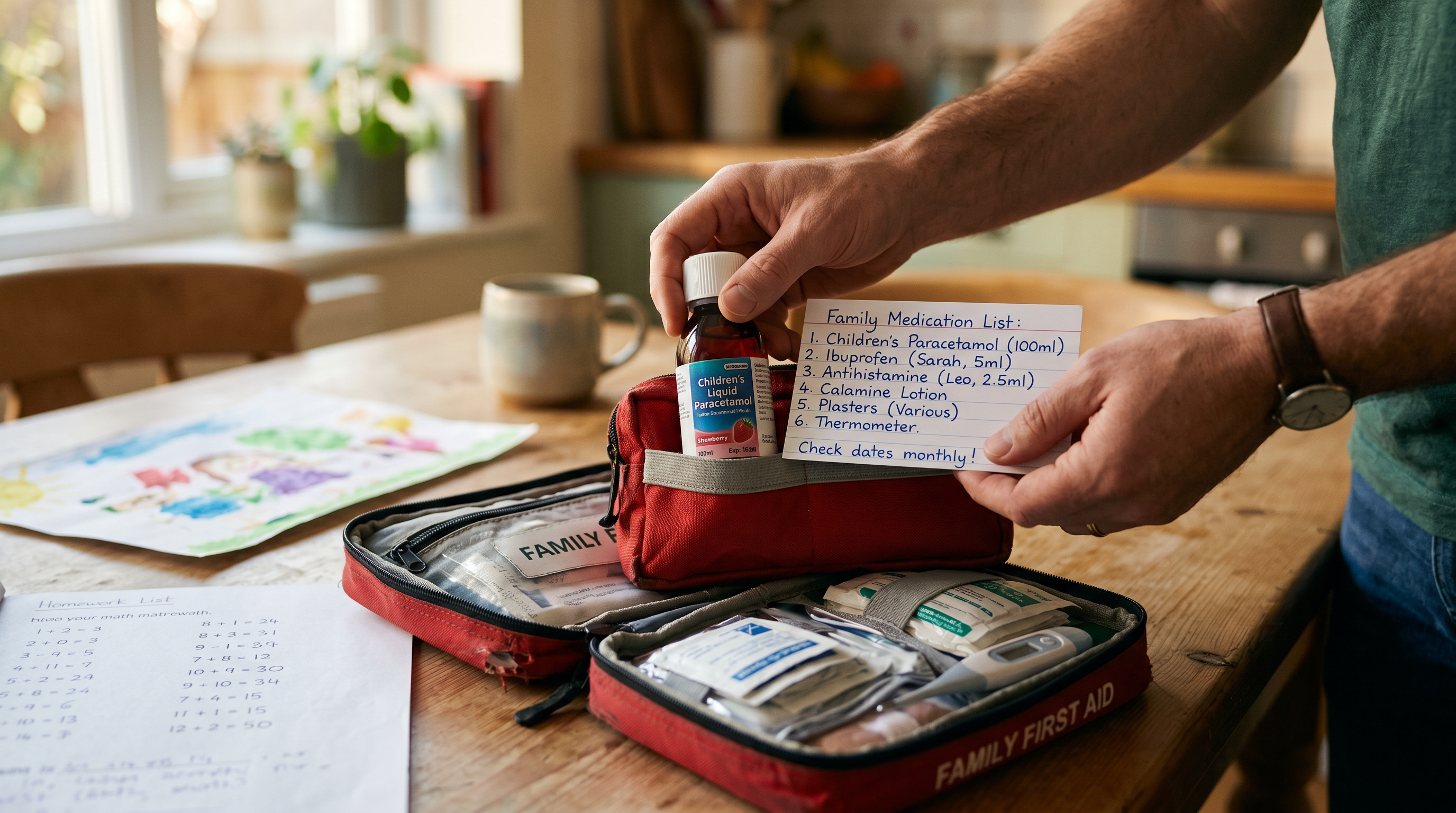
This is also where a written plan pays off. If you haven't already built one, a family emergency plan is the place to record who has what condition, what medications matter, and who's responsible for grabbing the kit if you ever have to leave in a hurry.
Where to Store Your First Aid Kit So Someone Actually Finds It
The best first aid kit in the world is useless if it's buried behind holiday decorations in the garage, or if only one person in the house knows where it lives.
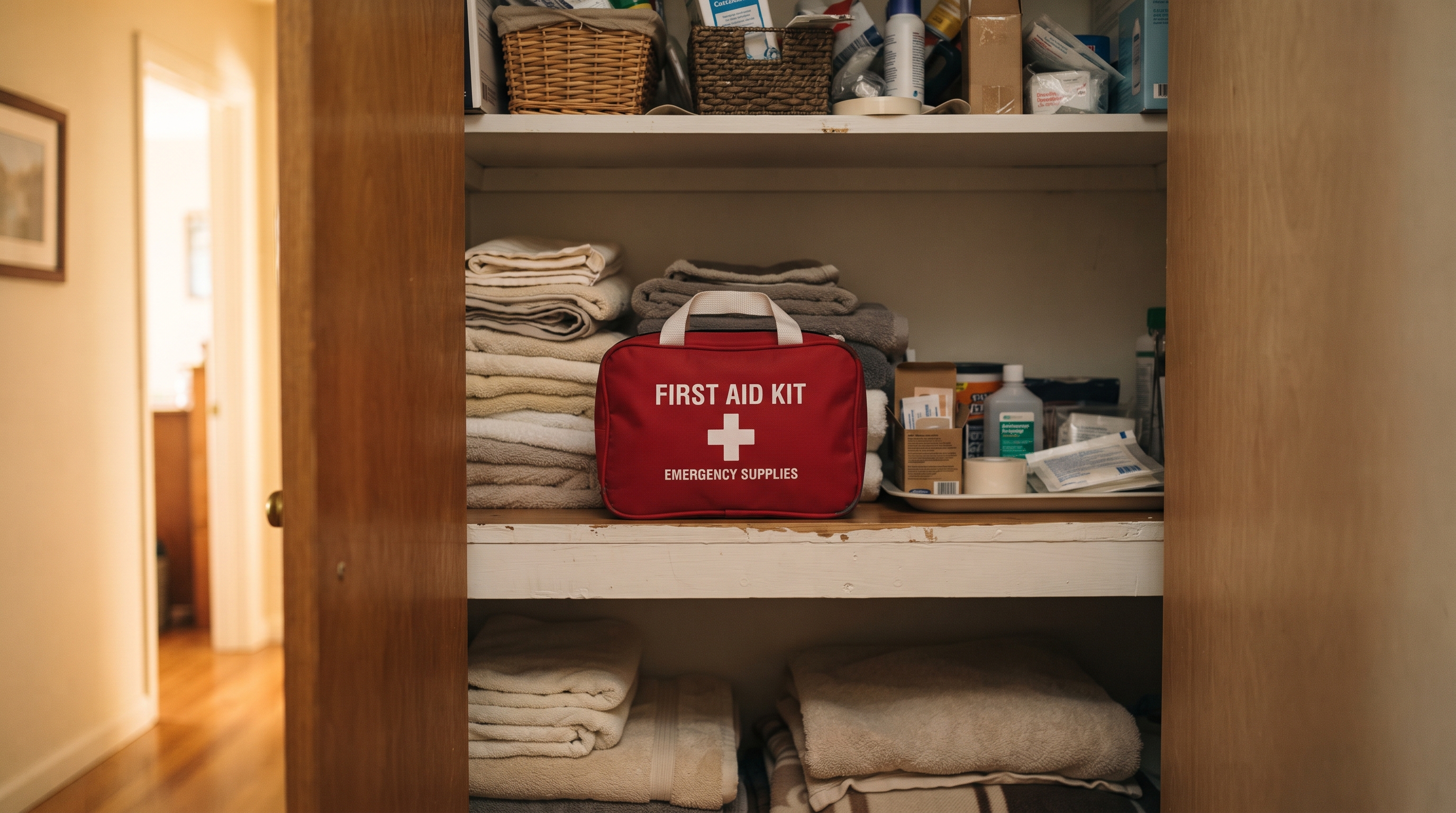
Pick somewhere central. A hallway closet, a kitchen cabinet, a pantry shelf. Somewhere every adult and any kid old enough to help can find it without asking. Avoid the bathroom if you can. Humidity from showers degrades adhesive bandages and some medications faster than you'd think. Avoid the garage too, since temperature swings between summer and winter aren't kind to ointments and cold packs.
Keep it somewhere reachable, not on the top shelf of a closet where you need a step stool during an actual emergency. And tell people where it is. Out loud, more than once. A kit nobody remembers exists might as well not.
If your home also needs a kit in the car, the same logic applies there too. The essentials for a car emergency kit overlap heavily with what's already in this list, plus a few roadside-specific additions.
How Often to Check and Restock Your First Aid Kit
A kit you bought three years ago and never opened again is not a functioning kit. It's an artifact.
Set a reminder every six months, tied to something you already do twice a year, like changing smoke detector batteries or switching clocks. When the reminder goes off, open the kit and actually go through it. Check expiration dates on medications and antiseptics. Restock anything that's been used, even partially. Replace anything that looks degraded, tape that's lost its stick, gauze in torn packaging, anything that's been sitting open to air.
This takes ten minutes twice a year. Skipping it is how you end up reaching for a cold pack that no longer gets cold, or an antibiotic ointment that expired during a presidency you've mostly forgotten.
Building vs. Buying: What Makes Sense for Most Households
A pre-made kit is a fine starting point, especially the more curated ones built around actual injury types rather than piece count. But most people end up happiest combining both approaches: start with a solid base kit, then strip out the padding and add what your household specifically needs.
If you're building from scratch, budget for quality over quantity. One roll of real cloth medical tape beats three rolls of the paper kind. Trauma shears that actually cut through denim beat the tiny scissors that come free in most kits. A single large gauze pad handles more real injuries than a stack of tiny bandages ever will.
The goal isn't an impressive-looking kit. It's a kit you'd actually reach for at 2 a.m. without hesitating, and one that has what you need when you open it.
A well-stocked kit only helps if you also know how to use what's in it. See 1st Hour's trauma-ready kits at 1sthour.com and build a setup that covers both the everyday scrapes and the moments that count.
This content is for informational purposes only and does not constitute medical advice. For serious injuries, call 911 or seek emergency medical care immediately.


