Car Emergency Kit: The 12 Items That Could Save Your Life
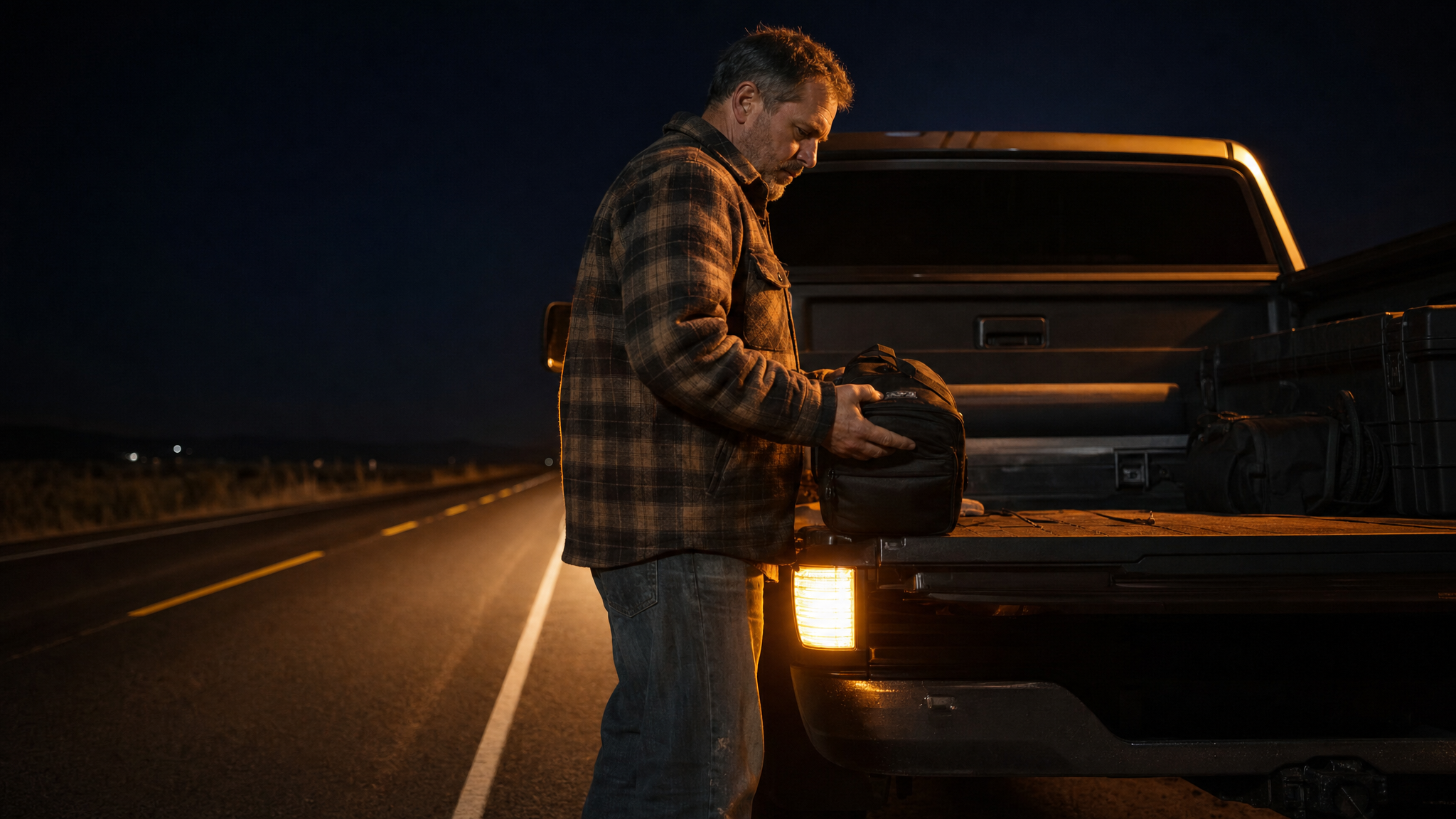
Most people think a car emergency kit means a first aid kit under the seat. Maybe jumper cables in the trunk. That's it. And for the vast majority of drives, nothing happens, so the assumption holds. But emergencies don't wait for convenient timing. They happen at night, in the rain, on a highway without a shoulder, 30 miles from help. According to NHTSA crash data, nearly 37,000 people die in vehicle crashes every year in the U.S., with over 4 million injuries reported annually. AAA responds to roughly 32 million roadside calls per year. This post covers what actually belongs in your car, why each item earns its spot, and how to store it so it's ready when you need it.
Why Most Drivers Are Completely Unprepared
There's a gap between how people imagine car emergencies and how they actually happen.
Most drivers picture a scenario they'd see coming. A flat tire on a quiet road. A battery that dies in a parking lot. Slow, manageable, low-stakes. So the kit never gets built. Or it stays as a single-use first aid kit from a drugstore that expired two years ago.
What actually happens is different. A crash on the highway with no warning. A vehicle that goes off the road into a ditch or a body of water. A passenger bleeding badly with nothing in the car that can help. These are not extreme edge cases. They are what NHTSA's crash data documents year after year, across every state, every type of road.
The gap between unprepared and prepared doesn't require a $500 investment or a trip to a specialty store. It requires knowing which 12 items actually matter and putting them in your car before you need them. That's what this list is for.
The 12 Items That Belong in Every Car Emergency Kit
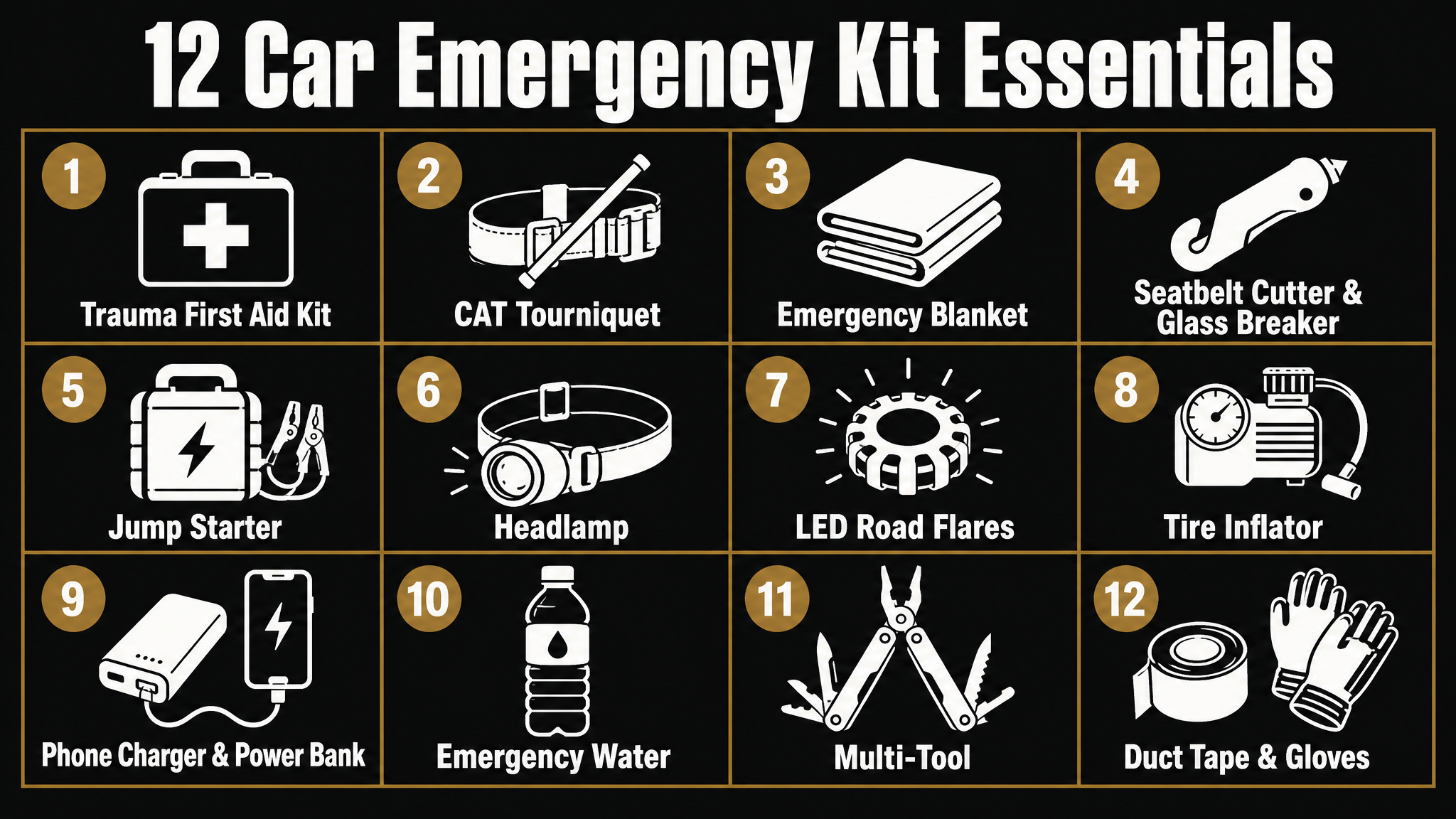
A complete car emergency kit covers three scenarios: medical emergencies, roadside breakdowns, and crash escape. Here are the 12 items every driver should have.
- First aid kit (trauma-grade) — Not a drugstore kit. Look for one that includes hemostatic gauze, wound packing material, trauma pads, and nitrile gloves. The standard first aid kit won't cut it when the injury is serious.
- Tourniquet and bleeding control supplies — A tourniquet stops life-threatening limb bleeding fast. The CAT tourniquet is the standard used by military medics and first responders. It's designed to be applied one-handed. Practice using it at home before you ever need it in the field.
- Emergency blanket (mylar) — Retains up to 90% of body heat. Weighs almost nothing. Critical for preventing shock, managing hypothermia, and staying warm while waiting for help. Every kit needs at least two.
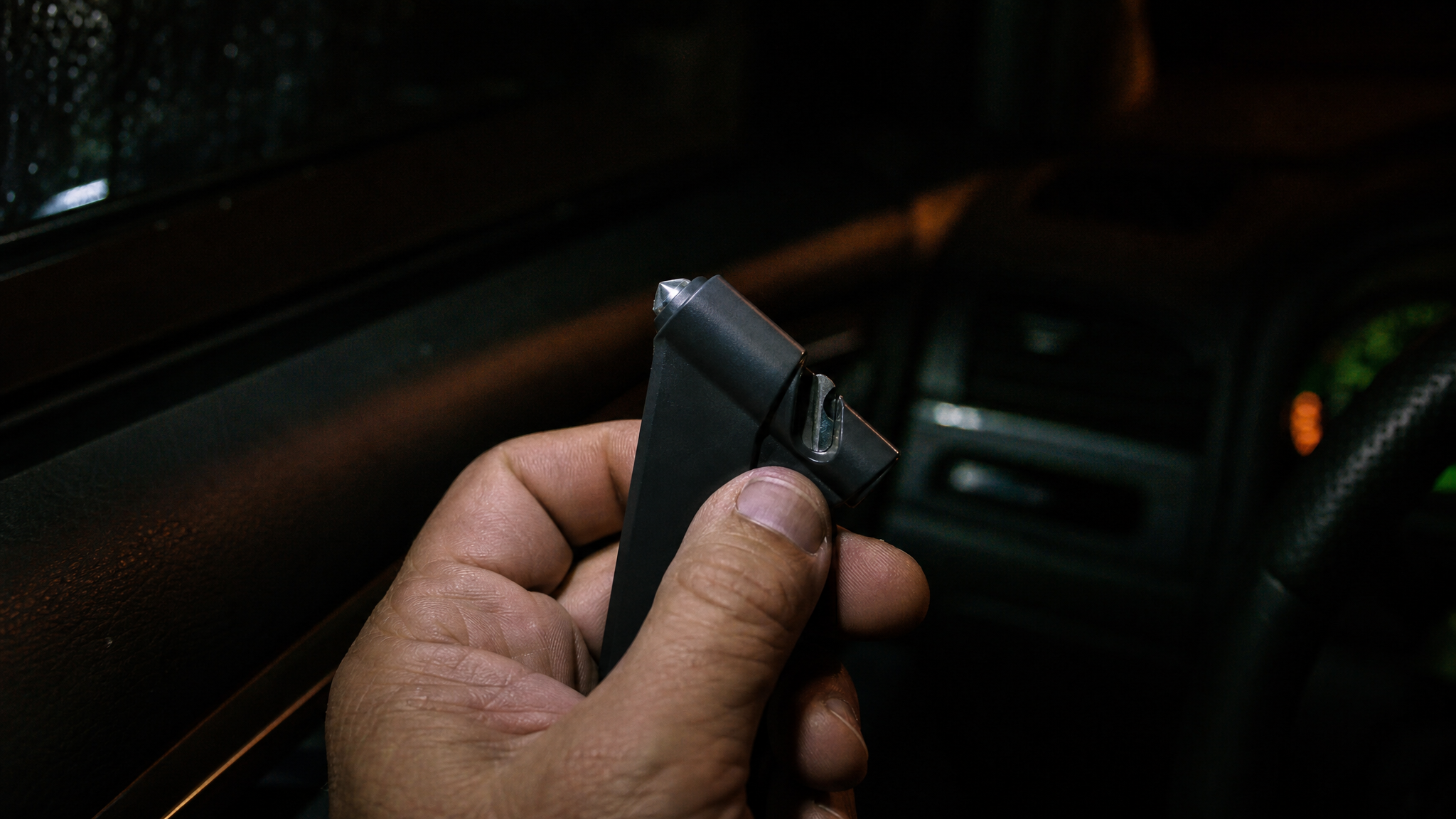
- Seatbelt cutter and glass breaker — One small tool that handles both crash escape scenarios. The seatbelt cutter frees you if the buckle jams or the belt locks under tension. The glass breaker shatters tempered side glass with one strike. Keep it clipped to your sun visor or door pocket — not buried in the glovebox.
- Jumper cables or portable jump starter — A dead battery is the single most common roadside breakdown. Jumper cables work if another driver stops to help. A portable jump starter works alone, at 2 a.m., with no one else around. The jump starter is the better investment.
- Flashlight or headlamp — A headlamp frees your hands for treating a wound, changing a tire, or directing traffic. Keep fresh batteries in it. A flashlight app on your phone drains the battery and leaves you with no communication.
- Reflective triangles or LED road flares — Being visible on the roadside is the difference between a driver seeing you and not. LED flares are brighter, work in daylight, run on batteries that last for hours, and don't create a fire hazard. Combine them with reflective triangles for maximum coverage.
- Tire inflator or fix-a-flat — A can of fix-a-flat or a small portable air compressor handles slow leaks and minor punctures long enough to reach a tire shop. It's not a permanent fix, but it gets you off the shoulder and moving.
- Phone charger and power bank — A dead phone in an emergency is its own emergency. Keep a power bank charged and in the kit. Check the charge every few months. This one item has probably ended more roadside situations than anything else on the list.
- Water (at least 1 liter) — Emergency water packets last for years without degrading. A water bottle doesn't. Packets designed for emergency kits are the right choice here — they stay shelf-stable and take up almost no space.
- Multi-tool — A quality multi-tool covers wire cutting, pliers, screwdrivers, and a blade. Leatherman or Gerber. Skip the cheap versions; they fail when you actually need them.
- Duct tape and work gloves — Duct tape patches hoses, secures dressings, holds things together when nothing else will. Work gloves protect your hands from glass, sharp metal, and road debris during a breakdown or crash response.
The First Aid Items You Can't Leave Out
Most car emergency kits sold at big-box retailers include a first aid kit. That's a start. The problem is what's in it.
A standard drugstore kit is built for minor cuts and blisters — band-aids, antiseptic wipes, a few gauze pads. That's fine for a campsite scrape. It's not adequate when someone in a crash is bleeding severely from a leg or arm wound.
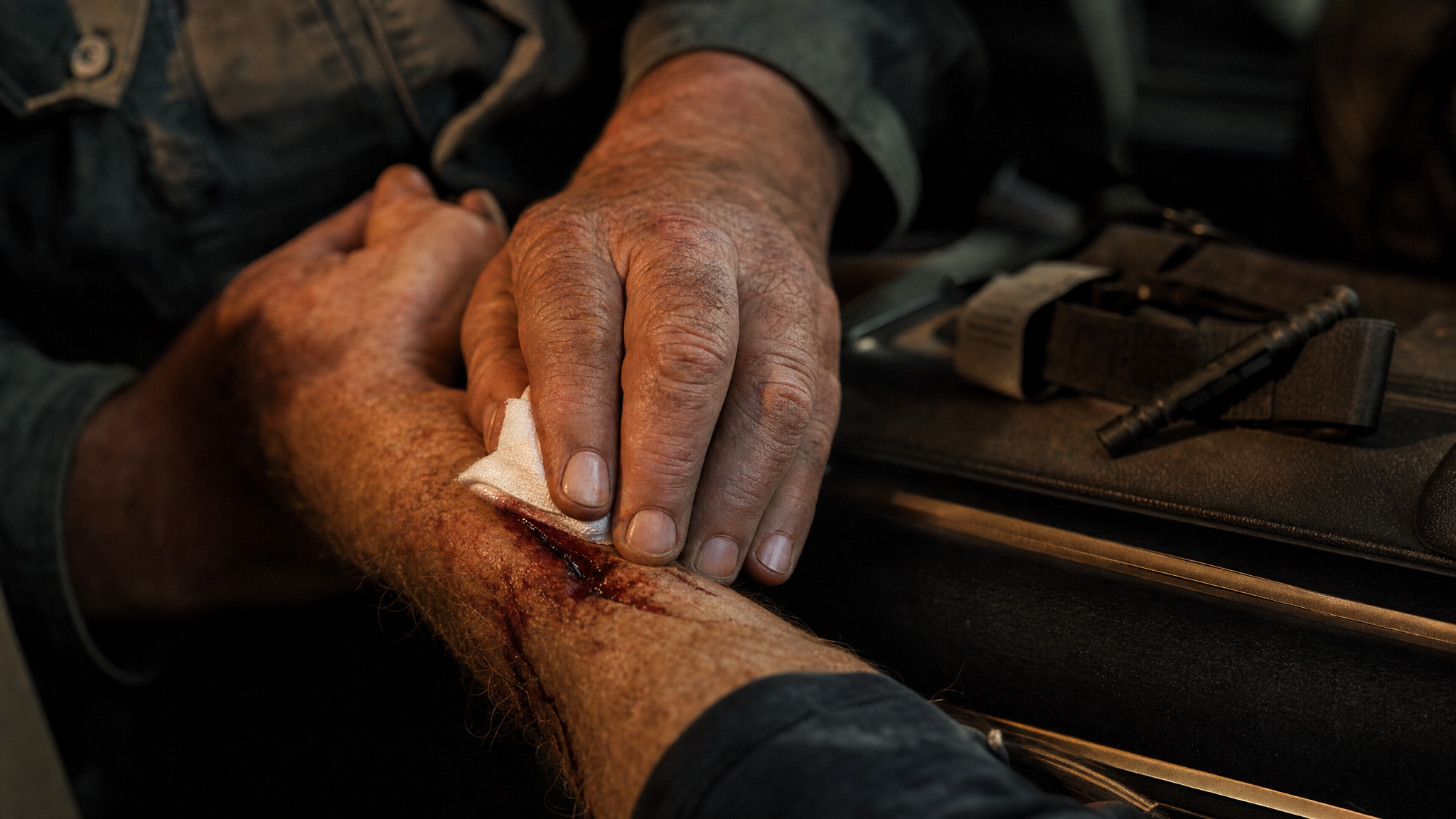
For a car safety kit, you need trauma-grade supplies. That means:
Hemostatic gauze like QuikClot or Celox is treated to accelerate clotting in deep wounds. It's the same type used by combat medics and emergency rooms. A single roll of hemostatic gauze can make an immediate difference in a severe bleeding situation while waiting for EMS.
Wound packing gauze is used to pack deep wounds and control severe hemorrhage. This is a technique worth learning — look for a Stop the Bleed course near you. It takes about an hour and the skills stay with you.
A tourniquet rated for field use, applied to a limb, stops bleeding that wound packing alone cannot control. The CAT tourniquet is the standard for a reason. It costs around $30 and weighs almost nothing. It belongs in every car.
Knowing what to do when someone is injured in a car accident starts with having the right supplies within arm's reach. And knowing how to stop severe bleeding is a skill that transfers well beyond car accidents.
The Red Cross car kit guidance covers the basics. For trauma-level readiness, go further than the basics.
One more skill worth having: if someone loses consciousness or stops breathing, knowing how to perform hands-only CPR can keep them alive until EMS arrives. It takes 30 minutes to learn and you keep it for life.
Safety and Visibility — Being Seen Can Save Your Life
Pull over on the side of a highway at night and you'll understand this immediately. Traffic is moving at 65–75 mph. Drivers see you late. Sometimes they don't see you at all until they're almost on top of you.
Being visible is not optional. It's the first thing you do when you're stopped on the side of any high-speed road.
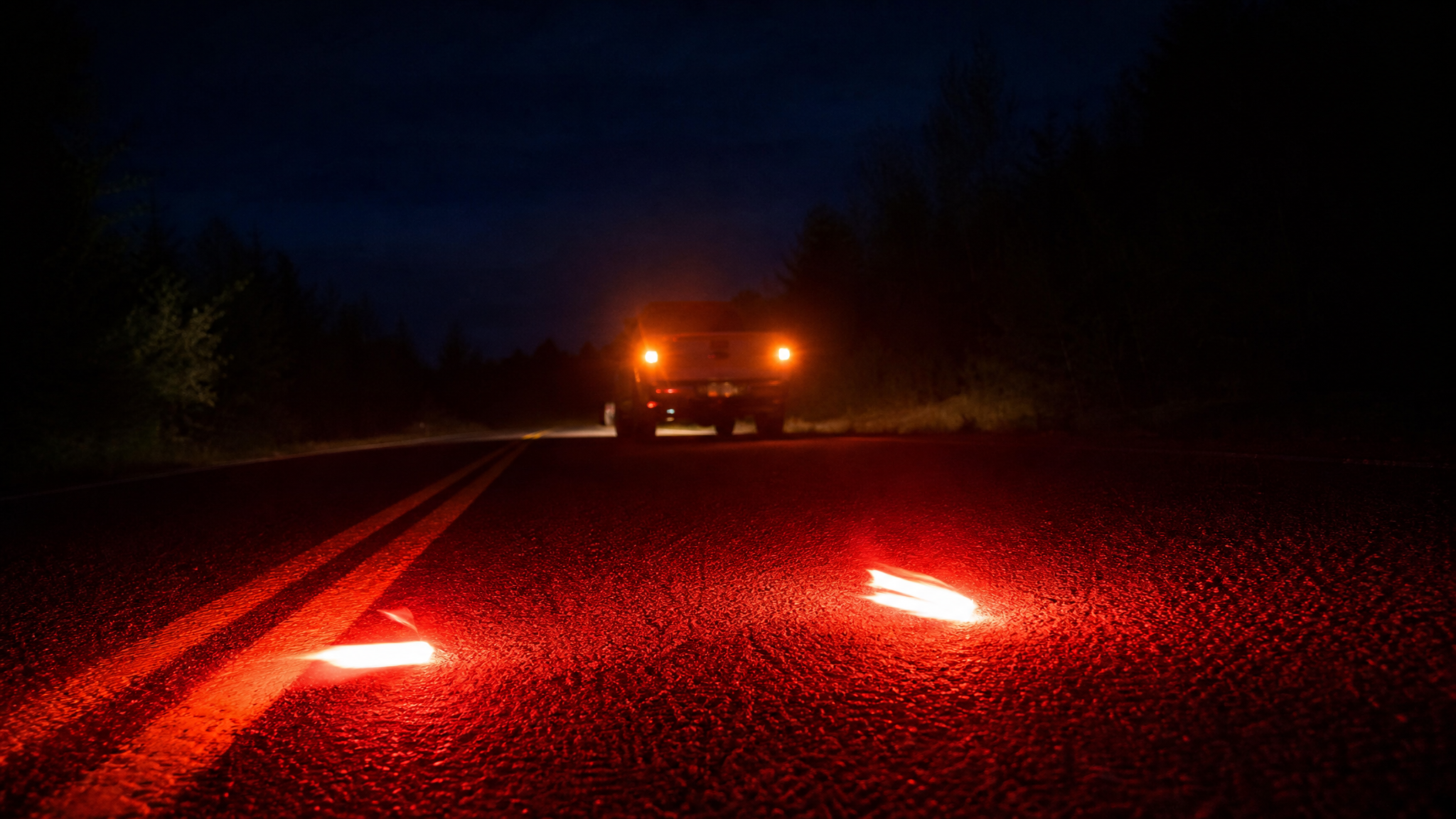
Reflective triangles are the standard roadside warning device. They fold flat, work in all weather, and are recommended by FEMA's ready.gov vehicle guide. Proper placement: 10 feet behind the vehicle, 100 feet back, and 300 feet back. That spacing gives approaching drivers time to react.
Road flares are brighter and draw faster attention. The downside is fire risk near fuel or dry brush, and they burn out. Keep one or two in the kit for situations that demand immediate high visibility.
LED road flares are the best option for a permanent car safety kit. They're bright enough to be visible in daylight, they run on batteries that last for hours, they're reusable, and there's no fire risk. A set of three LED flares with two reflective triangles covers almost any roadside scenario.
The right visibility setup costs under $40. What it buys is the ability to stop oncoming traffic from becoming your second emergency.
The Escape Tools Most Kits Skip
Most people have never seriously thought about what happens if they can't get out of their car after a crash.
Car fires are one scenario. A vehicle can go from smoke to fully involved in under two minutes. If the doors are jammed or the seatbelt is locked under tension, two minutes is not enough time to improvise a solution.
Vehicle submersion is another. A car entering water can sink in 60 to 120 seconds. Once the water pressure against the door exceeds the pressure inside the car, the door is nearly impossible to open until the car is fully flooded. The window becomes the only realistic exit — and electric windows fail almost immediately in water.
A seatbelt cutter and glass breaker addresses both. The cutter gets you free if the buckle jams or the belt has locked under crash tension. The glass breaker is a hardened point that shatters tempered side glass with a single firm strike to the corner of the window.
Here's where most people get this wrong: they keep the tool in the glovebox or buried in a bag in the trunk. If you're pinned or disoriented after a crash, you cannot reach the glovebox. If your car is sinking, you're not opening the trunk. The tool has to be within arm's reach from the driver's seat. Clip it to the sun visor or mount it to the door panel. That's the only location that matters.
Understanding why the first 60 minutes after trauma matter makes it clear why escape speed is not a minor variable. Every minute that passes narrows the window for a good outcome.
How to Store Your Car Emergency Kit So You'll Actually Use It
A kit you have to dig for in an emergency is almost as bad as having no kit at all.
One bag, not scattered items. Put everything in a single bag or case. A small duffel, a drawstring bag, a hard-sided case with a handle. When something goes wrong, you grab one thing, not six. Label it if you share the car with family members.
Location matters. Store the bag in the trunk or cargo area. But keep the seatbelt cutter and glass breaker clipped where you can reach them from the driver's seat. Keep the power bank in the center console or door pocket, not buried in the bag where you'd have to unzip it under stress.
Check it twice a year. Spring and fall, when clocks change, is the standard reminder. Replace anything expired. Charge the power bank. Check the flashlight batteries. Restock whatever you've used. The five minutes it takes is the maintenance cost for having a functional kit.
Seasonal adjustments. In winter, add hand warmers, a second emergency blanket, and a small folding shovel. In summer, add extra water and a cold pack in the first aid kit. The base 12-item kit stays consistent through the year. Season-specific items are additions, not substitutes.
A car breakdown kit that is organized and within reach is one that actually gets used under pressure, by someone who is stressed and moving fast. Build for that person, not for ideal conditions.
What to Do If an Emergency Happens Before You Build Your Kit
You don't have to do this all at once.
If you're not going to build the full kit today, buy the seatbelt cutter and glass breaker first. It costs $10–15, clips to your visor in 10 seconds, and covers a scenario that is nearly impossible to handle without the right tool. That one purchase closes one of the biggest gaps in most people's vehicle emergency supplies.
Then add the tourniquet. Then the emergency blanket. Then the trauma-grade first aid supplies. Building a complete roadside emergency kit over two or three weeks is better than waiting until you have time to do it all at once, which often means never.
The breakdown items — jump starter, reflective triangles, tire inflator — are worth adding in a second pass. They cover the scenario you're statistically most likely to face. They're less time-critical than the medical and escape items, but they belong in the kit.
What we've found is that most people who put this off treat it like a big project. It isn't. It's 12 items. Most of them fit in a bag the size of a lunch cooler. The whole thing takes less than an hour to source and assemble, and it stays in your car for years.
The gap between being prepared and not is smaller than it looks. The only thing it actually requires is starting.
If you want a kit that's already built to this standard, 1st Hour puts together trauma-ready car emergency kits with the escape tools, bleeding control supplies, and roadside gear that most kits skip. See the full kit at 1sthour.com and be ready before you need to be.
This content is for informational purposes only. It does not constitute medical advice. In any emergency, call 911 immediately.


