How to Build a Family Emergency Plan (And Actually Stick to It)
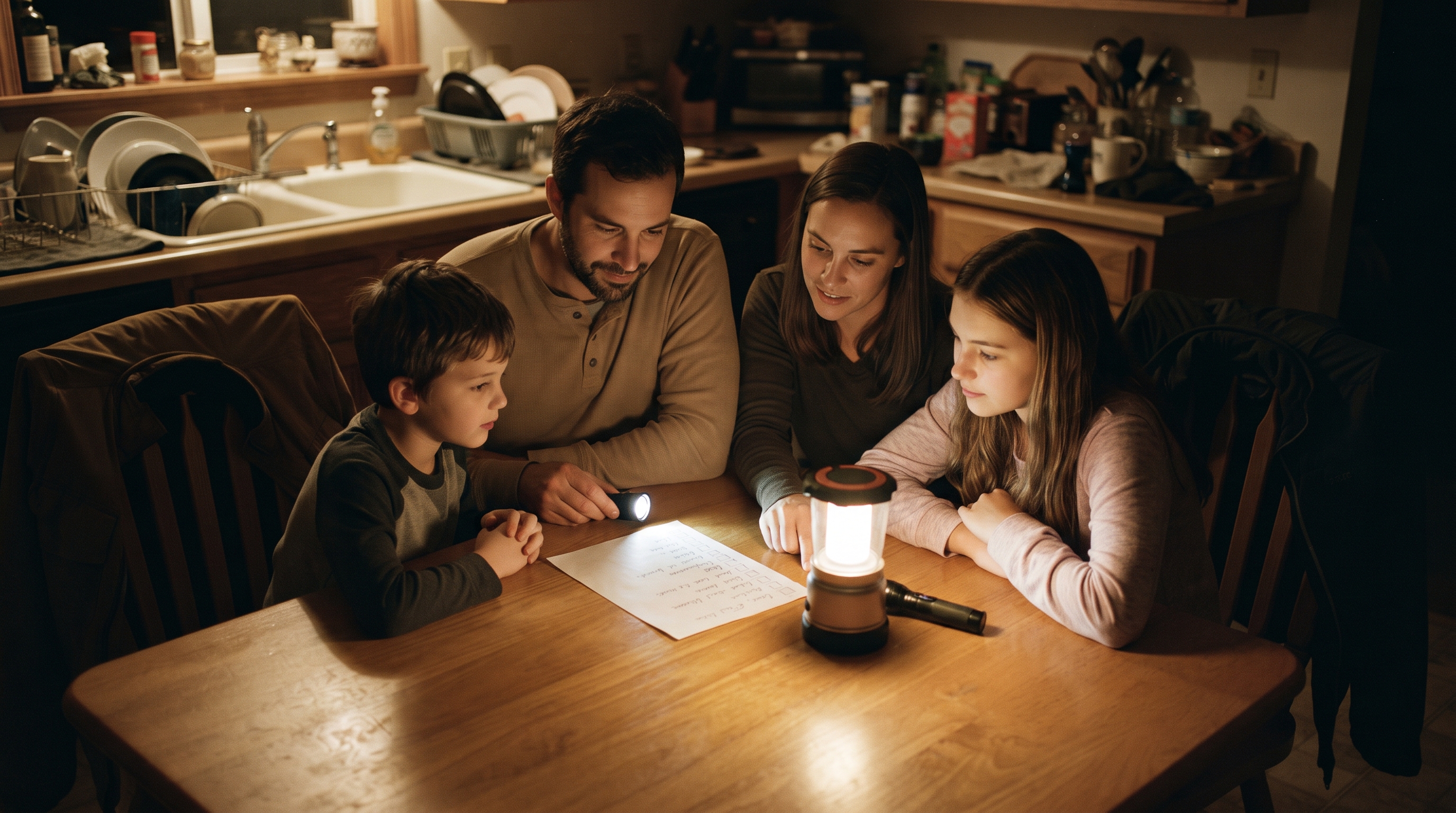
Most families that have an emergency plan built it once, printed it, and never looked at it again. That's not really a plan. It's a document. A real plan is something your spouse and your ten-year-old could both act on at 2 a.m. with the power out and their phones dead. This post walks through what actually needs to be in place, in an order that makes sense to build, and how to make sure it sticks instead of collecting dust in a kitchen drawer.
Why Most Family Emergency Plans Never Get Used
Ready.gov, the Red Cross, and FEMA all publish solid templates. The problem isn't the templates. It's that filling one out feels like the finish line, when it's really the starting line.
A plan that exists only on paper fails the moment everyone is separated, scared, and not thinking clearly. Under real stress, people forget things they knew cold five minutes earlier. That's not a character flaw. It's how brains work when cortisol floods the system. The fix isn't a better form. It's fewer decisions to make in the moment, because you already made them in advance.
So the goal here isn't "write a plan." It's "make a plan simple enough that panic doesn't erase it."
That distinction changes what you build. A 12-page household emergency binder looks thorough, but nobody is flipping through 12 pages while a wildfire is two ridgelines away. A plan that survives contact with an actual emergency is short, specific, and already living in the heads of the people who need it. Fewer pages, more repetition.
Pick Two Meeting Places for Your Family Emergency Plan
Every family plan needs two designated spots, and they serve different jobs.
The first is close to home. Something like the mailbox at the end of the driveway, or a neighbor's front porch. This is where everyone goes if there's a fire or a fast-moving hazard and the house itself isn't safe to be near. It needs to be somewhere every family member, including young kids, can walk to without help.
The second is farther away, outside your immediate neighborhood. A library, a relative's house, a church parking lot a few miles out. This one matters when the emergency covers the whole area and home isn't a safe place to return to at all. Pick somewhere with a fixed address that doesn't depend on a business being open.
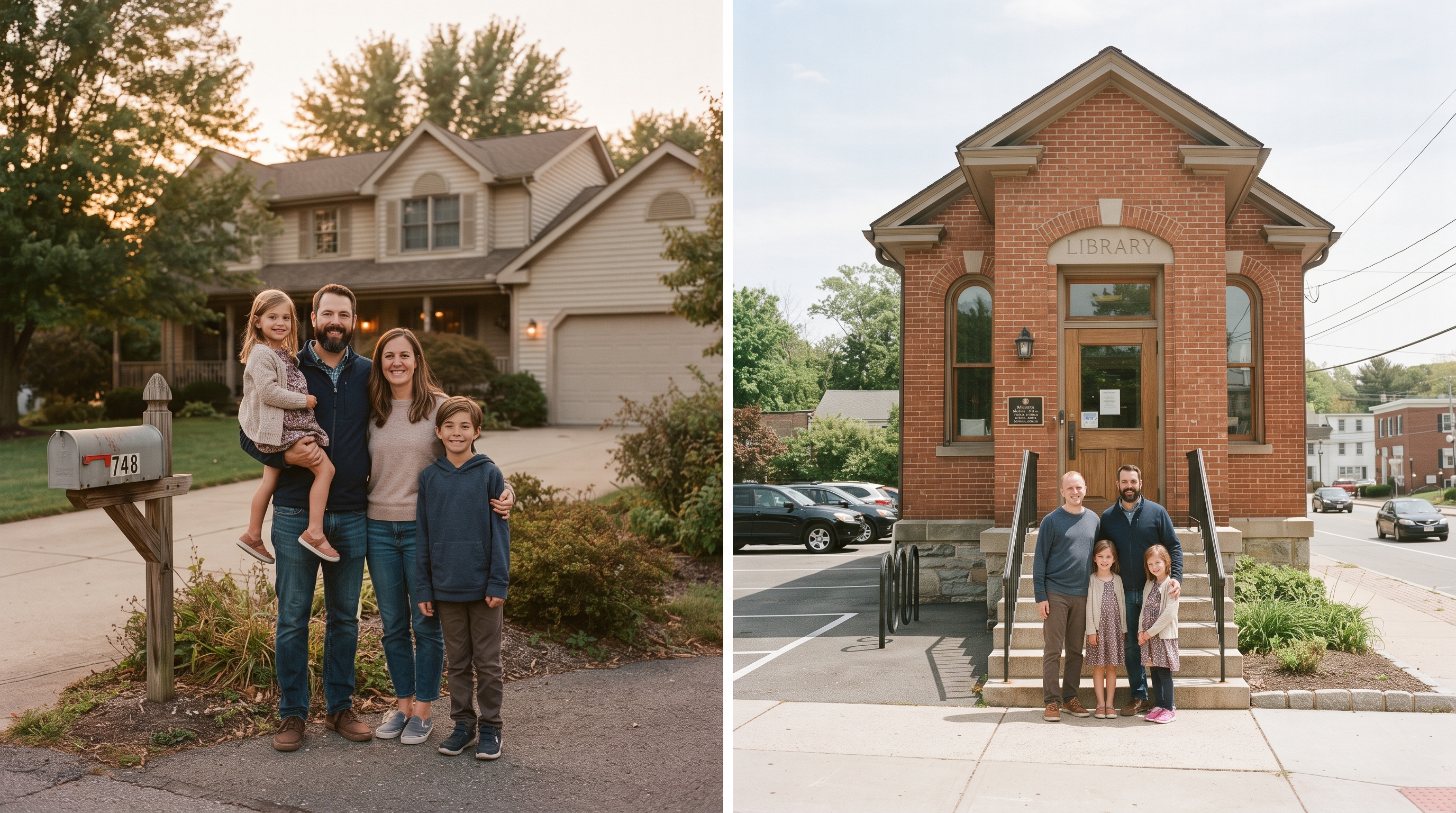
Write both down. Say them out loud at dinner more than once. A meeting place that lives only in your head isn't a meeting place your kids can use.
Choose an Out-of-Town Contact
During a real regional emergency, local phone lines and cell towers get overloaded fast. Ironically, it's often easier to make a call across the country than across town.
That's why every family plan needs one out-of-town contact. Someone in a different area code, ideally a different region entirely, who each family member can call or text if they get separated. Everyone checks in with that one person, and that person becomes the hub who knows where everybody is.
Pick someone reliable, tell them they're the contact, and make sure every family member, kids included, has that number written down somewhere that isn't just their phone. Phones die. Paper doesn't.
Text messages also tend to get through when calls won't. A text uses far less bandwidth than a voice call, so during an overloaded network event, a short text to your out-of-town contact, "we're okay, headed to the library meeting spot," often lands when a phone call fails five times in a row. Make texting the default first move, not the backup plan.

Write Down What's Hard to Remember Under Stress
There's a specific category of information that people blank on precisely when it matters most: medical details. Allergies, medications and dosages, blood type, insurance policy numbers, your kids' school addresses, your pediatrician's phone number.
None of this is complicated to write down. All of it is easy to forget when you're standing in a parking lot after an evacuation, trying to remember which of your kids is allergic to what.
Put this on a single card or a note in each person's wallet or backpack, and keep a duplicate at home in an easy-to-grab spot near your go-bag. If someone else ends up caring for your child during an emergency, whether that's a neighbor, a teacher, or a first responder, this card does the talking when your kid can't.
Assign Jobs, Not Just Instructions
A plan that says "everyone grab your things and meet outside" sounds fine until three people go for the same task and nobody grabs the dog.
Give each family member, including kids old enough to carry something, a specific job. One person grabs the go-bags. One person gets the pets. One person is responsible for the youngest child, full stop, no matter what else is happening. If you have an elderly parent or a family member with a disability living with you, name who is responsible for them specifically, and have a backup in case that person isn't home when it happens.
Jobs remove the moment of "wait, who's doing this?" That moment costs time you don't have.
Write the jobs down where they'll actually be seen, a notecard on the fridge works fine, and revisit them once a year as kids get older and more capable. The eight-year-old who could barely carry their own backpack last year might be ready to handle the family dog's leash and food this year. Plans that stay static while kids grow up stop matching reality within a couple of years.
Run One Practice Drill a Year
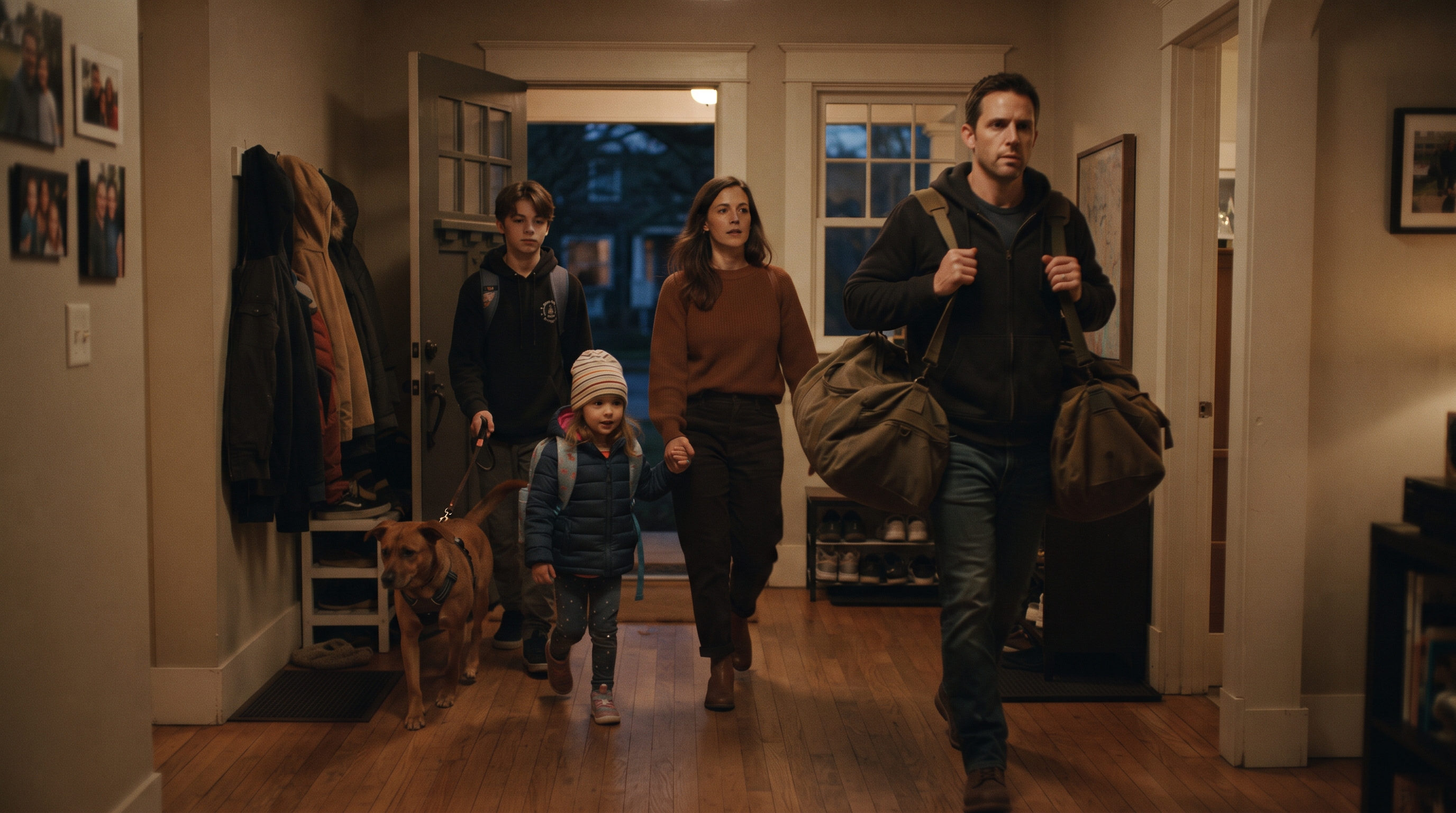
This is the step nearly everyone skips, and it's the one that matters most. A plan you've never practiced is a plan you're guessing about.
Once a year, run it for real. Have everyone walk to the close meeting place. Have your kids practice texting or calling the out-of-town contact. Time how long it actually takes to grab the go-bags and get out the door. You'll find gaps: a meeting place that's actually further than anyone remembered, a go-bag buried behind holiday decorations, a kid who doesn't actually remember your out-of-town aunt's number.
Fix what the drill exposes. Then run it again next year. Fifteen minutes, once a year, is what separates a plan on paper from a plan your family can actually execute.
Having the plan is step one. Having the gear to back it up, a stocked go-bag, a car kit, first aid supplies your family actually knows how to use, is what makes the plan possible to carry out when it counts. Our guide to what belongs in a car emergency kit is a good next stop if that part of your setup isn't there yet. It's also worth knowing how to perform hands-only CPR and understanding why the first 60 minutes after an injury matter most. Both are skills a practiced family plan should assume someone in the house has.
A plan gets your family to the right place. The right gear is what gets you through what happens next. See 1st Hour's trauma-ready kits at 1sthour.com and make sure the supplies match the plan.
This content is for informational purposes only and does not constitute medical, legal, or emergency management advice. In an active emergency, follow the guidance of local authorities and emergency services.


