72 Hour Emergency Kit Checklist: What to Pack and Store
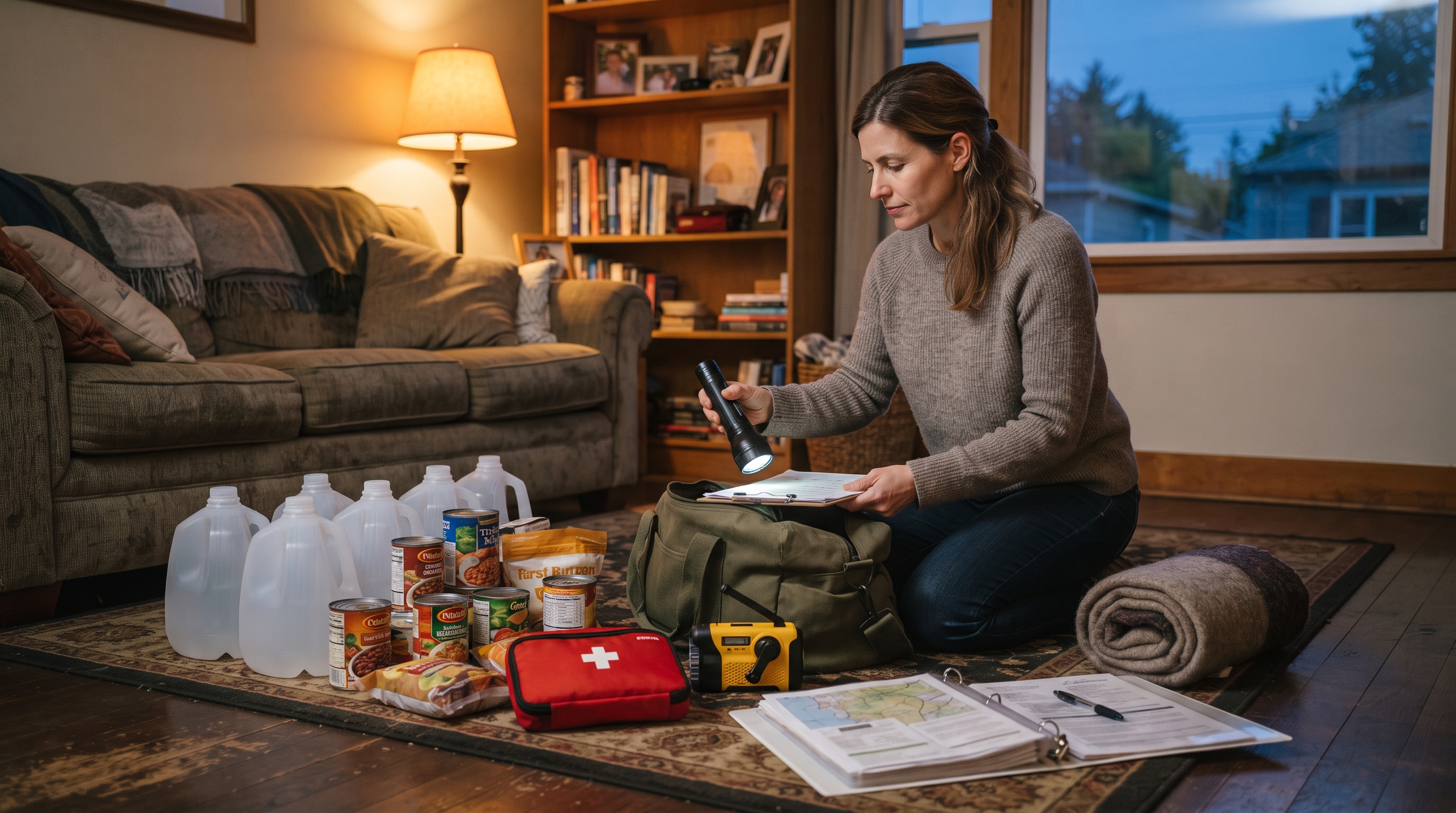
Help can take longer than you expect. After a big storm, a quake, or a widespread outage, roads close and stores empty out fast, and emergency crews work through the worst calls first. Three days is the planning window most agencies use for a reason. This 72 hour emergency kit checklist covers what to pack, how much, and where to keep it so you can reach it in the first hour.
72 Hour Emergency Kit Checklist: Water and Food
Start here, because everything else is easier with water and a full stomach.
Water. Ready.gov recommends one gallon per person per day, for drinking and sanitation. For three people over three days, that is nine gallons. Add extra for children, nursing mothers, sick family members, and hot weather. Sealed commercial bottles keep well in a cool, dark spot. If you ever need to treat tap or storm water, our guide on how to purify water in an emergency walks through boiling, filters, and bleach.
Food. Pick ready-to-eat items that need no refrigeration and little or no cooking: canned meat and beans, peanut butter, crackers, dried fruit, granola bars, and shelf-stable milk. Choose foods your family will actually eat. A kit full of items nobody likes is a kit nobody wants to open.
Add a manual can opener, paper plates, and plastic utensils. Pack pet food and extra water if you have animals, and formula, diapers, and wipes if you have an infant.
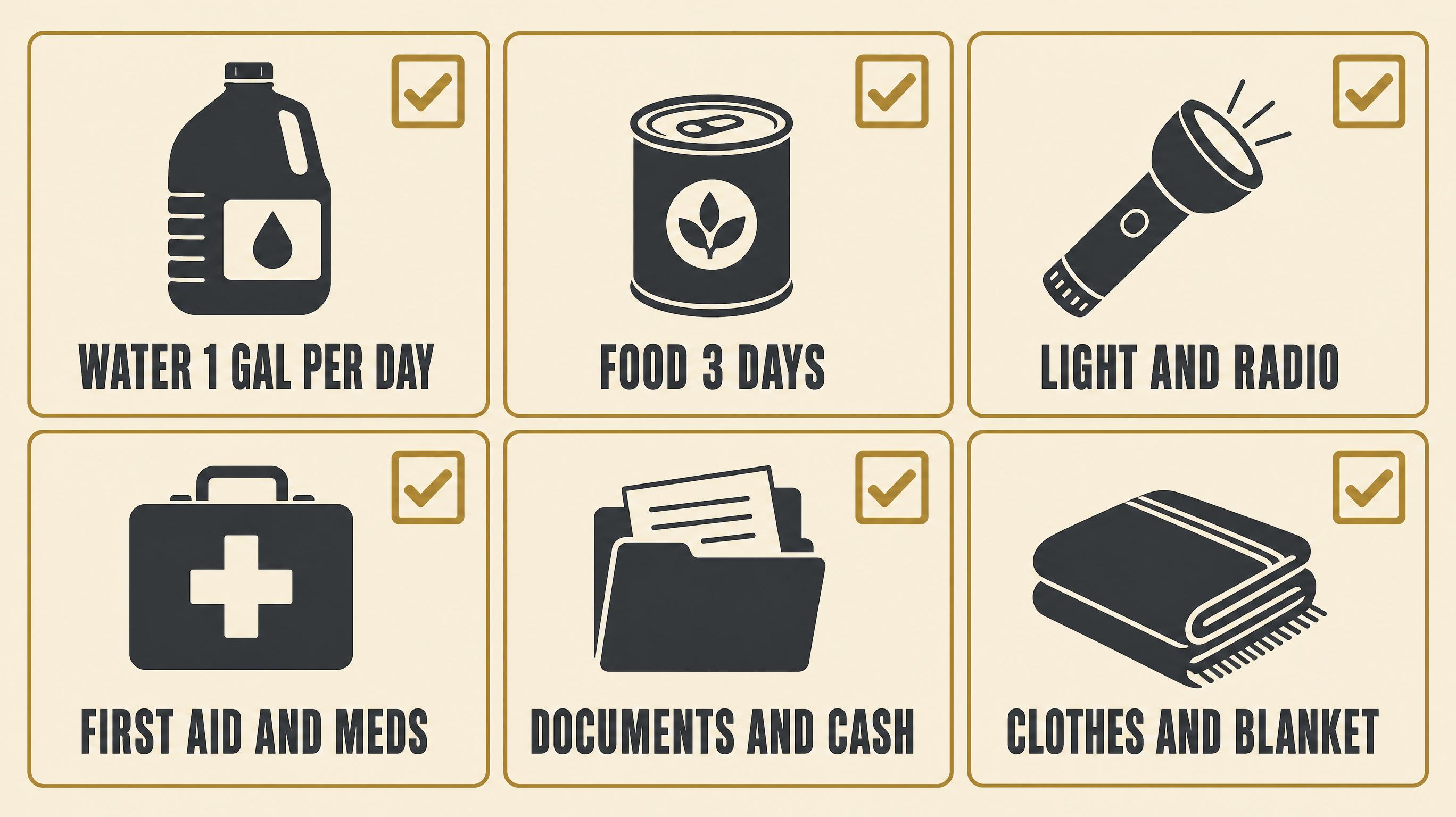
The American Red Cross draws a useful line here. It suggests a 3-day supply of water and food if you may need to evacuate, and a 2-week supply if you plan to stay home. Treat the 72 hour kit as your starting point and build up from there when space allows.
72 Hour Emergency Kit Checklist: Light, Power, and Communication
When the grid goes down, information and light matter almost as much as water. Our power outage emergency plan covers the first hour at home, and this part of the kit supports it.
Pack these:
- A flashlight for each adult, plus spare batteries
- A battery-powered or hand-crank radio, ideally with NOAA Weather Radio and tone alert
- A phone charger and a charged backup battery
- A whistle to signal for help
- A written list of family and emergency phone numbers
Phones die, and cell networks jam during disasters. Keep the paper list in the kit anyway. A headlamp frees both hands, which helps when you are packing, cooking, or treating an injury in the dark.
Add a multi-purpose tool, or a wrench or pliers to shut off utilities. Local paper maps are easy to forget, and they work when GPS does not.
First Aid, Medications, and Sanitation
A kit for the first hour of an emergency needs real first aid supplies. Ready.gov lists a first aid kit as a basic item, and we cover the contents in our home first aid kit checklist. At a minimum, make sure yours has bandages, gauze, tape, gloves, and something to control serious bleeding.
Medications need their own plan. The Red Cross recommends a 7-day supply of prescription medicines and medical items. Add pain relievers, anti-diarrhea medicine, and antacids if your family uses them. Pack spare glasses or contact lens solution, and hearing aid batteries if someone needs them. Rotate prescriptions as refills arrive so the stock does not expire.
For sanitation, pack moist towelettes, hand sanitizer, soap, garbage bags, and plastic ties. Include a dust mask and any personal hygiene items your household uses.
Documents, Cash, and Clothing
This is the section people skip, and it is the one they regret skipping.
Keep copies of insurance policies, photo ID, bank records, medication lists, and proof of address. Ready.gov suggests saving them electronically or sealing them in a waterproof container. Store a copy on a USB drive and keep one paper set in the kit.
Cash helps when card readers and ATMs go down. Small bills are best, since a store may not be able to make change.
For clothing, pack a full change of climate-appropriate clothes, sturdy shoes, and a warm blanket or sleeping bag for each person. An emergency blanket adds warmth for very little weight.
Where to Store Your Kit
Pack your supplies in airtight plastic bags, then put everything in one or two containers you can carry, like a duffel bag or a plastic bin. Ready.gov says to keep canned food in a cool, dry place and boxed food in tightly closed plastic or metal containers.
Location matters as much as contents. A perfect kit in the back of a crowded attic does no good when you have ten minutes to leave. Pick a spot near an exit, tell everyone in the house where it is, and keep it out of anywhere that floods or overheats.
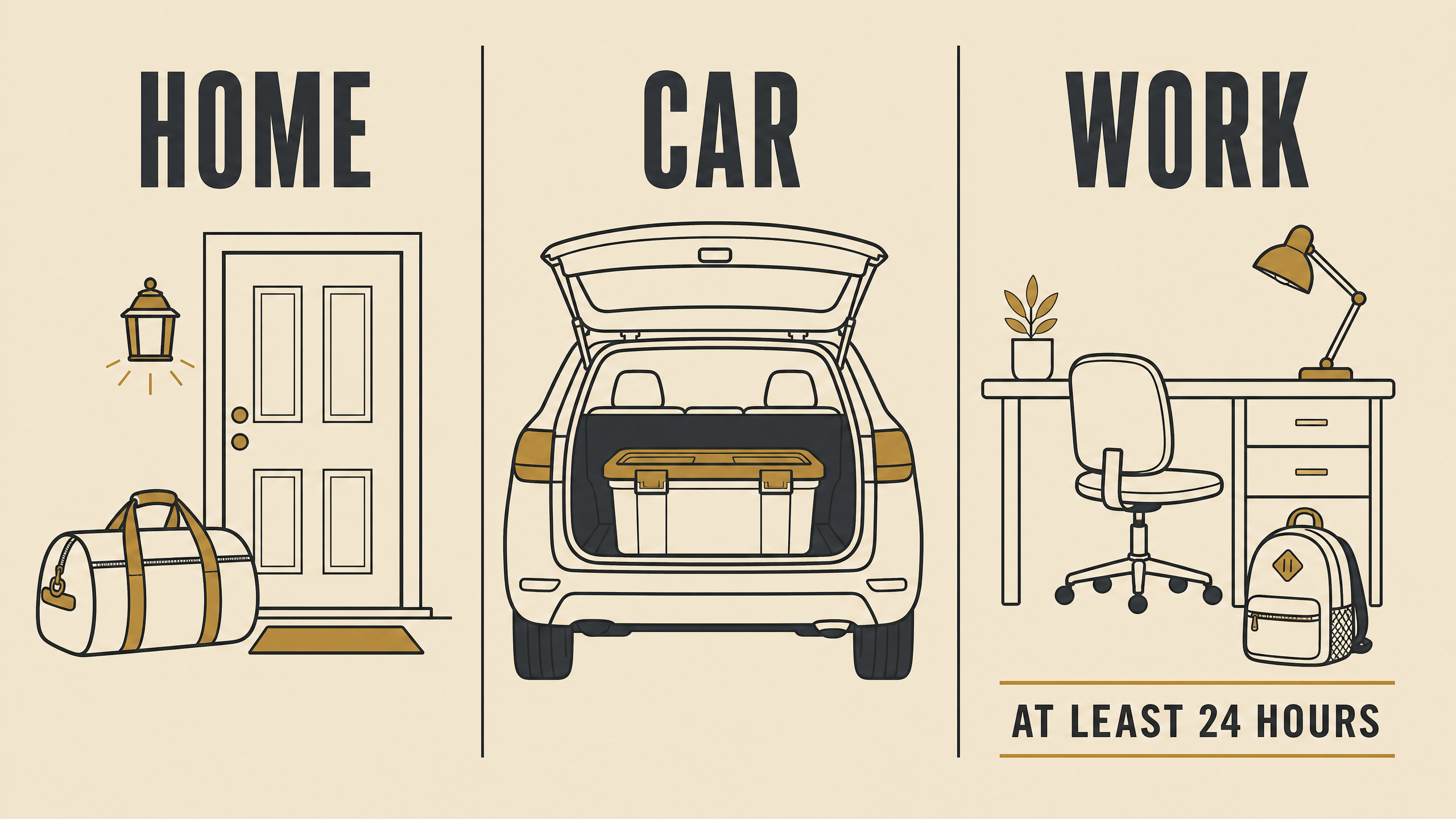
Ready.gov recommends separate kits at home, at work, and in your car. A work kit should cover at least 24 hours and sit in a grab-and-go bag with comfortable walking shoes. For the car, see our list of car emergency kit essentials.
If you live in a hurricane zone, the hurricane prep checklist shows how this kit fits into a last-minute plan.
Keep Your Kit Current
A kit goes stale. Food expires, batteries leak, and a toddler becomes a school kid with different needs.
Ready.gov says to replace expired items and to rethink your needs every year. Pick a date you will remember, such as the day clocks change, and run through the kit then.
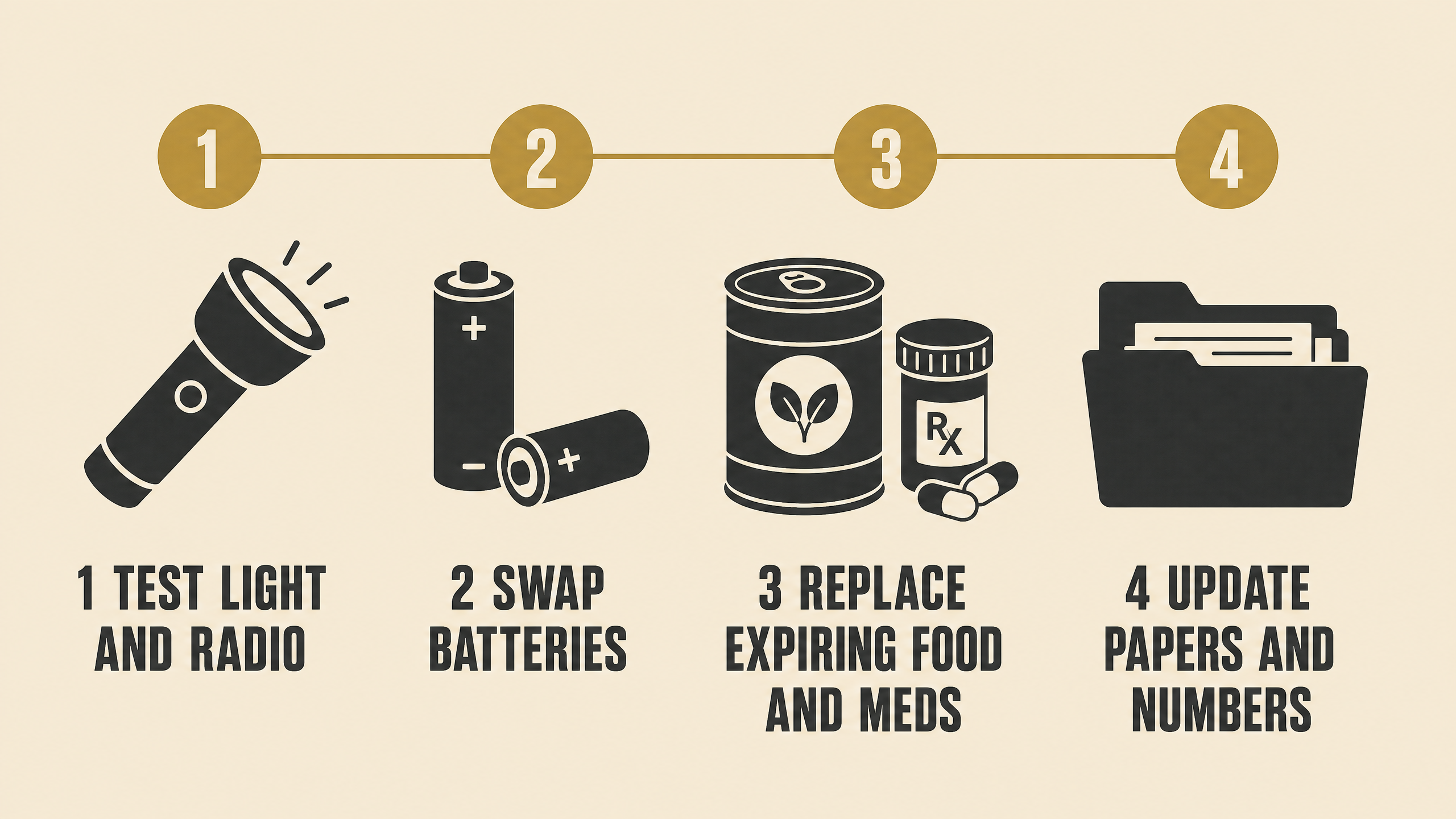
On that day, test each flashlight and the radio, and replace the batteries. Swap out food and medicine that will expire within the year, and use the old food at dinner. Refresh the water if it is not commercially bottled, since Ready.gov says to replace it every six months. Update phone numbers and document copies, and check that clothes still fit.
Then walk your household through the plan. A kit only helps if people know it exists, and our guide to building a family emergency plan covers meeting spots, contacts, and who grabs what.
Supplies get you through the first three days. The first hour is where bleeding control and quick action matter most, so keep trauma care in the kit. See what's inside The 1stHour Trauma Kit, built for the moments before help arrives.
This content is for informational purposes only and does not constitute medical advice. In an emergency, call 911.


