How to Purify Water in an Emergency: 4 Methods That Work
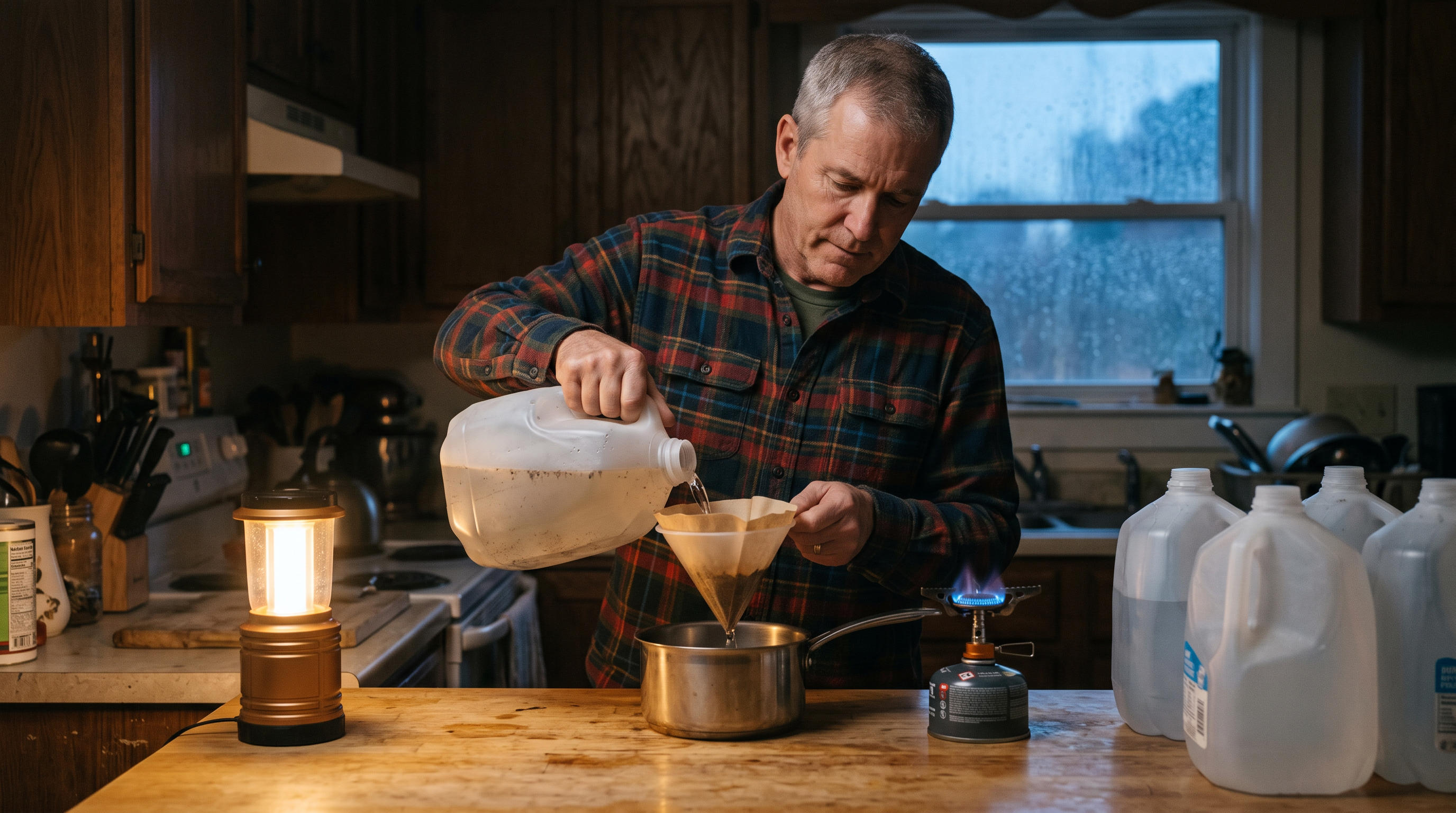
The tap runs brown after a storm, or the utility sends a boil advisory, or you are a day from the trailhead with an empty bottle. Knowing how to purify water in an emergency turns a scary situation into a chore. This guide covers boiling, filters, tablets, and bleach, plus the things none of them can fix.
How to Purify Water in an Emergency: Clear Cloudy Water First
Every method works better on clear water. Dirt and floating bits shield germs from heat and chemicals, so start by getting the clutter out.
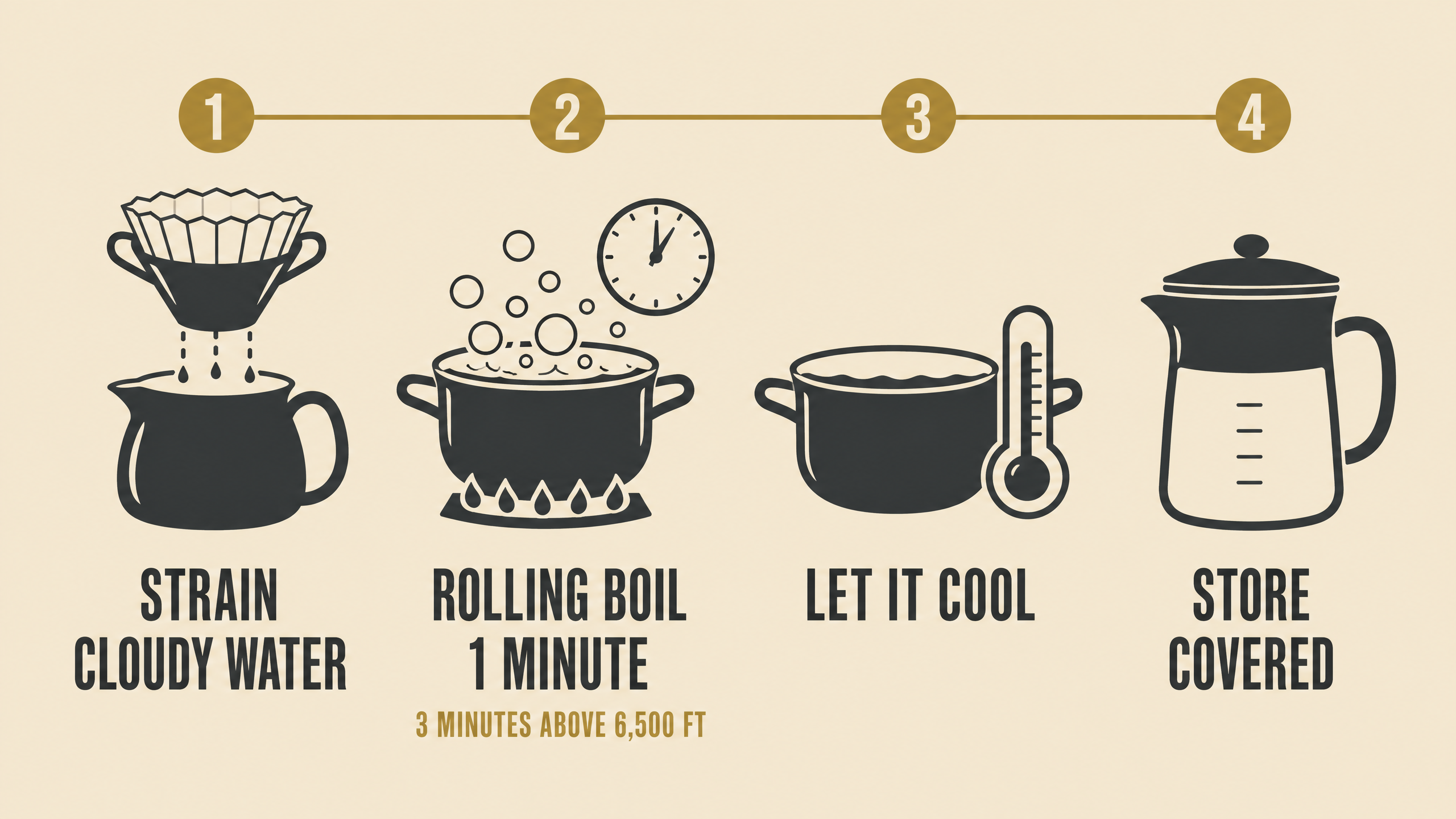
Let cloudy water sit until the silt settles, then pour the clear top portion into a clean container. Or run it through a clean cloth, a paper towel, or a coffee filter. The EPA's emergency disinfection guidance says disinfection works less well in cloudy or colored water, so this step matters.
Straining does not make water safe. It only prepares it. Germs pass right through a coffee filter, so you still need one of the methods below.
How to Purify Water in an Emergency by Boiling
Boiling is the method to pick when you have a heat source and a pot. It kills viruses, bacteria, and parasites, which is more than any other option on this list.
Bring the water to a rolling boil, with big bubbles breaking the surface, and hold it for 1 minute. The CDC says to boil for 3 minutes above 6,500 feet. The EPA draws that line at 5,000 feet. If you are anywhere near the mountains and unsure, take the extra two minutes.
Then let the water cool by itself. Do not add ice from an unknown source. Pour it into a clean container with a tight lid. If it tastes flat, pour it back and forth between two containers a few times, or stir in a pinch of salt per quart.
A camp stove, a grill, a fireplace, or a gas burner all work. If the power is out, our power outage emergency plan covers backup cooking and lighting.
Filters, Tablets, and Bleach: What Each One Does
When you cannot boil, you have three more options. They are not equal, and the differences matter.
Portable filters. The CDC says a filter needs an absolute pore size of 1 micron or smaller to remove parasites like Giardia and Cryptosporidium. For bacteria, the pore size must be 0.3 micron or smaller. Filters do not remove viruses, so add a chemical disinfectant afterward.
Tablets and drops. Follow the label, because every product is made for a specific volume of water. Chlorine dioxide tablets kill Cryptosporidium when used correctly. Iodine and chlorine tablets do not. The CDC also says to avoid iodine if you are pregnant, have thyroid problems, or are sensitive to iodine, and that no one should drink iodine-treated water for more than a few weeks.
Household bleach. Use plain, unscented bleach that lists disinfection on the label, with no color-safe formula and no added cleaners. The EPA table calls for 8 drops per gallon of 6 percent bleach, or 6 drops per gallon of 8.25 percent bleach. That is 2 drops per quart or liter in either case. Double the dose if the water is cloudy, colored, or very cold. Stir, then wait 30 minutes.
After 30 minutes, the water should smell faintly of chlorine. If it does not, repeat the dose and wait another 15 minutes. If the taste is too strong, pour it between clean containers and let it stand a few hours.
Sunlight and UV. The CDC describes a slow backup: fill clear plastic bottles, lay them on their sides in direct sun for 6 hours on a sunny day or 2 days when it is cloudy. Water has to be clear going in, so strain it first. UV pens and lamps work the same way and only on clear water.
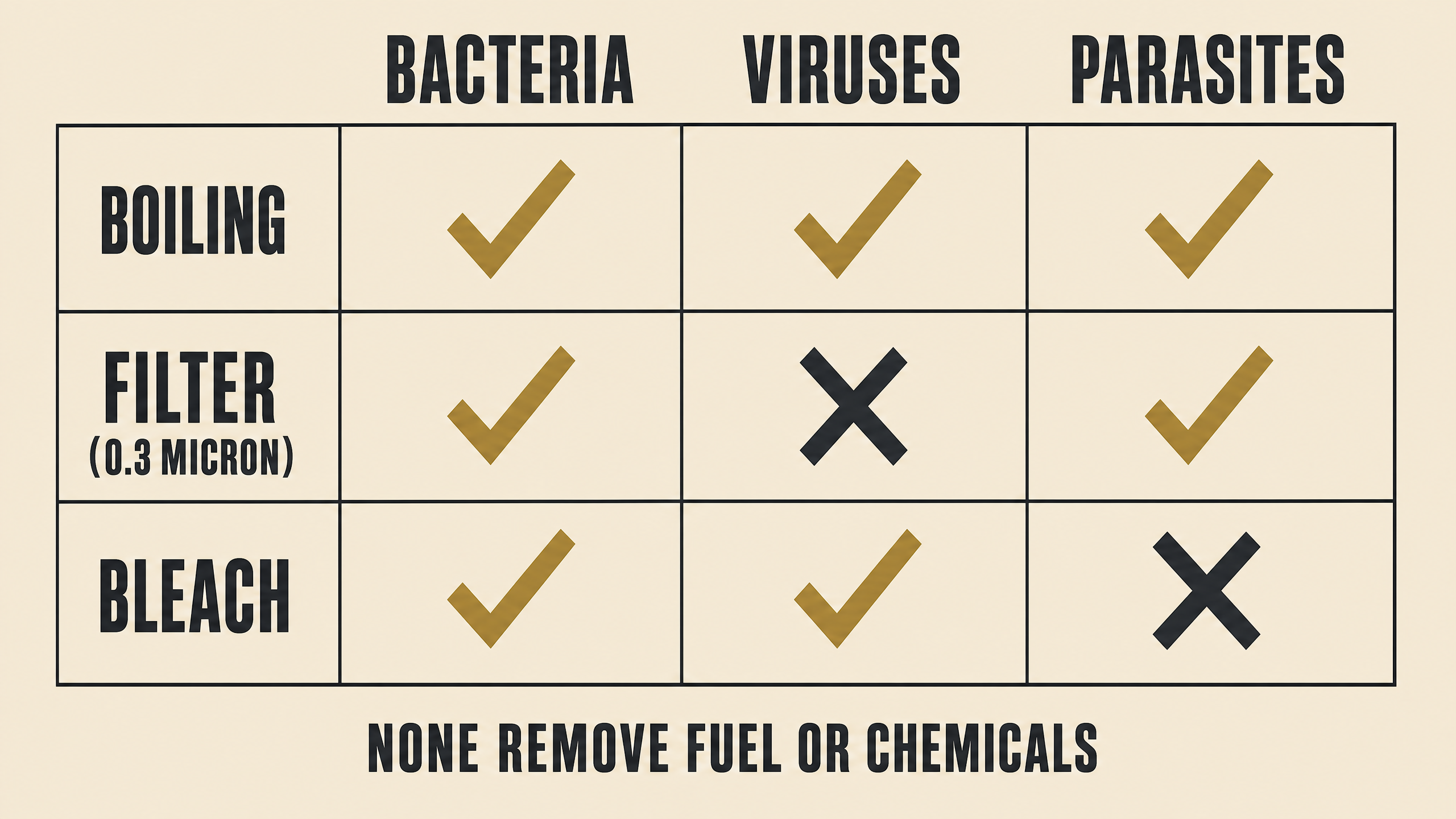
Chemical disinfectants kill most viruses and bacteria but may miss parasites. That is the main reason boiling comes first on the list.
A simple way to choose: boil if you have fuel and a pot. Filter and then treat if you are moving and carrying light. Use bleach at home when the stove is not an option, since a bottle of it costs little and lasts a long time.
What Purifying Water Will Not Remove
Boiling and disinfecting deal with germs. They do nothing about chemicals.
The CDC is clear on this. If water may be contaminated with fuel, toxic chemicals, or radioactive material, boiling and treating cannot make it safe. Use bottled water or another source, and call your health department. Boiling can even concentrate some chemicals as the water cooks off.
This comes up after floods. Floodwater often carries sewage, fuel, and farm runoff, and our guide on what to do during a flash flood explains why you stay out of it in the first place. Never drink water from a radiator, a boiler, or a home heating system either.
A boil water advisory from your utility works the same way. Treat the water you use for drinking, making ice, brushing teeth, and rinsing food. Wait for the utility to announce that the advisory is over before you go back to the tap, and run the cold taps for a minute or two first to clear the pipes.
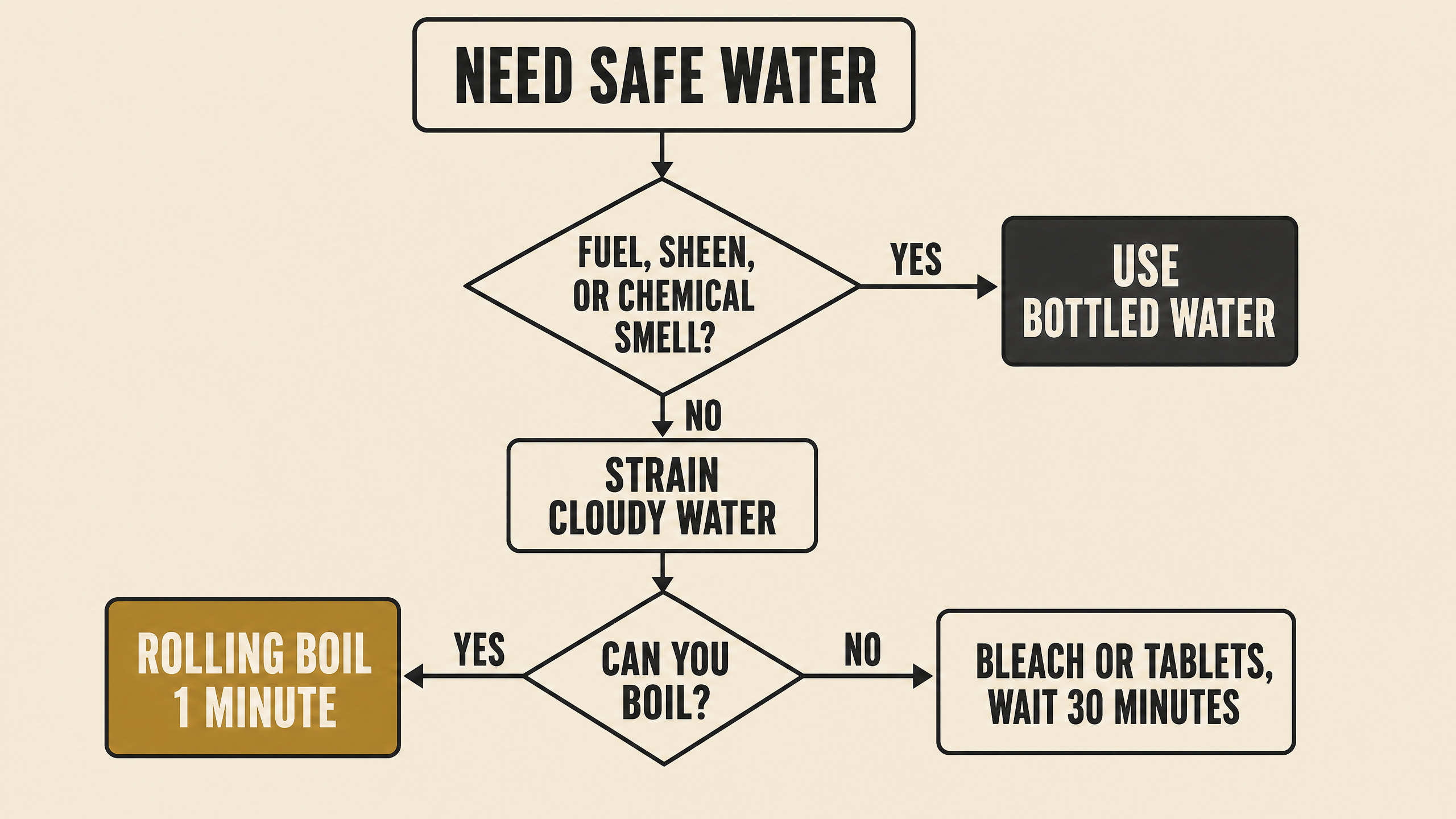
A short rule helps here. If the water smells like fuel, shows a sheen, or sat near a spill, do not treat it. Replace it.
How to Store Water After You Purify It
Treated water can pick up germs again if it goes into a dirty jug. Use clean, food-grade containers with tight covers.
To sanitize a container, wash it with dish soap, then rinse it with 1 teaspoon of unscented bleach in a quart of water, as Ready.gov advises. Label each one with the date.
Ready.gov recommends at least one gallon of water per person per day, for drinking and sanitation, and more for children, nursing mothers, sick people, or hot weather. It says water that is not commercially bottled should be replaced every six months. Sealed commercial bottles can sit in a cool, dark place.
Count your people and your pets, then multiply by the days you want to cover. Three days is a common starting point, and our hurricane prep checklist shows how that fits into a full kit. If you are on the trail and not at home, the lost in the wilderness survival plan covers where water fits in the first day.
Last, watch for dehydration while you wait on safe water. Dark urine, a dry mouth, and a pounding headache come first, and signs of dehydration in adults lists the rest.
Safe water is one piece of getting through the first hour with a clear head. Keep your bleach, a filter, and your supplies together, and keep trauma care within reach. See what's inside The 1stHour Trauma Kit, built for the moments before help arrives.
This content is for informational purposes only and does not constitute medical advice. In an emergency, call 911. For questions about your local water supply, contact your health department.


