Flash Flood Warning? Here's Exactly What to Do Next
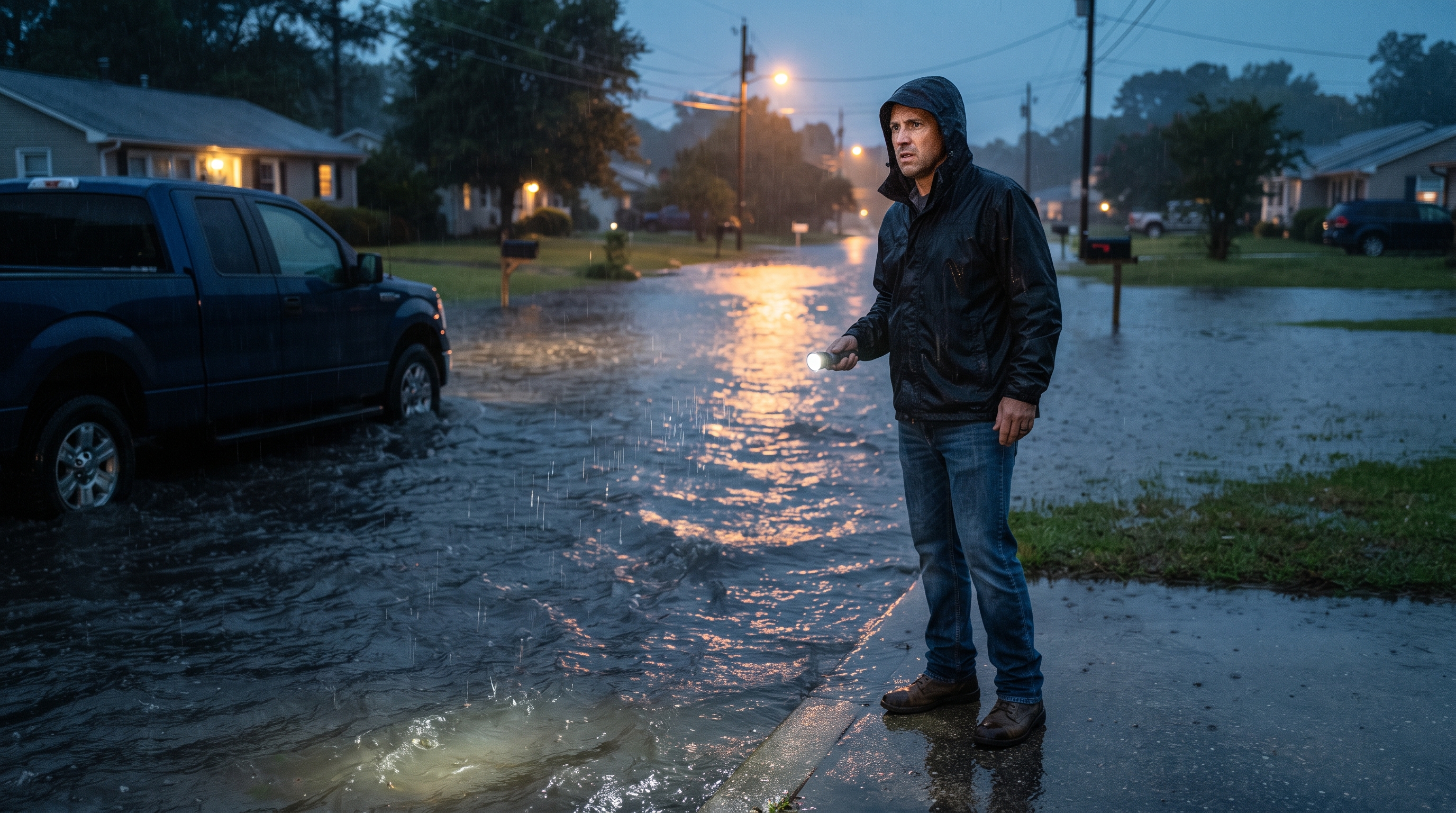
Your phone just buzzed. Flash flood warning, effective now, for your county. Maybe it's raining hard outside, maybe the sky looks fine and you're wondering if this is a mistake. It isn't. Flash floods build fast, sometimes in under an hour, and they kill more people in the U.S. most years than almost any other weather event. What you do in the next ten minutes matters more than anything you plan to do later. Here's how to think through it based on where you actually are right now.
Watch vs. Warning: Know Which One You're Looking At
A flash flood watch means conditions are favorable for flooding. Rain is falling or expected, and the ground can't absorb it fast enough, but nothing dangerous has happened yet. Treat a watch as your cue to get ready: charge your phone, know your evacuation route, and keep an eye on the sky.
A flash flood warning is different. It means flooding is happening or about to happen, and you may have only minutes to act. The National Weather Service doesn't issue warnings casually. If you get one, don't wait to see how bad it gets before you move.
The mistake we see most often is people treating a warning like a watch, sitting tight because "it's not that bad yet." Flash floods don't give you a second warning. The water that's a trickle across the road right now can be axle-deep in fifteen minutes.
The First Two Minutes After a Flash Flood Warning Hits
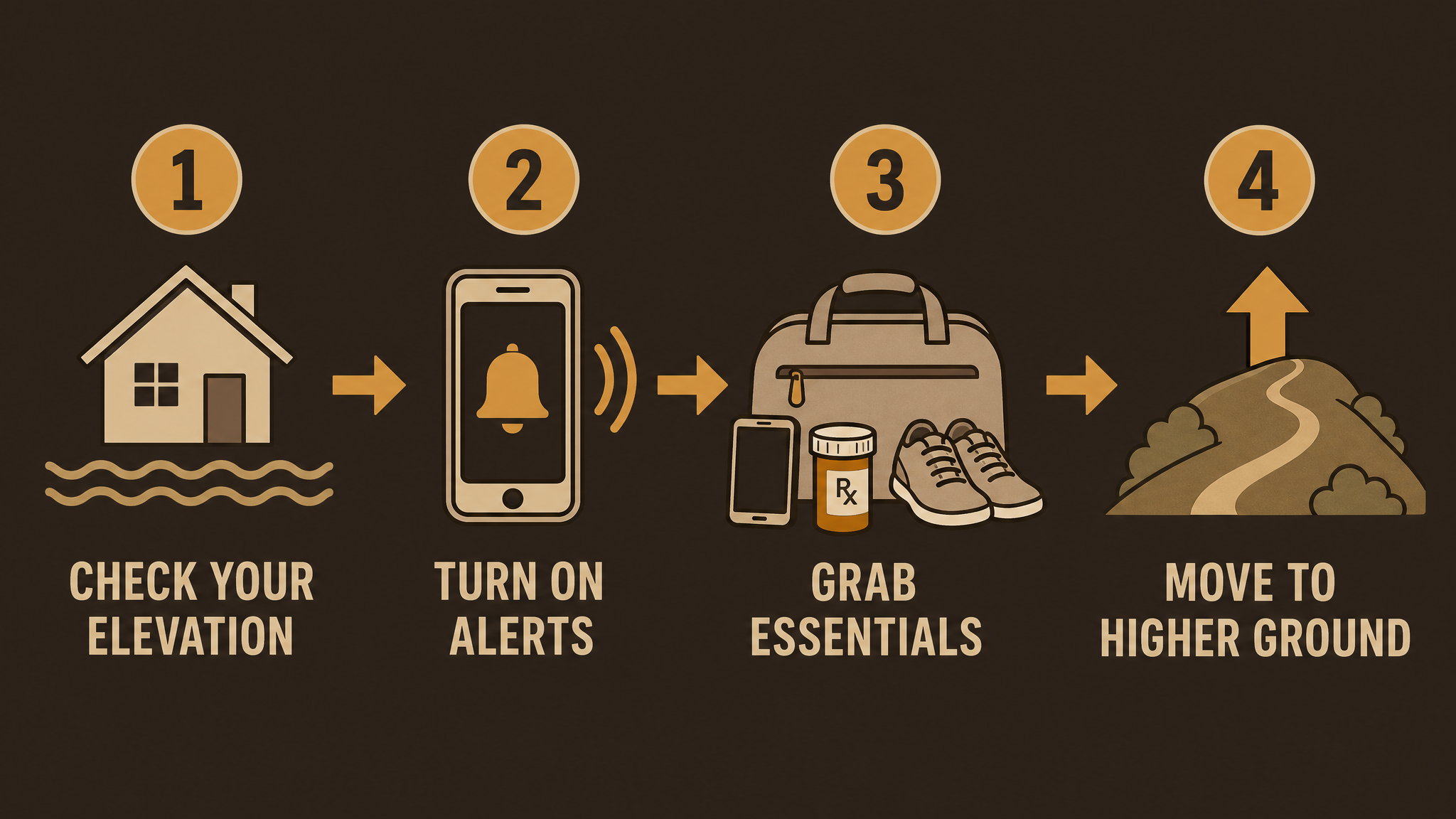
Before anything else, figure out your elevation relative to water. Are you near a creek, storm drain, low-lying street, or floodplain? If yes, start moving to higher ground now, on foot if driving isn't an option.
Next, get your alerts working for you instead of against you. Keep your phone on and charged. If your area has a NOAA Weather Radio, turn it on for updates that don't depend on cell service, which often goes down first in a flood.
Grab what you can carry in under a minute: phone, charger, medications, wallet, shoes you can move fast in. Don't spend ten minutes packing a bag while water is rising outside. If you have a car emergency kit already staged, that decision is already made for you, which is the whole point of building one before you need it.
If You're Still in the Car
This is where most flash flood deaths happen, and it's almost always avoidable. About half of all flood fatalities in the U.S. involve someone driving into water they thought their vehicle could handle.
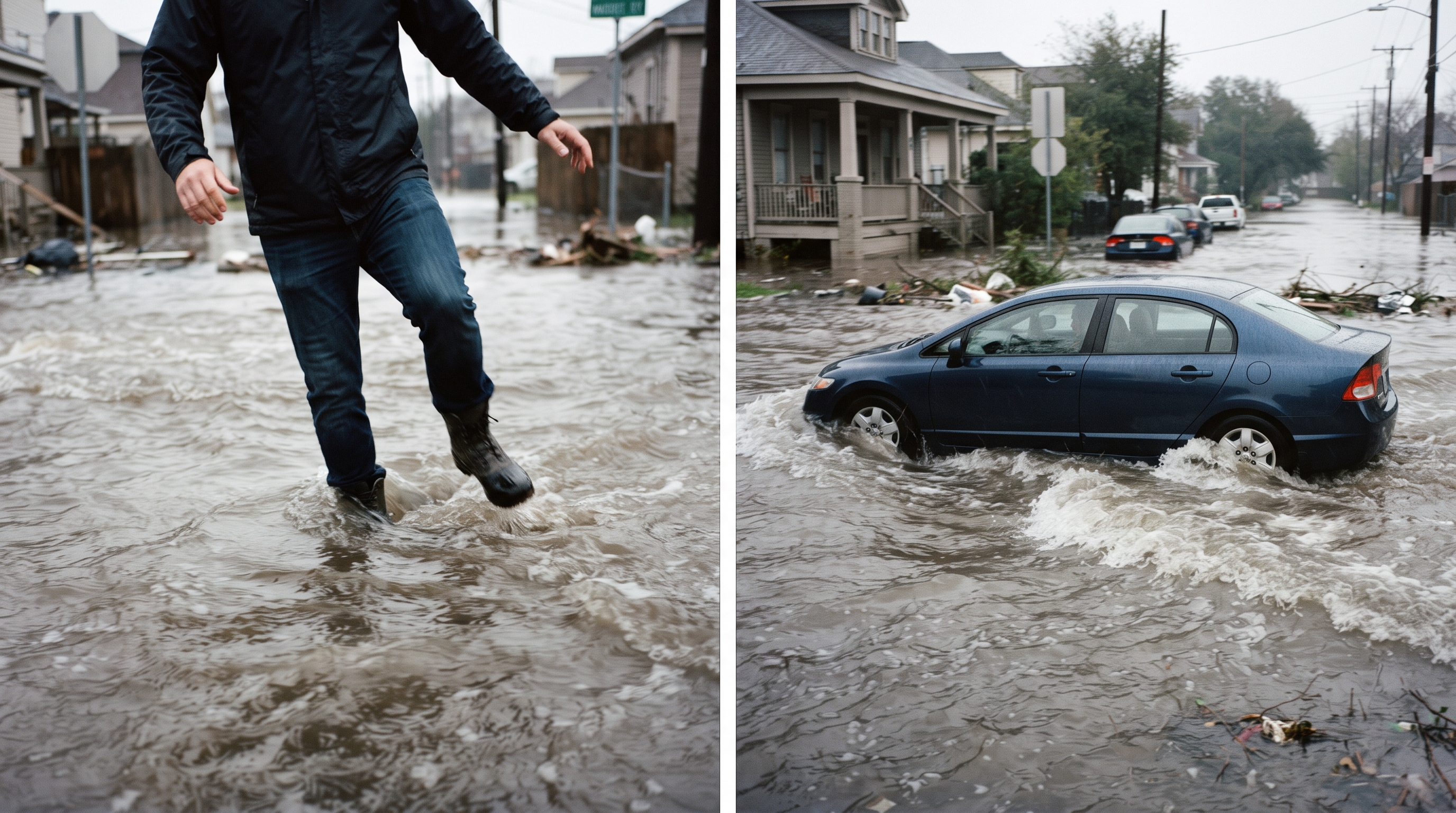
If you come up on a flooded road, don't cross it. You can't tell how deep moving water is from the driver's seat, and you can't tell if the road underneath is even still there. A foot of moving water can float most cars, and two feet can carry away an SUV or truck. Turn around and find another route, even if it means a long detour.
If you're already caught in rising water and the car has stalled, get out immediately if you safely can, and move to higher ground on foot. If the water is rising fast and you can't get a door open, move to the roof through a window and call for help from there. Staying inside a stalled car in rising water is one of the most dangerous places you can be.
If You're Trapped Inside a Building
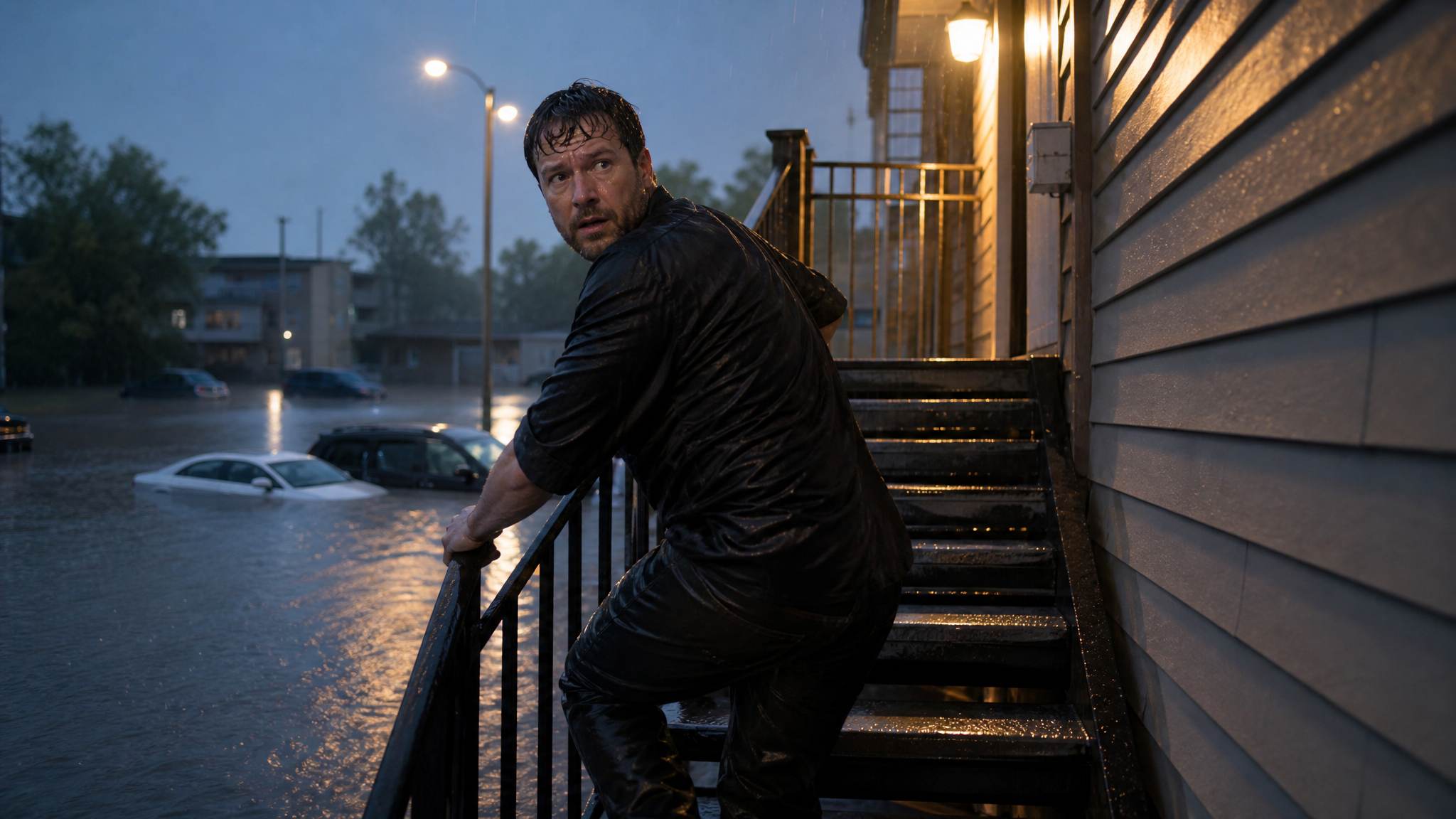
Water rising around a house or apartment building calls for vertical evacuation: move up, not out. Head to the highest floor available, and bring a phone, light source, and something to signal with.
Only go to the roof as a last resort, when water inside the structure is still rising and there's no higher floor left. Once you're on the roof, stay visible and call 911 or text if voice service is down, since texts sometimes get through when calls don't.
Don't go into a basement or crawl space to "check on things" once water has started entering a structure. Basements can flood from floor to ceiling in minutes, and there have been cases where people went down to move belongings and couldn't get back out.
If Water Is Already Rising Around You Outdoors
If you're caught outside, on foot, when flooding starts, get to the highest ground you can reach immediately, even if it's just a small rise or a sturdy structure. Avoid low points like underpasses, ditches, and storm culverts, which fill first and fastest.
Never try to walk through moving water more than ankle-deep. Six inches of fast water can knock an adult off their feet, and once you're down, the current does the rest. If you must cross standing water, use a stick to check depth ahead of each step, and never cross alone if you have another option.
Stay away from downed power lines near any standing water. Water conducts electricity, and a line that looks dead may not be.
After the Water Recedes
Don't go back into your home or neighborhood until local authorities say it's safe, even if the water outside looks like it's gone down. Floodwater is not clean water. It carries sewage, chemicals, and debris, and can hide sharp hazards or unstable ground under a muddy surface.
Check for structural damage before entering any building, and don't turn on electrical systems until they've been inspected if water reached outlets or the electrical panel. Mold can start growing within 24 to 48 hours in wet drywall and carpet, so drying out affected areas quickly matters for health, not just cleanup.
Building Your Flash Flood Plan Before the Next Warning
The people who move fastest and safest during a flash flood warning are usually the ones who already decided what they'd do before the alert ever came. That means knowing your evacuation route, keeping a car emergency kit within reach, and having a family emergency plan everyone in the house actually knows, not just one that's written down somewhere.
If flooding isn't your only concern where you live, it's worth looking at how the same "decide now, not later" approach applies to hurricane prep and earthquake readiness too. And if a flood ever leaves someone trapped in a vehicle, knowing what to do in that first hour applies whether the water rose slowly or all at once.
A flash flood warning gives you minutes, not hours, and the gear you reach for shouldn't require thought when the moment comes. The 1stHour Trauma Kit is built to stay in a car, a closet, or a go-bag so it's already where you need it, whether the emergency is a flood, a crash, or something else entirely. Preparedness isn't about predicting which disaster hits. It's about not having to think when one does.
This content is for informational purposes only and does not constitute medical advice. In a life-threatening emergency, call 911 immediately.


