Earthquake Survival: What to Do in the First 60 Seconds and the First Hour After
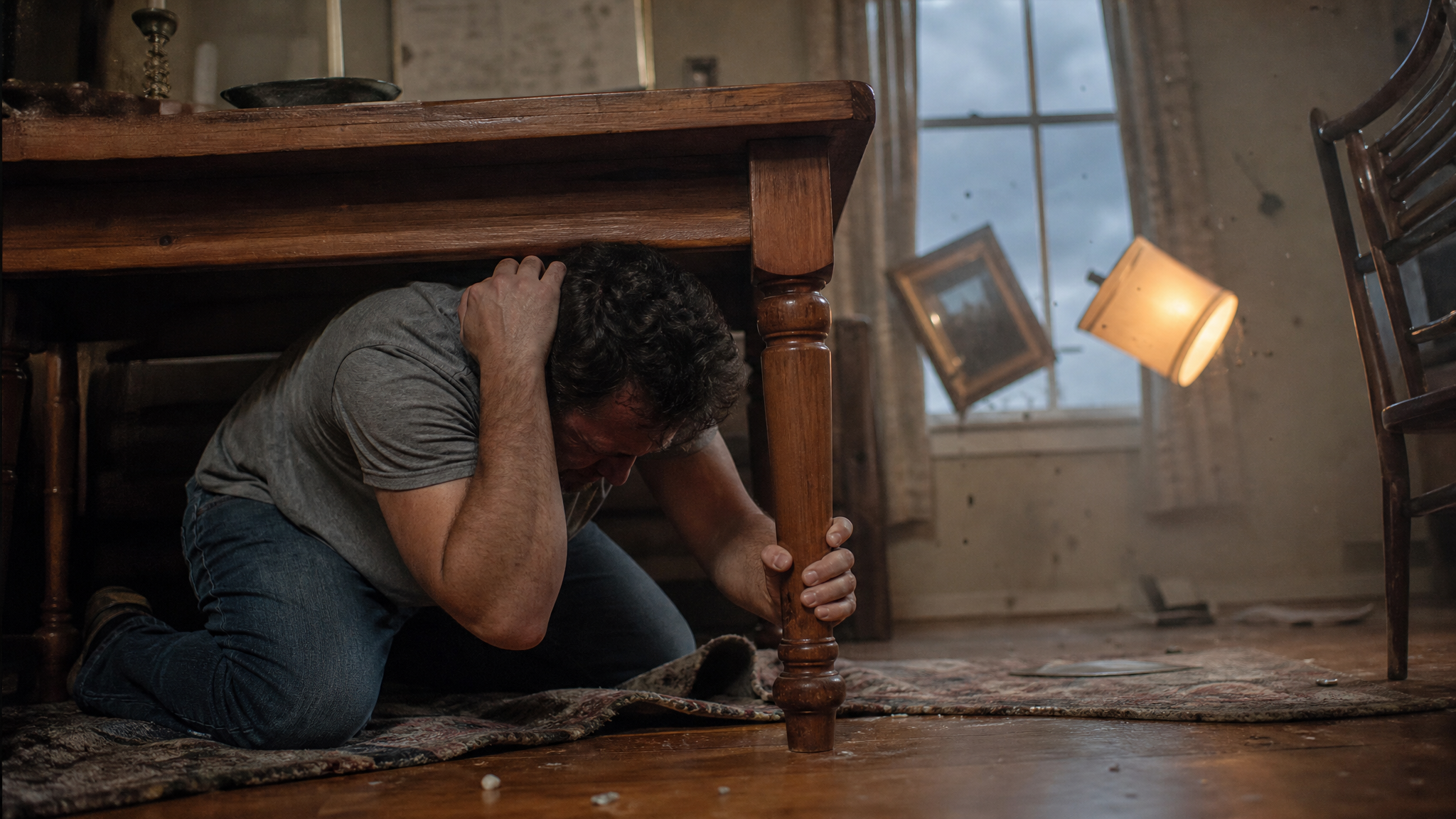
If you've ever felt a building sway and had no idea whether to run, hide, or freeze, you're not alone. Earthquakes give you almost no warning, and the instinct to bolt for a doorway or sprint outside is exactly the wrong move in most cases. This post breaks down what actually works in the first 60 seconds, what to do in the hour that follows, and why that second window is where most people get hurt.
What to Do When an Earthquake Starts: Drop, Cover, and Hold On
Forget the old advice about standing in a doorway. Modern doorframes aren't stronger than the rest of the house, and standing in one leaves you exposed to falling objects. The method emergency agencies actually recommend, from the USGS to the Red Cross, is Drop, Cover, and Hold On.
Drop to your hands and knees before the shaking knocks you down. Cover your head and neck with one arm, and get under a sturdy desk or table if one's within reach. Hold on to that shelter with your free hand so you move with it instead of getting left exposed when it shifts.
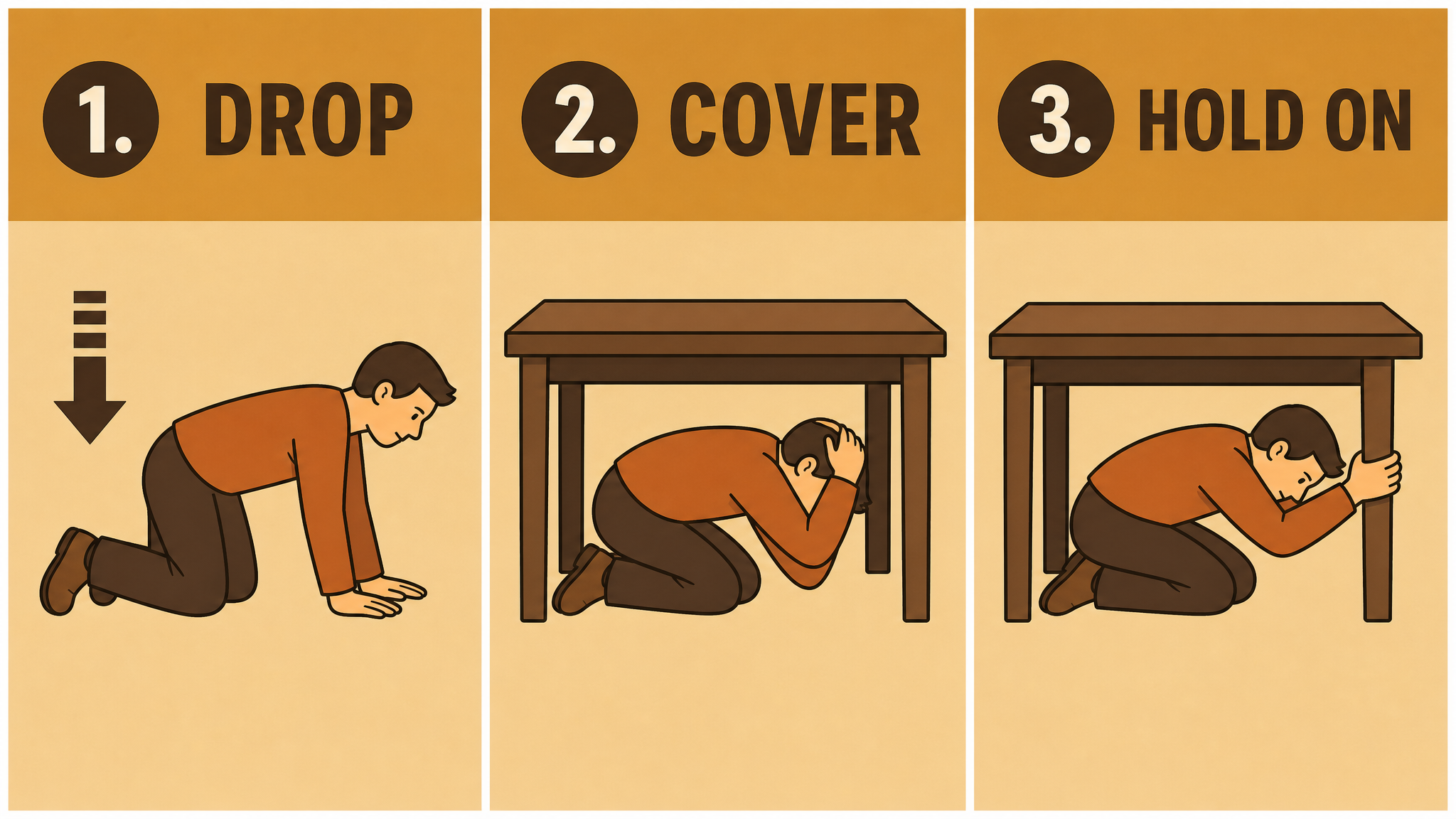
If you're indoors, stay indoors. Get under something solid or move against an interior wall, away from windows, mirrors, and anything tall enough to tip over. If you're outside, move to open ground, away from buildings, trees, and power lines, and stay there. If you're driving, pull over as soon as you safely can, away from overpasses and bridges, and stay in the car with your seatbelt on until the shaking stops.
The First 60 Seconds: Why Most Injuries Happen After the Shaking Stops
Here's the part that surprises people. The CDC's research points to falling objects and debris, not building collapse, as the leading cause of earthquake injuries. Bookshelves tip, glass shatters, cabinets fly open. The seconds right after the shaking stops are often more dangerous than the shaking itself, because people stand up too fast and walk straight into a mess they can't see clearly yet.
Stay where you are for a few extra seconds after you think it's over. Earthquakes sometimes have a second jolt right on the heels of the first, and standing up too early puts you back in the path of anything still falling or settling. When you do move, watch your footing. Broken glass, fallen shelving, and shifted furniture create a floor that looks nothing like it did an hour ago.
Checking for Injuries and Getting to Safety
Check yourself first. It sounds backwards if there are other people around you, but you're no use to anyone if you're bleeding out or can't stand. Once you've confirmed you're okay, check the people near you, starting with anyone who was closest to windows, shelving, or heavy furniture.
For anything beyond a scrape, the basics matter: apply direct pressure to cuts with a clean cloth, and don't move anyone with a suspected back or neck injury unless staying put is more dangerous than moving them. If someone's bleeding heavily, our guide on how to stop severe bleeding walks through the exact steps, and it's worth reading before you're standing in a room that just got shaken apart.
If your building shows visible damage, cracked walls, a leaning structure, doors that won't close right, get everyone out and stay out. Do not go back in to grab belongings. A building that survived the shaking can still fail afterward, and it's not worth testing.

What to Do After an Earthquake: Gas, Water, and Electrical Safety
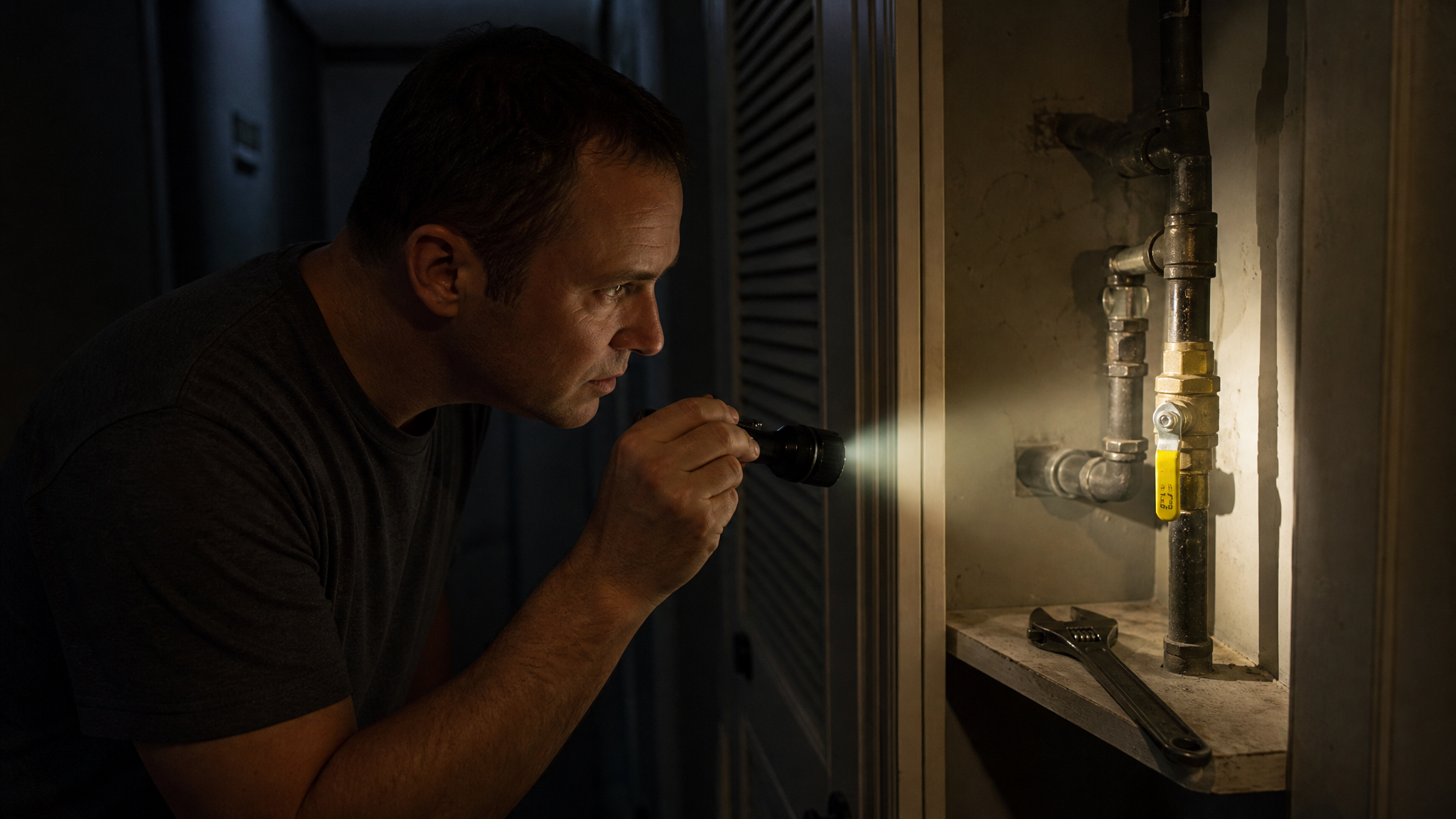
This is where the real risk shifts from falling objects to invisible ones. Broken gas lines are common after a moderate-to-strong earthquake, and they're the reason so much earthquake advice repeats the same warning: do not flip a light switch, strike a match, or use any appliance until you know there's no gas leak. A spark from a switch is enough to ignite gas that's already pooling in a room.
If you smell gas or hear a hissing sound near a gas line, don't investigate with a flame or a phone flashlight held close to the source. Leave the building, shut off the gas at the main valve from outside if you know how and it's safe to reach, and call your gas company or 911 once you're clear. Use a battery-powered flashlight to inspect anything indoors, and turn it on before you walk in the door, not after, since the switch itself can spark.
Check your water and electrical lines the same way. Broken water lines can flood a space fast, and downed power lines outside should be treated as live wires no matter how they look. Stay away from them entirely and report them instead of trying to move them yourself. If the quake knocks out power for an extended stretch, TacticalBox's power outage prep guide covers keeping food safe and running a generator safely until utilities are restored.
If you've already built out a plan for your household, this is exactly the scenario it should cover. Our family emergency plan guide walks through where to meet if you're separated and who your out-of-state contact should be, which matters more than people expect once cell towers get overloaded.
Aftershocks: What to Expect and How to Respond
Aftershocks aren't a rare afterthought, they're close to guaranteed. Smaller quakes can follow the main event for hours, days, or in some cases months, and while most are weaker than the initial shake, some can still cause additional damage to structures already weakened.
Treat every aftershock like the real thing. If you feel the ground move again, Drop, Cover, and Hold On immediately, even if it feels minor. Don't assume you're past the danger just because the first quake has passed. Keep your phone charged and your radio or a battery-powered device nearby so you can catch official updates, since aftershock warnings and structural inspection notices often come through those channels first.
Building Your Earthquake Emergency Kit
None of this works well if you're improvising in the dark. A basic kit staged somewhere accessible, not buried in a closet, makes the first hour faster and calmer for everyone in the house.
At minimum: a battery-powered or hand-crank flashlight and radio, water and shelf-stable food for at least three days, a whistle to signal for help if you're trapped, copies of important documents, and a way to shut off your gas if you don't already have a wrench dedicated to that valve. If you haven't put a full kit together yet, our home first aid kit checklist covers what belongs in it and what usually gets left out.
The first aid piece deserves its own attention. Earthquakes create real injuries, cuts from broken glass, wounds from falling debris, and a kit built for actual trauma matters more than a box of bandages. That's the gap The 1stHour Trauma Kit is built to close, and it's worth having staged in your home before the ground ever moves, not scrambled together while the power's out and the aftershocks are still coming.
If earthquakes aren't your only concern, our hurricane prep checklist covers the same first-hour thinking for storm season, and the overlap in what belongs in a kit is bigger than most people assume.
The first hour after an earthquake is chaotic enough without fumbling for supplies you should already have. The 1stHour Trauma Kit is built for the cuts, punctures, and injuries that actually happen when a building shakes apart, so you're ready before the ground moves. Check out The 1stHour Trauma Kit here.
This content is for informational purposes only and does not constitute medical advice. Always follow official guidance from local emergency management, the USGS, and utility providers after an earthquake.


