How to Help Someone Trapped in a Car After a Crash
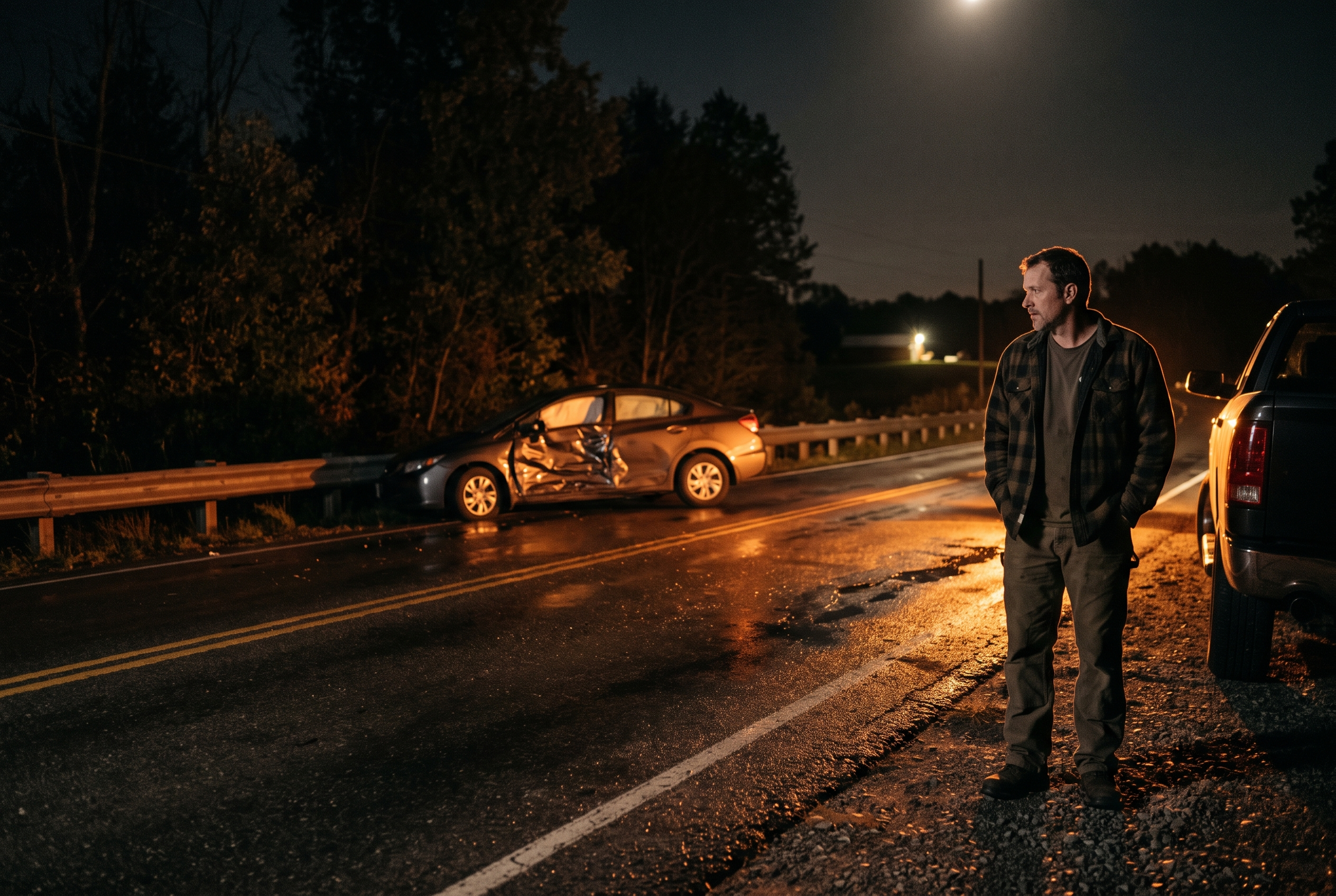
Most people have never had to help someone trapped in a crashed car. Then one day they're on the side of a road, hands shaking, watching someone slumped behind a deployed airbag — and they have no idea what to do. This guide covers exactly what to do when someone is trapped in a car after a crash, step by step, from the moment you pull over to the moment EMS takes over. It's not complicated. But you need to know it before it happens.
Assess the Scene Before You Approach
Before you run toward the vehicle, stop. Take five seconds.
Look for hazards: oncoming traffic, fuel leaking from the car, smoke, downed power lines, unstable terrain. A second crash — a bystander getting hit by a passing car — is one of the most common secondary tragedies at accident scenes. Don't add yourself to the casualty count.
If you're on a highway or fast road, turn on your hazard lights and, if possible, position your vehicle to block traffic. Use flares or warning triangles if you have them.
Check for fire. Look at the engine compartment, the fuel tank area, and any smoke. Vehicle fires occur in roughly 1 in 8 fatal crashes. If there's fire or the smell of fuel and a hot engine, the calculus on moving the victim changes — we'll cover that below.
Once you've confirmed it's safe to approach, move toward the vehicle.
Call 911 Immediately — Here's What to Tell Them
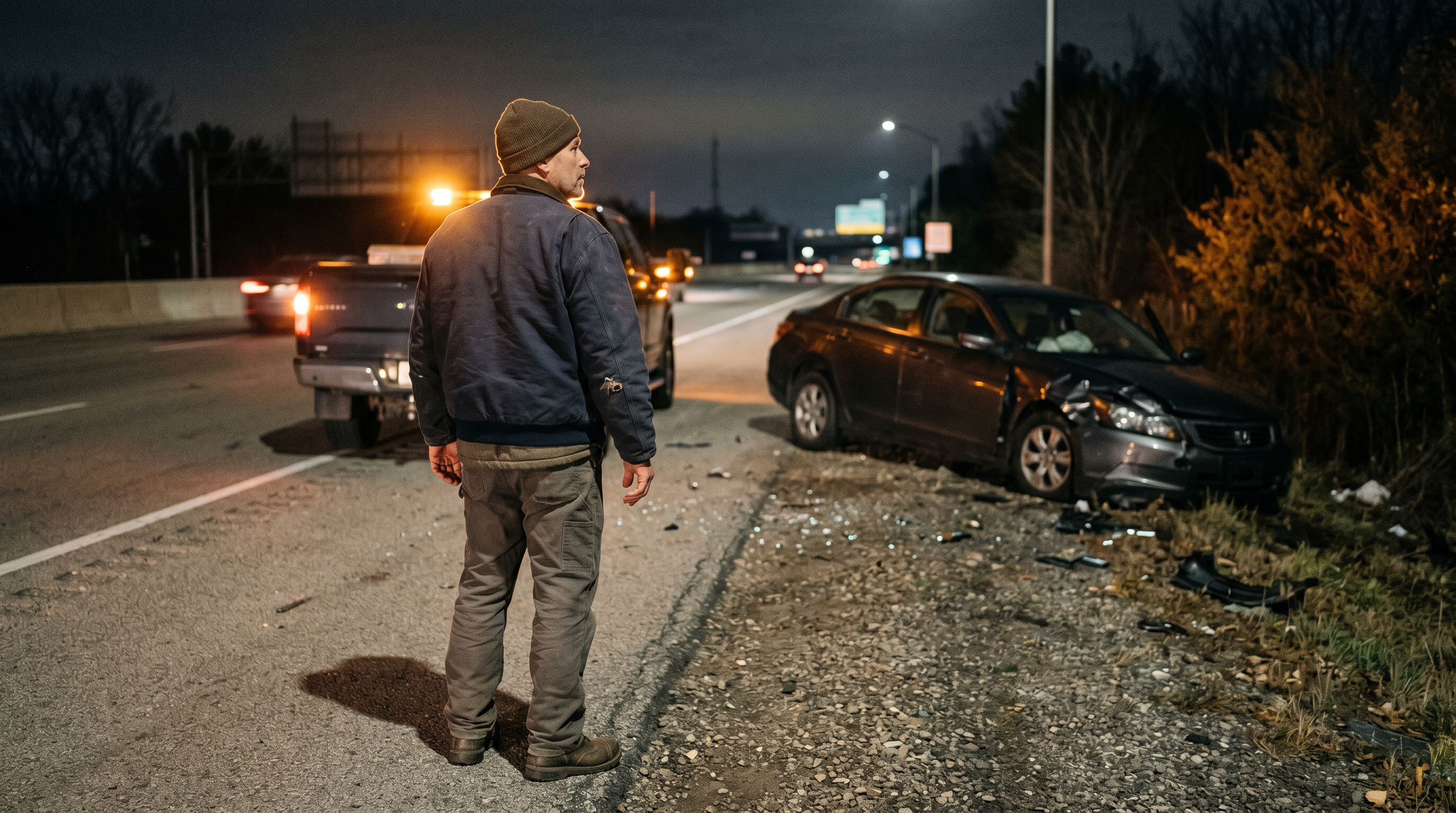
Make this call before you start providing first aid. If others are present, point at a specific person and say: "You — call 911 right now."
When you get through, give dispatch:
- Your exact location (highway, cross streets, mile markers, landmarks)
- How many vehicles were involved
- How many people are injured or trapped
- Whether there's fire, smoke, or fuel visible
- Whether anyone is unconscious or not breathing
Don't hang up until they tell you to. Dispatchers can walk you through what to do while you wait. They can also alert the fire department and rescue teams who carry hydraulic cutting tools for vehicle entrapment rescue.
In urban areas, average EMS response time is around 7 minutes. In rural areas, it can be 14 minutes or more. That's a long time. What you do during that window matters.
How to Stay With the Trapped Person Until Help Arrives
Talk to them. If they're conscious, keep them awake and calm. Let them know help is coming. Ask them simple questions: What's your name? Can you wiggle your fingers? Does anything hurt?
This does two things. It keeps them engaged and reduces panic — which matters because panic accelerates blood loss and shock. And it gives you information you can relay to paramedics when they arrive.
If they're conscious, tell them not to try to move. Even if they feel like they can. Especially if they're on adrenaline. Crash victims often feel fine for the first few minutes, then the pain hits hard.
Keep them warm if you can. Shock causes the body to lose heat. A jacket, a blanket, anything you have. Place it over them gently without disturbing their position.
If they're bleeding from an extremity and it's severe, you can apply direct pressure. Use a cloth, a piece of clothing, anything clean. Don't remove the object if something is impaled — stabilize it in place and leave it for EMS.
Should You Try to Move Someone Trapped in a Car?
This is the question that trips people up. The short answer: only if staying in the car will kill them faster than moving them might.
When Immediate Extraction Is Necessary
Move the person if:
- There is fire inside or directly under the vehicle and you cannot extinguish it
- The vehicle is in water and rising fast
- The person has no pulse and is not breathing and CPR cannot be performed in position
Outside of these situations, leave them where they are. Spinal injuries occur in roughly 2 to 3 percent of serious crash victims, but moving someone incorrectly can convert a non-paralytic spinal injury into permanent damage. Wait for EMS. They have the tools and training to extract safely.
How to Safely Support Their Head and Neck If You Must Move Them
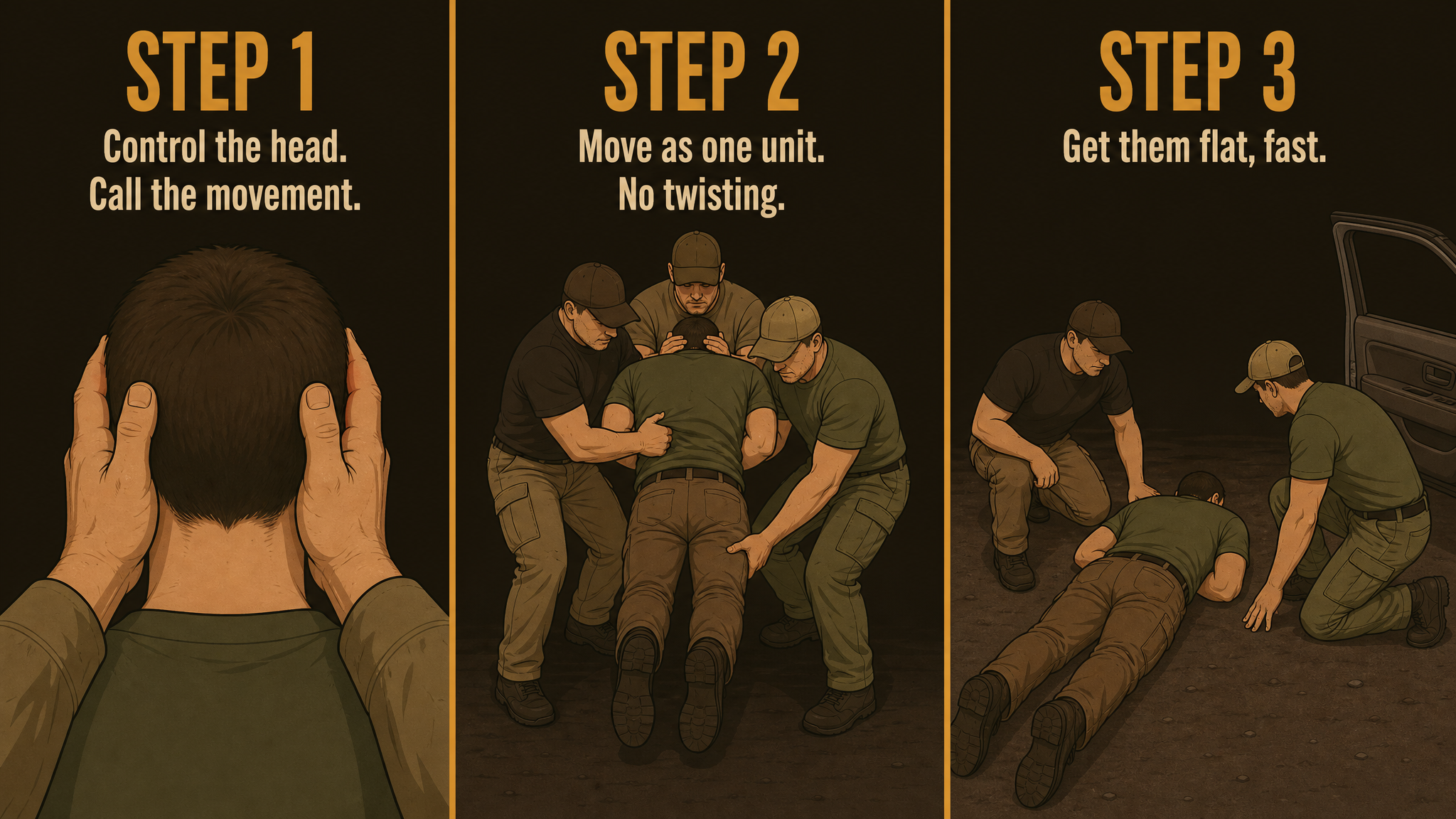
If you have no choice but to move the person, minimize spinal movement. Here's how to do it with one or two helpers:
One person places both hands on either side of the person's head, maintaining neutral alignment (ears over shoulders). That person controls the head and calls the movement. The others grip the torso and legs.
Move as a unit. Slowly. No twisting. Get them flat on the ground as quickly as possible once clear of the vehicle.
This isn't perfect. It's not a medical procedure. But it's better than dragging someone by their arm.
How to Break a Car Window in an Emergency
What to do when someone is stuck in a car and the doors won't open comes down to this: get a window punch if you have one, or find a hard metal point if you don't.
Here's what works:
A dedicated window punch or rescue hammer. These tools cost $10 to $20 and are specifically designed for vehicle entrapment emergencies. The pointed tip concentrates force enough to shatter tempered glass with minimal effort. AAA recommends keeping one in every vehicle. A seatbelt cutter is often built into the same tool.
The corner of a headrest metal rod. Remove a headrest from a seat. The metal prongs at the bottom can be used to strike the corner of a tempered side window. Aim for the lower corner, not the center.
A spark plug ceramic piece. In survival situations: break a spark plug, take the small ceramic chip, and throw it hard at the window. The hardness of the ceramic fractures tempered glass even with minimal force. This is a last resort.
What to avoid: punching or kicking the center of the window. Tempered glass is designed to take impact at the center. The corners are where it's vulnerable.
One critical note: the windshield is laminated glass. It will crack and spiderweb but it won't shatter. Don't waste time on the windshield. Go for a side window.
Once the glass breaks, it will fall in small pebbles — that's how tempered glass is designed. Clear the remaining shards from the frame before reaching in.
What to Do If the Person Is Unconscious or Not Breathing
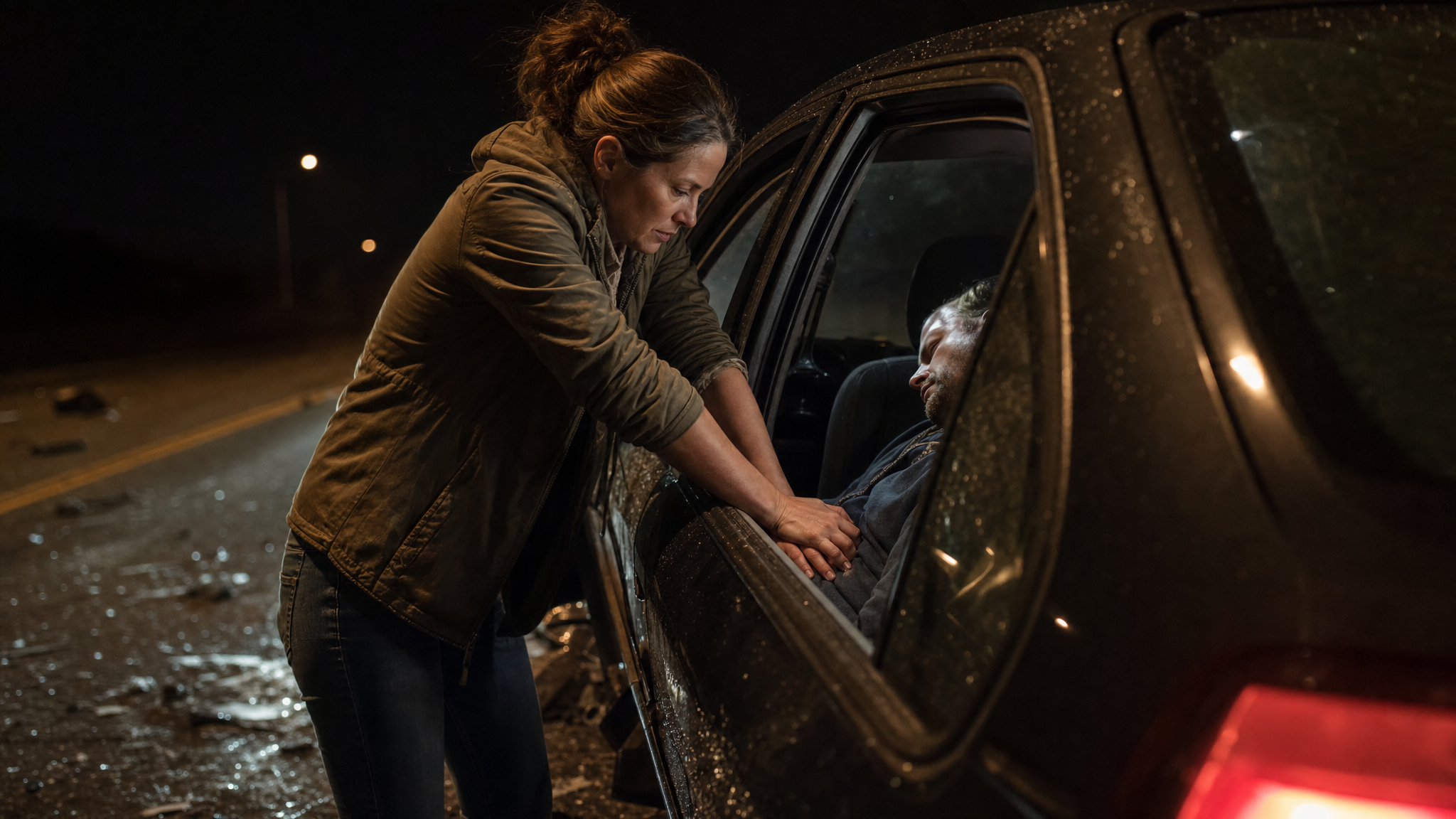
Check for breathing. Watch the chest. Listen. Feel for breath on your cheek.
If they're not breathing and have no pulse: start CPR. Bystander CPR doubles or triples survival odds for cardiac arrest, according to the American Heart Association. Don't wait for someone with a certification to appear. If you don't know CPR, the 911 dispatcher can walk you through compression-only CPR in real time.
If they're unconscious but breathing: don't move them unless the immediate extraction criteria above apply. Monitor their breathing continuously. Note any changes when EMS arrives.
If they're conscious but confused or fading in and out: talk to them constantly. Keep them stimulated. Monitor for changes in responsiveness and report everything to paramedics.
What NOT to Do — Common Bystander Mistakes That Make Things Worse
Don't try to remove the seatbelt yourself if the person is unconscious. The seatbelt may be the only thing keeping them in a safe position. Leave it for EMS unless you need to perform CPR.
Don't give them water or food. If surgery is needed, anything in the stomach complicates anesthesia. Keep their airway clear.
Don't pull on their limbs. If they're pinned, you can cause additional injury. Apply pressure to bleeding wounds but don't attempt to extract them from the wreckage.
Don't let a crowd gather close. Too many people creates confusion for EMS, raises stress for the victim, and increases the chance of a secondary injury. Designate someone to keep bystanders back.
Don't leave. Stay until emergency services arrive. Your presence — as a calm, communicating person who knows what happened — is genuinely valuable. You're the witness. You saw the crash, you assessed the scene, and you can give paramedics a full handoff when they arrive.
Around 38,000 people die in car crashes annually in the U.S. according to NHTSA. Many of those deaths happen in the minutes before professional help arrives. What a prepared bystander does in that window can change the outcome.
Being on scene at an accident is one of those situations where having the right tools with you can shift what's possible. A window punch and seatbelt cutter are the two most useful items you can carry. They cost less than a lunch. The 1st Hour Car Emergency Kit includes both, along with the other items worth having in your vehicle before you ever need them.
This content is for informational purposes only and does not constitute medical advice. In any emergency, call 911 immediately.


