Lost in the Wilderness: A Step-by-Step Survival Plan for Hikers
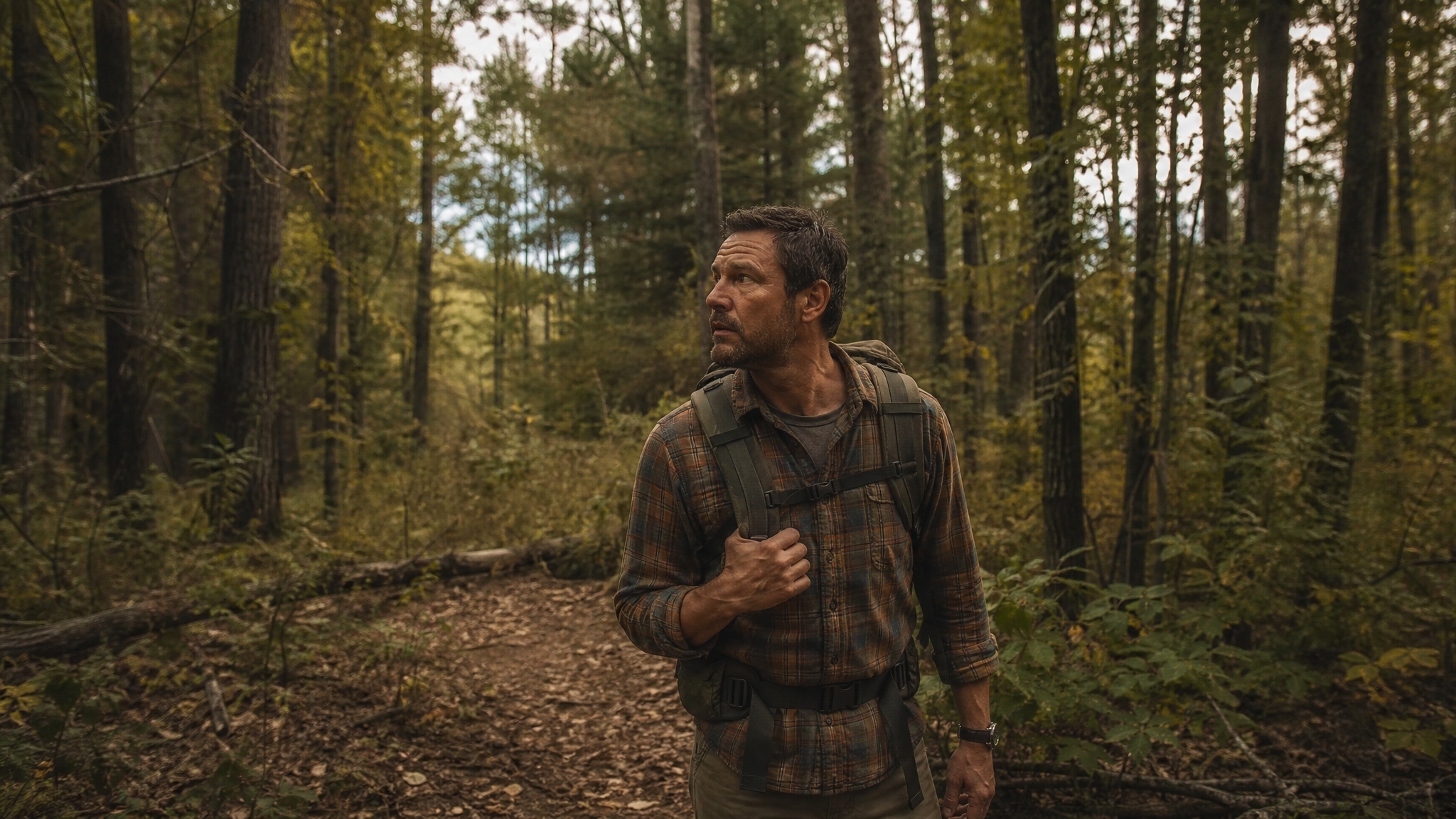
You're on a trail you've hiked before, or maybe one you haven't, and at some point the markers stop making sense. Maybe you took a fork you don't remember. Maybe the light is fading faster than you planned for. Whatever got you here, the moment you admit to yourself that you're lost is the most important moment of the whole ordeal, because what you do in the next ten minutes shapes everything that follows. Most people's first instinct is wrong. They keep walking, hoping the trail reappears. Here's the actual plan, the one search and rescue teams wish more people knew before they needed it.
What to Do the Second You Realize You're Lost
The moment you know you're lost, stop walking. Not in five minutes, not after you check one more direction. Right now. This is the "S" in the STOP method: Stop, Think, Observe, Plan, a sequence used by wilderness guides and search and rescue trainers precisely because it interrupts the instinct to keep moving.
Once you've stopped, think. Retrace your last twenty minutes mentally. Did you cross a stream? Pass a distinct rock formation? Hear traffic or voices? Your brain holds more detail than you think under stress, but only if you slow down enough to access it.
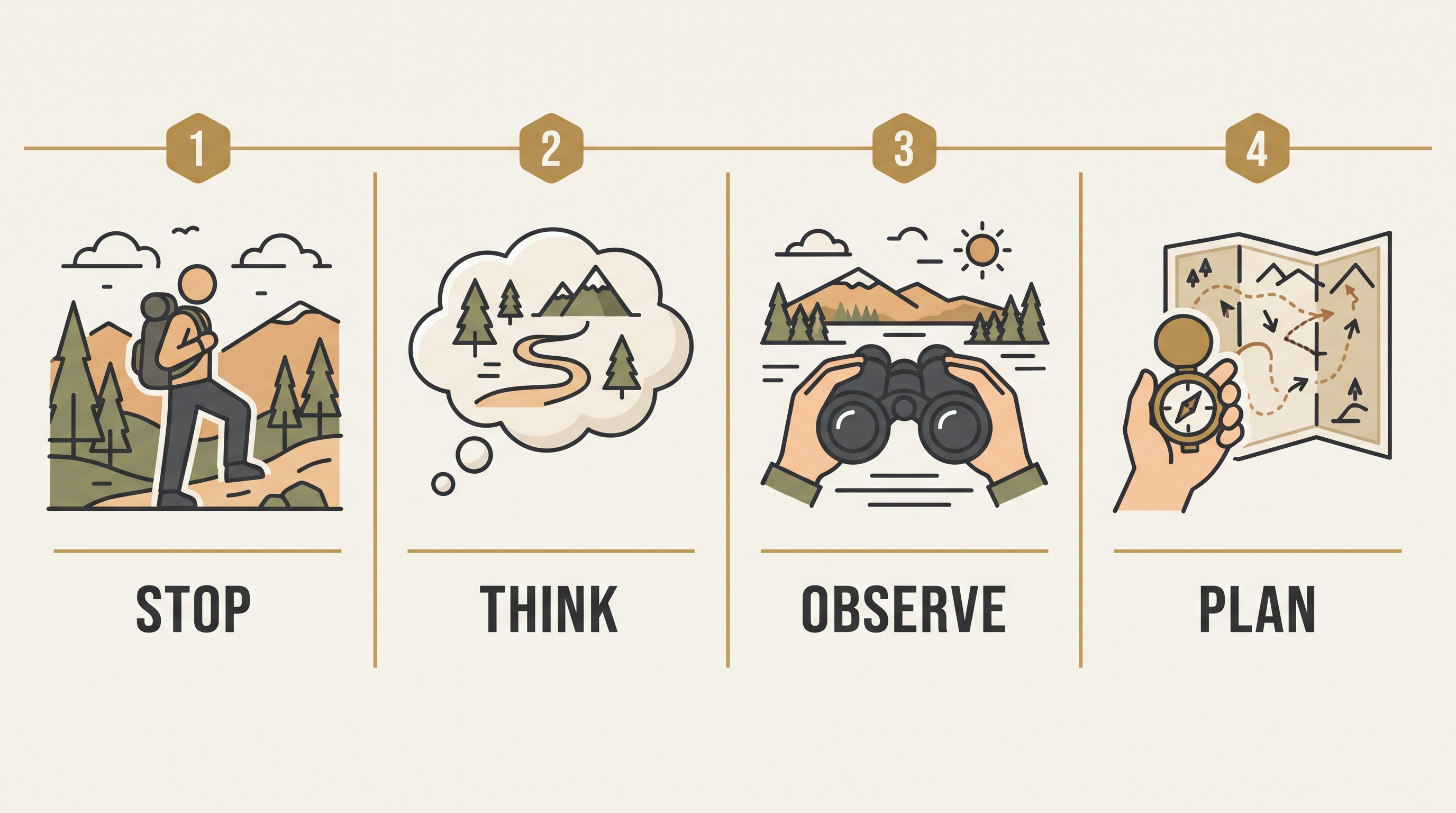
Then observe. Look at your surroundings without moving from the spot. Check the sun's position for a rough sense of direction. Look for landmarks, water sources, or signs of a trail nearby.
Finally, plan. Based on what you thought through and observed, decide your next move, which in the vast majority of cases means staying exactly where you are and making yourself easy to find. Search and rescue data backs this up hard: the majority of people reported lost in the backcountry are located within 24 hours, and that number improves significantly for hikers who stop moving once they realize they're off course, according to the U.S. Forest Service.
Why Staying Put Beats Wandering Further
This is the part that goes against every instinct. When you're lost, your body wants to move, to fix it, to get somewhere that feels familiar. But every step you take after realizing you're lost is a step search teams have to account for. A hiker who stays within a few hundred yards of where they went off course is dramatically easier to find than one who's covered another three miles trying to self-rescue.
There's a real exception here: if you know with certainty which direction leads to a trail, road, or water source, and you can reach it before dark, moving deliberately toward it makes sense. The distinction is between purposeful movement toward a known point and anxious wandering with no destination. One shortens your ordeal. The other extends it, sometimes by days.
Roughly 48% of people reported missing in wilderness search and rescue cases nationwide are hikers, more than any other outdoor activity, according to search and rescue research published in the Journal of Travel Medicine. That's not a reason to panic. It's a reason to trust that search protocols exist, are well-practiced, and work best when you make their job easier by staying visible and staying put.
How to Signal for Help So Rescuers Can Find You
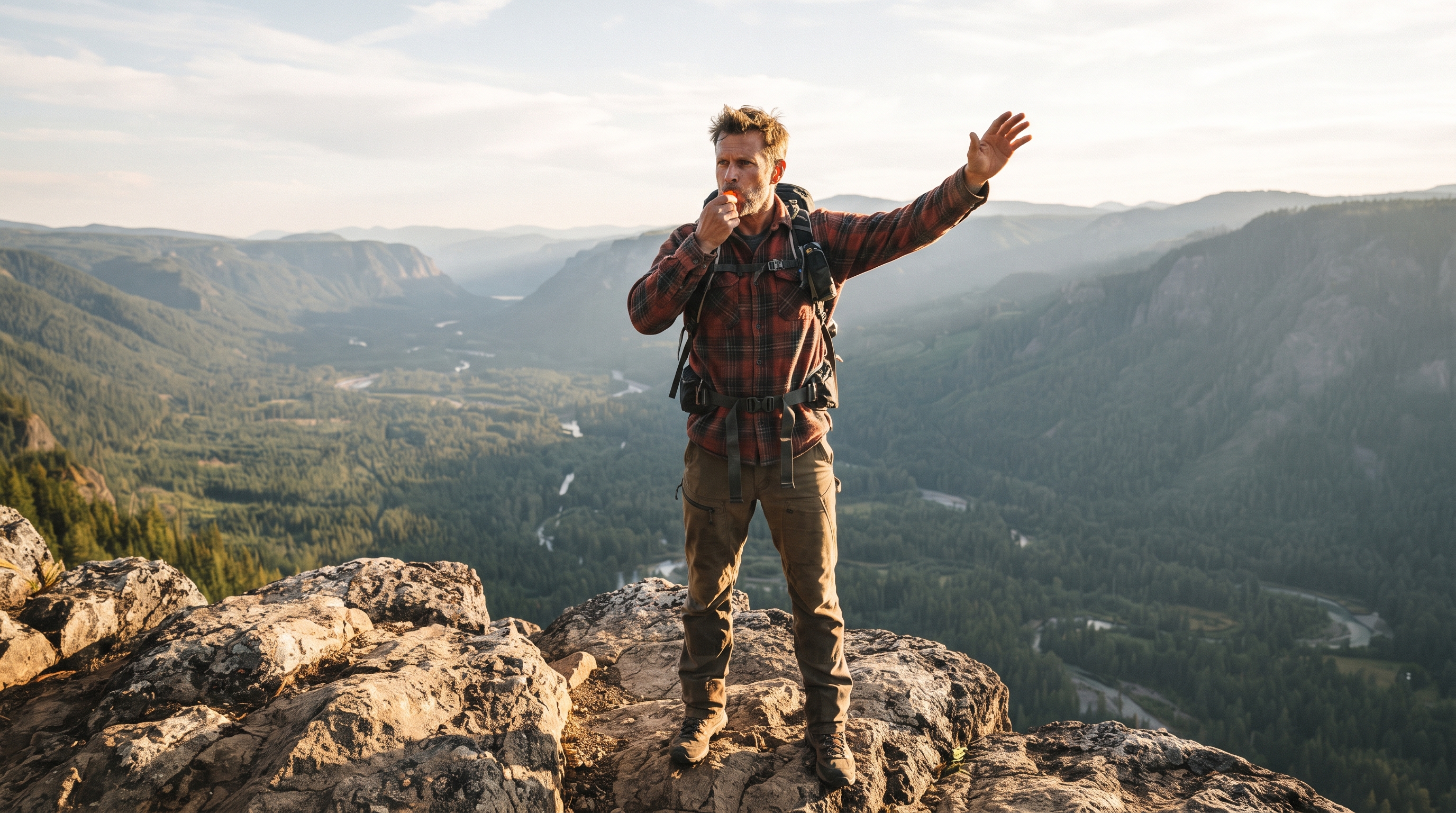
Once you've decided to stay, your job shifts to being found. The universal wilderness distress signal is anything in groups of three: three whistle blasts, three fires arranged in a triangle, three piles of rocks, three flashes of a mirror or flashlight. Rescuers and other hikers are trained to recognize threes as a deliberate signal, not a coincidence.
A whistle carries much farther than your voice and doesn't tire out the way shouting does. If you're carrying one, use it in sets of three, pause, and repeat every few minutes. No whistle? Banging two rocks together or a metal object against your pack works in a pinch.
If you're in open terrain, ground-to-air signals matter too. A large "X" or "V" made from branches, rocks, or clothing laid out in a clearing can be seen from search aircraft long before a person on the ground would spot you. Bright colors help. That reason alone is worth carrying something orange or red, even on a short day hike.
Building Shelter and Managing Body Heat in the First Hour
Exposure, not hunger or thirst, is what actually kills lost hikers fastest. Body heat loss can set in within the first hour, especially once the sun starts dropping or if you're wet from rain, sweat, or a stream crossing. Managing your temperature matters more right now than finding food.
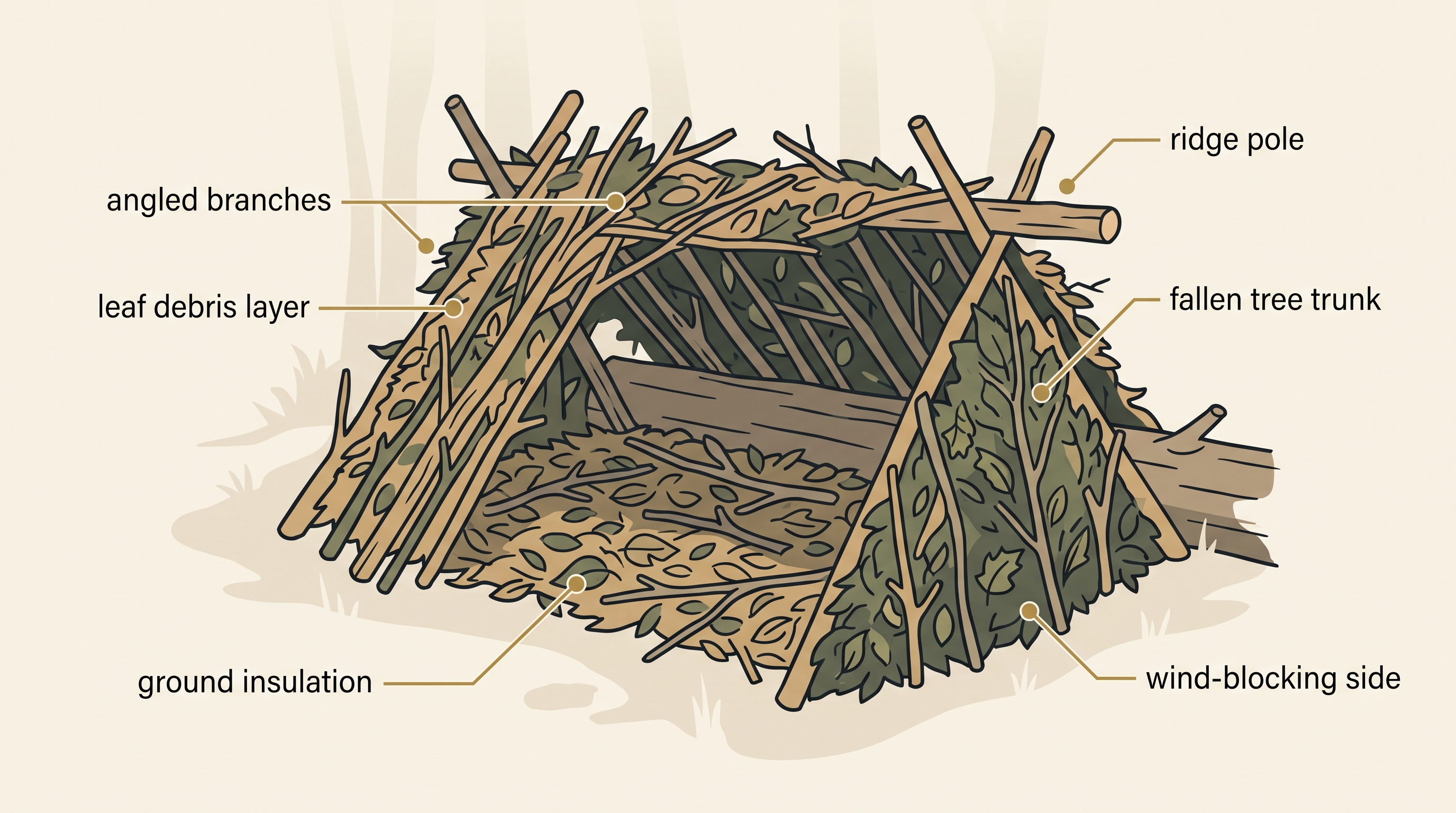
If you have any kind of emergency blanket, poncho, or extra layer, use it before you feel cold, not after. Get off wet or cold ground by sitting on your pack or a pile of dry leaves and branches. If you have time and daylight, a basic lean-to using branches against a fallen tree or rock outcrop cuts wind exposure significantly, even without any real building skill.
Watch yourself and anyone with you for early hypothermia signs: uncontrollable shivering, fumbling hands, slurred speech, or confusion. These show up faster than most people expect, sometimes within an hour in cold, wet, or windy conditions, and they compound the exact problem you're trying to solve by making clear decisions harder.
Water, Food, and What Actually Matters in Hour One
Here's the order that actually matters when you're lost: shelter and body temperature first, signaling second, water third, food a distant fourth. A person can survive several days without food. Exposure and dehydration work on a much shorter clock.
If you find a water source, that's good, but don't wander far to chase one in the first hour. If you're carrying water, ration it, but don't withhold it out of fear either; mild dehydration clouds judgment fast, and judgment is the one resource you can't afford to lose right now.
Skip foraging entirely unless you're certain about what you're eating. Misidentifying a plant adds a second emergency on top of the first one, and food is the lowest priority of the four anyway.
Common Mistakes That Turn "Lost" Into "Emergency"
A few patterns show up again and again in search and rescue reports, and most of them are avoidable.
Wandering downhill on the assumption it leads to civilization. Sometimes true, often not, and it can lead deeper into terrain that's harder to search.
Splitting up the group to "cover more ground." This multiplies the number of lost people search teams have to locate and rarely speeds anything up.
Continuing to hike after dark instead of stopping to signal and shelter. Falls and injuries spike once visibility drops, turning a lost-hiker situation into a trauma situation.
Not telling anyone your route before you left. This one happens before the hike even starts, and it's the single biggest factor in how fast a search begins. Tell someone your trail, your expected return time, and when to call for help if you're late.
Knowing the STOP method and the signaling basics gets you through the first hour. Having the right gear on you when something actually goes wrong, whether that's exposure, a fall, or an injury on the trail, is what turns a plan into a real outcome. That's exactly the situation the 1stHour Trauma Kit was built for: compact enough for a day pack, stocked for the moments a basic first aid kit doesn't cover. If you're building out your family emergency plan or reviewing your home first aid kit, your trail kit deserves the same attention.
This content is for informational purposes only and does not constitute medical or wilderness safety advice. If you or someone with you is in a life-threatening situation, contact emergency services as soon as you're able.


