Wildfire Evacuation: How to Get Out Safely When You Have 30 Minutes or Less
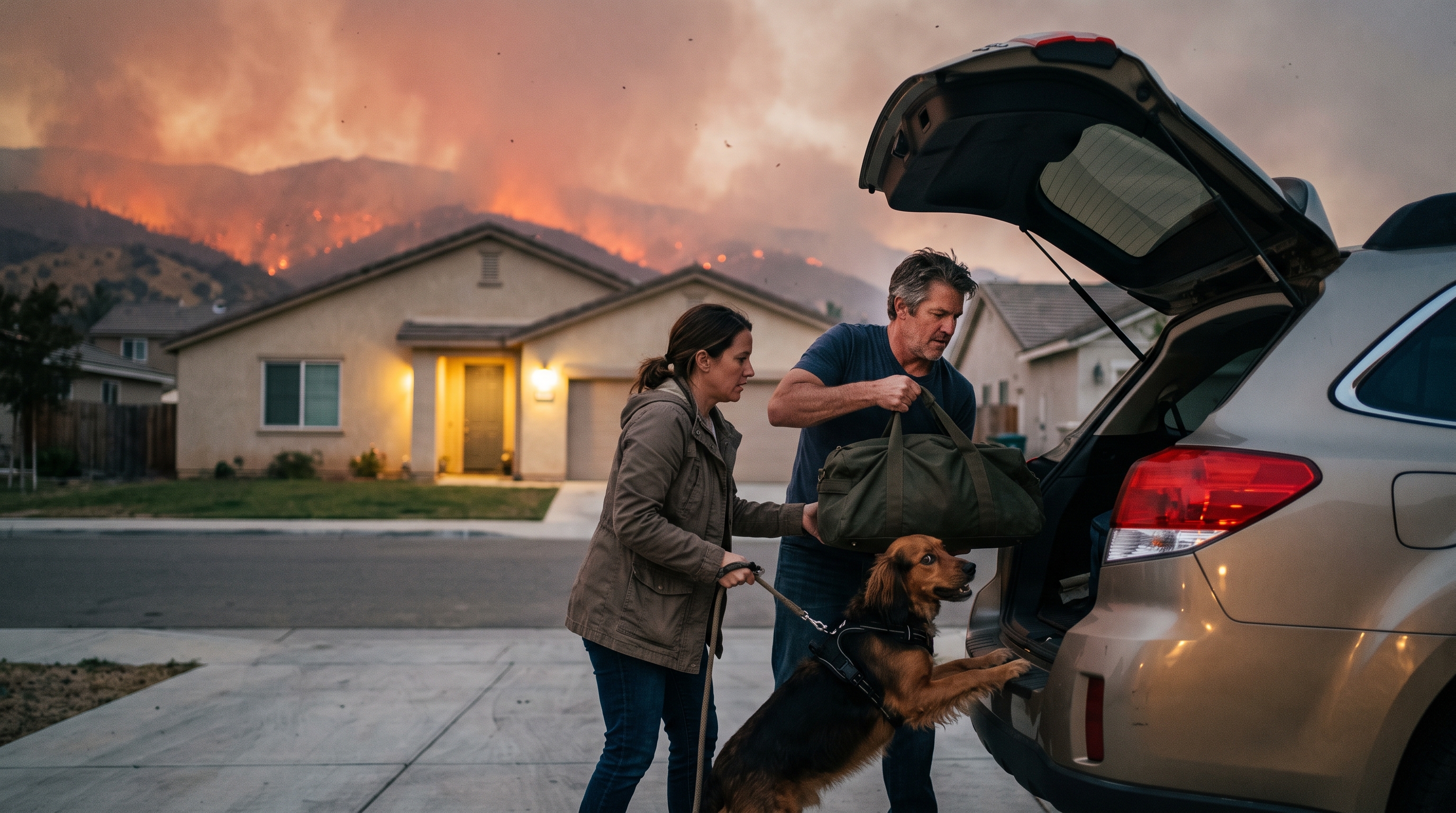
If you live anywhere near dry brush, hillsides, or a canyon view, your wildfire evacuation plan has to work even when the warning gives you almost nothing. CAL FIRE's own data backs that up: a lot of residents in evacuation zones get less than 30 minutes between the order and the point where staying is no longer an option. That's not enough time to think it through. It's enough time to move, if you already know what moving looks like. Here's what to do with the clock running.
Evacuation Warning vs. Evacuation Order: Know the Difference
These two phrases get used loosely in group texts and neighborhood apps, but they mean different things, and mixing them up costs you time you don't have.
An evacuation warning means conditions could get dangerous. Fire is in the area, the wind could shift, and you should be ready to leave on short notice. This is your cue to pack the car, load the pets, and top off the gas tank. Nobody's telling you to leave yet.
An evacuation order means leave now. Not "soon," not "after you finish packing." CAL FIRE and most local fire agencies use the "Ready, Set, Go" framework for exactly this reason: Ready means your kit is packed year-round during fire season. Set means you've heard a warning and you're loading the car. Go means you're in it, driving, no detours.
If you get an order and you're still in "warning" mode mentally, you've already lost minutes you needed.
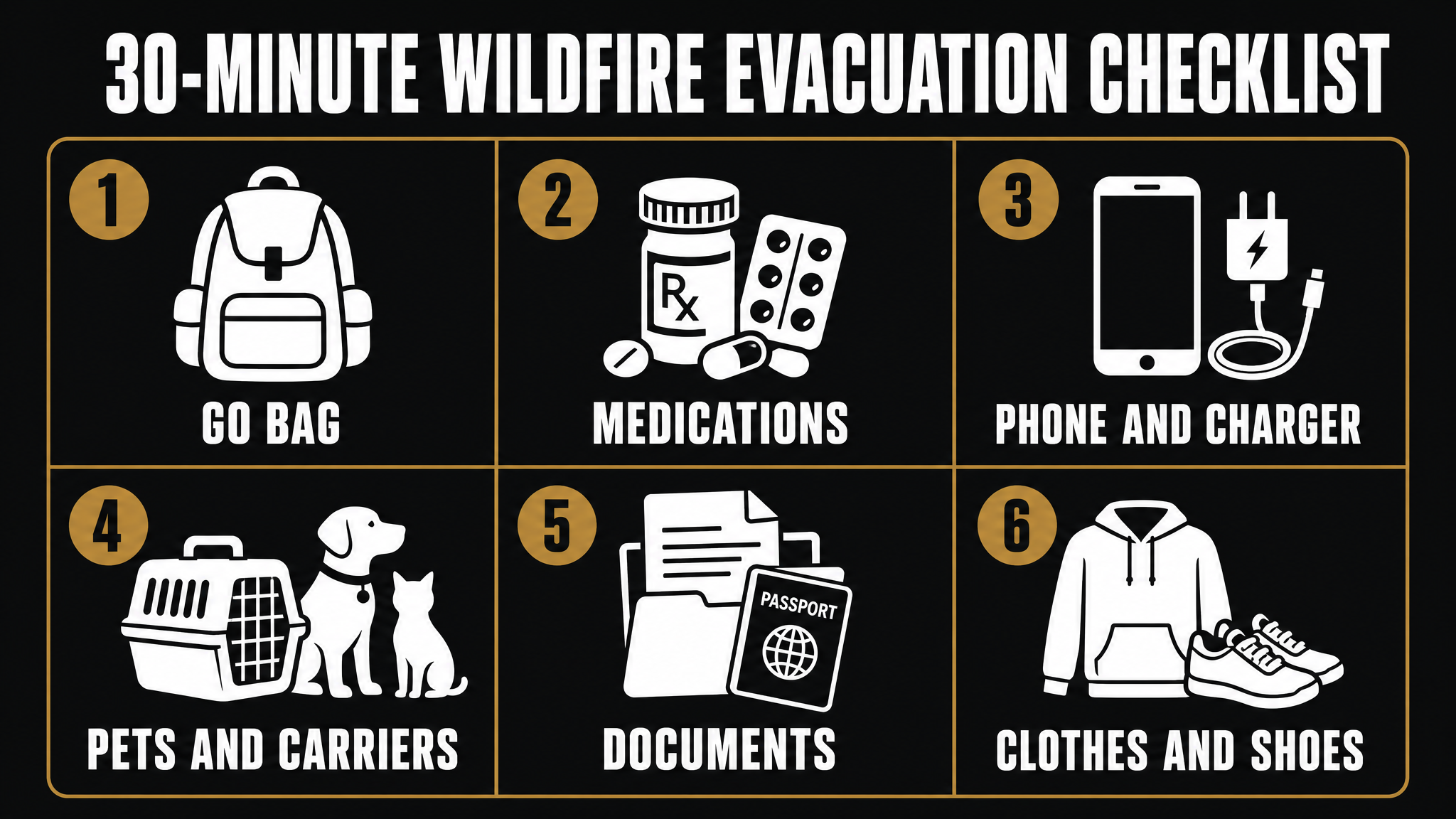
Your Wildfire Evacuation Plan: The 30-Minute Checklist
A real wildfire evacuation plan isn't a 40-item list. It's the handful of things that matter when the smoke is visible from your window and the car needs to be moving in half an hour.
Grab, in this order:
- Your go bag, if it's packed (and if it isn't yet, pack one this week, not during fire season)
- Medications and any medical equipment someone in the house depends on
- Phone, charger, and a car charger
- Pets, their carriers, food, and leashes
- Important documents, but only if they're already staged in a folder or fireproof bag by the door
- A change of clothes and sturdy shoes for everyone, worn or grabbed, not dug out of drawers
That's it. Photo albums, keepsakes, anything in a closet upstairs: leave it. A house full of memories is still a house. You're not.
Keep your go bag in the car during red flag warnings if you can. It removes one whole step from a night where every minute counts.
A Note on Kids and Pets
Assign one adult to each kid and each pet before the order ever comes, not in the moment. A five-year-old and a nervous dog both slow you down if nobody's specifically responsible for them, and in a house with more than one adult, that job needs a name attached to it in advance. Kids old enough to carry their own small bag should have one ready too. It gives them something to do besides panic, and it's one less bag for you to grab.
Five Minutes to Harden Your Home Before You Leave
If you genuinely have five spare minutes (and only if you do), a few small moves can slow a fire down before it reaches your house.
Close every window, interior doors included. This isn't about comfort, it's about keeping embers from finding a path inside once the fire front passes. Move anything flammable, patio furniture, doormats, propane tanks, at least five feet from the exterior walls. Shut off the gas at the meter if you know how. Turn off the AC so it isn't pulling smoke through the vents. Utilities in fire-prone areas also cut power proactively during high-risk conditions, and TacticalBox's power outage prep guide covers keeping food safe and running a generator safely if that happens on your street. Leave a porch or exterior light on so firefighters can see your house through smoke.
Leave your doors unlocked. Firefighters may need to get in, and a locked door in their way costs them time they don't have either.
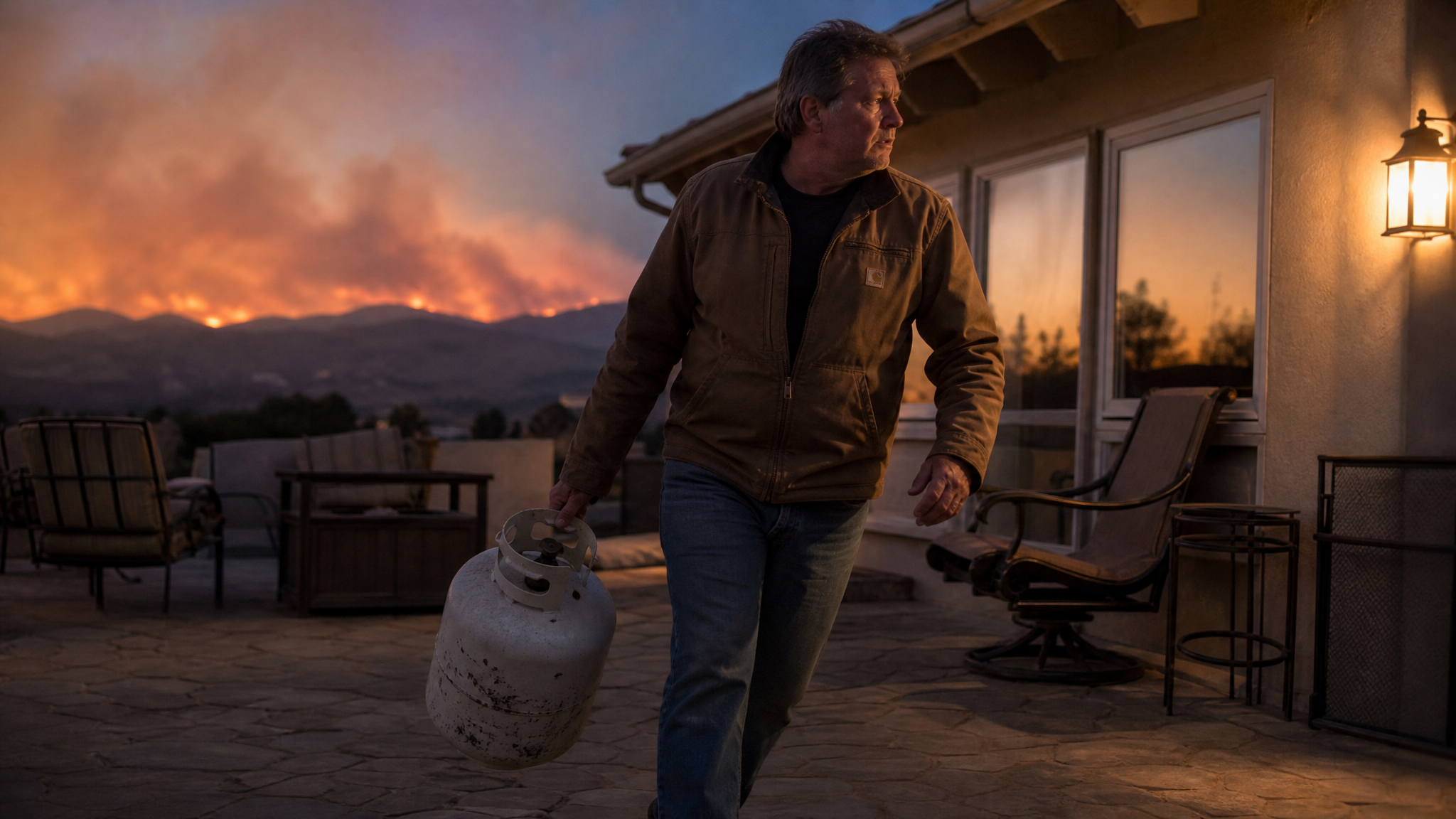
None of this is worth staying an extra ten minutes for. If the choice is between hardening the house and getting your family in the car, get in the car.
Choosing Your Route When Smoke Is Already Rolling In
Know two ways out of your neighborhood before you ever need them. One road closes, one gets clogged with traffic, and you don't want to be discovering your backup route for the first time with a fire behind you.
Drive away from the glow and away from smoke, even if it means a longer route. A shorter path toward the fire is never the faster option once you account for what happens if conditions shift. Keep headlights on, even in daylight. Visibility drops fast in heavy smoke, and other drivers need to see you as much as you need to see the road.
If official evacuation routes are posted, use them. They're chosen with fire behavior in mind, not just distance.
What to Do If the Fire Cuts Off Your Escape Route
This is the scenario nobody wants to plan for, and it's exactly why we're covering it. If flames or smoke block the road ahead and you can't safely turn around, staying in your car is safer than getting out and running.
Pull over away from trees and heavy vegetation, ideally behind a solid structure or in a cleared area. Close all windows and vents, turn off the ventilation system, and turn on your hazard lights. Get everyone down low, below window level, and cover exposed skin with a wool blanket or cotton clothing if you have it. Skip synthetic fabrics; they melt against skin instead of just burning off.
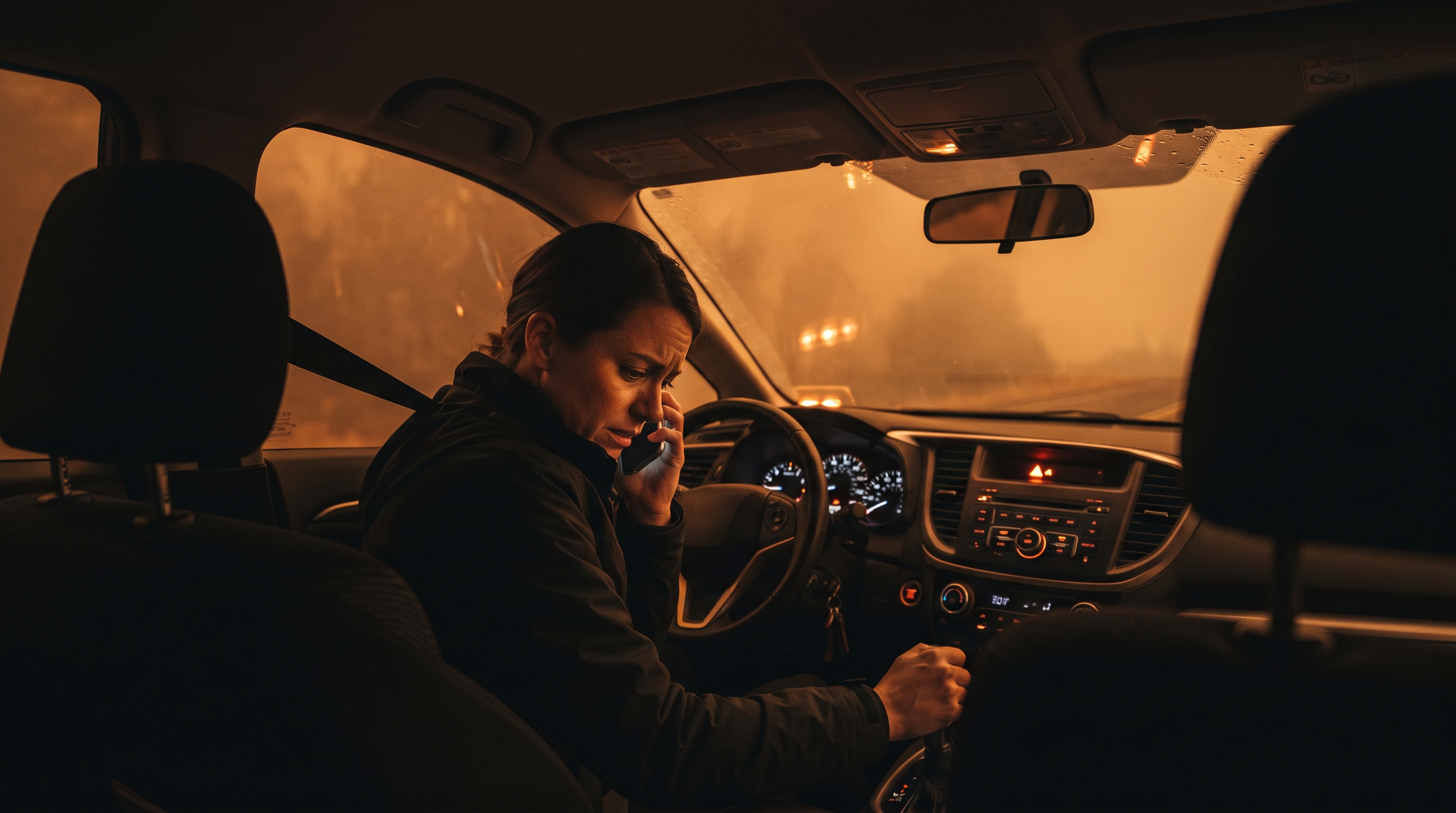
Call 911 and tell them exactly where you are. Stay in the car until the fire front passes and the smoke visibly thins. Don't get out the moment it looks calmer. Falling trees and hot debris are still a real risk in the minutes after, and rushing that step is how people get hurt after the worst part is already over.
Wildfire Evacuation Plan: What to Do Once You're Clear
Once you're out of the immediate danger zone, don't relax completely yet. Check in with family members using your pre-agreed meeting point or contact person, especially if cell towers are overloaded and calls aren't going through. Avoid driving back toward evacuated areas, even to check on the house. Roads stay closed for a reason, and every car that turns around is one more obstacle for fire crews.
Follow official channels, not rumors, for updates on when it's safe to return. And once you're somewhere stable, that's the moment to restock anything you used from your go bag, so the next warning doesn't catch you unprepared again. If your area faces more than one type of disaster, the same "decide now, not later" thinking applies to a family emergency plan, a car emergency kit, and even a hurricane prep checklist or a plan for a flash flood warning.
A wildfire evacuation plan only works if it's already built before the smoke shows up. That means a go bag that's packed and current, not something you'll assemble "eventually." The 1stHour Trauma Kit covers the medical piece of that bag: real trauma supplies, organized the way you'd need them if a scrape, burn, or worse happens in the chaos of getting your family out. Get it staged in your go bag before you need it.
This content is for informational purposes only and does not constitute medical or emergency management advice. Always follow official evacuation orders and instructions from local fire authorities.


