Bleeding Control Kit Checklist: What to Pack and Where to Keep It
Most homes have a first aid kit that handles scrapes, blisters, and minor burns. Very few have anything that can stop heavy bleeding. That gap is easy to close. A bleeding control kit is small, it is inexpensive, and it holds the handful of tools that matter in the first minutes after a serious injury. This bleeding control kit checklist covers what to pack, where to keep it, and how to keep it ready.
What a Bleeding Control Kit Is For
A standard first aid kit is built for common injuries. A bleeding control kit is built for one problem: blood loss that will not stop with a bandage and a hand on the wound. Think of a deep cut from a chainsaw or a table saw, a car crash, a fall onto broken glass, or a farm accident. In those cases a person can lose a dangerous amount of blood before an ambulance arrives.
The kit does not replace 911, and it does not replace your first aid kit. It sits beside them. If you want the steps themselves, our guide to how to stop severe bleeding walks through them.
Bleeding Control Kit Checklist: What Goes in the Bag
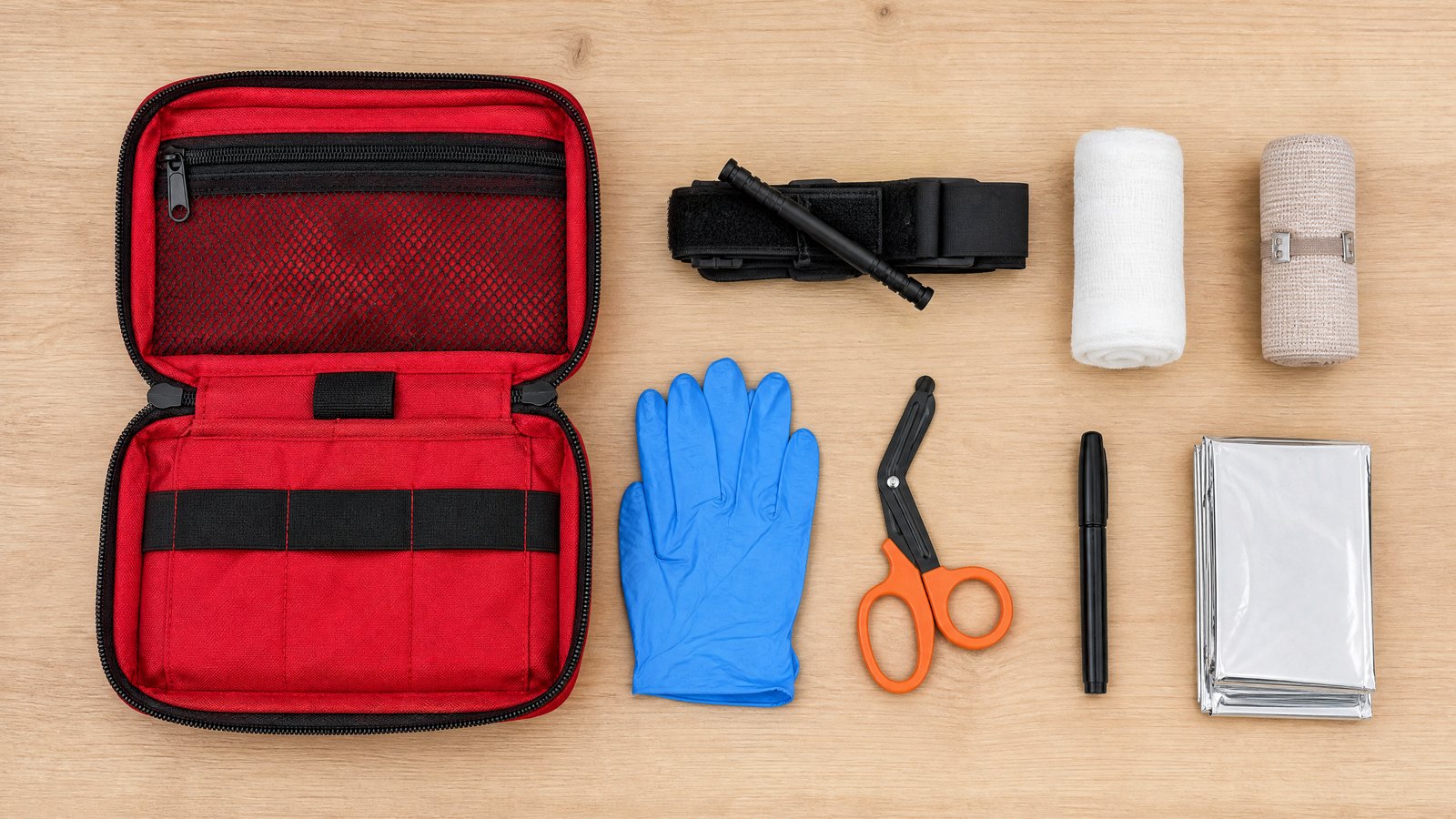
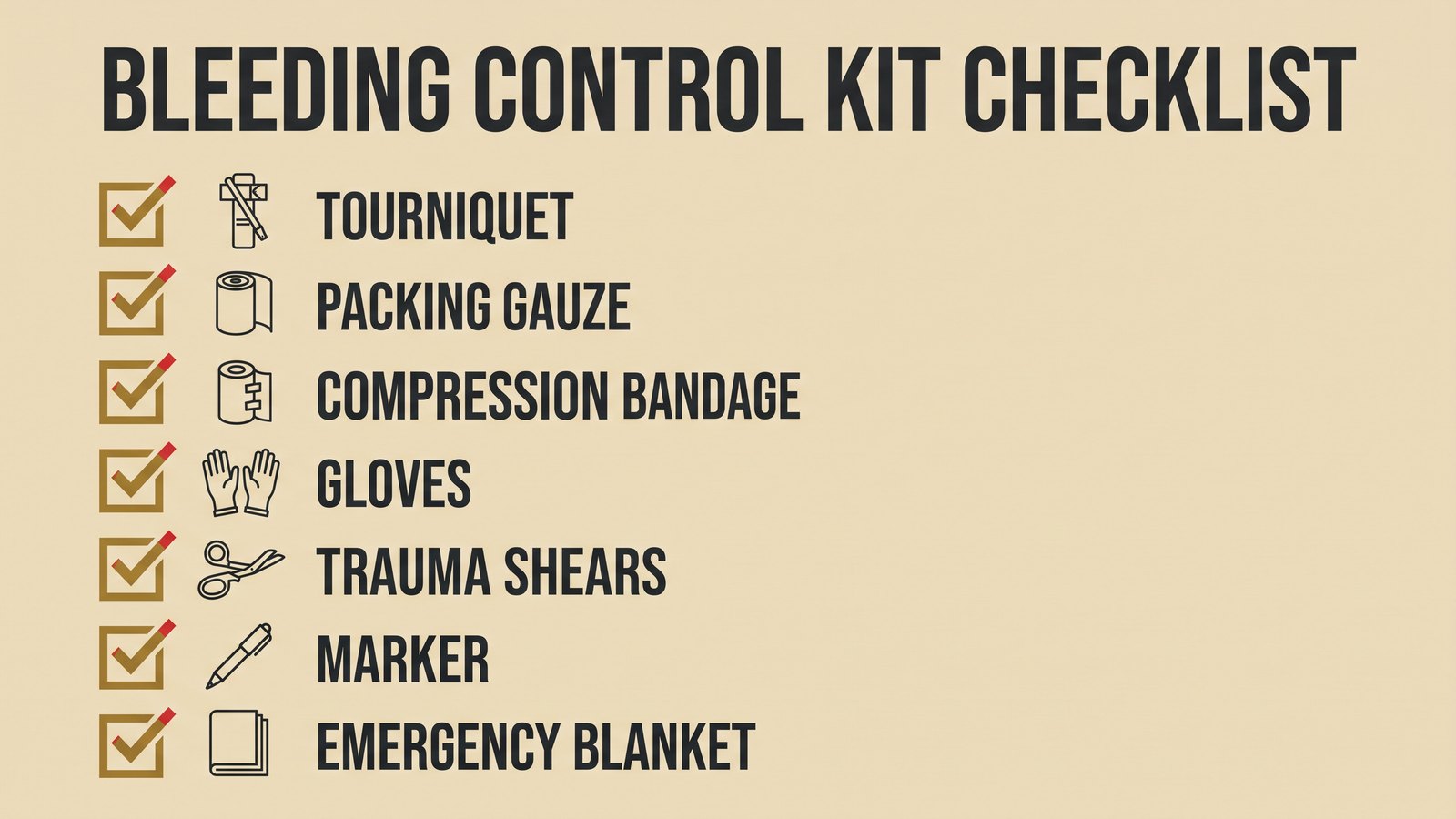
The American College of Surgeons publishes model guidance for public bleeding control kits through its Stop the Bleed program. According to the ACS bleeding control toolkit, a kit should include at least one tourniquet endorsed by the Committee on Tactical Combat Casualty Care, a bleeding control bandage, a compression bandage, protective gloves, a marker, scissors, and printed instructions.
Here is that list in practical terms:
- Tourniquet. The one item most people do not own. Choose a model on the CoTCCC recommended list, and take it out of its packaging once so you know how it feels in your hands.
- Wound packing gauze. Plain or hemostatic gauze that you pack into a deep wound. Hemostatic gauze carries a clotting agent that helps bleeding stop faster.
- Compression bandage. An elastic dressing with a pressure bar that holds a pad firmly over a wound after it has been packed.
- Gloves. Nitrile, at least two pairs, in a size that fits you.
- Trauma shears. Strong enough to cut denim and leather so you can see the wound.
- Permanent marker. You write the time the tourniquet went on, on the tourniquet or on the person's skin, so responders know how long it has been in place.
- Emergency blanket. North American Rescue lists a survival blanket because a person who is bleeding gets cold fast, and cold makes things worse.
- Instruction card. A simple printed card helps when someone is nervous and nobody remembers the steps.
If you want to understand how those two main tools work, read our guides on tourniquet use and wound packing before you buy anything.
Basic vs. Advanced Kits
Basic kits come in a nylon pouch and hold the core items: a tourniquet, a compression dressing, gloves, and shears. They are a good fit for a glove box, a kitchen drawer, or a workshop wall. Advanced kits add hemostatic gauze, a chest seal, and extra dressings. They cost more and weigh more, and they make sense if you have training or you want to cover a larger group.
If you are buying for a home, one kit per level of the house is a sensible start. For an office, a school, or a place of worship, think in terms of how many people are in the building at once. One kit is rarely enough for a crowd. Your local EMS agency or fire department can usually tell you what they recommend.
Where to Keep a Bleeding Control Kit
A kit in a closet does no good when someone is bleeding in the garage. Placement matters as much as contents.
A 2023 simulation study from Linköping University in Sweden, published in Disaster Medicine and Public Health Preparedness and summarized by Newswise, tested how kit placement affects outcomes. The researchers found that the equipment should be reachable within about 90 seconds of walking, that kits belong in two or more locations rather than one, and that they should not sit at building entrances, where people may be pushed away from them during an evacuation.
You can apply that at home and at work:
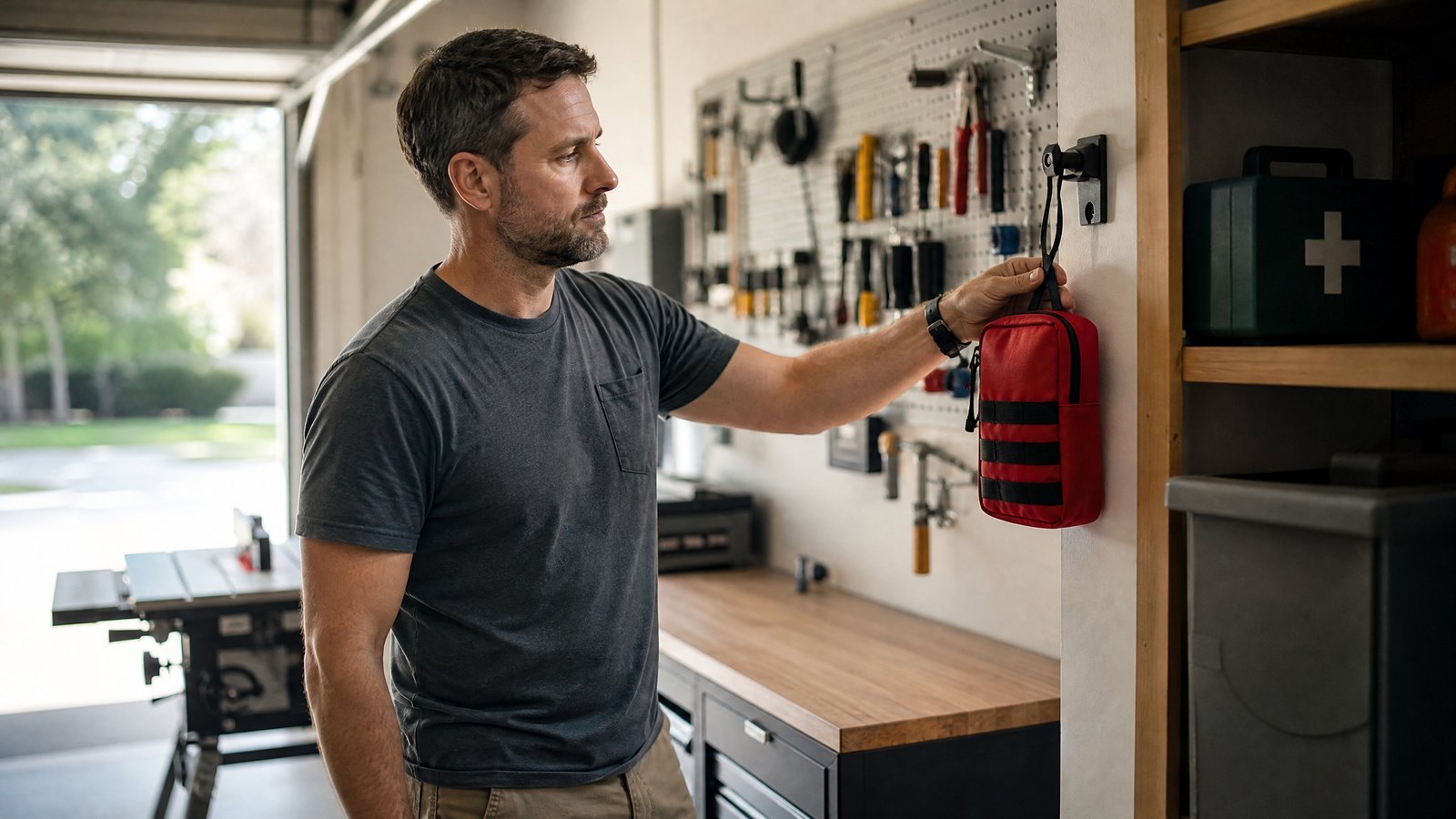
- Keep one kit where injuries are most likely, such as the garage, workshop, kitchen, or barn.
- Keep one in each vehicle, within reach of the driver, not buried under luggage.
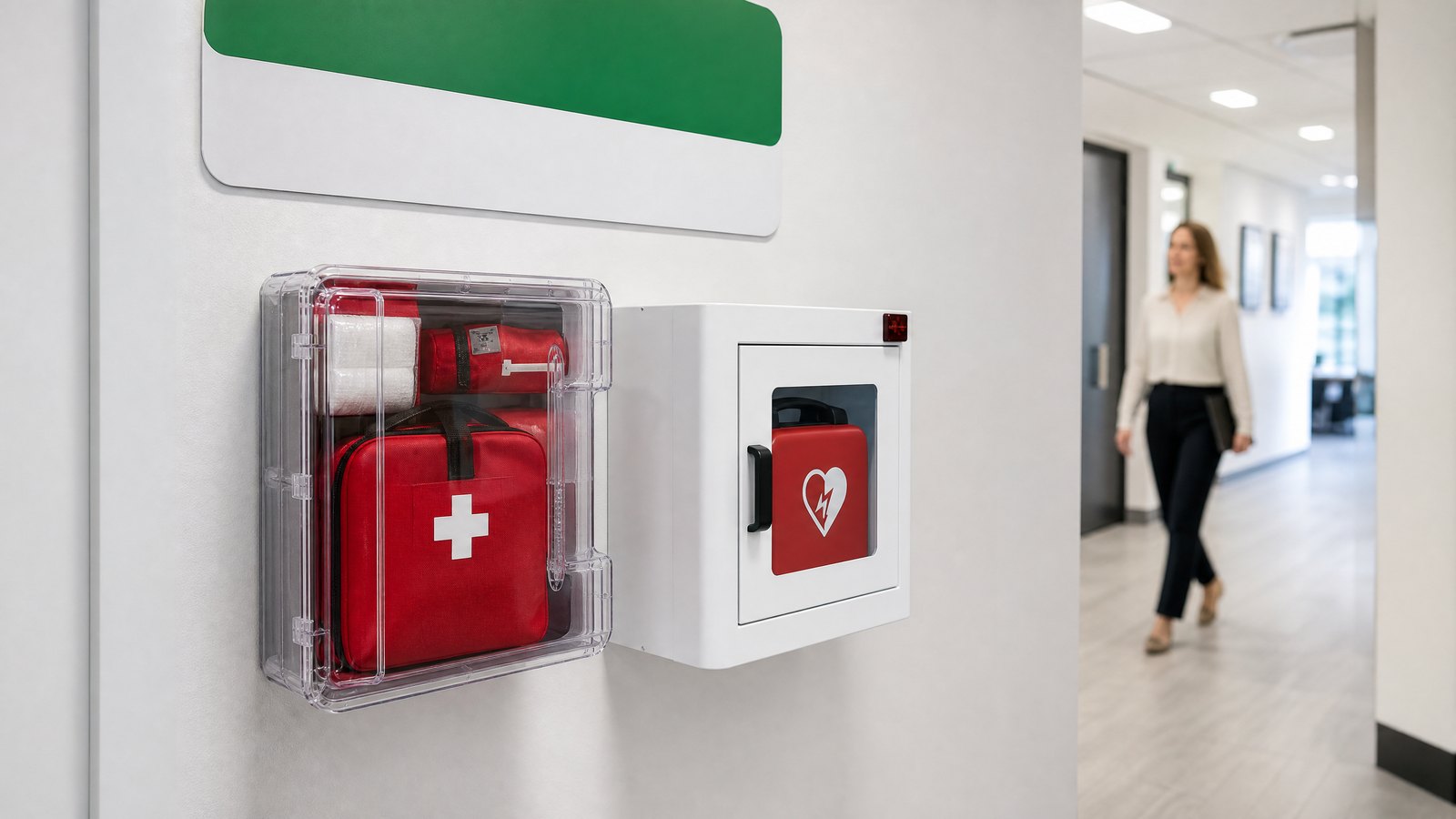
- At work, mount the kit where it is clearly visible, such as beside the AED. The ACS model guidance allows a kit to share storage with an AED, and our guide on how to use an AED explains why that spot is worth knowing.
- Tell everyone who lives or works there where it is. A hidden kit is a useless kit.
How to Check and Restock Your Bleeding Control Kit
The ACS model guidance says kits should be checked after each use and at least once a year if they were not used. That is a good rule for any kit.
Put a reminder in your calendar and run through the same list each time:
- Confirm every item is still there and sealed.
- Look at expiration dates on gauze, dressings, and gloves, and replace anything that has expired.
- Check the tourniquet for sun damage, cracks, or a stiff strap.
- Replace whatever you used, and write the date inside the pouch.
- Re-read the instruction card so the steps are fresh.
Heat degrades supplies. A kit that lives in a hot car all summer needs a closer look than one on an office wall. Our 72 hour emergency kit checklist uses the same annual review rhythm, so you can check both on the same day.
Training Matters as Much as Supplies
A tourniquet in a drawer helps nobody if the person next to the injury has never touched one. The best thing you can do after buying a kit is take a Stop the Bleed class, which many hospitals, fire departments, and community groups offer, often at no cost. In one short session you practice packing a wound and applying a tourniquet on a training model.
If you only have ten minutes, open the kit, pull out the tourniquet, and practice putting it on your own arm or leg with the instructions beside you. Then do it again with your eyes closed. It feels silly. It also builds the muscle memory you will want if you ever need it.
If you already keep a general kit, our home first aid kit checklist covers the everyday supplies that sit alongside a bleeding control kit.
When help is minutes away, what you can do in the first hour changes everything. See what's inside The 1stHour Trauma Kit, built for the moments before help arrives.
This content is for informational purposes only and does not constitute medical advice. In an emergency with heavy bleeding, call 911 immediately. This article is not a substitute for hands-on first aid training.


