How to Use an AED
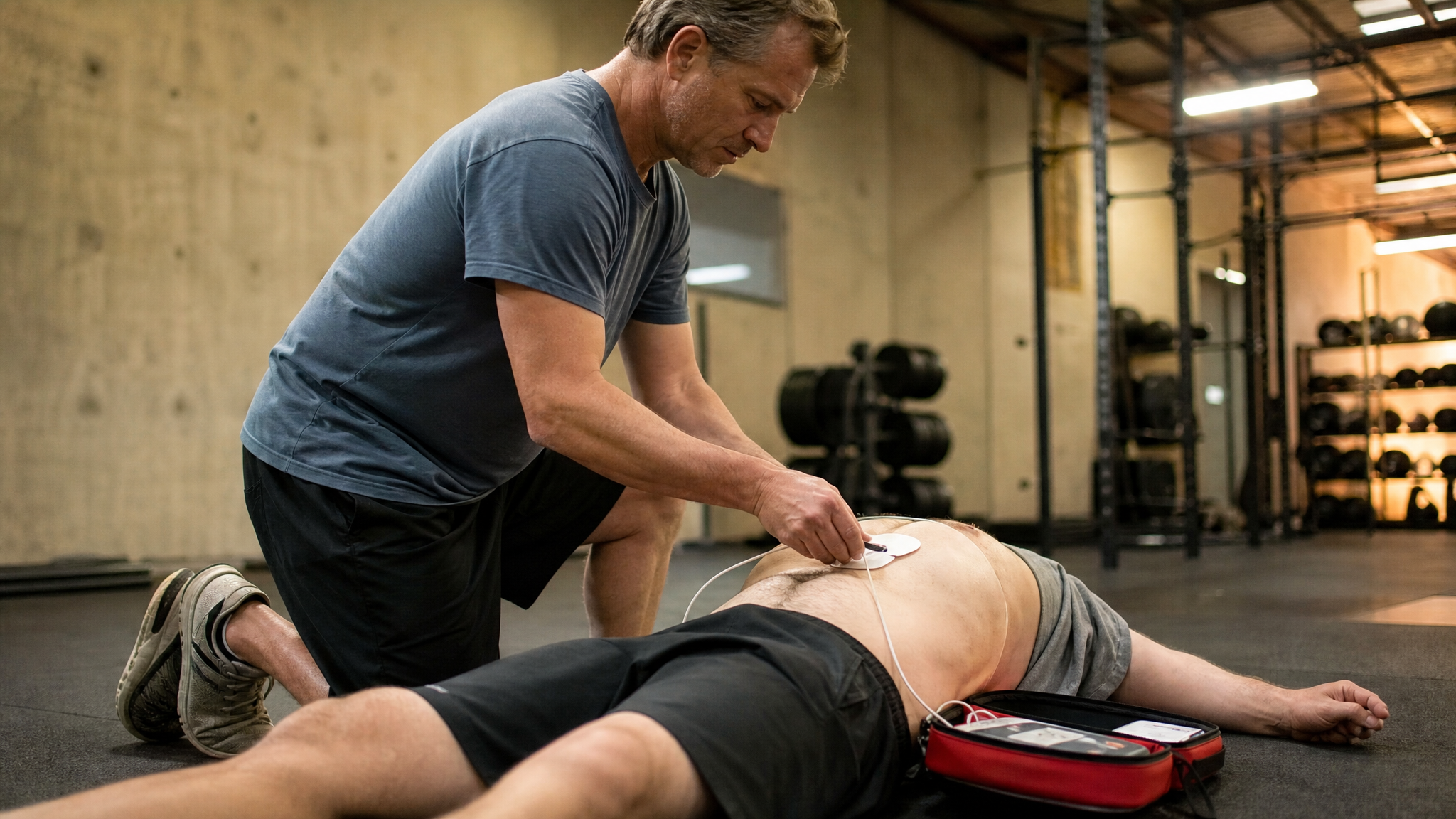
You don't need training. You don't need a certification. You need to know the steps, trust the machine, and go.
This guide shows you exactly how to use an AED, step by step — no training required.
What Happens During Cardiac Arrest (Why Every Second Counts)
Cardiac arrest is not the same as a heart attack. A heart attack is a plumbing problem — blocked blood flow. Cardiac arrest is an electrical problem. The heart's rhythm collapses. It stops pumping. The person loses consciousness in seconds.
Every minute without treatment, survival odds drop by about 10 percent. After 10 minutes, the chances are low. After 4 minutes, brain damage becomes a real risk.
But here's what changes everything: CPR and an AED used together can double or triple the odds of survival. Not at the hospital. Right there, on the floor, before the ambulance arrives.
That window is yours to use. This guide shows you how.
What an AED Actually Does — And Why It's Designed for You
AED stands for Automated External Defibrillator. The word "automated" is doing a lot of work there.
The machine reads the heart's electrical activity through the pads you attach. It decides whether a shockable rhythm is present. If it is, it charges and delivers a shock. If it isn't, it won't shock — even if you push the button.
You cannot accidentally shock someone who doesn't need it. The AED will not let that happen.
The entire device is built around one assumption: the person using it has never done this before. Voice prompts walk you through every step. Diagrams on the pads show you exactly where to place them. The machine tells you when to stand clear, when to push the button, and when to resume CPR.
Your job is to follow the voice. That's it.
Can Anyone Use an AED? (Yes — Including You)
No certification required. No medical training required. In every U.S. state, Good Samaritan laws protect bystanders who use an AED in good faith during an emergency. You are not liable for trying to help.
The law is designed specifically so that hesitation doesn't cost someone their life. If you act reasonably and do your best, you are protected.
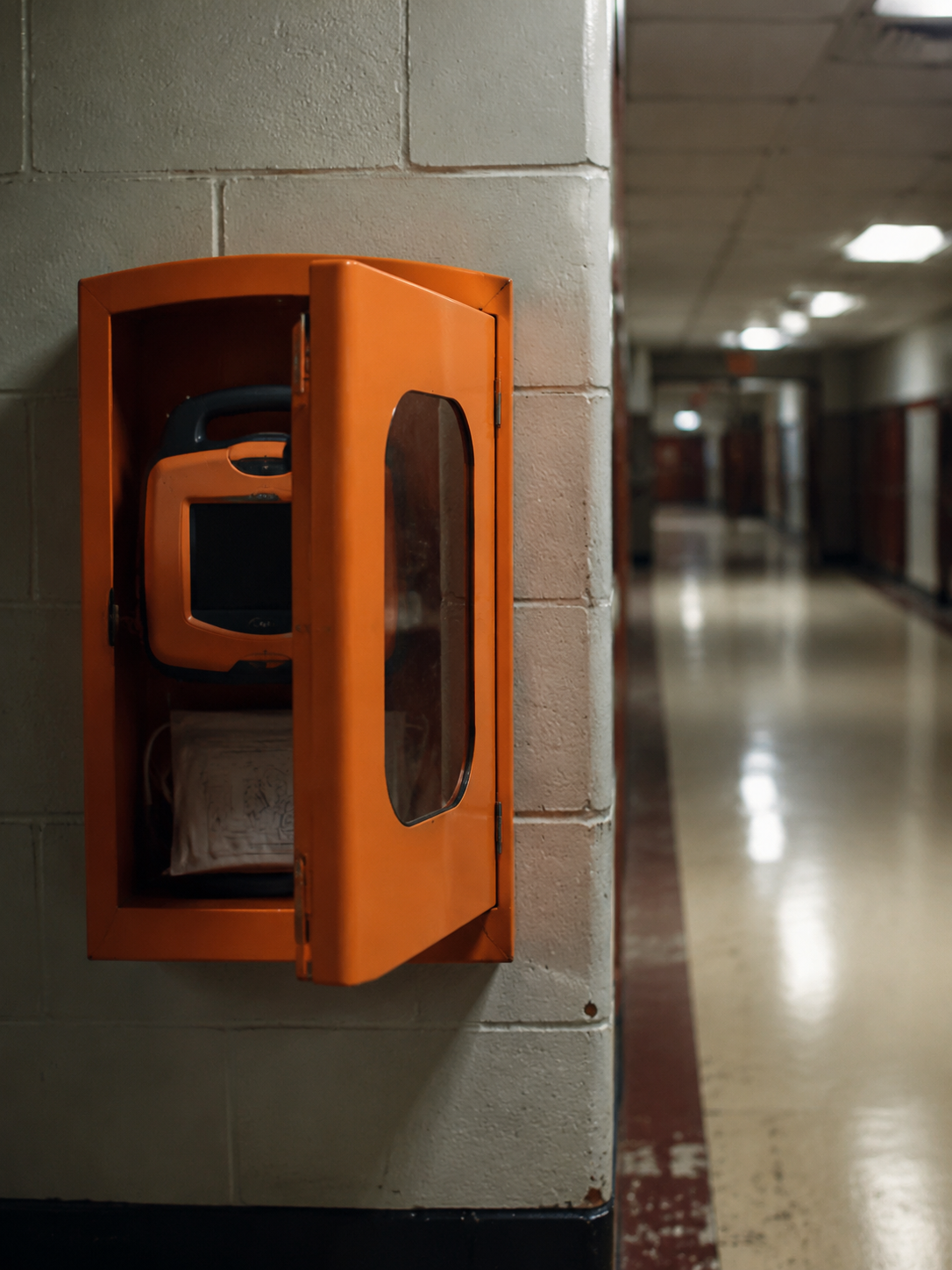
AEDs are placed in public spaces — schools, gyms, airports, office buildings — because they're meant to be used by regular people. Flight attendants, teachers, coaches, front desk workers. None of them are paramedics.
If you can follow spoken instructions, you can use an AED.
How to Use an AED: Step-by-Step

Step 1: Call 911
Do this first, or have someone else do it while you start. Don't wait. Get EMS moving toward you immediately.
Step 2: Turn on the AED
Most units turn on the moment you open the lid. Others have a power button. Either way, once it's on, the voice guides you from here.
Step 3: Expose the chest
Bare skin only. Cut or tear away clothing if needed. Every second matters — don't hesitate to damage the shirt.
Step 4: Attach the pads
Place one pad on the upper right side of the chest, below the collarbone. Place the second pad on the lower left side, below and to the left of the nipple. The pads have diagrams showing placement. Plug the connector into the AED if it isn't already connected.
Step 5: Let the AED analyze
The machine will tell everyone to stand clear. Don't touch the person. Let it read the heart rhythm. This takes a few seconds.
Step 6: Deliver the shock if advised
If a shockable rhythm is detected, the AED will charge and tell you to press the shock button. Make sure no one is touching the person. Press the button.
If no shock is advised, the AED will tell you to resume CPR.
Step 7: Immediately resume CPR
This is the step most guides leave out. After the shock, go straight back to compressions. Don't wait to see if the person wakes up. Don't check for a pulse. Start CPR immediately and keep going until EMS takes over.
The AED will prompt you every two minutes to stop and let it re-analyze. Follow that cycle until help arrives.
Need a refresher on compressions? Our hands-only CPR guide covers the rate, depth, and hand position.
AED Pad Placement: The Specifics Most Guides Skip
Real emergencies don't always look like the training video. Here's what to do in situations you're likely to encounter.
Hairy chest: The pads need firm skin contact. Chest hair can break that seal. If the AED kit includes a razor, do a quick shave on the pad sites. No razor? Press the pads down hard and proceed. Imperfect contact is better than no AED.
Wet skin: Dry the chest quickly with a shirt or towel before placing pads. Water conducts electricity in the wrong direction and can reduce effectiveness.
Pacemaker or defibrillator scar: You'll usually see a small lump under the skin on the upper left chest. Don't place a pad directly over it. Shift the pad about one inch to the side or use an anterior-posterior placement (one pad on the chest, one on the back).
Pregnant woman: Use standard pad placement. An AED is safe to use during pregnancy. The shock is not strong enough to harm the baby, and the alternative — letting cardiac arrest continue — is far worse.
Child under 8 or under 55 lbs: Use pediatric pads if the AED kit has them. If not, adult pads are acceptable. For very small children, place one pad on the center of the chest and one on the center of the back to avoid overlap.
Using an AED and CPR Together: The Rhythm
The most common confusion people have is when to stop CPR and switch to the AED. The answer is simple: stop compressions only when the AED tells you to.
Here's the flow:
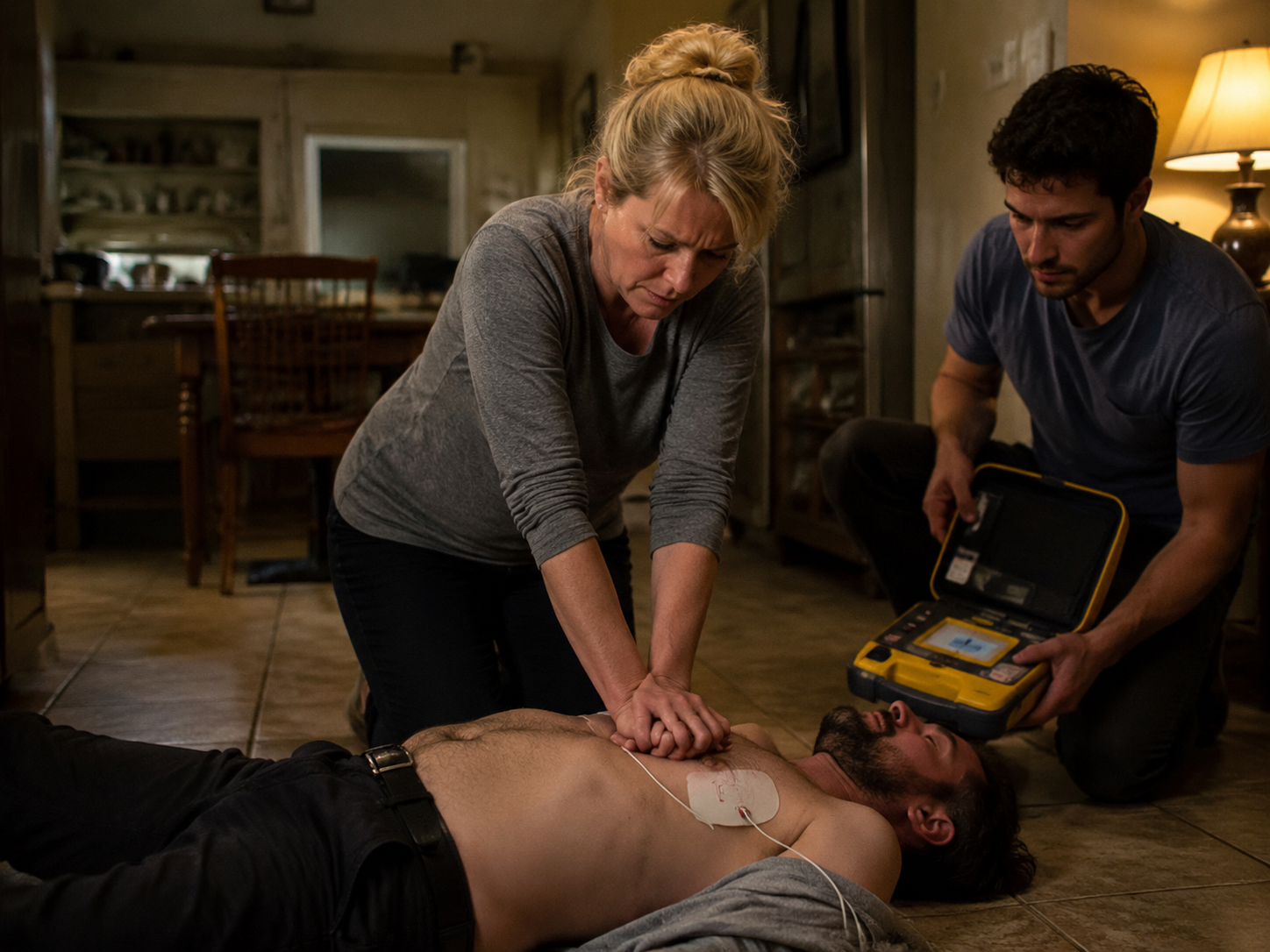
Start CPR the moment you recognize cardiac arrest. Keep going while someone else retrieves and sets up the AED. Once the pads are on and the machine is analyzing, stop compressions and stand clear. After the shock, immediately resume compressions — don't pause to assess.
Every two minutes, the AED will tell you to stop for re-analysis. Use that window. Otherwise, keep compressing.
Two things to know:
- Fatigue sets in fast. If there are other bystanders, rotate compression duty every two minutes.
- The AED rhythm keeps you on track. Don't overthink the timing — follow the voice prompts.
Common Fears — Answered Directly
"What if I do it wrong?"
The AED will correct you with voice prompts. If the pads aren't making contact, it will tell you. If the placement is off, it will tell you. You'd have to ignore the machine to truly do this wrong.
"What if they don't need a shock?"
The device analyzes the rhythm first. If no shockable rhythm is detected, it won't shock. You cannot accidentally hurt someone with an AED who didn't need it.
"Can I hurt them?"
Cardiac arrest is already fatal without intervention. You cannot make that situation worse by trying. The only way to hurt someone in cardiac arrest is to do nothing.
"What if someone tells me to stop?"
Keep going. Good Samaritan laws protect you. The person on the floor is in cardiac arrest — your help is what they need. If a family member panics and tells you to stop, calmly say "I'm trained to help" and continue until EMS arrives.
"What if I forget the steps?"
The AED tells you what to do at every stage. You don't have to remember a sequence. Turn it on, attach the pads, and follow the voice.
Where to Find an AED — and How to Use an AED When You Do
Most large public buildings are required to have AEDs on site. Airports, gyms, shopping malls, schools, office buildings, stadiums — look for the green or red AED sign, usually near first-aid kits or emergency exits.
The fastest way to find one in an unfamiliar space: the PulsePoint AED app. It maps AED locations in registered buildings near your GPS coordinates. Worth downloading before you ever need it.
When you enter a new space — a hotel, a conference center, a school — take 30 seconds to look for the AED cabinet. It takes almost no time, and it's a habit that makes you useful in the worst moments.
At 1st Hour, we build tools and resources for people who want to be ready before the emergency happens. If this guide helped you feel more prepared, take a look at our training kits and preparedness resources — designed for exactly this: the moment between when something goes wrong and when help arrives. Browse 1st Hour Preparedness Kits
This article is for general educational purposes only. It does not substitute for formal first-aid or CPR/AED certification. We encourage readers to complete hands-on training through the American Heart Association, American Red Cross, or a certified local provider.


