Sudden Dizziness: When Vertigo Is an Emergency

The room tilts when you roll out of bed. Or you stand up from the couch and the world goes gray at the edges. Most of the time it passes in under a minute and you feel a little silly. This guide explains sudden dizziness, when to worry, and the signs that separate a harmless spell from one that needs an ambulance.
Sudden Dizziness: When to Worry
Doctors use two words that people often blur together. According to Mayo Clinic, dizziness is the general feeling of being faint, woozy, or unsteady, while vertigo is the sense that you or the room is spinning or moving. You do not need to name it correctly to get help. What matters is what comes with it.
A short spell that fades when you sit down, with nothing else going on, is rarely an emergency. Worry grows when the dizziness is new, severe, lasts for hours, or arrives with other symptoms. A good rule is to ask two questions. Is anything else wrong, and can I stand and walk normally? If something else is wrong, or you cannot walk, treat it as urgent.
Sudden Dizziness Red Flags That Mean 911
Johns Hopkins Medicine tells people to call 911 if dizziness shows up with any of these new symptoms:
- Confusion, or trouble speaking or understanding speech
- Slurred speech
- Numbness or weakness in the face, arm, or leg
- Clumsiness or shaking in the arms or legs
- Double vision, or vision trouble in one or both eyes
- A drooping eyelid or one pupil that looks different from the other
- Inability to stand, even while holding on to something firm
- Sudden severe vomiting with no clear cause
- Sudden severe headache or neck pain with no clear cause
Mayo Clinic adds chest pain, a fast or irregular heartbeat, trouble breathing, fainting, seizures, and a sudden change in hearing to its list of reasons to get emergency care. Dizziness that is new, severe, and lasts for hours or days with vomiting and trouble walking also needs the ER, even if none of the other signs are present.
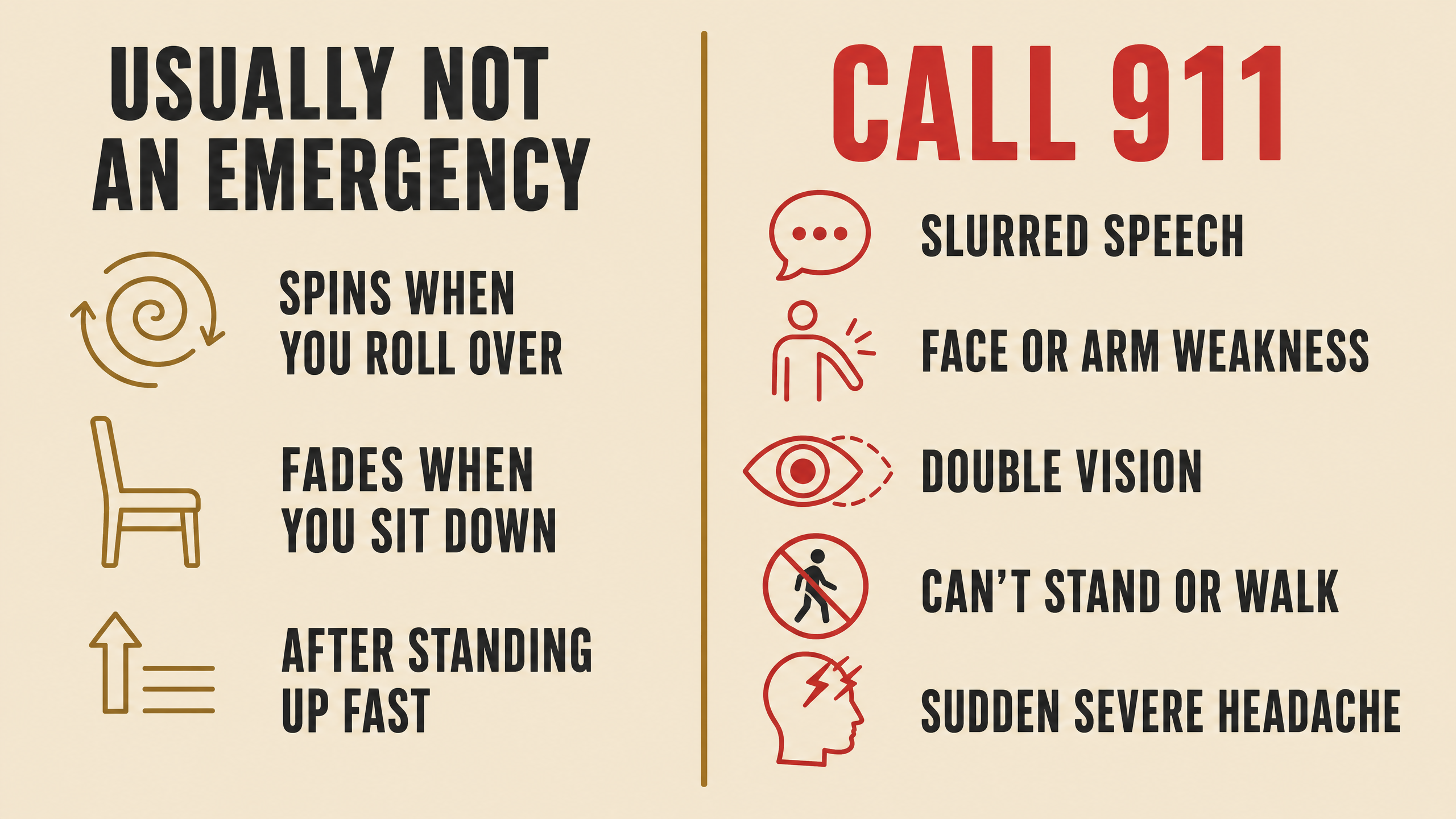
If your symptoms match any line above, do not wait to see if it settles. Call 911 and say what you are feeling and when it started.
Dizziness and Stroke: What to Check
Sudden dizziness is one of the less obvious stroke symptoms. The American Stroke Association lists sudden trouble walking, dizziness, and loss of balance or coordination alongside the better known face drooping, arm weakness, and speech trouble. A stroke in the back of the brain can cause dizziness and clumsiness with no weakness at all, which is why it gets missed.
Check the face, arms, and speech first. Ask the person to smile, raise both arms, and repeat a short sentence. Then ask them to stand and take a few steps with you beside them. If they cannot stand or walk straight, that alone is a reason to call. Our guide to recognizing a stroke fast walks through the full check.

Note the time the symptoms began. Paramedics and the hospital team need it. The American Stroke Association also says to call 911 even if the symptoms go away, because a brief episode can be a warning stroke.
Common Causes of Sudden Dizziness That Are Not Emergencies
Plenty of dizzy spells have simple causes. The most common cause of vertigo is benign paroxysmal positional vertigo, or BPPV, where tiny crystals in the inner ear drift out of place. It causes a short spin when you roll over in bed, tilt your head back, or bend down. It is unpleasant and not dangerous.
Other everyday causes include:
- Standing up too fast, which drops blood pressure for a moment
- Dehydration, heat, or skipping meals (see our notes on signs of dehydration and low blood sugar without diabetes)
- Medicines, including blood pressure drugs, sedatives, and some antidepressants
- An inner ear infection or migraine
- Anxiety or a panic attack
One cause deserves a second look. Carbon monoxide can make several people in the same home dizzy at once, often with a headache. If more than one person feels off, get outside into fresh air and read our guide to carbon monoxide poisoning symptoms.
What to Do While You Wait for Help
If you or someone near you has red flag symptoms, call 911 first. Then:
- Sit or lie down somewhere safe, away from stairs and sharp furniture. A fall is the biggest short-term risk.
- Stay with the person. Do not leave someone who is dizzy and confused alone.
- Do not give food, drink, or pills. Swallowing can be unsafe if a stroke is affecting the face or throat.
- Unlock the front door and turn on a light so paramedics can reach you.
- Write down when it began, any medicines taken, and what changed.
- If the person becomes unresponsive, check their breathing and be ready to start hands-only CPR.
A sudden bad headache with the spinning is a separate warning sign. Our list of headache red flags explains why that pairing matters.
When to See a Doctor Instead
Not every dizzy spell needs 911, but repeated ones deserve a visit. Mayo Clinic advises seeing a healthcare professional if dizziness is repeated, sudden, severe, or long-lasting with no clear cause. Make an appointment if you get spinning with position changes, if a new medicine started the problem, or if you have had a fall.
If you passed out, read fainting vs. something worse and tell your doctor. When you are unsure, err on the side of calling. A false alarm costs you a few hours. A missed stroke can cost far more.
The first minutes decide how the next hour goes. See what's inside The 1stHour Trauma Kit, built for the moments before help arrives.
This content is for informational purposes only and does not constitute medical advice. Sudden dizziness with warning signs is an emergency, so call 911 and follow the instructions of emergency responders.


