How to Recognize a Stroke FAST: Why the First Hour Decides Recovery
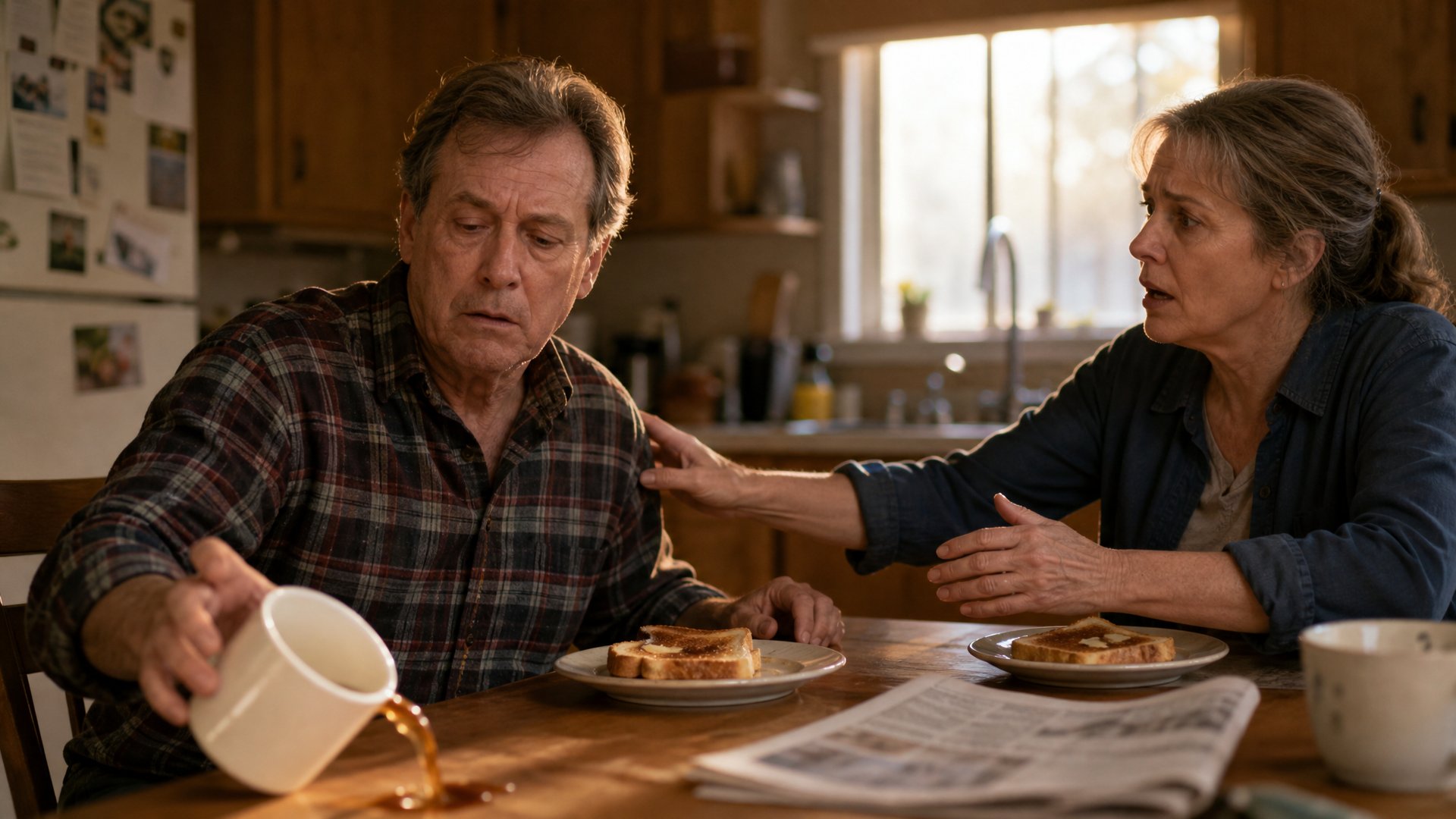
Most people picture a stroke as dramatic. Someone clutches their head and collapses. The real thing is usually quieter than that, and that's exactly what makes it dangerous. A crooked smile at dinner. A coffee cup that slips out of a hand that suddenly won't grip. A sentence that comes out scrambled. Bystanders wait, because it doesn't look like an emergency yet. Meanwhile the clock that decides how much of this person comes back is already running. Learning how to recognize a stroke takes about a minute. This post covers the test, and what to do in the window before the ambulance arrives.
The FAST Test: How to Recognize a Stroke in Under a Minute
FAST is the American Stroke Association's screening tool, and it works because you don't need any medical training to run it. Four checks, ten seconds each.
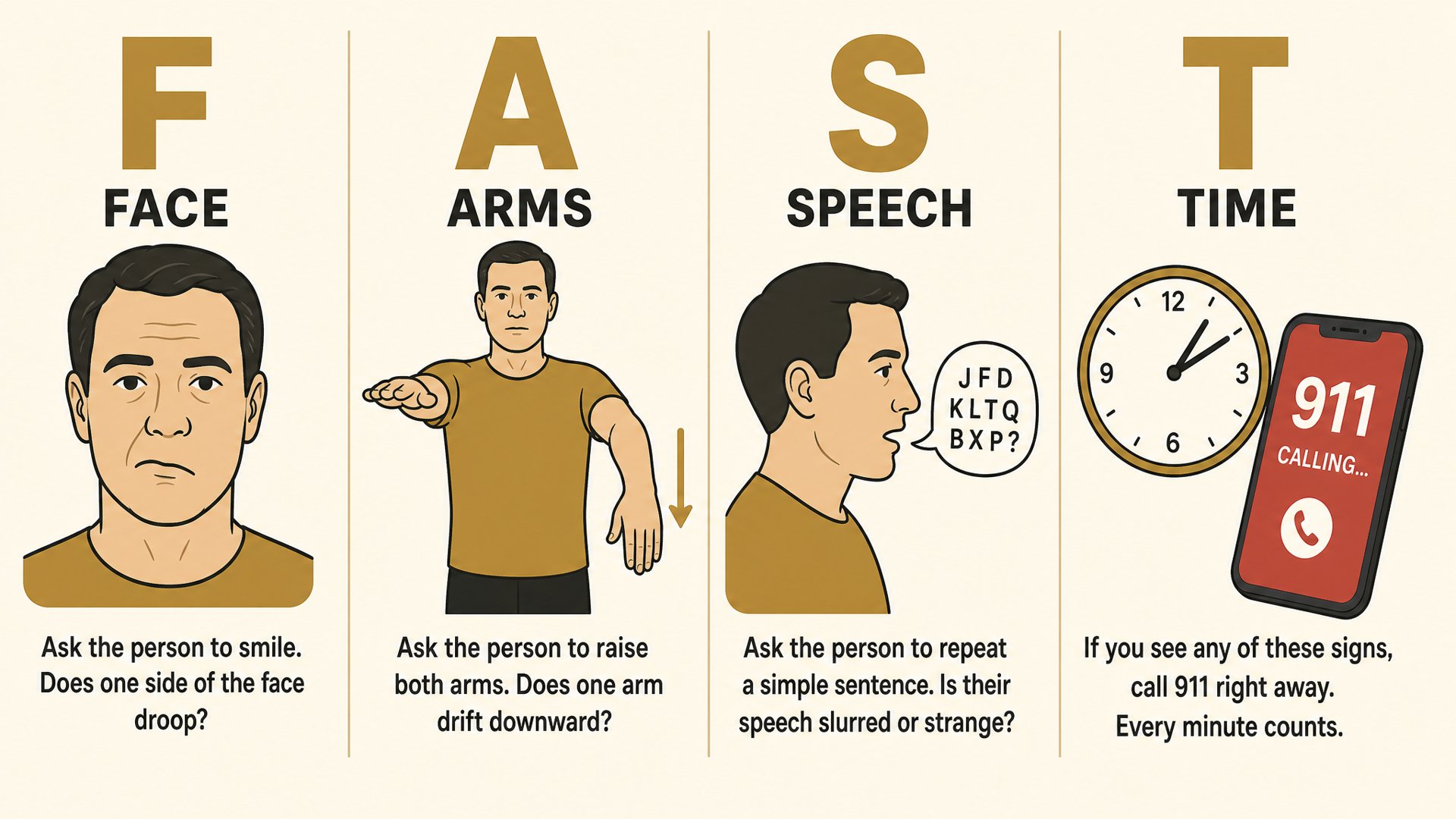
F is for Face. Ask the person to smile. A stroke usually hits one side of the brain, so one side of the face stops cooperating. Look for a droop at the corner of the mouth or an eyelid that sags. If the smile is crooked and it wasn't before, that counts.
A is for Arms. Ask them to close their eyes and raise both arms straight out in front, palms up. Watch for ten seconds. If one arm drifts downward or can't come up at all, that counts.
S is for Speech. Ask them to repeat a plain sentence. "The sky is blue in Cincinnati" is the classic. Listen for slurring, wrong words, or no words at all. Some stroke patients can hear you fine but produce word salad. Some can't get anything out. Either counts.
T is for Time. One failed check is enough. You don't need two out of three. Call 911, say the word "stroke" to the dispatcher, and write down the time the symptoms started or the last moment you knew the person was normal. That timestamp will follow them through the entire hospital course, because every treatment decision hangs on it.
BE-FAST: Two Signs the Classic Test Misses
FAST catches most strokes, but not all of them. Strokes in the back of the brain, the region handling balance and vision, can pass a face-arm-speech check completely. That's why many hospitals now teach BE-FAST, which adds two checks to the front.
B is for Balance. Sudden dizziness, a lurching walk, or falling to one side for no reason. If someone who was walking fine an hour ago suddenly can't stay upright, treat it as a red flag, not clumsiness.
E is for Eyes. Sudden vision loss in one or both eyes, double vision, or a curtain coming down over half the visual field.
The addition matters more than it might seem. One hospital program that trained its community on BE-FAST found patients arriving in a median of 82 minutes after symptom onset, compared with 141 minutes before the training. That hour of difference translated directly into more patients qualifying for clot-busting treatment and more of them walking out with normal function.
Why the First Hour Decides How Much Brain Survives
Here's the number that should change how you act: an untreated ischemic stroke kills roughly 1.9 million neurons every minute. Not per hour. Per minute. Brain tissue downstream of the blocked artery is starving, and it doesn't wait politely for the ambulance.
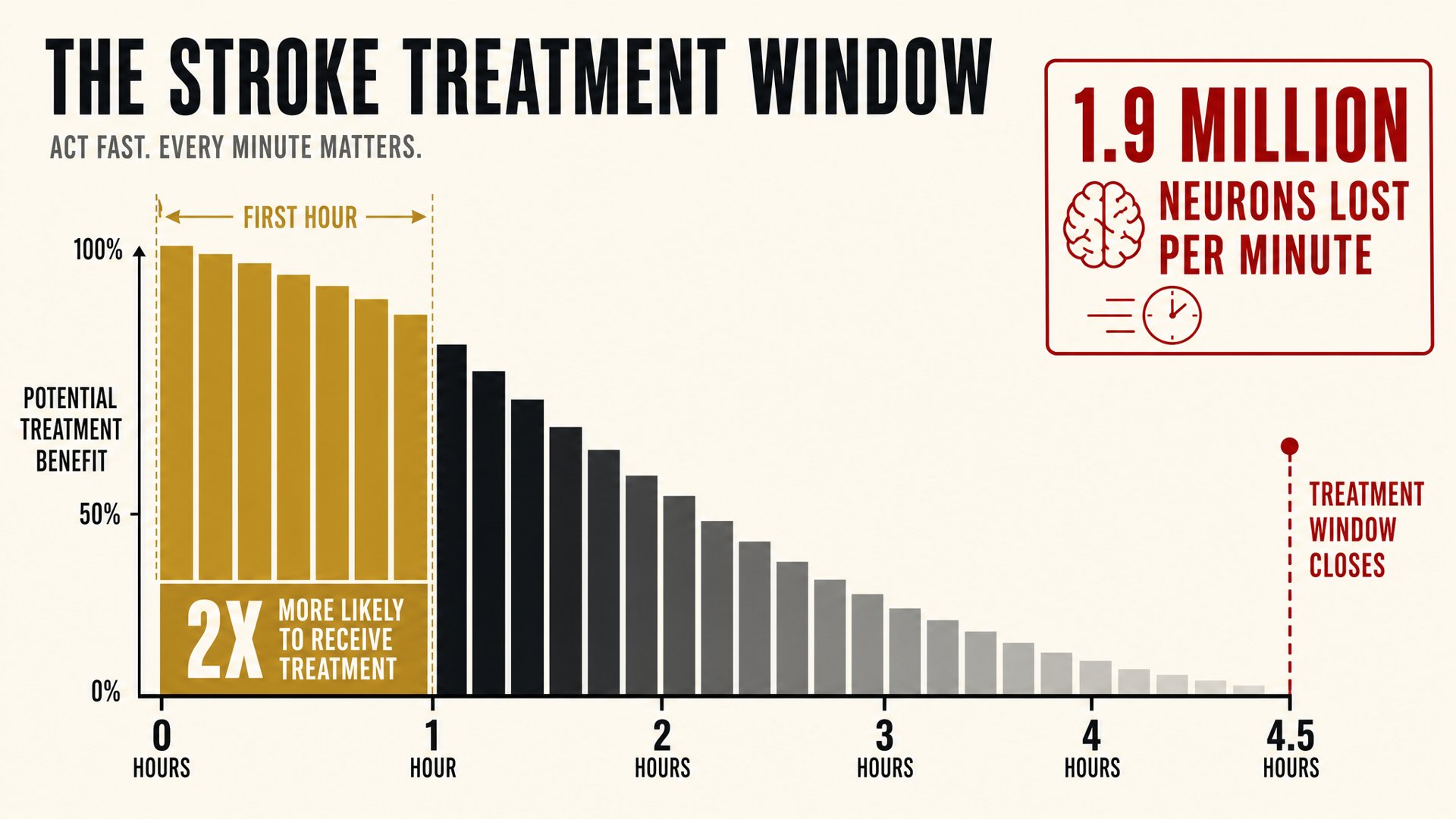
The main emergency treatment is a clot-dissolving drug called tPA (or its newer cousin tenecteplase). It's approved for use up to 4.5 hours after the last time the person was known to be well, but that window is a cliff, not a plateau. Patients who reach the hospital within the first 60 minutes are roughly twice as likely to actually receive the drug as those arriving between hours one and three. Research published in JAMA found outcomes improving with every 15-minute reduction in time to treatment.
We write about this same principle in the golden hour in trauma: the first 60 minutes after a medical catastrophe are worth more than all the hours that follow. Stroke may be the purest example. Nothing you can buy and nothing the paramedics carry substitutes for someone in the room recognizing what's happening and starting the clock early.
What to Do While You Wait for the Ambulance
You've called 911. Now your job is simple, and it's mostly about not making things worse.
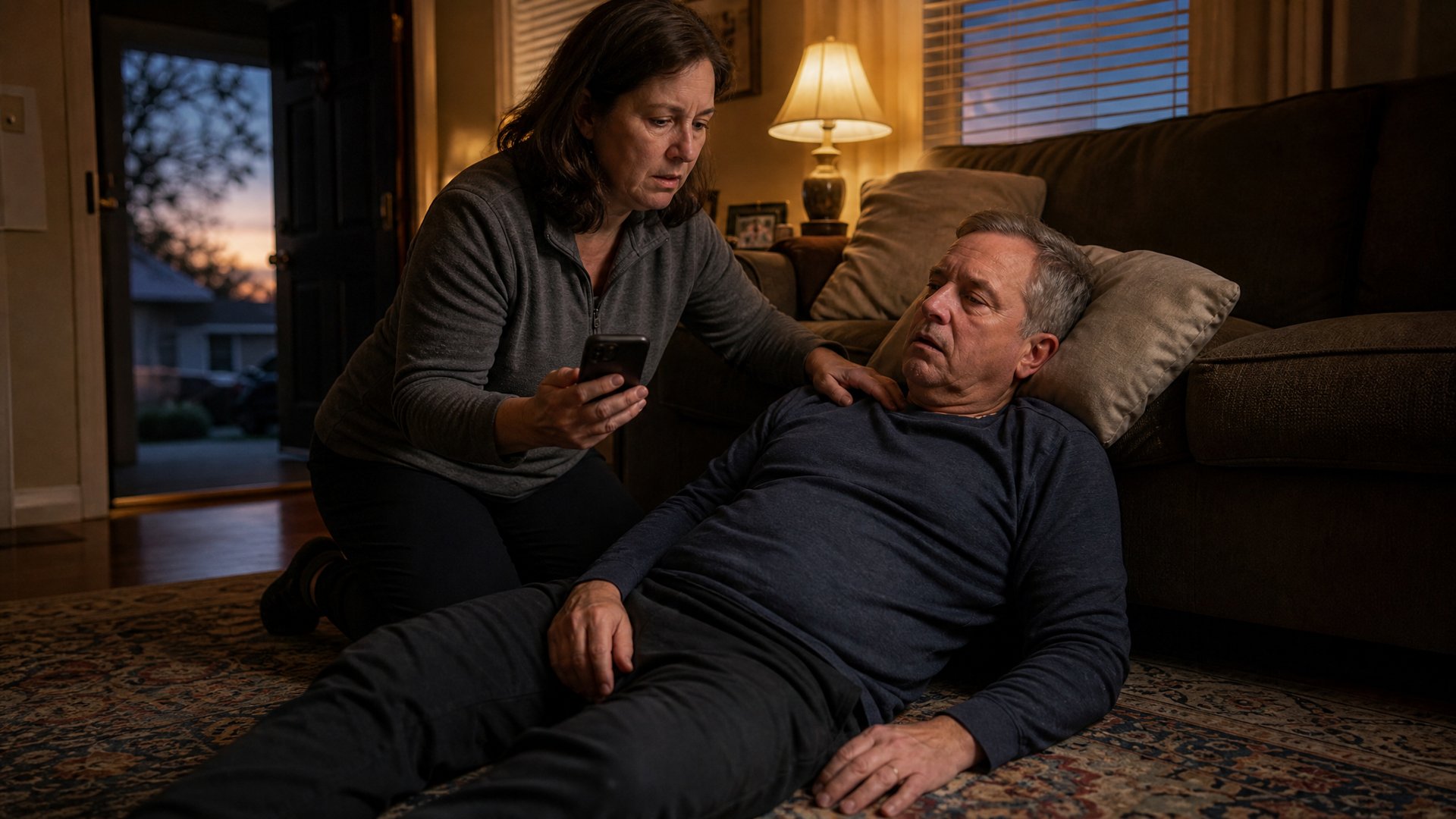
Write down the time. Last-known-well time, on your phone or the back of your hand. The ER team will ask within the first minute of arrival.
Keep them still and safe. Sit or lay them down before they fall. If they're conscious, lying on their back with head and shoulders slightly raised on a pillow is fine. If they're unconscious but breathing, roll them onto their side so their airway stays clear.
Nothing by mouth. No water, no food, no pills. Strokes routinely knock out the swallowing reflex, and anything they swallow can end up in their lungs.
Gather their medication list. If a pill organizer or prescription bottles are handy, grab them. Blood thinners in particular change what the hospital can do.
Keep talking to them. Calmly. Panic in the room raises everyone's blood pressure, including theirs. If you feel your own head going blank, that's a known effect of adrenaline, and we've covered how to push through it in why your brain freezes in an emergency.
Be ready if they stop breathing. It's rare, but severe strokes can progress to cardiac arrest. Know hands-only CPR before you ever need it.
What NOT to Do When You Suspect a Stroke
Don't drive them yourself if an ambulance can reach you. Paramedics start the stroke workup in the truck, alert the hospital before arrival, and can route to a certified stroke center instead of the nearest ER. A private car does none of that, and the patient can deteriorate in your passenger seat on the highway. The exception is a remote location where EMS is 45 minutes out and a hospital is 10. Then dispatch may tell you to drive. Ask them.
Don't give aspirin. This one surprises people, because aspirin is the right move for a suspected heart attack. Strokes are different. About 13 percent of strokes are bleeds, not clots, and aspirin makes a bleeding stroke worse. You can't tell the two apart from the outside. A CT scanner can. Let the hospital decide.
Don't let them sleep it off. The most expensive sentence in stroke care is "let's see how you feel in the morning." Symptoms that fade can be a TIA warning of a bigger event hours later, and symptoms that persist past the treatment window become permanent.
Worth noting: stroke and heart attack get confused constantly, and the correct responses differ. If chest pressure and arm pain are the story rather than face droop and slurred speech, read our post on warning signs of a heart attack.
How to Recognize a Stroke Before It Strikes: TIAs and Risk
Sometimes the body sends a warning shot. A transient ischemic attack, or TIA, produces stroke symptoms that vanish within minutes to an hour. The clot breaks up on its own and everything seems fine. It isn't. Roughly 1 in 5 people who have a TIA will have a full stroke within 90 days, many within the first 48 hours. A TIA is an emergency-room visit, not a story to mention at the next checkup.
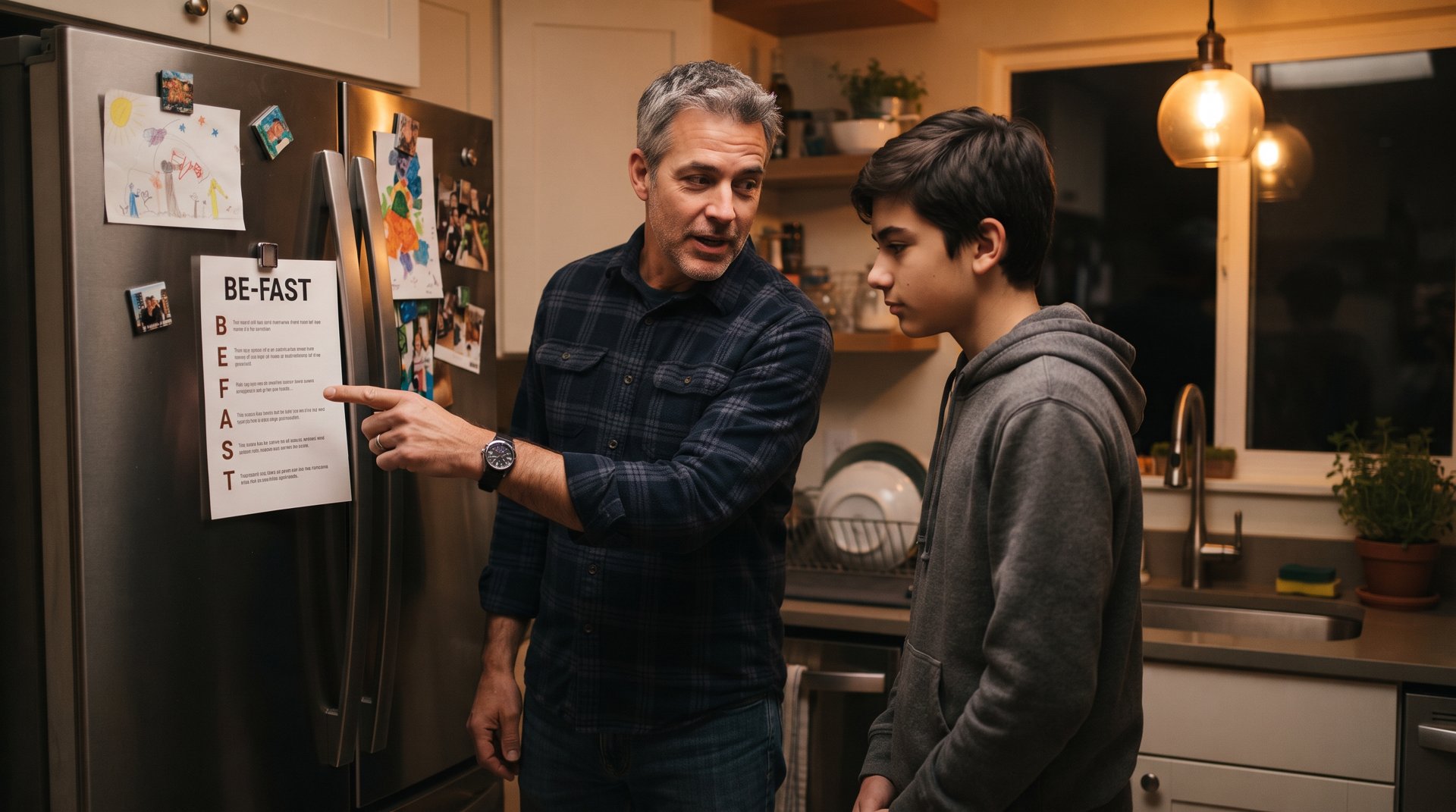
Know who's most at risk in your household: anyone with high blood pressure, atrial fibrillation, diabetes, a smoking habit, or a prior stroke or TIA. If that describes someone you live with, teach the whole family BE-FAST this week. Print the checklist, stick it on the fridge, and make sure even the kids can run it. Recognition is the one part of stroke care that can't be delegated to professionals, because they're not in the room when it starts.
The first hour of a stroke belongs to whoever is standing next to the patient, and the same is true of severe bleeding, cardiac arrest, and every other emergency we write about. Being ready is a habit, not a purchase. That said, the right gear in reach removes friction when seconds count. The 1stHour Trauma Kit puts 82 pieces of serious first-aid capability in one bag, so the day something goes wrong, you're responding instead of rummaging. See what's inside the kit.
This content is for informational purposes only and does not constitute medical advice. Always call 911 in a suspected stroke and follow the guidance of medical professionals.


