Low Blood Sugar Symptoms Without Diabetes: What to Do

You do not need diabetes to have a blood sugar crash. It is less common, which is exactly why it gets missed. People write off the shaking and sweating as stress, caffeine, or a skipped lunch. Sometimes that is all it is. Sometimes your body is telling you something that needs a name. Here is how to recognize it, what to do in the first few minutes, and when to stop waiting and get help.
Low Blood Sugar Symptoms Without Diabetes: What They Feel Like
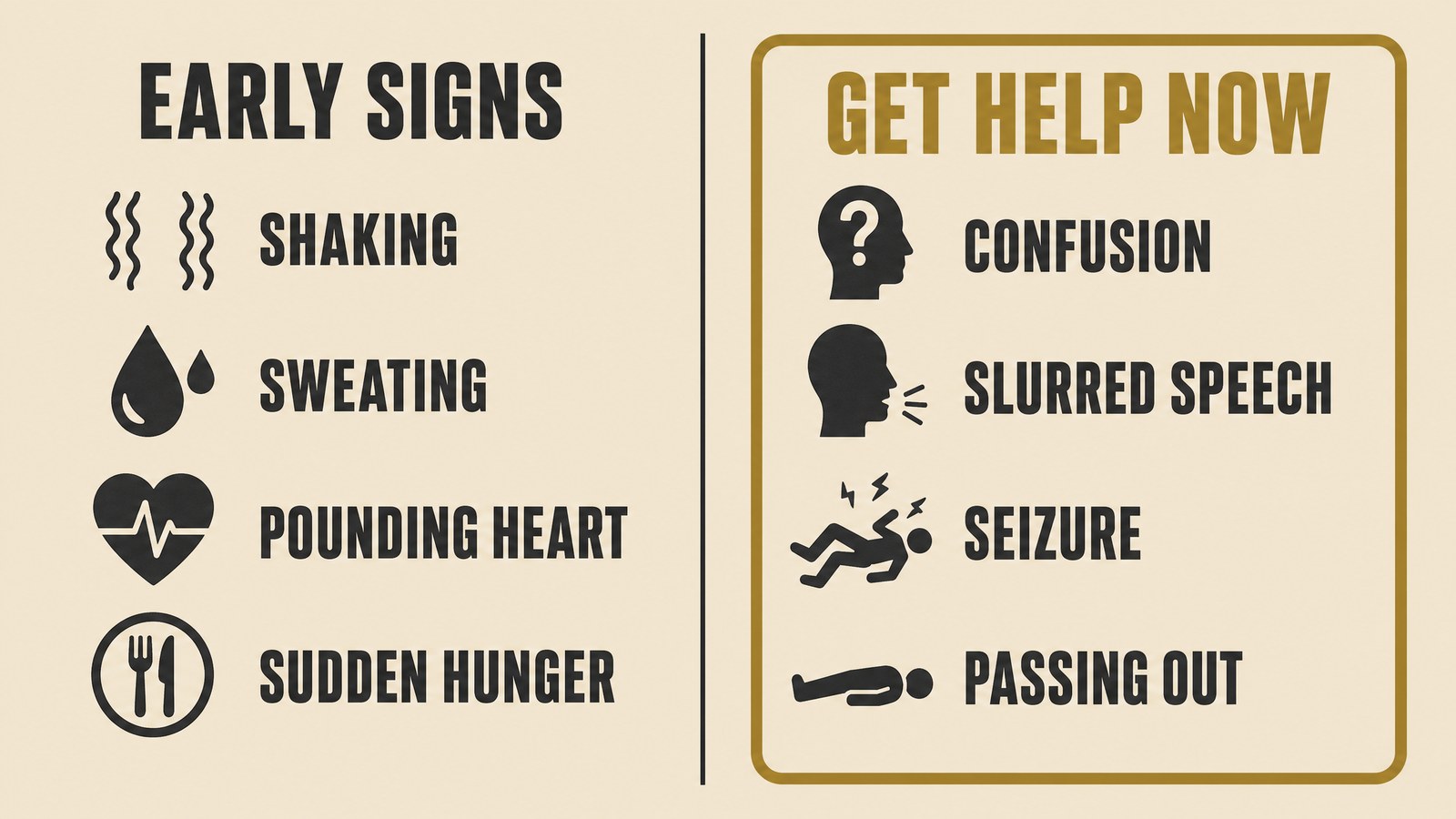
The first signs come from your body's alarm system. When glucose drops, your body releases adrenaline to push it back up, and that is why the early symptoms feel like anxiety. The Cleveland Clinic lists shaking, sweating and chills, a faster heart rate, dizziness, extreme hunger, weakness, irritability, and trouble concentrating as the early signals. The Mayo Clinic adds headache, nausea, and tingling around the lips or tongue.
Picture a Tuesday at 3 p.m. You skipped breakfast, had a light lunch, and now your hands are trembling over the keyboard. You are sweaty, a little nauseous, and the screen will not hold still. Most people reach for a vending machine and feel better within minutes. That quick recovery is a clue that the problem was sugar.
If the drop continues, the brain starts to run short of fuel. Symptoms then turn into:
- Confusion or acting out of character
- Blurred, double, or tunnel vision
- Slurred speech and poor coordination
- Seizures or fainting
At night, low blood sugar can show up as nightmares, drenched sheets, or waking up exhausted and foggy.
What Causes Low Blood Sugar in People Without Diabetes
Doctors sort non-diabetic low blood sugar into two main patterns. Knowing which one fits you helps your doctor find the cause faster.
Reactive hypoglycemia happens a few hours after eating. The Cleveland Clinic describes it as low blood sugar about two to four hours after a meal, often after a lot of simple carbohydrates like white bread, pastries, or potatoes. Your body releases more insulin than the meal called for, and the sugar overshoots downward. Stomach bypass surgery is another known trigger.
Fasting hypoglycemia shows up after long gaps without food, and it tends to have a cause worth chasing down. The Mayo Clinic lists these:
- Heavy drinking without eating, which keeps the liver from releasing stored glucose
- Severe liver, kidney, or heart disease, or a serious infection
- Hormone problems involving the adrenal or pituitary glands
- Certain medications, including someone else's diabetes pills
- Rarely, an insulin-producing tumor of the pancreas
- Starvation or malnutrition
If you have had a night of heavy drinking and wake up shaky, sweaty, and confused, that could be more than a hangover. Our guide to alcohol poisoning symptoms covers the signs that need an ambulance.
What to Do Right Now When You Think Your Blood Sugar Is Low
Act first, figure out the cause later. If you have a glucose meter, check it. Many people without diabetes do not own one, and that is fine. You can treat based on symptoms if you are alert and able to swallow.
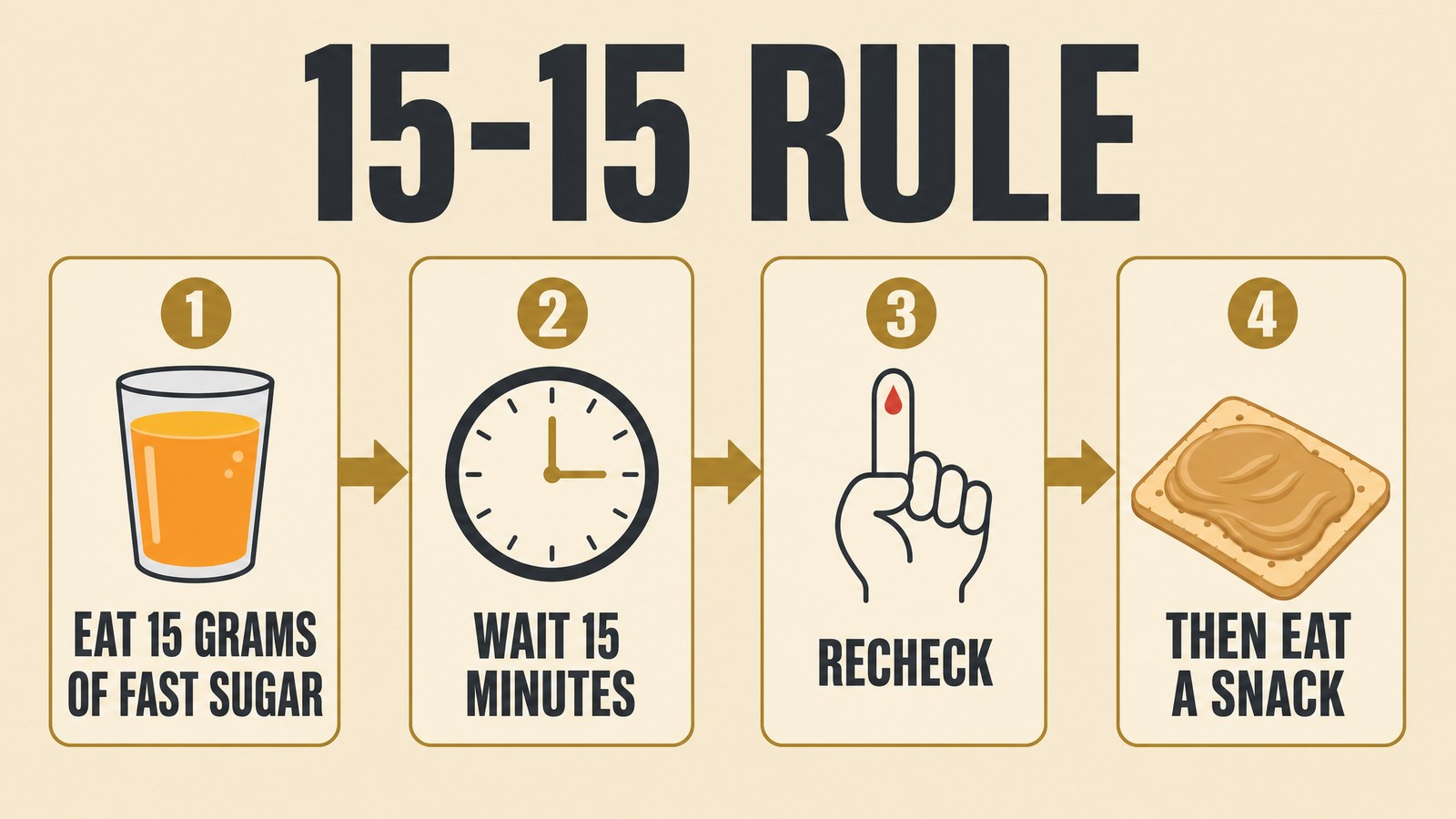
- Take 15 grams of fast-acting carbohydrate. That is about four glucose tablets, a half cup of juice or regular soda, or a tablespoon of sugar or honey. Skip chocolate and anything with a lot of fat, which slows absorption.
- Wait 15 minutes. Sit down while you wait. Do not drive.
- Recheck. If you have a meter and the reading is still low, or you still feel bad, repeat the 15 grams.
- Eat a real snack once you feel better. Pair protein with a slow carbohydrate, like peanut butter on whole-grain crackers, so the number does not crash again.
The Cleveland Clinic calls this the 15-15 rule, and the National Institute of Diabetes and Digestive and Kidney Diseases gives the same approach, with 15 to 20 grams as the dose. It was written for people with diabetes, but the first-aid logic is the same: fast sugar, short wait, recheck.
When Low Blood Sugar Without Diabetes Is an Emergency
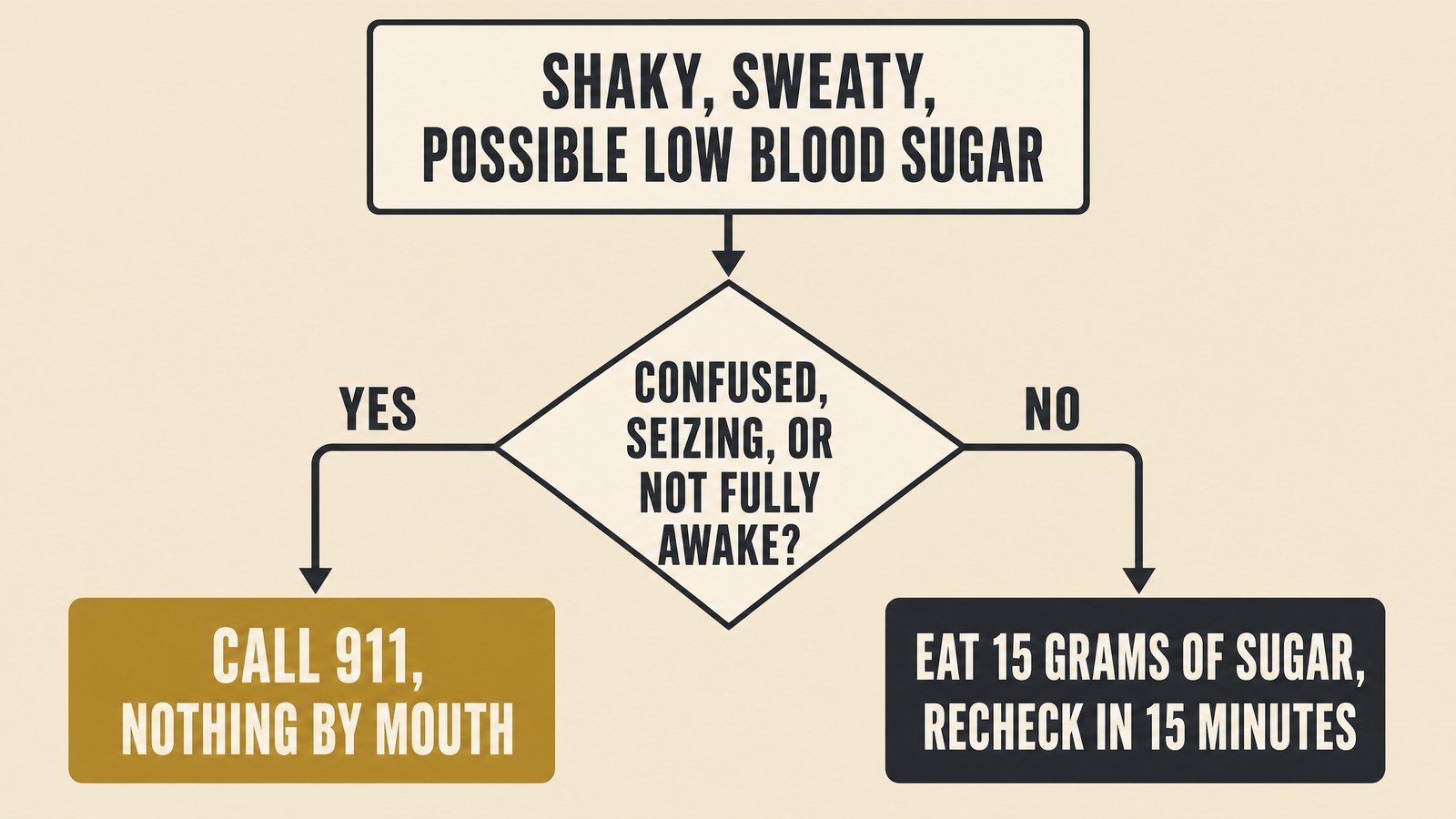
Some situations should not be handled with a juice box. Call 911 if the person:
- Is confused, acting strangely, or cannot follow simple directions
- Has slurred speech or cannot walk steadily
- Has a seizure
- Is unconscious or very hard to wake
Do not put food or drink in the mouth of someone who is not fully alert. They can choke. Roll them onto their side, keep them from hurting themselves, and stay with them until help arrives. If they are seizing, our post on what to do if someone has a seizure has the steps.
Slurred speech and confusion also appear in a stroke, so do not assume it is sugar. If one side of the face droops or one arm is weak, treat it as a stroke and read how to recognize a stroke FAST. When in doubt, call. Paramedics can check a blood sugar in seconds.
Low Blood Sugar Symptoms Without Diabetes That Keep Coming Back
One bad afternoon after a missed meal is not a mystery. A pattern is. Book an appointment if episodes keep happening, if they wake you at night, if they come on without any obvious reason, or if you needed someone else to help you through one.
The Mayo Clinic advises getting medical help right away when you have possible symptoms and do not have diabetes. Serious causes are uncommon, but the cause is not something to guess at. Your doctor may ask you to track when the episodes happen, what you ate beforehand, and what you were doing. If episodes happen, treat them, then write down the time, what you felt, and what you ate. A simple note on your phone is enough, and it gives the doctor something to work with.
If you do get a meter reading, write that down too. Clinicians generally look for a documented low number alongside symptoms that clear after you eat. The Cleveland Clinic gives a threshold of below 55 mg/dL for people without diabetes, though your doctor will judge what your numbers mean.
How to Lower Your Risk of Another Episode
You cannot fix an underlying medical cause with diet alone, but daily habits help if the cause is reactive or meal related. The Mayo Clinic suggests eating regularly, choosing complex starches such as whole grains, beans, and starchy vegetables, eating smaller meals if you have reactive hypoglycemia, and limiting sugary foods and drinks.
A few practical moves:
- Do not go long stretches without eating when you are active
- Never drink heavily on an empty stomach
- Keep fast sugar in your bag, your desk, and your car
- Tell the people around you what to do if you start acting strangely
That last one matters. Low blood sugar affects judgment, and you may not realize how bad you look. A coworker or family member who knows the signs can step in sooner. Stress can also make the whole picture worse, so if you have been wondering why you feel so rattled, our piece on why your brain freezes in an emergency explains how the body's alarm response works. And if you are helping someone who does have diabetes, see our guide to diabetic emergencies.
Most blood sugar scares pass in a quarter hour. The ones that do not need someone nearby who knows what to do. See what's inside The 1stHour Trauma Kit, gear and guidance built for the first hour of whatever happens next.
This content is for informational purposes only and does not constitute medical advice. If you or someone else is confused, seizing, or unconscious, call 911.


