Alcohol Poisoning Symptoms: When Sleeping It Off Kills
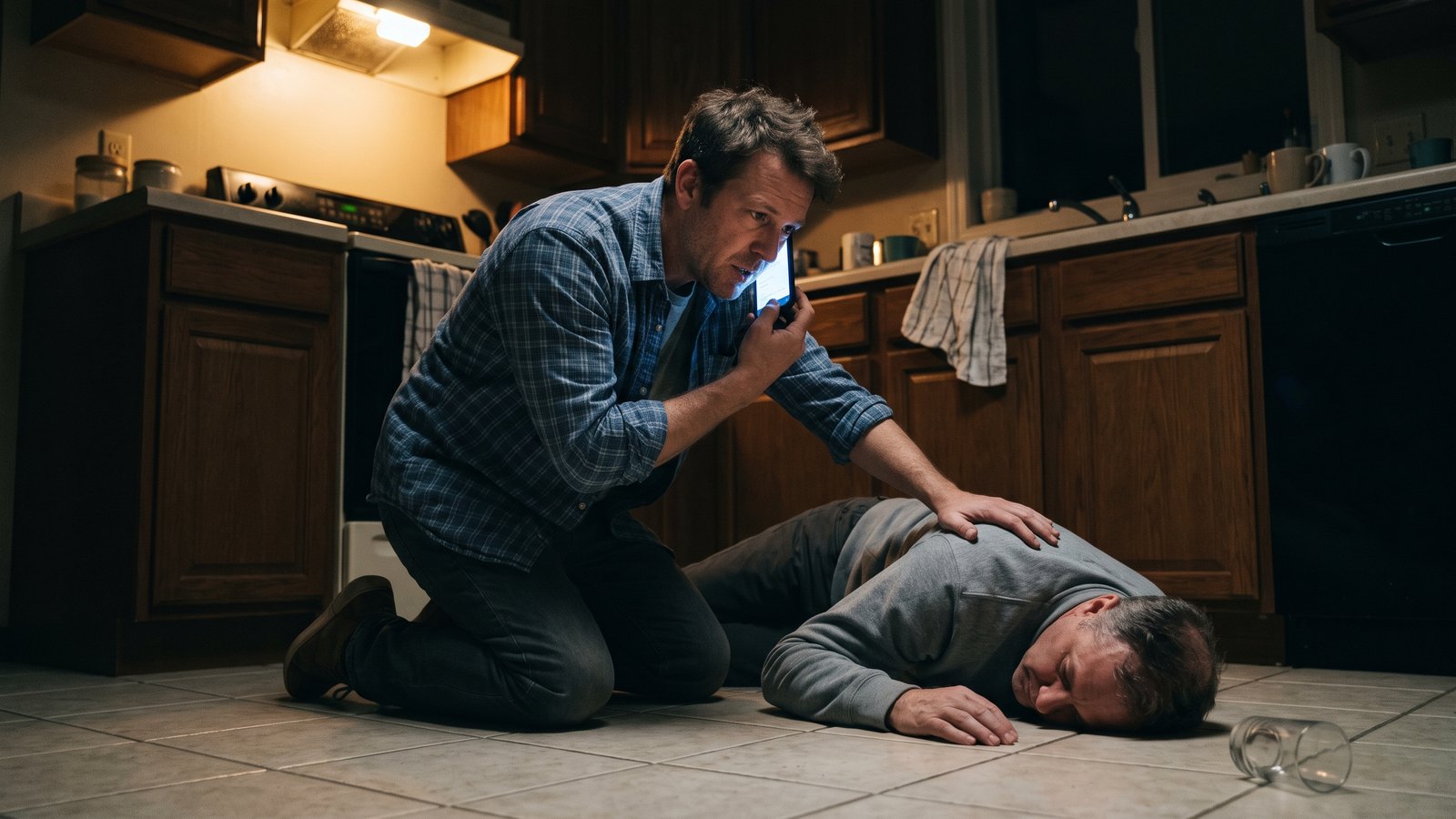
Most of us have steered a friend toward a couch at some point and figured that was the end of it. Sleep, water, a rough morning, a story later. That plan works right up until it doesn't, and the reason it fails is that alcohol poisoning symptoms look like ordinary heavy drinking for a while, then stop looking like it very suddenly. The line isn't about how loud someone was or how much they put away. It's about whether the parts of the brain that run breathing and body temperature are still doing their job. Here's how to read that, and what to do while help is on the way.
The Alcohol Poisoning Symptoms That Mean Call 911 Now
The National Institute on Alcohol Abuse and Alcoholism publishes a short list of critical signs. It's worth reading once now rather than at two in the morning:
- Mental confusion or stupor
- Difficulty staying conscious, or you can't wake them at all
- Vomiting
- Seizures
- Slow breathing, fewer than 8 breaths per minute
- Irregular breathing, 10 seconds or more between breaths
- Slow heart rate
- Clammy skin
- Dulled responses, including no gag reflex
- Very low body temperature, bluish skin, or unusual paleness
Two of those are numbers, and numbers are easier to act on than adjectives. Pull out your phone, watch the person's chest, and count for a full minute. Under 8 is an emergency. So is a pause of ten seconds or longer between breaths, even if the overall count looks acceptable.
NIAAA is direct about the rest of it: don't wait for all the symptoms to show up, and understand that a person who has passed out can die. If you're standing there debating it, that debate is your answer.
Drunk vs. Poisoned: Where the Line Actually Sits
Loud, sloppy, unsteady, repeating themselves, sick in the bathroom. Unpleasant, but the body is still running its own systems. The person can be roused, can hold a conversation of sorts, is warm, and is breathing at a normal rate.
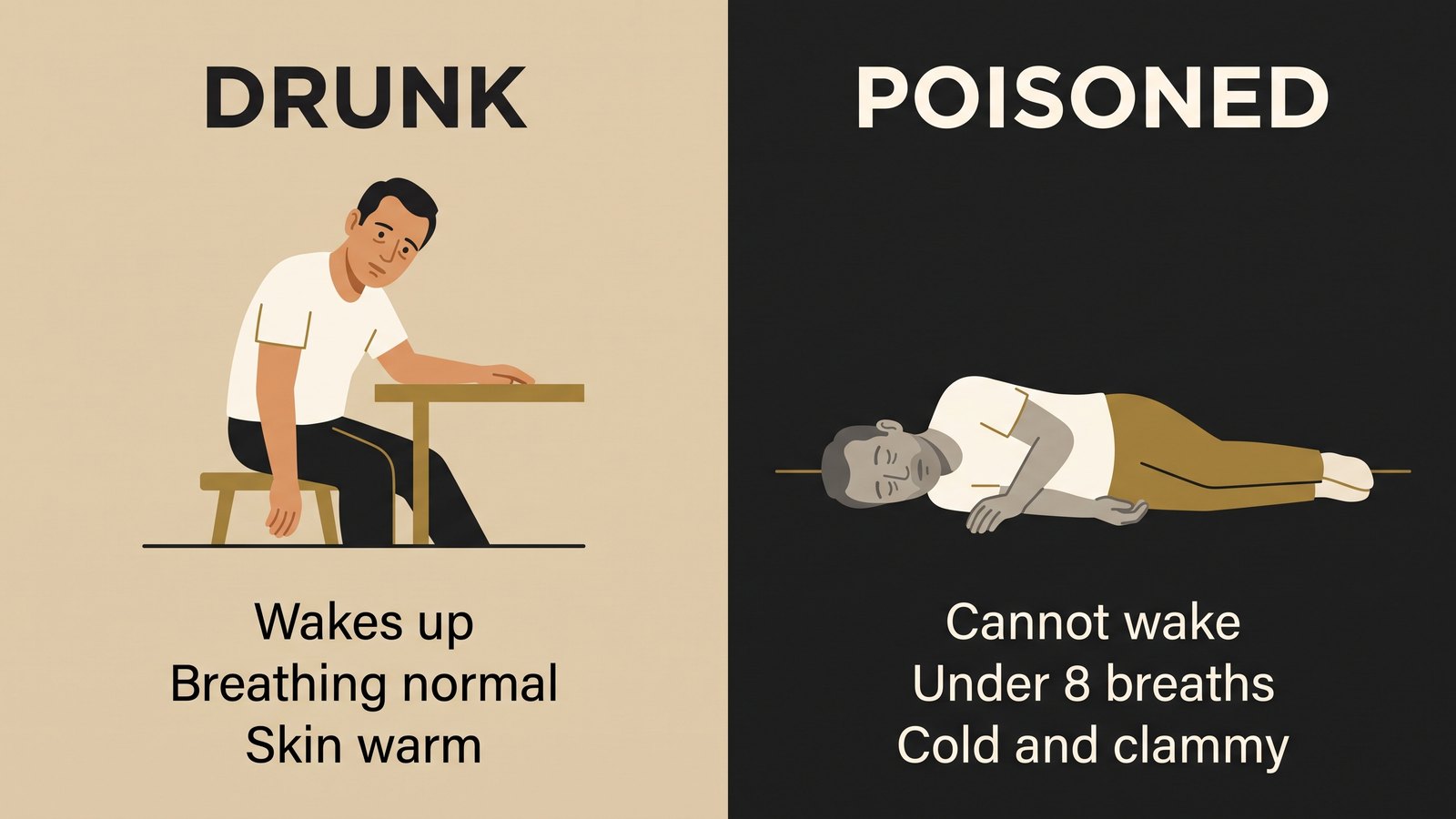
Poisoned looks different, and quieter. That's what makes it easy to miss. The room calms down, someone stops talking, and everyone reads it as the party winding down instead of a nervous system shutting off. Cleveland Clinic's breakdown of blood alcohol levels puts loss of consciousness in the 0.30 to 0.40 percent range and calls anything above 0.40 percent potentially fatal, with coma and respiratory arrest on the table.
So the questions worth asking aren't about the number of drinks. They're these: Can I wake them? Are they breathing normally? Is their skin warm and normal in color? Is anyone still with them? Three good answers and one bad one is still a bad situation.
Why Blood Alcohol Keeps Climbing After the Last Drink
Here's the part that catches people. Someone stops drinking, or passes out, and everyone relaxes because the intake stopped. But alcohol already sitting in the stomach and small intestine keeps crossing into the bloodstream after that. NIAAA is explicit about it: blood alcohol concentration can continue to rise even when a person has stopped drinking or is unconscious.
That means the worst version of the person you're looking at may still be twenty or forty minutes ahead of you. Someone who seemed borderline when they lay down can be well past borderline by the time anyone looks in again. The liver has one speed and it can't be hurried.
This is also why "he's done, he'll be fine" is such a common last decision before a bad outcome. It treats the situation as static when it's still moving.
How to Check Alcohol Poisoning Symptoms in Someone Who Passed Out
If the person is out, you need four pieces of information, and you can gather all of them in under a minute.
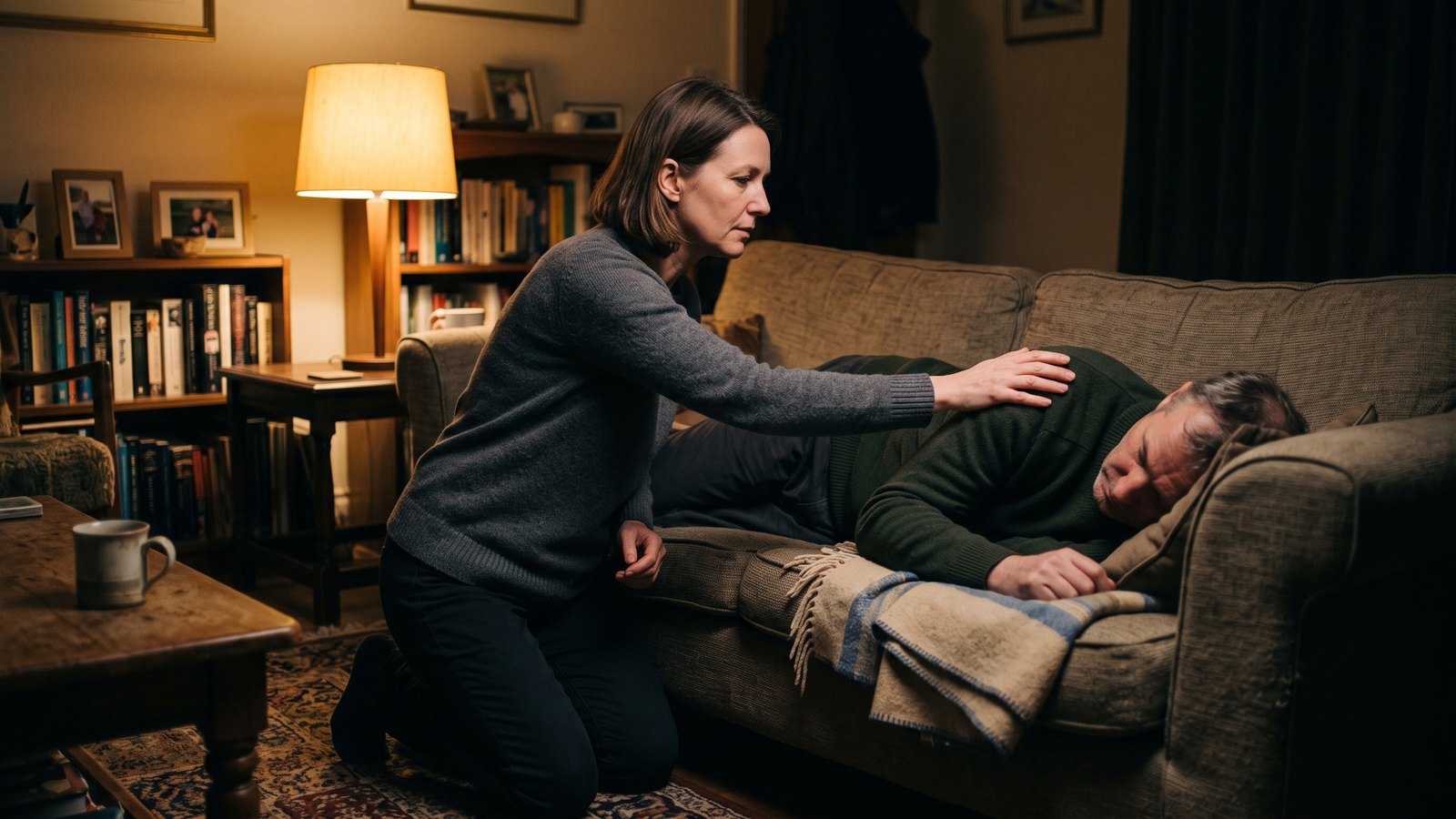
Can you rouse them?
Say their name loudly. Shake a shoulder firmly. A heavily intoxicated person will usually mumble, swat at you, or open their eyes briefly. If you get nothing at all, that's not sleep.
How are they breathing?
Count for a full minute, and watch for the gaps. Snoring, gurgling, or wet-sounding breathing means fluid where it shouldn't be, and that's an airway problem, not a comfort problem.
What does their skin tell you?
Cold, clammy, gray, or bluish, especially around the lips and fingernails, points to poor oxygen and falling body temperature. Alcohol dilates blood vessels and dumps heat, which is why body temperature can drop fast in someone lying on a cold floor or outside.
Have they vomited?
At high blood alcohol levels the gag reflex dulls or disappears, which means vomit doesn't get cleared. Choking is the way this most often turns fatal, and it happens silently to someone lying on their back.
What to Do While You Wait for the Ambulance
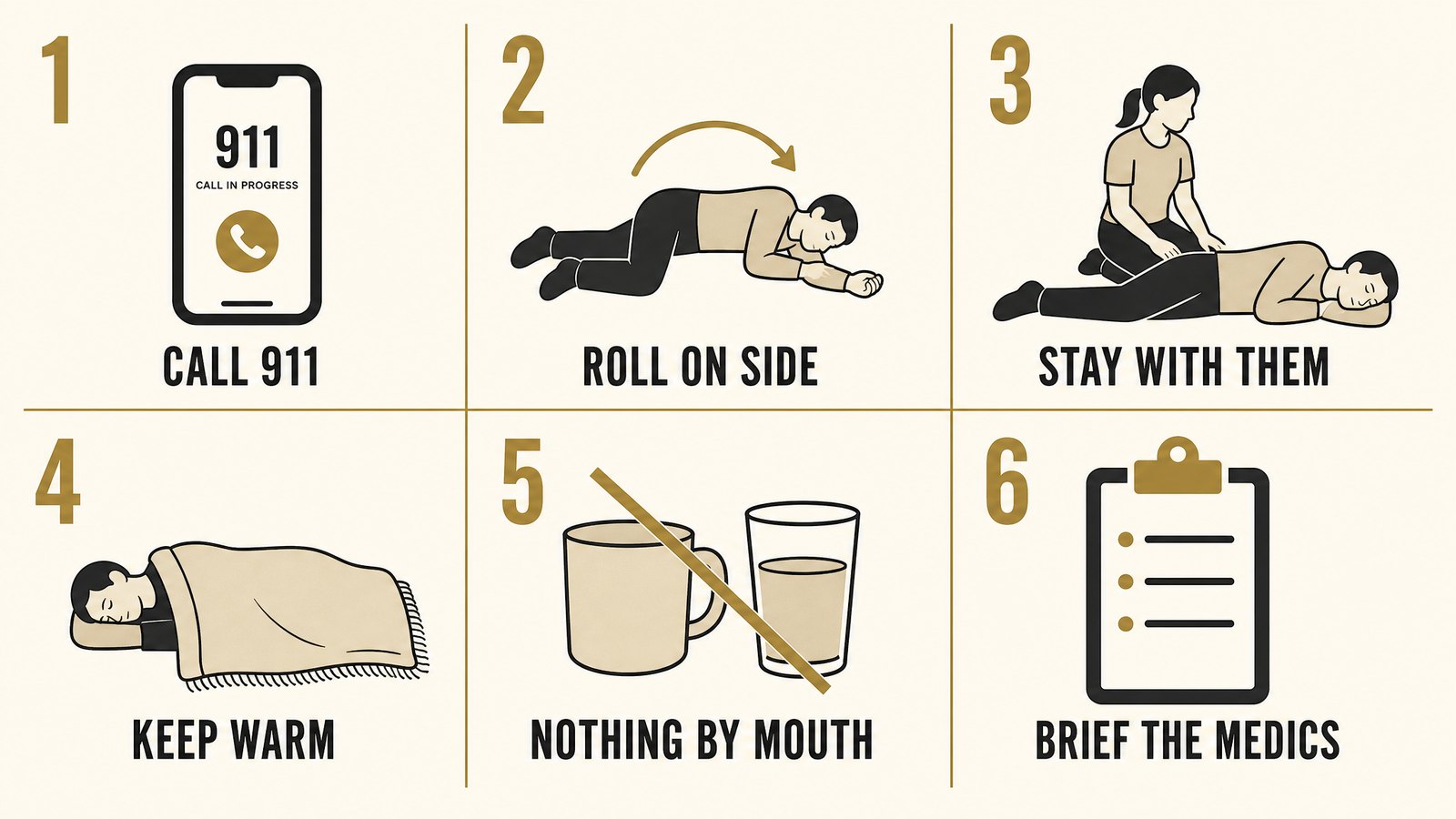
- Call 911. Say the person is unresponsive after drinking and describe the breathing. That gets a faster response than "my friend had too much."
- Roll them onto their side. If they're unconscious or lying down, put them on one side with the lower ear pointed toward the ground so anything that comes up drains out instead of down. If they're conscious and being sick, have them lean forward.
- Don't leave them alone. Not for a minute, not to move the car, not to deal with anyone else. This is the single instruction people break most often, and it's the one that matters most.
- Keep them warm. A blanket over them, off a cold floor if you can manage it.
- Nothing by mouth if they're not fully awake. No water, no food, no coffee. An unconscious person can't protect their airway.
- Get your facts ready for the medics. What they drank and roughly how much, when they stopped, any other drugs or medications involved, allergies, and known health conditions. Alcohol mixed with opioids, sleep aids, or anti-anxiety medication is a much more dangerous combination, and the medics need to know.
If they seize, don't restrain them or put anything in their mouth. Clear hard objects out of the way, time it, and stay on the line. Seizure response has its own rules. If they stop breathing altogether, start chest compressions and keep going until EMS takes over.
Coffee, Cold Showers, and Walking It Off
None of it works. NIAAA says so in one sentence: cold showers, hot coffee, and walking do not reverse the effects of an alcohol overdose and could actually make things worse.
Worth understanding why, because "it can't hurt" is the usual justification. Caffeine makes someone more alert without lowering their blood alcohol at all, which produces a person who is still poisoned and now willing to drive. A cold shower drops body temperature in someone already losing heat, and an unsteady person in a wet tub is a fall waiting to happen. Walking them around raises the injury risk and buys nothing.
Also skip forcing vomiting. It raises the odds of aspiration in someone whose gag reflex is already unreliable. The only useful interventions here are the position, the blanket, the company, and the phone call. Everything else is theater. Note that alcohol is one poisoning where the standard "call Poison Control" reflex doesn't apply the same way, since other kinds of poisoning follow different rules and this one is a straight 911 call.
Who This Actually Kills
Ask most people to picture an alcohol poisoning death and they picture a nineteen-year-old at a party. The CDC's Vital Signs report says otherwise. About six people a day die of alcohol poisoning in the United States, roughly 2,200 a year. Three in four of those deaths are adults aged 35 to 64. Three in four are men. The highest death rate lands in the 45 to 54 bracket.
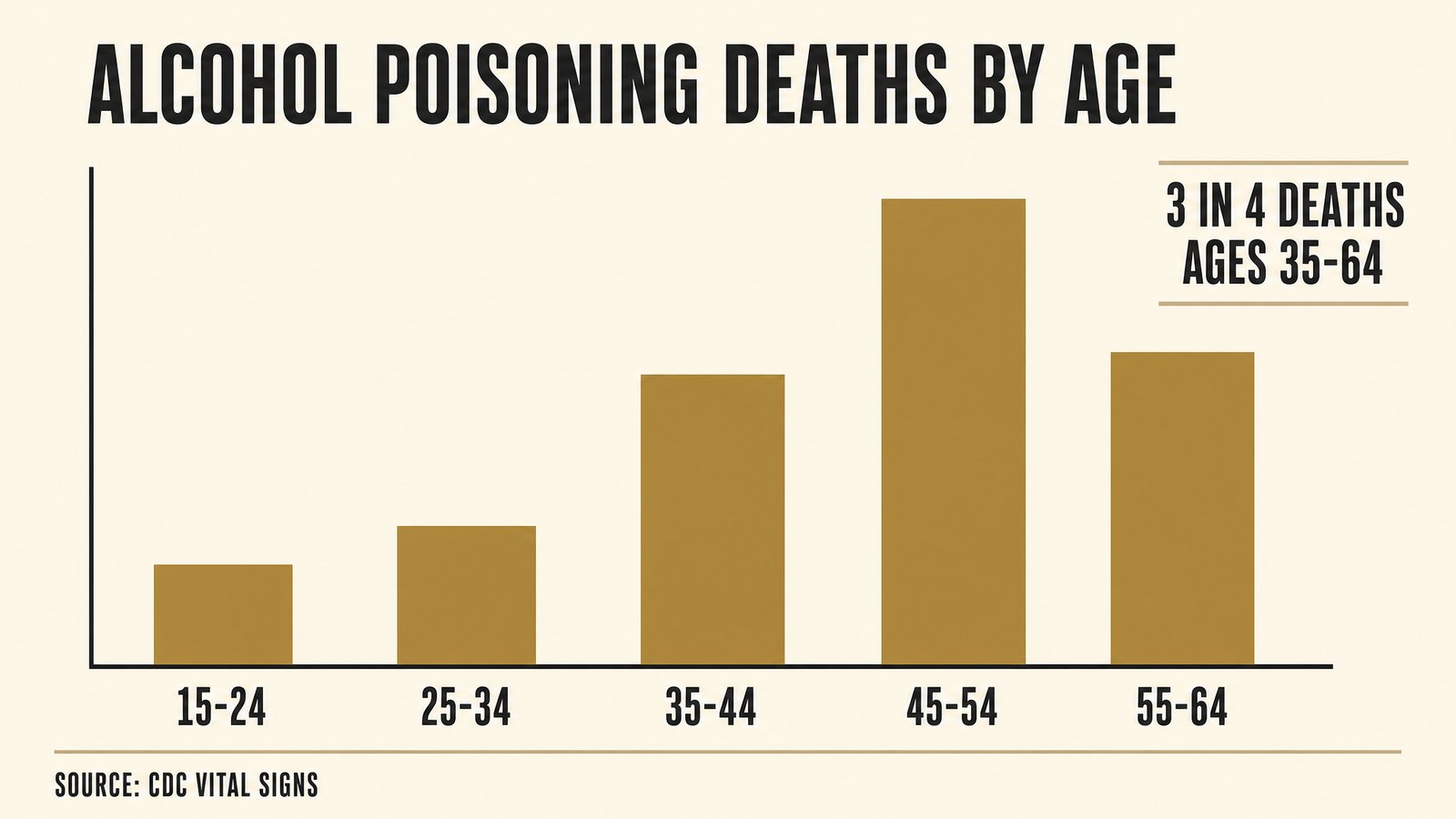
That reframe changes who you're watching. It's the guy who's been drinking the same way for twenty years and has the tolerance to prove it, at a retirement party or a hunting camp or his own kitchen. Tolerance changes how drunk someone looks. It doesn't change what a given blood alcohol level does to the brainstem, and it doesn't stop a dulled gag reflex from letting vomit into a windpipe.
The people around him are the variable. Someone who notices the breathing and makes the call changes the outcome. Someone who decides he's earned a nap doesn't.
Reading the signs is most of this. The rest is being ready for what the first hour hands you, whether that's a fall on the way to the bathroom, a cut from broken glass, or a long wait in a driveway for an ambulance you can hear but can't see yet. The 1stHour Trauma Kit puts 82 pieces of real medical gear in one case, built for the calls that don't wait until morning.
This content is for informational purposes only and does not constitute medical advice. If you suspect alcohol poisoning, call 911 immediately. If you or someone you know is struggling with alcohol use, SAMHSA's free and confidential helpline is available at 1-800-662-HELP (4357).


