What to Do If Someone Is Having a Seizure
Knowing what to do if someone has a seizure is one of those skills that feels abstract right up until you need it in real time. Watching it happen is one of those moments that feels a lot bigger than it usually is. The shaking, the sounds, the fact that nothing you say seems to reach them, all of it makes the seconds crawl by. Most seizures stop on their own within a minute or two and the person comes out the other side fine. But knowing the actual steps, and just as importantly what not to do, is the difference between helping and accidentally making things worse. Here's the actual protocol, not the version passed around at dinner parties.
What a Seizure Actually Looks Like
Not every seizure looks like the version in movies. The most recognizable type, a tonic-clonic seizure, involves the body going stiff first, then jerking or convulsing rhythmically. The person usually loses consciousness, may make unusual sounds as air passes over tightened vocal cords, and sometimes loses bladder control. It typically lasts one to three minutes.
Other seizures look nothing like that. Some involve a blank stare and a brief loss of awareness with no convulsing at all. Some involve repetitive movements, like lip smacking or picking at clothing, while the person seems partially there but not responsive to you. If you're not sure what you're looking at, the safe move is to treat it as a seizure and follow the same steps below. You don't need a diagnosis to help correctly.
What to Do If Someone Has a Seizure: The First Steps
The goal during the seizure itself is simple: protect the person from injury and don't interfere with the seizure itself.
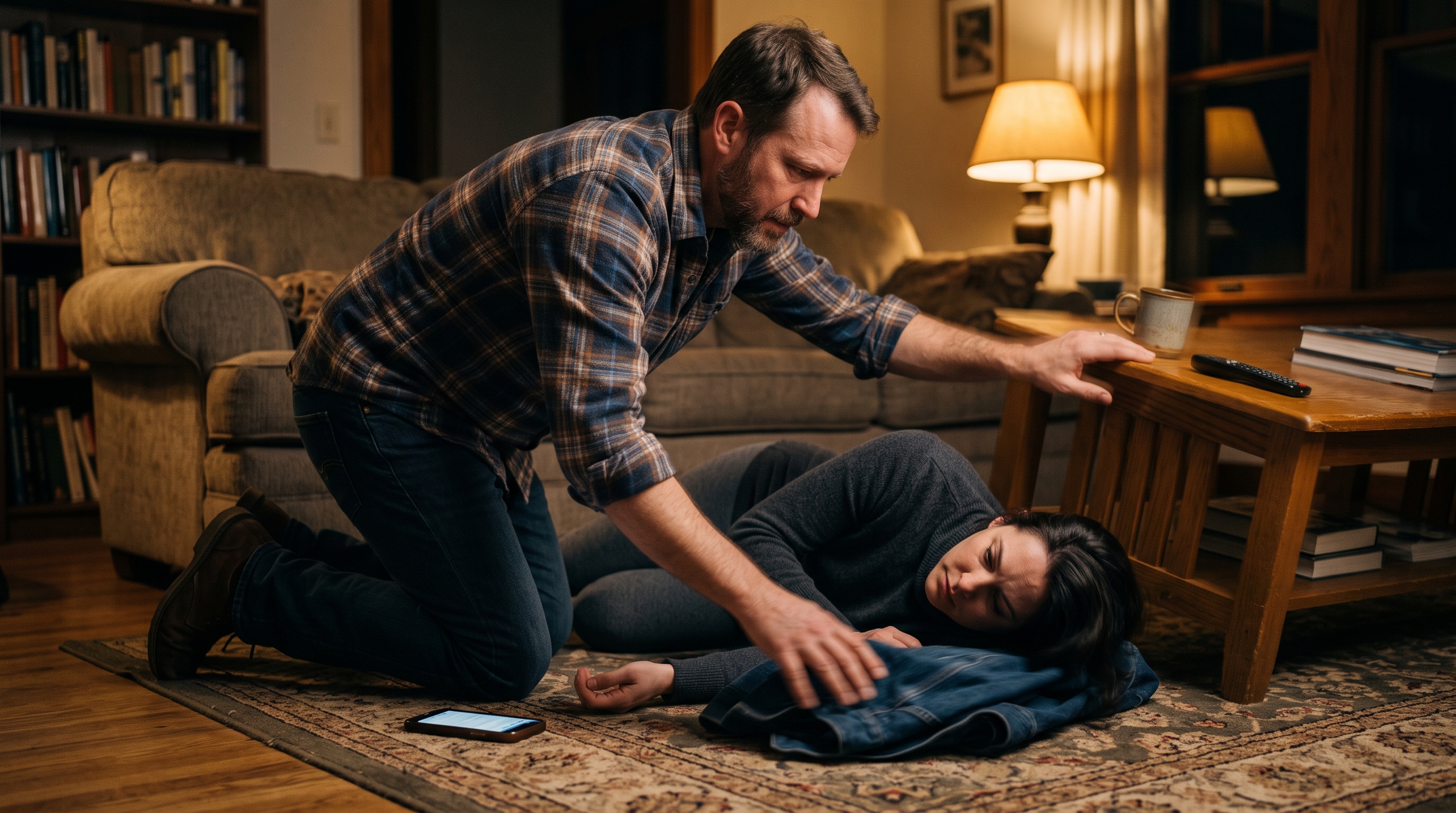
Ease them to the ground if they're standing or sitting when it starts. You can't stop a fall, but you can guide it. Clear the immediate area of furniture, glass, anything with a hard edge. If you can, slide something soft and flat under their head, a folded jacket works fine, so the back of their skull isn't hitting the floor with every jerk.
Loosen anything tight around the neck, a collar or a necklace, in case it restricts breathing. Take off eyeglasses if they're wearing them. Then step back mentally and just watch. Note the time it started. That single detail, more than anything else you do, matters most if the seizure runs long.
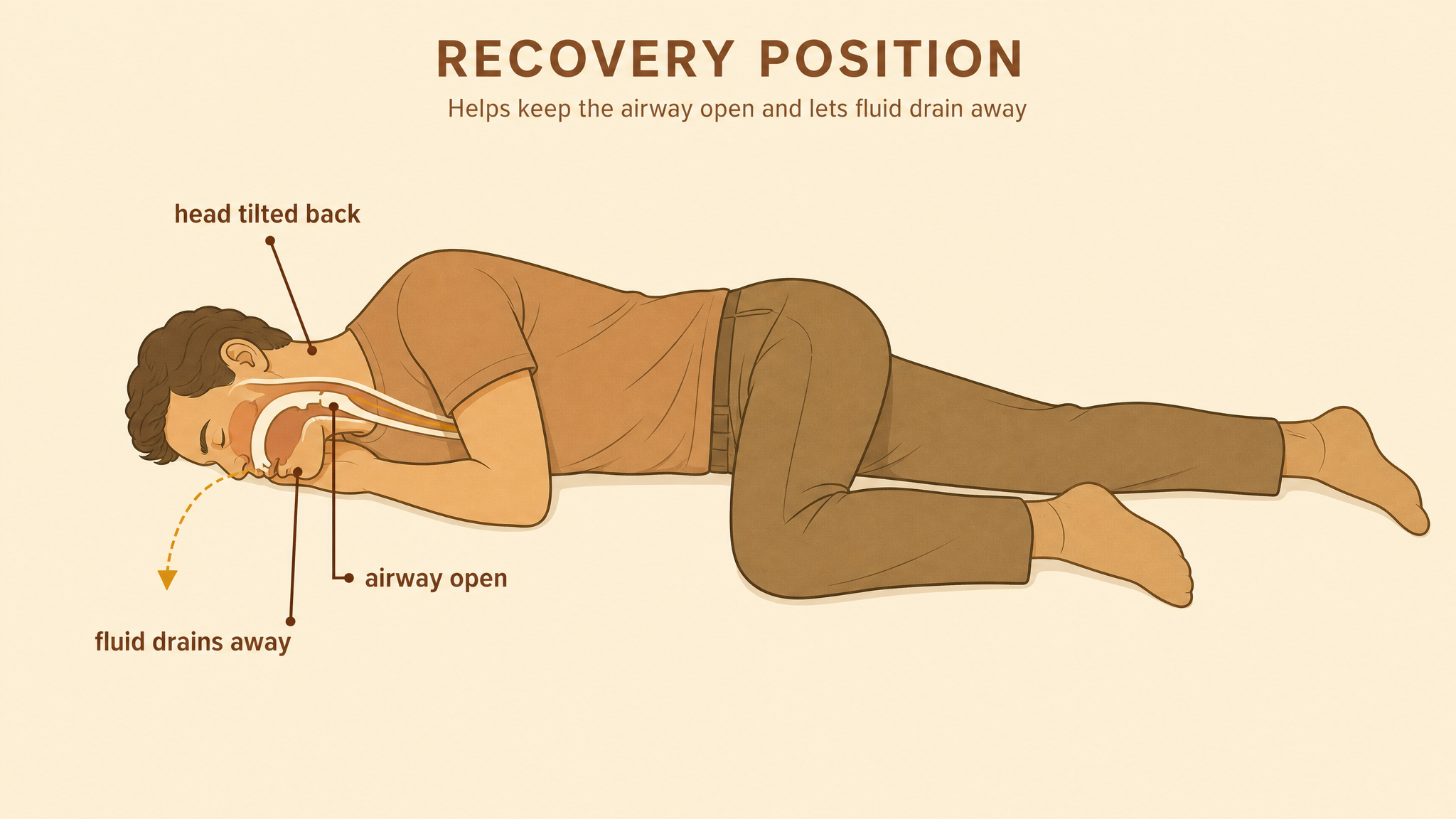
Once the convulsing has slowed or stopped, or sooner if you can do it safely, roll them onto their side with their mouth angled toward the ground. This keeps saliva or vomit from pooling in the airway. Stay with them the entire time. A seizure is disorienting enough without waking up alone.
What Not to Do During a Seizure
A few instincts feel protective and actually aren't.
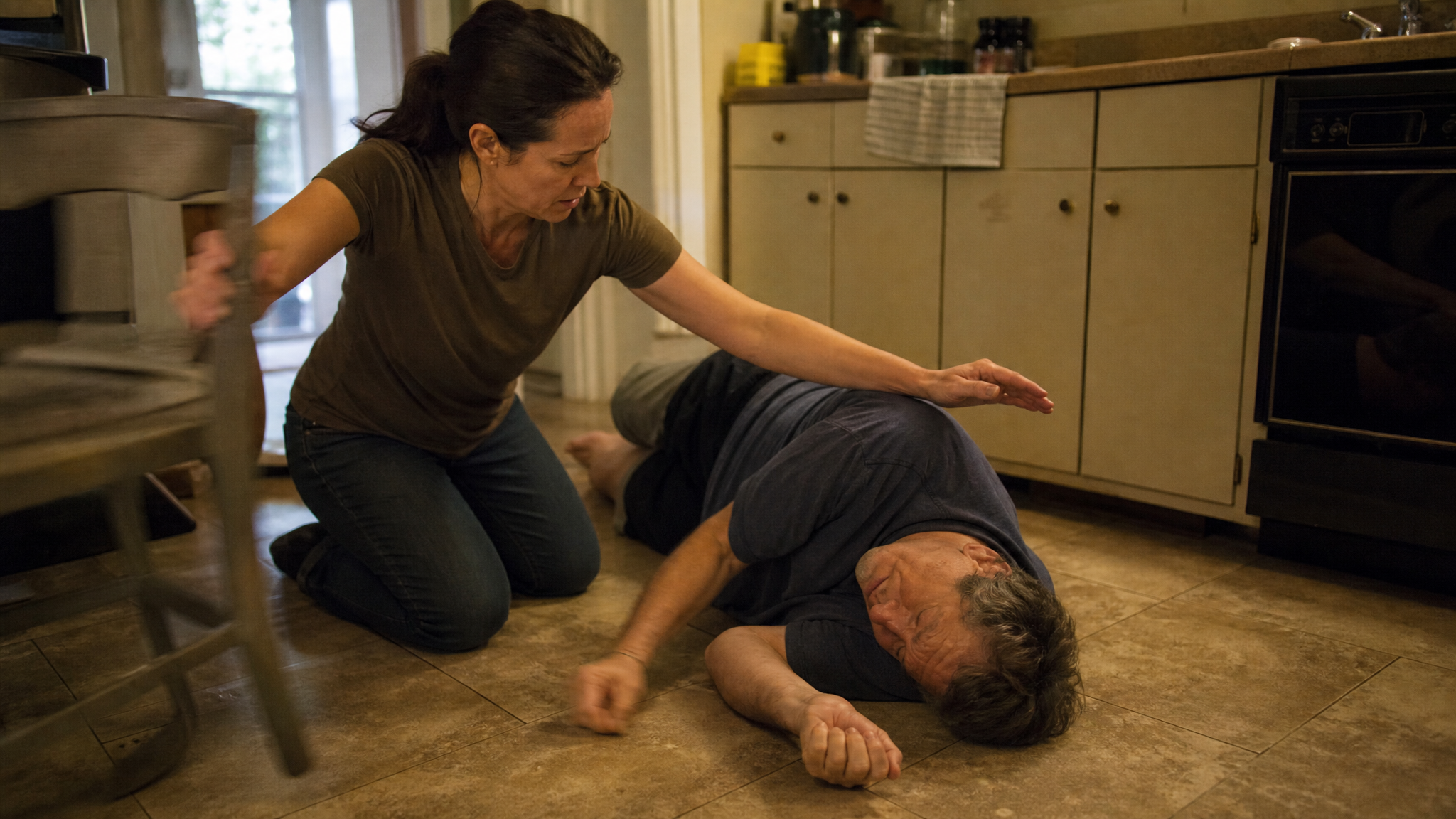
Don't hold the person down or try to stop the movement. The convulsions aren't something you can override by applying pressure, and trying to can injure both of you, a dislocated shoulder from restraint during a seizure is a real and avoidable injury.
Don't put anything in their mouth. This is the one that refuses to die as a piece of common knowledge, and it's flat-out wrong. A person cannot swallow their tongue during a seizure; it's anatomically not something that happens. A spoon, a wallet, your fingers, anything jammed between clenched teeth is far more likely to break a tooth, cut the mouth, or block the airway than it is to help anything.
Don't try to give mouth-to-mouth breaths during the convulsing itself. Breathing typically resumes on its own once the seizure passes. If it doesn't resume once things have stopped, that's a different situation, and it's covered below.
Don't offer water, food, or medication until the person is fully alert and aware of their surroundings. Someone in a post-seizure fog can't swallow safely, and giving them anything by mouth before they're clearly with you again risks choking.
What to Do If Someone Has a Seizure That Passes the 5-Minute Mark
Most seizures don't need an ambulance. This one does.
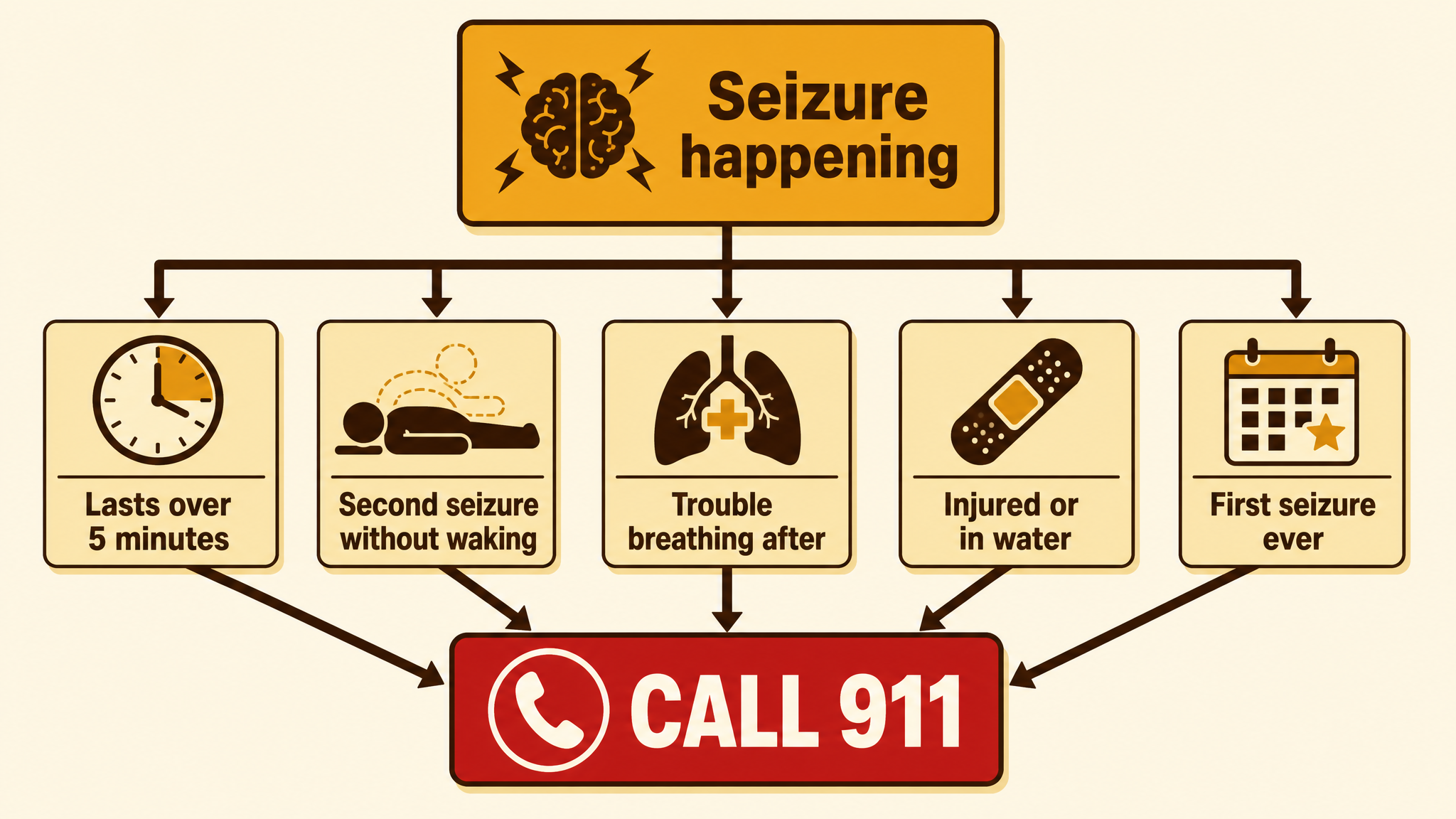
Call 911 if the seizure lasts longer than 5 minutes. This is the single number worth remembering out of everything in this article. A seizure that runs past that mark has a real chance of progressing into status epilepticus, a prolonged seizure state that requires emergency medical treatment.
Also call if the person has a second seizure shortly after the first without fully waking up in between, if they're having serious trouble breathing or don't seem to be waking up once the shaking stops, if they were injured during the fall or the seizure happened in water, or if this is the first seizure they've ever had. A first-time seizure always warrants medical evaluation, even if it resolves in under a minute, because it can signal something that needs a doctor's attention regardless of how it looked in the moment.
Call as well if the person is pregnant, has diabetes and doesn't regain consciousness, or if you simply don't know their medical history and can't rule out something more serious going on. When in doubt, make the call. Nobody has ever regretted calling 911 for a seizure that turned out fine.
After the Seizure Stops: The Recovery Position and What Comes Next
Once the convulsing ends, the person usually enters what's called the post-ictal state: groggy, confused, sometimes combative without meaning to be, often with no memory of what just happened. This can last anywhere from a few minutes to half an hour.
Keep them in the recovery position, on their side, if they're not fully alert yet. This lets fluid drain out of the mouth instead of down the airway. Stay close, speak calmly, and resist the urge to explain everything that just happened all at once. A simple "you had a seizure, you're safe, I'm right here" covers what they need to hear in the first minute.
Check them for any injuries that happened during the fall or the convulsing itself, since people rarely notice a cut or a bump until they're more alert. Keep them warm if it's cold, and don't let them try to stand or walk until they're steady and clearly oriented. Once they're fully back, they'll likely want to know what happened. Tell them plainly and offer to help them get home or reach someone who can stay with them, since driving or being alone right after a seizure isn't safe.
If It's a Child, or It's Their First Seizure
Kids get a specific kind of seizure that adults almost never do: a febrile seizure, triggered by a rapid spike in body temperature during a fever. It looks frightening, shaking, unresponsiveness, sometimes blue lips for a few seconds, but the large majority resolve in under two minutes and don't cause lasting harm. The steps are identical to any other seizure: clear the area, protect the head, don't restrain, don't put anything in the mouth, time it, and call 911 if it passes 5 minutes or the child doesn't return to normal breathing quickly afterward.
Any first seizure in a child or an adult is worth a call to a doctor even if it's brief and the person seems fine minutes later, since it's the kind of event that needs a medical opinion regardless of how short it was. If your household includes kids, it's worth walking them through basic first aid steps they can use if they're the first one to notice something's wrong, since a seizure at home is exactly the kind of moment where a kid with a plan does better than a kid who freezes.

A seizure is one of those emergencies where the right response is mostly about restraint: don't fight the convulsions, don't put anything in the mouth, don't panic about a myth that isn't true. Knowing the actual steps ahead of time, and having a plan for the household beyond this one event, is what turns a scary few minutes into something you handled. If you haven't put together a family emergency plan yet, a seizure is exactly the kind of event worth building into it, alongside a properly stocked home first aid kit. And if you want gear built for the moments when something serious happens and help is still minutes away, see 1st Hour's trauma-ready kits at 1sthour.com.
This content is for informational purposes only and does not constitute medical advice. For any medical emergency, call 911 or seek immediate medical care.


