How to Teach Kids Basic First Aid Without Scaring Them
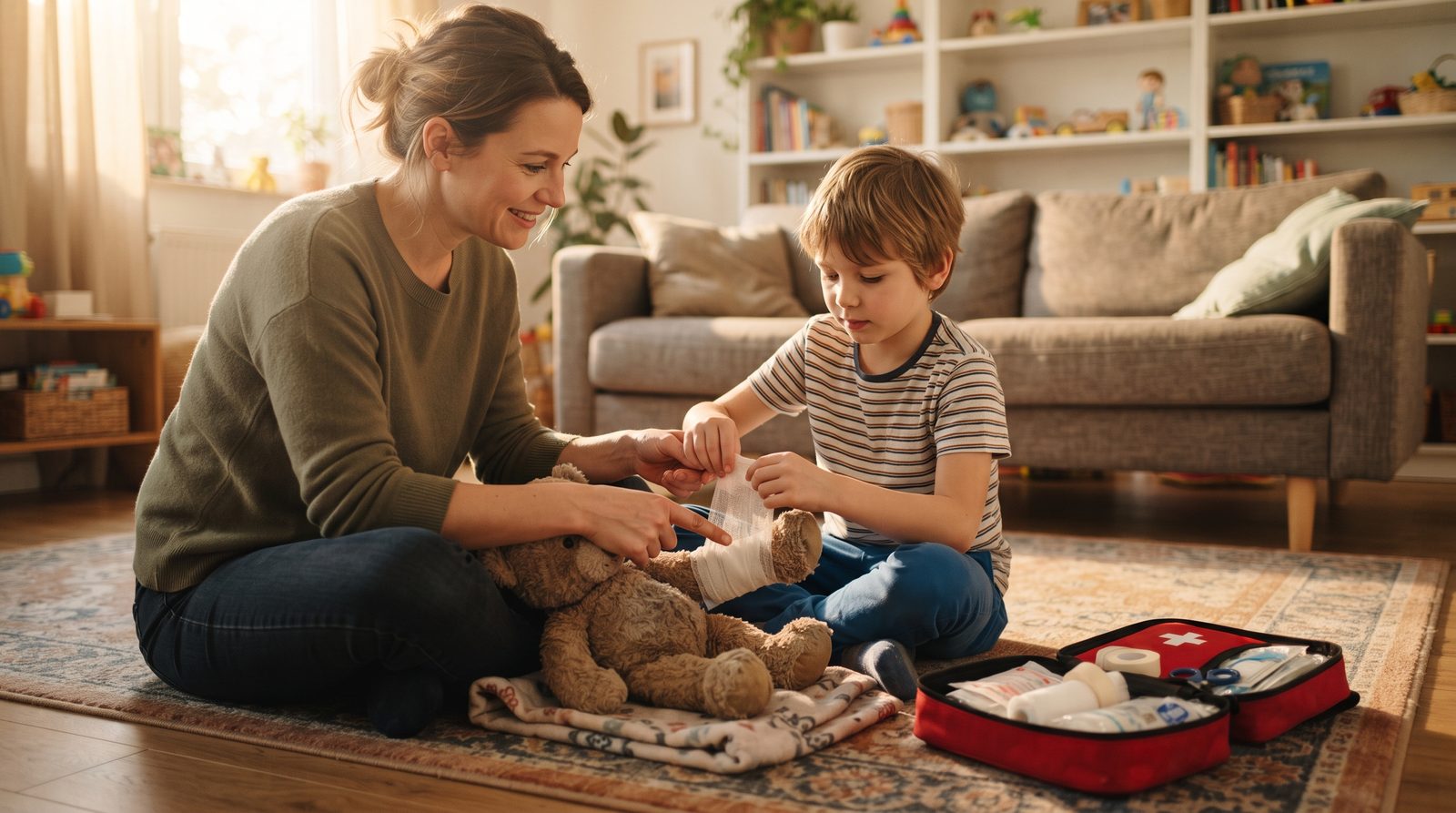
Most parents put off teaching kids first aid for one reason. They worry that teaching a kid what to do when someone's bleeding or not breathing means dragging them into a conversation about death, and that conversation feels like it belongs a decade further down the road. Here's the thing: kids already know bad things happen. They see it in movies, hear about it at school, catch fragments of adult conversations they weren't supposed to hear. What they don't have is a plan. And a kid with no plan and a kid with a plan react to the same emergency completely differently. One freezes. The other calls 911, gives the address, and stays on the line until an adult takes over. Teaching first aid isn't the scary part. Leaving a kid with nothing to do is.
Why Teaching Kids First Aid Makes Them Feel Safer, Not Scared
Fear comes from feeling powerless, not from having information. A kid who's never been told what to do if Grandpa collapses is the one who panics, because the moment feels enormous and they have zero tools for it. A kid who's practiced "check, call, do something simple" a few times in a calm living room has a script to run. That script is what keeps panic from taking over.
The American Red Cross has made this case directly: kids understand more than adults give them credit for, and they can't be shielded from the idea that emergencies happen. What they can be given is a way to respond that doesn't require an adult to walk them through it in the moment. That's the actual goal here. Not toughening kids up. Handing them a tool.
There's also a competence side to this that has nothing to do with emergencies at all. A kid who knows how to clean and bandage a scrape stops needing you for every skinned knee on the playground. That's a small thing that adds up to a kid who trusts their own hands a little more.
Teaching Kids First Aid by Age: What They Can Actually Learn
Age-appropriate doesn't mean watered down. It means matching the skill to what a kid's brain and hands can actually do at that stage.
Ages 4 to 6. This age can learn to recognize that something's wrong, tell an adult, and dial 911 if no adult is available. According to Red Cross guidance, kids as young as 4 can check if someone's breathing, say their home address out loud, and give that information to a 911 operator. That's the whole lesson at this age. Notice, tell, call. Nothing more complicated than that.
Ages 7 to 12. This is where real hands-on skills start. Cleaning a cut, applying a bandage, using an ice pack for a sprain, recognizing the difference between a scraped knee and something that needs an adult right now. Red Cross training data shows kids as young as 7 can be taught to control bleeding effectively after practice, which matters more than it sounds like it does. Most injuries a kid encounters, their own or someone else's, are the kind this age group can actually help with.
Teens. Full CPR, using an AED, treating burns and fractures, staying calm while giving an emergency dispatcher useful information under pressure. If your teen babysits, this age group benefits enormously from hands-only CPR training, since it's simple enough to learn in an afternoon and useful for the rest of their life.
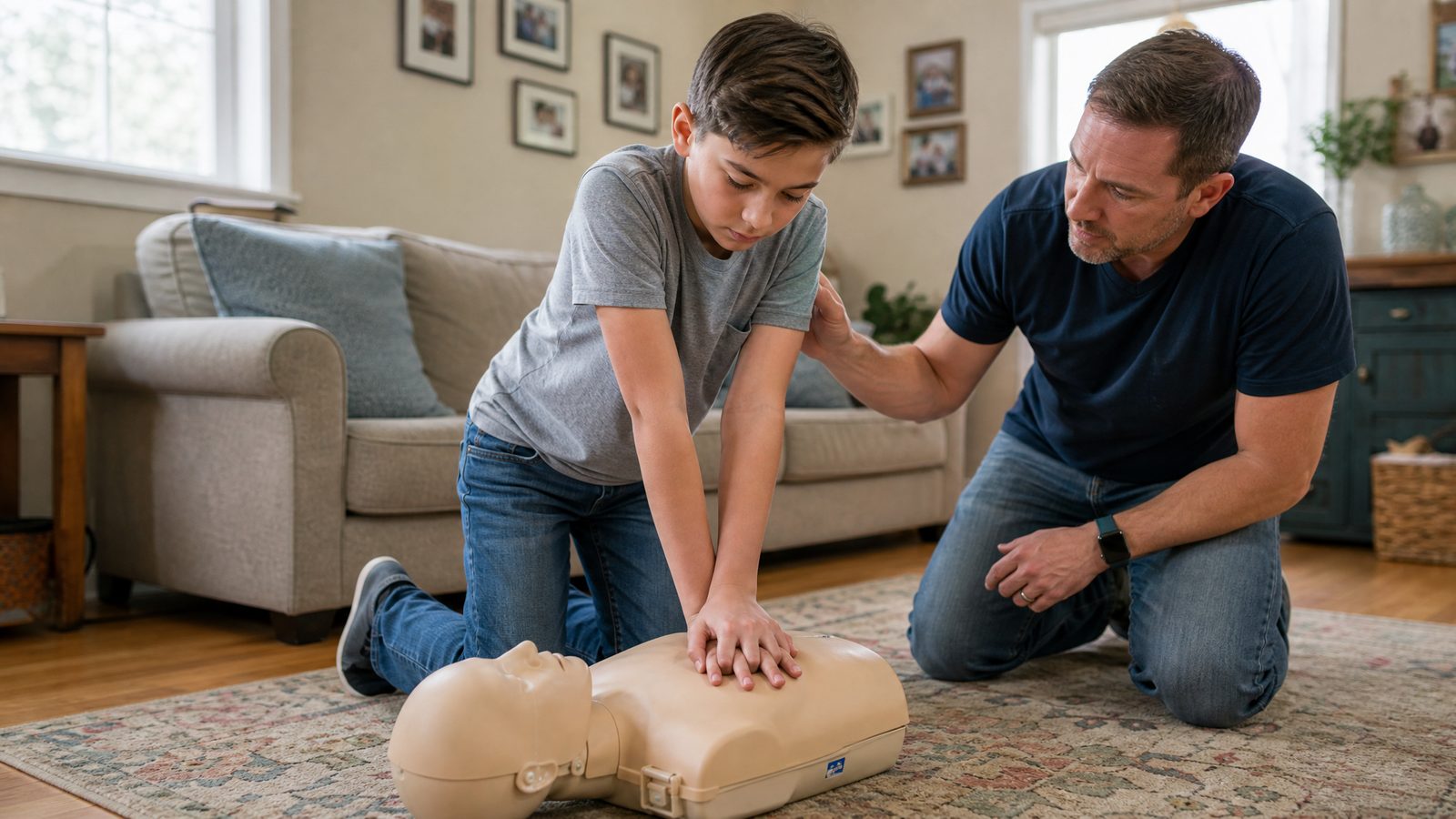
None of these stages require a course or a certification to start. They require you sitting down with your kid for twenty minutes and walking through it like it's a normal skill, because it is.
The One Skill Every Kid Should Know First: Calling for Help
If you only teach one thing, teach this. Every age group above four years old can learn to call 911, stay calm enough to answer questions, and give an address. This single skill has more real-world impact than almost anything else on this list, because it's the one that works even when a kid is too young or too scared to do anything hands-on.
Practice it like a fire drill. Have your kid say your home address out loud until it's automatic, the same way "stop, drop, and roll" became automatic for an earlier generation. Role-play a call: what to say first ("I need help, someone is hurt"), what the dispatcher will ask (address, what happened, is the person breathing), and the fact that they should stay on the phone until told to hang up. Make sure they know 911 works from a locked phone without a passcode, since that trips up more kids than you'd expect.
One detail worth repeating until it sticks: if bleeding is severe, a kid's job is to get an adult immediately, not attempt to handle it alone. Severe bleeding is one of the few situations where speed to an adult matters more than a kid trying to act solo, no matter how many practice runs they've had.
Teaching Methods That Don't Feel Like a Lecture
Nobody, kid or adult, retains much from being lectured at. First aid sticks when it's practiced, not explained.
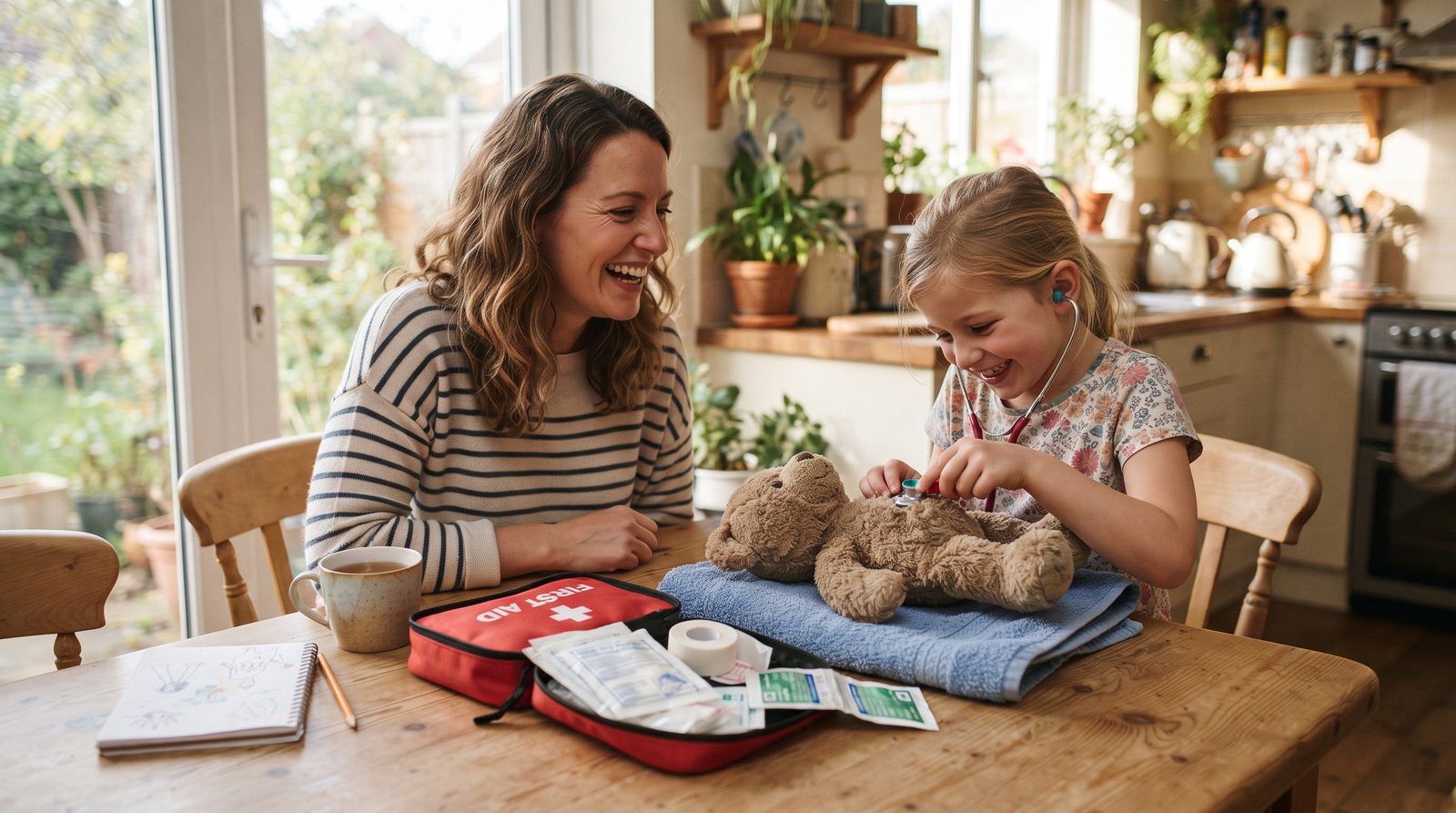
Role play works better than almost anything else here. Set up a pretend scenario, a stuffed animal with a "cut," a sibling playing an unconscious patient, and walk through the steps together. Keep it light. Kids learn the material just fine while treating it like a game, and treating it like a game is exactly what keeps the lesson from feeling heavy.
A few approaches that hold up across age groups:
Practice bandaging on a stuffed animal or a willing parent before it's ever needed on a real scrape. Use a real first aid kit during practice, not a pretend one, so the actual supplies feel familiar instead of foreign. Run a mock 911 call using a disconnected phone or a play phone, complete with your kid reciting the address from memory. Turn "what would you do if..." into a regular car-ride question, the same way you'd quiz multiplication tables, low stakes and repeated often enough to stick.
Avoid cramming everything into one sitting. Ten minutes here and there over a few weeks beats one long, serious conversation that starts to feel like a warning instead of a skill.
Basic Skills Worth Practicing Together
Beyond calling for help, a handful of physical skills are worth walking through as a family, in order of how often they actually come up.
Cleaning and bandaging a cut or scrape. This is the skill kids use the most, on themselves and on friends, so it's worth making genuinely routine. Recognizing a nosebleed and knowing to lean forward slightly, not backward, and pinch the soft part of the nose. Basic burn response: cool running water, not ice, and knowing when a burn is bad enough that an adult needs to see it immediately. Checking if someone is breathing and knowing that "not breathing" means call 911 immediately, no exceptions, no waiting to see if the person wakes up on their own.
Keep a stocked home first aid kit somewhere your kids know how to find, and let them help restock it occasionally. Familiarity with the supplies removes one more layer of the unknown.
Keeping the Lesson Calm, Not Scary
Tone does more work here than content. The same information delivered with a shrug lands completely differently than the same information delivered with a serious face and a lowered voice.
Answer questions honestly, but only the question that was actually asked. If your eight-year-old asks "what if someone stops breathing," answer that specific question and stop. Don't extend it into every worst-case scenario you can think of. Kids tend to ask exactly as much as they're ready to hear, and Red Cross training guidance backs this up directly: many kids have a good sense of their own comfort level with detail, and the better move is often to ask them how much they want to know rather than deciding for them.
Watch their reaction, not just their questions. Some kids want details and feel more secure with them. Others check out the moment the topic gets heavy and need a shorter, simpler version. Both are normal. Match the lesson to the kid in front of you, not to a script.
And keep circling back to competence, not danger. Unintentional injury is the leading cause of death for kids and teens in the U.S., which is exactly the reason this matters and exactly the reason it shouldn't be framed as doom. The point of the number isn't to scare anyone. It's a reason to make sure your kid has a plan, the same way you'd want them to know how to swim before they're ever near deep water.
A family that's practiced this together is a family with more than one person who can act when it counts, and that's worth building into a full family emergency plan if you haven't already. Pair that plan with a stocked kit and a few practiced skills, and a bad moment stops being the thing nobody in the house knows how to handle. If you want a kit built for real use, not just a drawer full of expired band-aids, see 1st Hour's trauma-ready kits at 1sthour.com and give your family a setup that matches the skills you're already teaching.
This content is for informational purposes only and does not constitute medical advice. For serious injuries, call 911 or seek emergency medical care immediately.


