Diabetic Emergencies: How to Help When Someone's Blood Sugar Crashes

A diabetic emergency rarely announces itself. One minute someone is fine, the next they're slurring words, sweating through their shirt, and looking at you like they don't quite recognize the room. Most people freeze here, because it looks like a hundred other things. Is he drunk? Having a stroke? Just tired? With diabetes, the clock is different. A blood sugar crash can go from "a little off" to unconscious in the span of a short phone call. This guide covers how to tell a low from a high, exactly what to do in the first few minutes, and the one mistake that turns a scary moment into a deadly one.
Low vs. High Blood Sugar: Telling a Diabetic Emergency Apart Fast
There are two ways a diabetic emergency goes wrong, and they move at completely different speeds.
Low blood sugar (hypoglycemia) is the fast one. It hits when there's too much insulin and not enough fuel, and the brain starts running out of sugar within minutes. Watch for shaking, heavy sweating, a racing heart, sudden hunger, and confusion. The person may get irritable or act drunk. Speech slurs. In a bad drop, they can have a seizure or pass out cold. This is the emergency that catches families off guard, because it comes out of nowhere.
High blood sugar (hyperglycemia) is the slow one. It builds over hours or days when there isn't enough insulin. The signs are thirst that won't quit, constant trips to the bathroom, fatigue, dry skin, nausea, and a strange fruity smell on the breath. It's serious, but it usually gives you more warning.
Here's the part that matters when you're standing there unsure: you don't have to diagnose it perfectly. If a person with diabetes is confused or acting off and you can't tell which way their sugar has gone, treat it as low. Giving sugar to someone who's actually high causes little harm over a few minutes. Withholding it from someone who's crashing can cost them the emergency. When in doubt, sugar.
Low Blood Sugar First Aid: The 15-15 Rule
If the person is awake and able to swallow, the response is simple enough to remember under pressure. It's called the 15-15 rule.
Give 15 grams of fast-acting carbohydrate. Then wait 15 minutes and check again. If they're still not right, do it a second time.
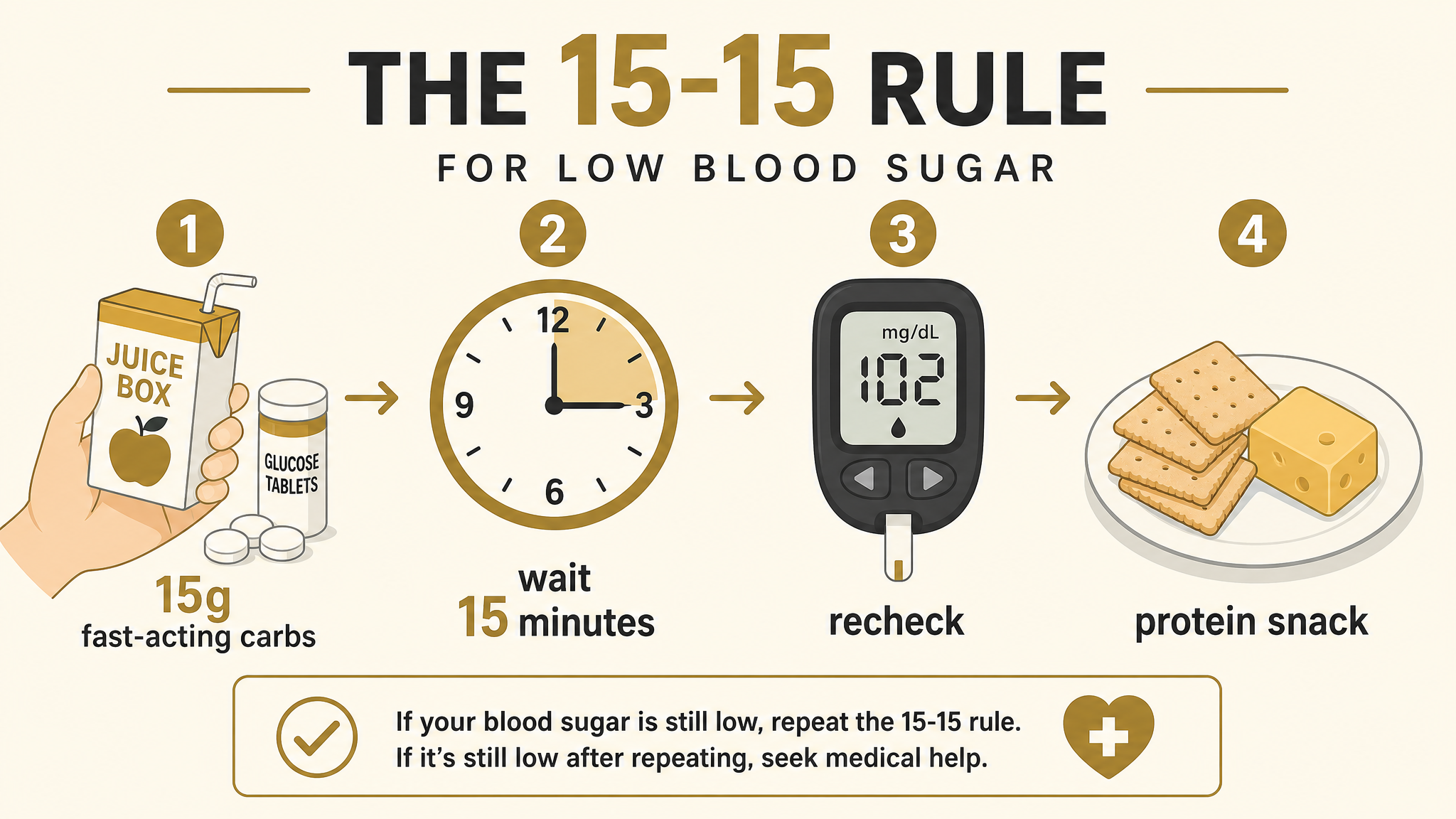
Fifteen grams looks like:
- Half a cup (4 ounces) of regular juice or non-diet soda
- 3 to 4 glucose tablets
- A tablespoon of sugar or honey
- A handful of hard candies, chewed
Skip anything with fat in it. Chocolate, cookies, and peanut butter all sound like sugar, but the fat slows absorption right when you need speed. Plain, fast sugar wins.
After 15 minutes, they should be coming back. Once they're steady, give them a real snack with some protein, like crackers and cheese or half a sandwich, so the sugar doesn't crash again an hour later. If two rounds of the 15-15 rule don't bring them around, or they're getting worse instead of better, call 911.
One thing worth knowing: a severe low can look like a seizure, and it can trigger one. If that happens, the response changes completely, which we cover in our guide on what to do if someone has a seizure. Clear the area, protect their head, and never try to hold them still or force anything into their mouth.
When Someone Passes Out: Glucagon and What Never to Do
This is the section that saves lives, so read it twice.
If a person having a diabetic emergency loses consciousness or can no longer swallow, the rule flips entirely. Do not pour juice, soda, or anything else into their mouth. An unconscious person can't swallow, and liquid poured in goes straight to the lungs. You can drown someone trying to help them. This is the mistake people make in a panic, and it's the one that kills.
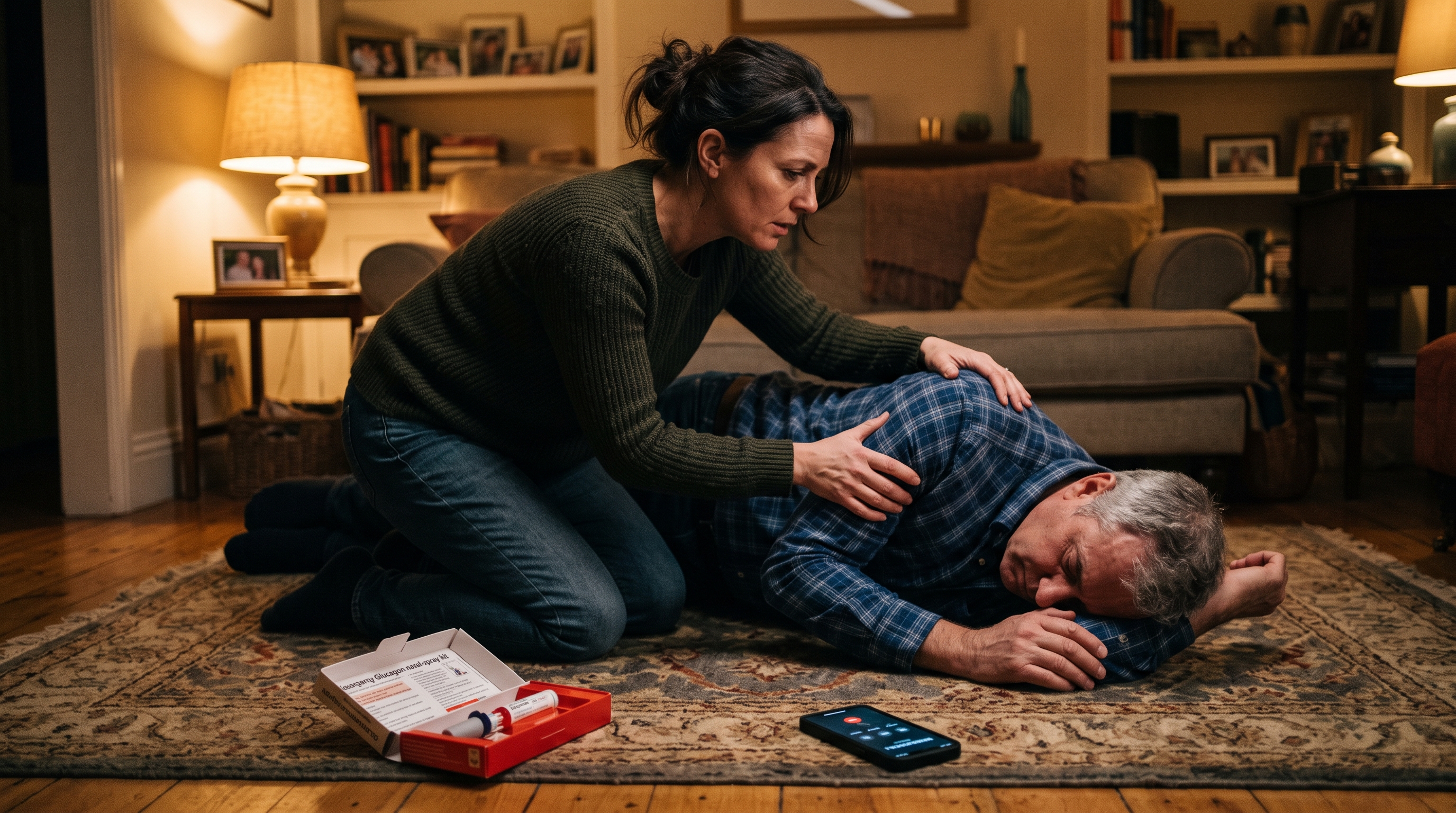
Instead, do this:
- Call 911 immediately. Say the person is diabetic and unconscious so the crew arrives ready.
- Give glucagon if it's available and you know it's there. Many people with insulin-treated diabetes keep an emergency glucagon kit, either an injection or a nasal spray. It raises blood sugar without needing the person to swallow, and it usually brings them back within about 15 minutes. Families of diabetics should know where the kit is and how it works before they ever need it.
- Roll them onto their side while you wait, so their airway stays clear if they vomit.
- Don't leave. Stay until paramedics arrive, and hand over the glucagon kit and any information you have about what happened.
If there's no glucagon and the person is unconscious, sugar rubbed on the inside of the cheek is sometimes suggested, but only in tiny amounts and only if you're certain they can't aspirate it. The safer move for most bystanders is to call 911 and keep the airway clear. Low blood sugar this severe is a true emergency, the kind where the first hour sets the outcome.
High Blood Sugar Emergencies: When Slow Turns Serious
High blood sugar usually isn't a sprint, but it has a finish line you don't want to reach.
If someone's sugar climbs and stays up, two dangerous conditions can develop. Diabetic ketoacidosis (DKA) shows up more in type 1 diabetes, with that fruity breath, deep rapid breathing, vomiting, and stomach pain. Hyperosmolar hyperglycemic state (HHS) hits more in type 2, with extreme thirst, confusion, and sometimes no ketones at all. Both can end in coma.
For milder high blood sugar in someone who's alert, encourage water and let them take their insulin if they manage their own doses and know what to do. Don't play doctor with someone else's insulin. Watch them.
Call 911 if you see the red flags: confusion, trouble breathing, persistent vomiting, fruity breath, or any drop in consciousness. These are signs the body is past the point of self-correction. Same as with anaphylaxis, waiting to "see if it passes" is how a manageable problem becomes a code.
Before It Happens: What Families of Diabetics Keep Ready
You handle a diabetic emergency well by deciding what you'll do before one happens. For a household or workplace with a diabetic in it, ready looks like this:
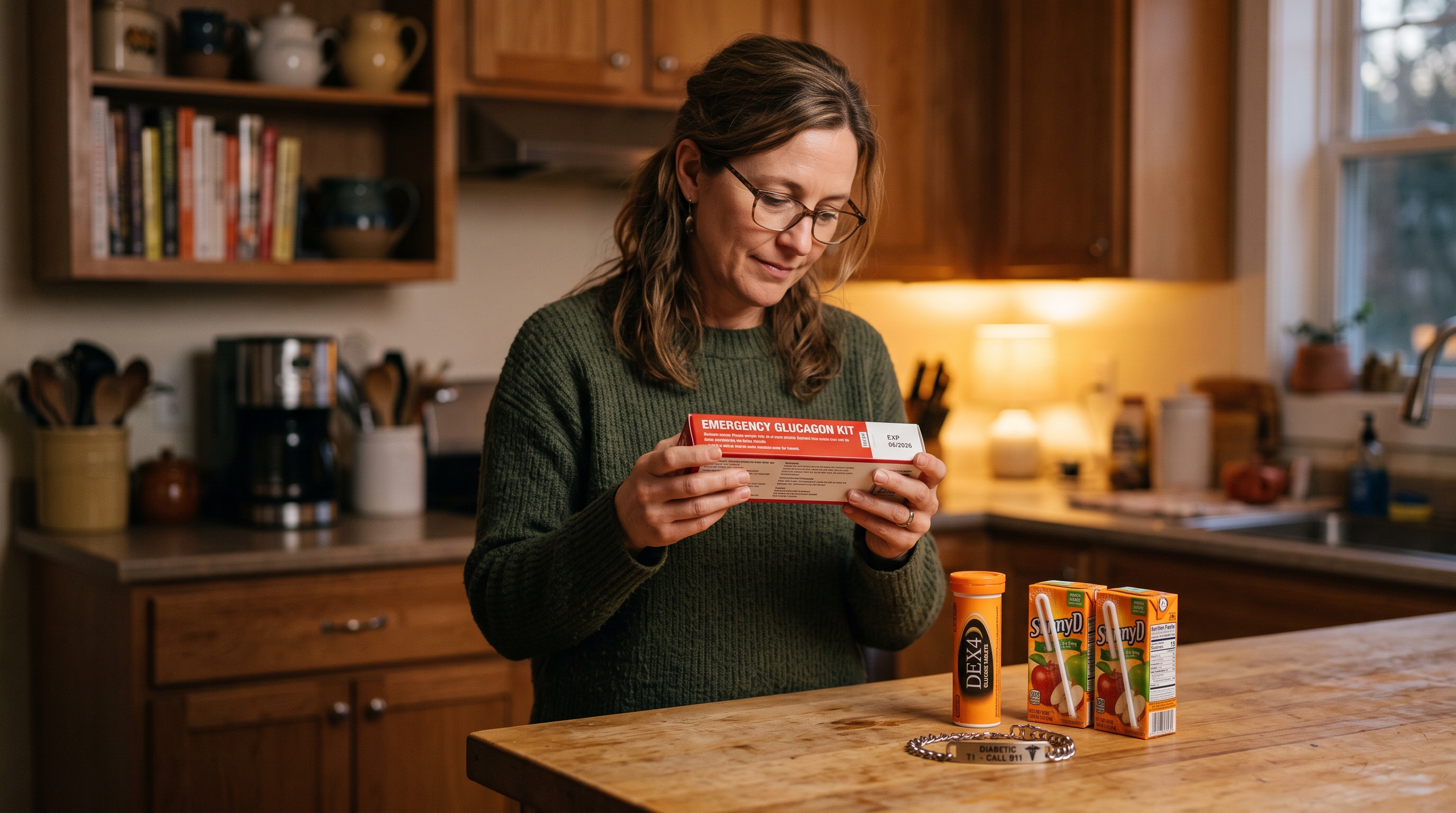
- Fast sugar in obvious places. Juice boxes, glucose tablets, or hard candy in the kitchen, the car, and the desk drawer. Everyone should know where.
- A current glucagon kit, and people who know how to use it. Check the expiration date twice a year. A kit nobody can find or figure out is no kit at all.
- A shared plan. Family members, close coworkers, and caregivers should know the person is diabetic, recognize the early signs, and know the "when in doubt, sugar" rule.
- Medical ID. A bracelet or phone medical card tells a stranger what they're dealing with when the person can't.
- A stocked home kit. Emergencies rarely arrive alone, and a real home first aid kit covers the cuts, falls, and injuries that a blood sugar crash can cause on the way down.
A diabetic emergency is one of the most survivable crises there is, as long as someone nearby knows the signs and doesn't freeze. Learn the difference between a low and a high, keep sugar close, and never put anything in an unconscious person's mouth. That's most of the battle right there.
The hardest part of any emergency is that the tools have to already be in the room when it starts. The 1stHour Trauma Kit packs 82 pieces of serious first-aid gear into one grab-and-go case, so when seconds count you're reaching for supplies instead of hunting through drawers. See what's inside the kit.
This content is for informational purposes only and does not constitute medical advice. A diabetic emergency can be life-threatening. Always call 911 and follow the guidance of medical professionals.


