Anaphylaxis First Aid: What to Do in the Minutes After a Severe Allergic Reaction

Most people who witness anaphylaxis for the first time make the same mistake. They wait. The hives don't look that bad yet, the person says they're fine, and nobody wants to jab a needle into someone's leg over what might be nothing. Here's the problem: anaphylaxis first aid is a race you're already losing by the time you're sure you need to run it. A severe food reaction can reach cardiac arrest in about 30 minutes. Insect venom moves faster. This guide covers how to recognize a reaction that's turning dangerous, the exact steps to take, and the second-wave trap that catches families off guard hours after everyone relaxed.
How to Recognize Anaphylaxis Before It Gets Ahead of You
A regular allergic reaction stays in one lane. Some hives, an itchy mouth, maybe a runny nose. Uncomfortable, but stable. Anaphylaxis is what happens when the reaction jumps lanes and starts hitting multiple body systems at once.
Watch for trouble in more than one of these areas:
- Skin: hives spreading fast, flushing, swelling of the lips, tongue, or face
- Airway: tightness in the throat, hoarse voice, wheezing, trouble swallowing
- Gut: sudden vomiting, cramping, or diarrhea shortly after eating
- Circulation: dizziness, a weak rapid pulse, pale or clammy skin, confusion, collapse
The speed matters as much as the symptoms. Most reactions begin within minutes of exposure, though some take half an hour or more to show themselves. If someone with a known allergy says their throat feels funny, or a child who just ate suddenly vomits and breaks out in hives, treat it as anaphylaxis. You will never regret acting early. People die from acting late.
One more sign worth burning into memory: a sense of doom. It sounds strange, but people in early anaphylactic shock often report a sudden, overwhelming feeling that something is very wrong. Believe them.
Anaphylaxis First Aid, Step by Step
When the reaction is on, the order of operations is simple and it does not change.
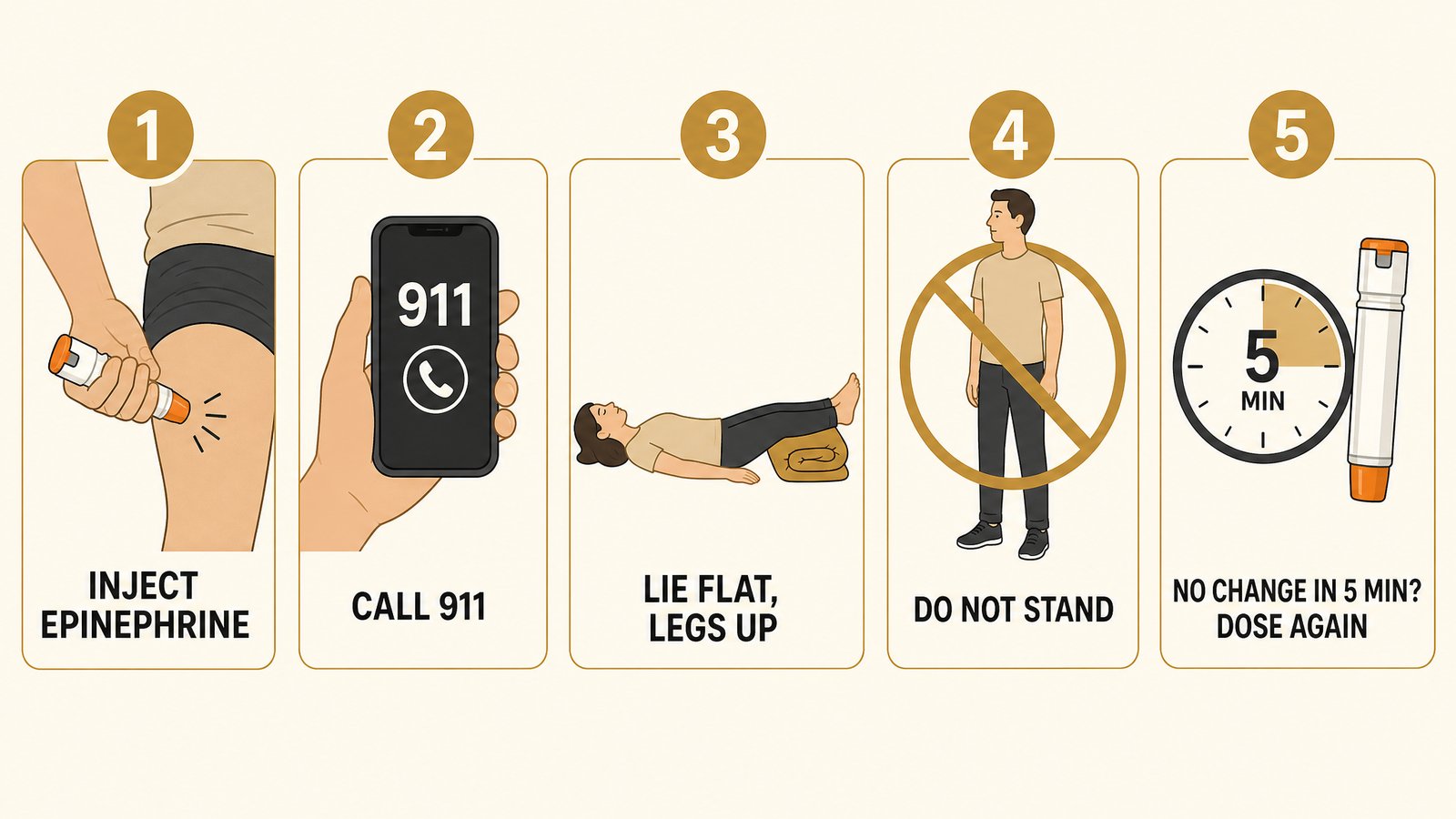
- Give epinephrine first. If the person has an auto-injector, use it now, into the outer mid-thigh. Epinephrine is the only drug that reverses anaphylaxis, and every minute of delay makes it work against a bigger fire.
- Call 911. Do this immediately after the injection, or have someone else call while you inject. Tell the dispatcher it's anaphylaxis so the crew comes ready.
- Lay the person flat and raise their legs. This keeps blood flowing to the heart and brain as blood pressure drops. If they're struggling to breathe, let them sit up slightly, and if they're vomiting, roll them onto their side. A pregnant woman should lie on her left side.
- Do not let them stand or walk. This one kills people. Standing suddenly during anaphylactic shock can drop blood pressure so hard the heart has nothing left to pump. Even if they say they feel better, keep them down until paramedics arrive.
- Watch the clock. If there's no clear improvement after 5 minutes, give a second dose of epinephrine. This is why allergists tell families to carry two injectors, not one.
Panic is the enemy of every step on this list. If you want to understand why your hands shake and your mind blanks in moments like this, we wrote about why your brain freezes in an emergency and how to train past it.
How to Use an Epinephrine Auto-Injector When You've Never Done It
Auto-injectors are built for untrained hands. The EpiPen, the most common one, works like this:
Pull it out of the carrier tube. Grip it in your fist with the orange tip pointing down. Pull off the blue safety release with your other hand. The phrase taught in every allergy clinic is "blue to the sky, orange to the thigh."
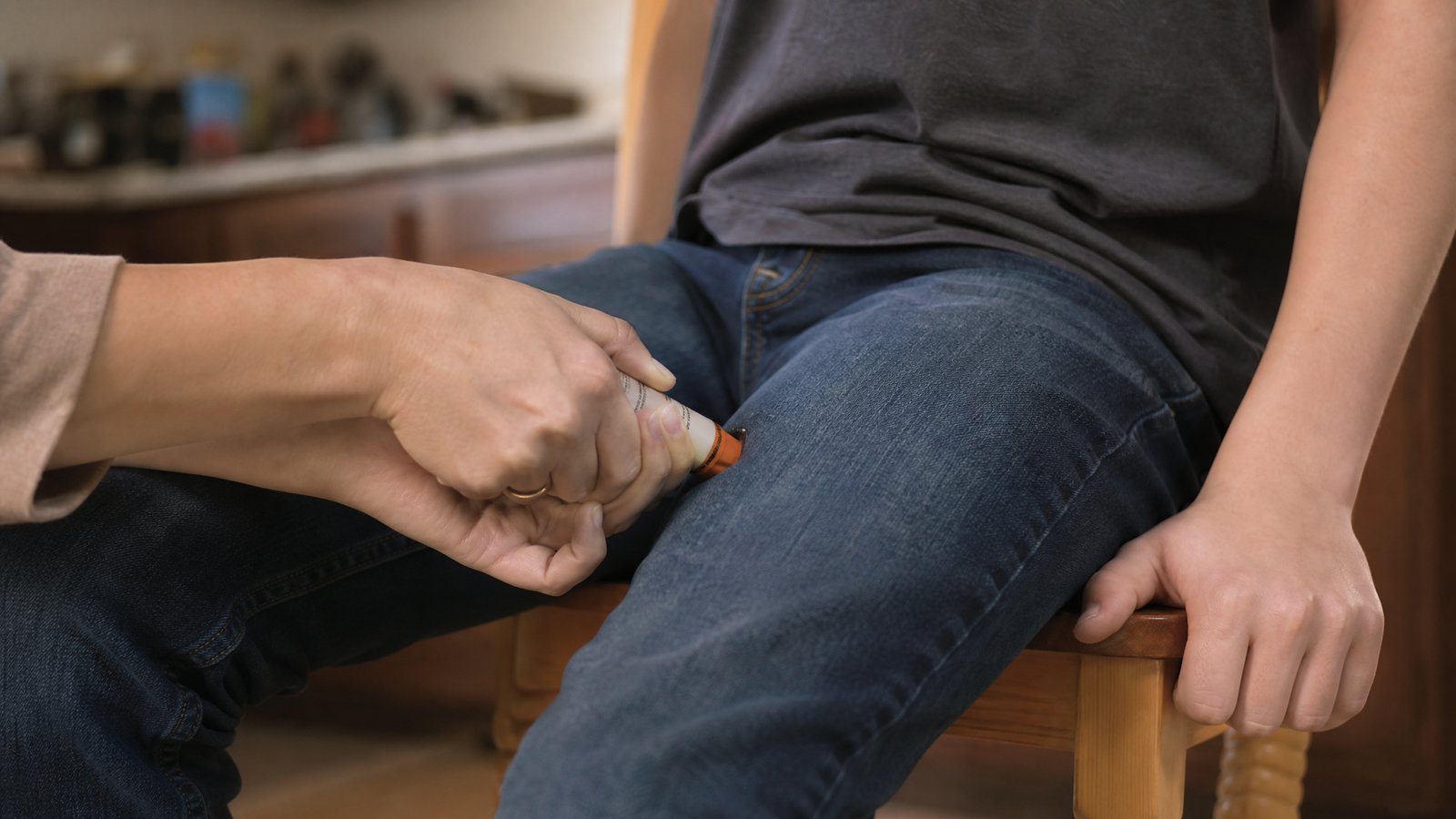
Swing the orange tip firmly into the middle of the outer thigh until you hear a click. That click is the injection firing. Hold it pressed against the leg for 3 seconds, then pull it straight out and rub the spot for a few seconds.
Two details people get wrong. First, it goes through clothing. Jeans, khakis, a school uniform. Don't waste time undressing anyone. Second, the outer thigh is the only target. Never the buttock, never a vein, and keep your thumb off both ends of the device so you don't inject your own hand.
If the person is a small child, hold their leg firmly during the injection. They will flinch, and a moving target is how you get a scratched leg instead of a delivered dose.
Used injectors go to the hospital with the patient so the ER team knows what was given and when.
Why Antihistamines Are Not Anaphylaxis First Aid
This is the myth that puts people in the ground. Somebody starts reacting, a well-meaning bystander hands them a Benadryl, and everyone waits for it to kick in.
Antihistamines treat the itch. They calm hives and a runny nose, and they take 30 to 60 minutes to do even that. What they cannot do is raise collapsing blood pressure or open a swelling airway. Epinephrine does both, within minutes, which is why every major medical organization lists it as the first and only front-line treatment for anaphylaxis.
The same goes for asthma inhalers. A person with asthma and a food allergy may reach for their inhaler when their chest tightens, but if the cause is an allergic reaction, the inhaler won't stop the crash. Epinephrine first. Everything else is a maybe, later, secondary.
If a reaction looks severe and there's no auto-injector anywhere, call 911 anyway and say the word "anaphylaxis." Don't drive to the ER yourself if an ambulance can reach you; paramedics carry epinephrine, and the reaction can peak on the highway.
The Second Wave: Biphasic Reactions
Here's the part most people have never heard of. In somewhere between 5 and 20 percent of anaphylaxis cases, the reaction comes back after it fully resolved. No new exposure to the allergen. The first wave ends, everyone exhales, and hours later the symptoms return, sometimes worse than round one.
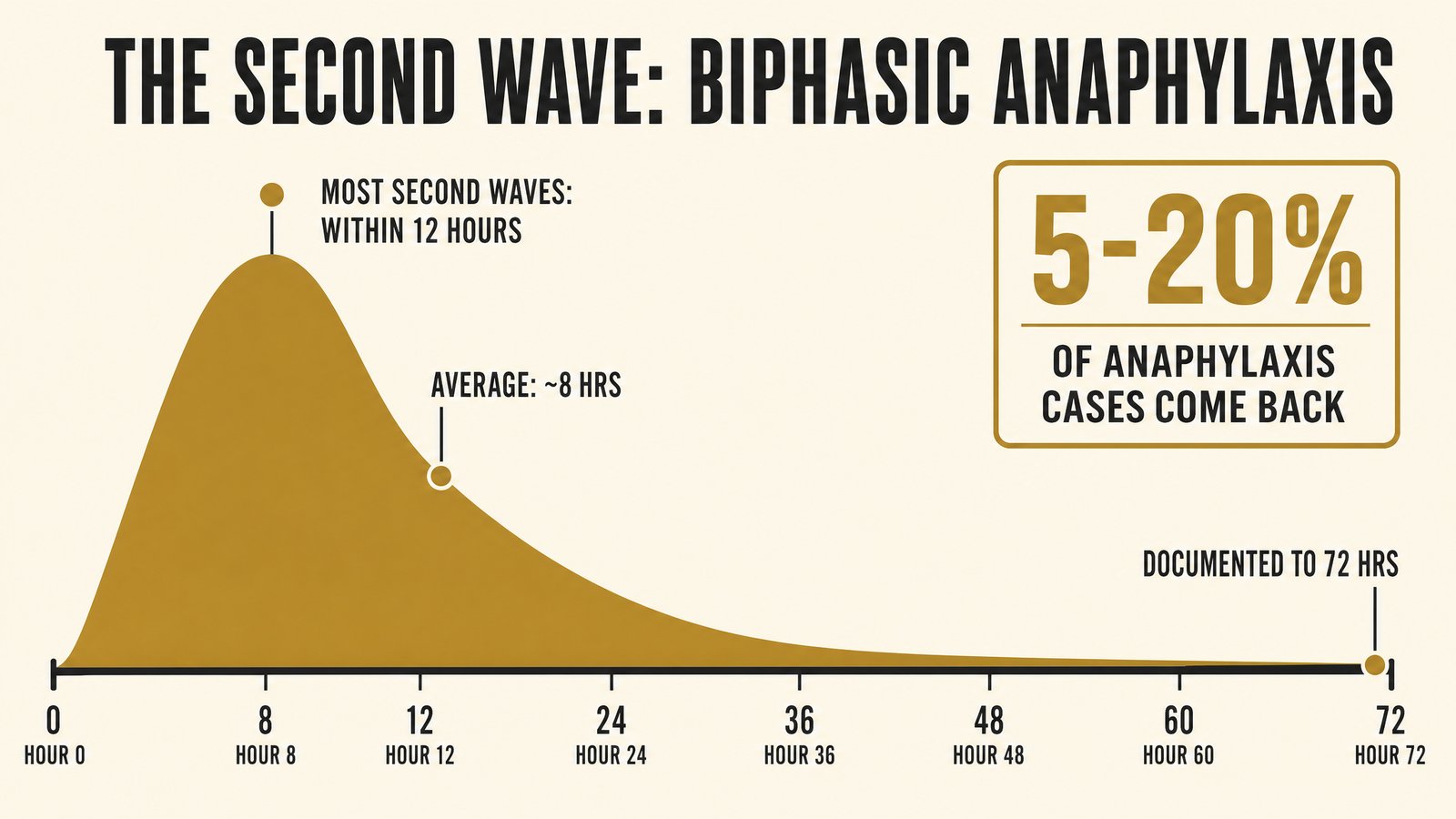
Doctors call it a biphasic reaction. Most second waves hit within 12 hours of the first, with the average landing around 8 hours, though cases have been documented as far as 72 hours out.
This is why the ER visit is not optional, even when the epinephrine worked and the person feels normal again. Hospital observation exists exactly for this window. A family that treats a reaction at home, skips the hospital, and goes to bed is betting a life on being in the lucky 80-plus percent.
Keep watching after discharge too. For the next day or two, take any returning symptom seriously and get back to the ER at the first sign of a second act.
Before It Ever Happens: What Allergy Families Keep Ready
We talk a lot about the first hour because that's when preparation pays out or the lack of it gets expensive. For allergy families, being ready looks like this:
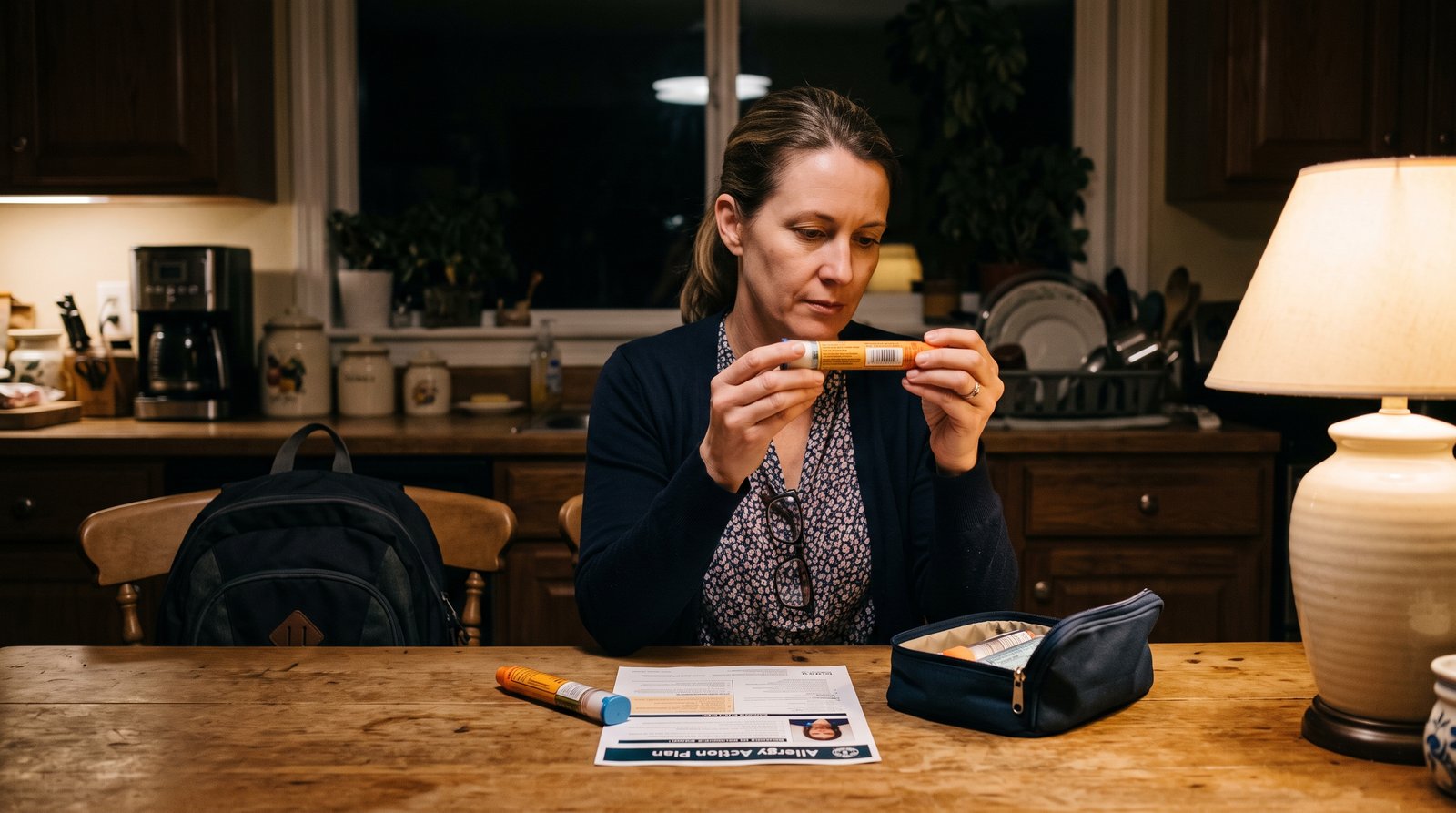
- Two auto-injectors, everywhere the person goes. One dose isn't always enough, and devices occasionally misfire. School bag, car kit, kitchen drawer.
- Check expiration dates twice a year. Expired epinephrine loses potency. Set a reminder when the clocks change.
- A written action plan. One page: known allergens, symptoms to watch for, exact dosing, emergency contacts. Teachers, grandparents, and sitters should each have a copy and know where the injector lives.
- Practice with a trainer device. Most auto-injector brands sell needle-free trainers. Five minutes of practice turns a fumbling first attempt into muscle memory.
- A stocked kit nearby. An auto-injector handles the reaction, but a real home first aid kit covers everything around it. The same thinking applies outdoors, where stings are the classic trigger; our guide to snake bite first aid covers another emergency where minutes decide the outcome.
Anaphylaxis moves fast, but it's beatable. The people who lose to it usually lost because nobody nearby knew the steps, or the epinephrine was in a bathroom cabinet two miles away. Know the signs, keep the medicine close, and act before you're certain. That's the whole game.
Every emergency in this post has one thing in common: the tools have to already be there when it starts. The 1stHour Trauma Kit packs 82 pieces of serious first-aid gear into one grab-and-go case, so the minutes that matter aren't spent hunting through drawers. See what's inside the kit.
This content is for informational purposes only and does not constitute medical advice. Anaphylaxis is a life-threatening emergency. Always call 911 and follow the guidance of medical professionals.


