Headache Red Flags: When It's More Than a Bad Headache

You've had a hundred headaches. Most of them you barely remember, because you took something, drank some water, and moved on with your day. That history is exactly what makes the rare dangerous one easy to miss. Your brain has trained you to treat "headache" as background noise.
A small number of headaches aren't background noise. They're the only warning sign your body gives before something serious, a bleed, an infection, an inflamed artery, gets worse. Knowing the actual headache red flags isn't about anxiety over every headache you get this year. It's a way to sort the four or five patterns that actually change what you should do next.
None of this is about the ordinary stuff. Tension headaches from a long day at a screen, dehydration headaches after a hot afternoon outside, the familiar migraine you've had since your twenties, those follow patterns you already recognize, and they're not what this article is about. What follows are the specific breaks from your normal pattern worth stopping for.
Headache Red Flag #1: The "Worst Headache of My Life" Pattern
Doctors have a name for this one: a thunderclap headache. It hits full intensity within about 60 seconds, like someone flipped a switch, and it's unlike any headache you've had before. According to Mayo Clinic, thunderclap headaches are uncommon, but they can signal bleeding in or around the brain, including a ruptured aneurysm.
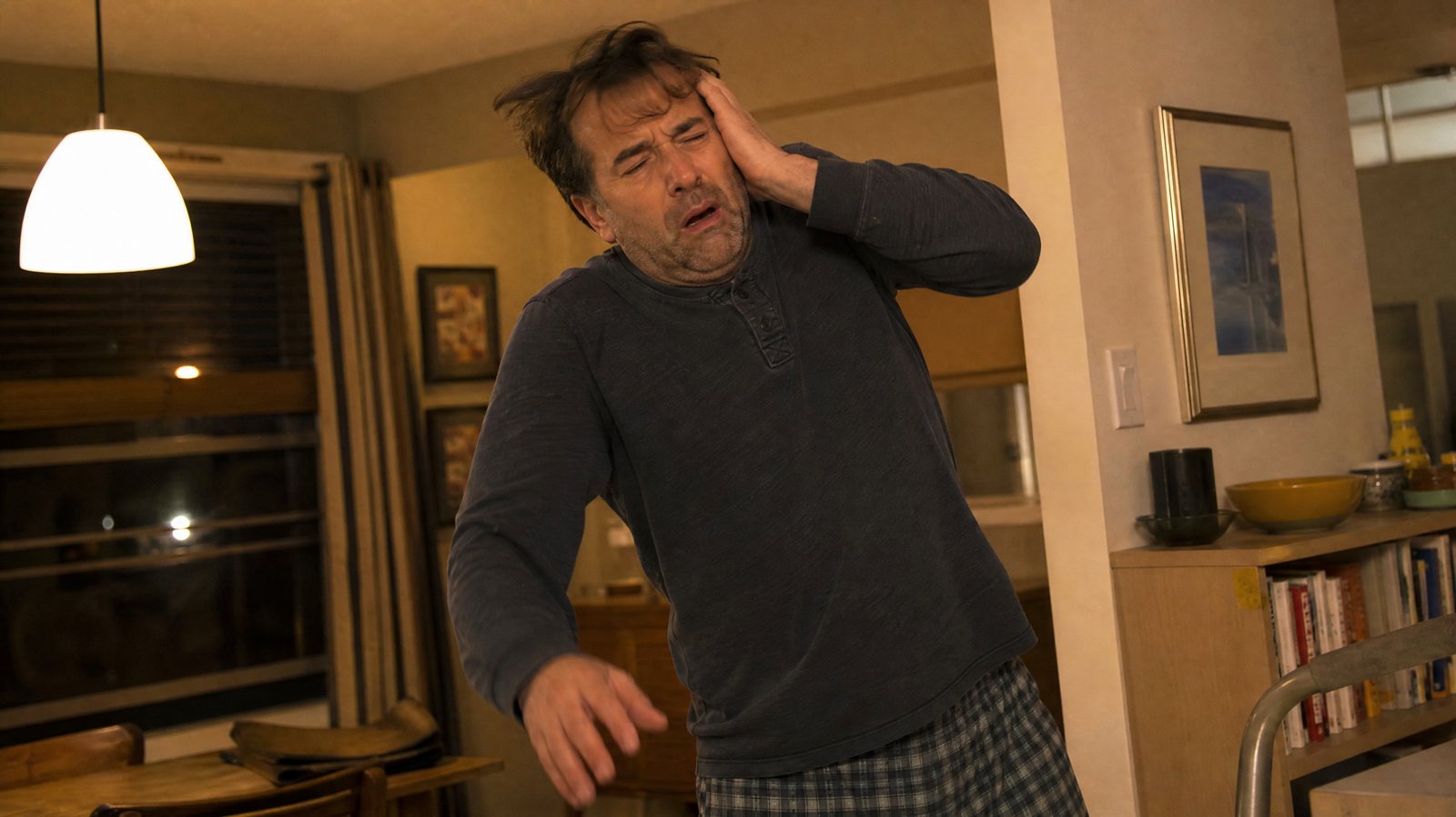
The speed is the whole tell. A migraine builds over minutes or hours. A tension headache creeps in gradually and you can usually point to when it started getting bad. A thunderclap headache does neither. One moment you're fine, the next you're gripping your head wondering what just happened.
Not every thunderclap headache turns out to be a bleed. Plenty resolve without a clear cause ever being found. But because the dangerous causes are so time-sensitive, the rule is simple: any headache that peaks in under a minute and feels like nothing you've experienced before gets treated as an emergency until a doctor says otherwise. Call 911 or get to the nearest ER. Don't drive yourself if you can help it.
Headache With Fever and a Stiff Neck
This combination points toward meningitis, an infection or inflammation of the tissue surrounding your brain and spinal cord. The CDC lists fever, headache, and a stiff neck as the classic symptoms, often alongside nausea, vomiting, and sensitivity to light.
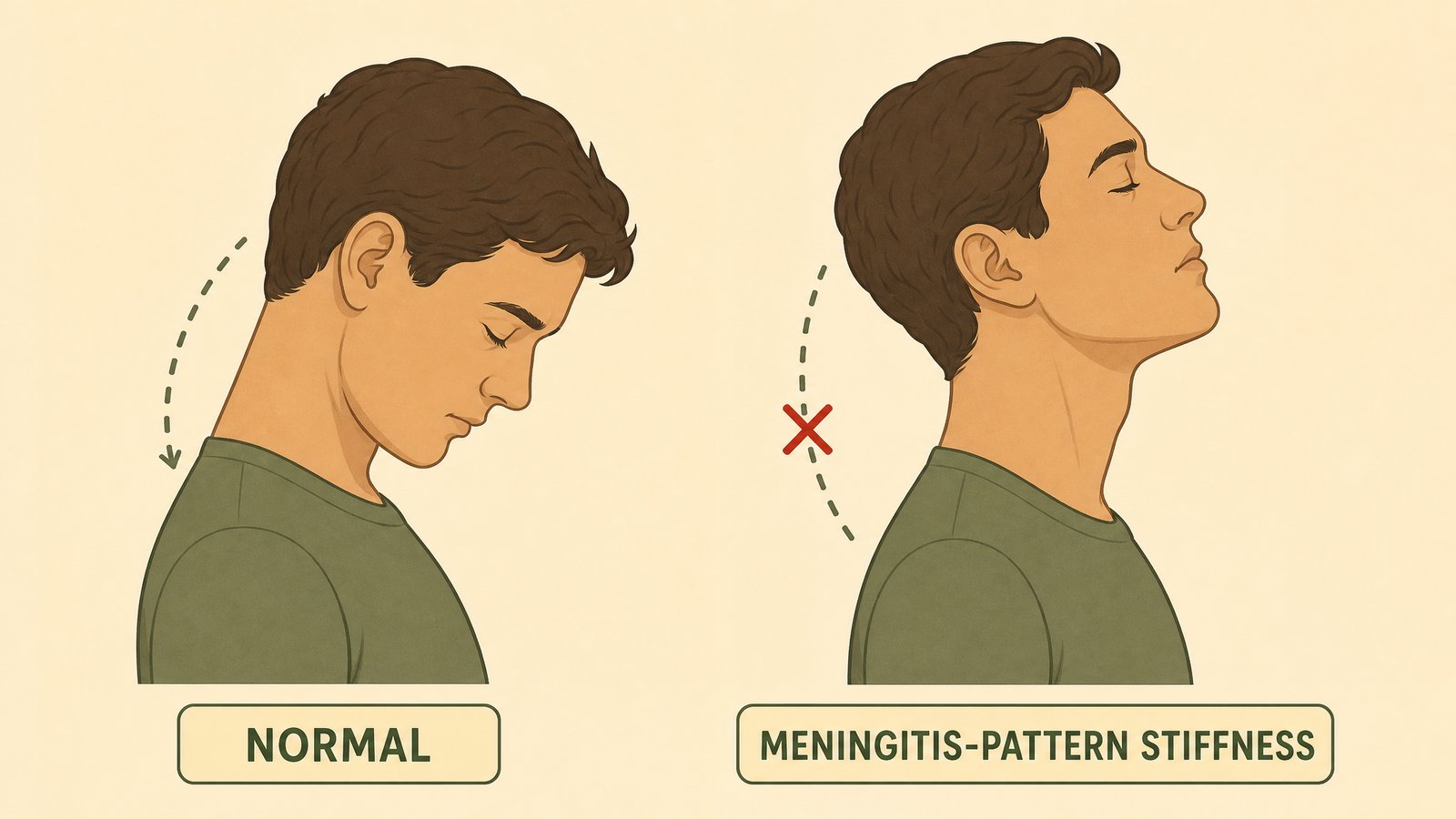
The stiff neck part is what separates this from a bad flu. Try to gently tuck your chin toward your chest. A normal, achy neck resists a little but gets there. Meningitis-related stiffness fights back hard, sometimes to the point where bending the neck forward is close to impossible. If that test is positive and there's a fever involved, don't wait to see if it passes.
One caveat worth knowing: the textbook combination of fever, stiff neck, and confusion isn't present in every real case, particularly in older adults or anyone with a weaker immune system. If someone has a severe headache, a new fever, and just seems off, that's enough reason to get checked, even without every symptom lining up perfectly.
A Headache After Hitting Your Head
A headache after a fall, a car accident, or getting knocked around on the field is common and usually not dangerous on its own. What matters is how it behaves over the following hours and days. A headache that keeps getting worse instead of easing off, especially one that doesn't respond to standard pain relievers, is a signal to stop watching and start moving toward care.
Watch for these alongside the headache: repeated vomiting, weakness or numbness on one side, trouble speaking, unequal pupil size, or any loss of consciousness even if it was brief. Symptoms after a head injury don't always show up right away. Slow bleeding inside the skull can take hours, sometimes a day or two, to build enough pressure to cause real trouble. "I felt fine right after" doesn't rule anything out.
This is where a lot of people, especially parents watching a kid after a fall off a bike, get the timing wrong. They check in once, an hour later. Once the headache seems stable, they stop watching closely.
The better approach is to keep loosely checking in for the next 24 to 48 hours. Is the headache the same, better, or worse than it was two hours ago? A flat or improving line is reassuring. A line that keeps climbing is the one that sends you in.
If you're dealing with the aftermath of a hit to the head right now, knowing the full set of concussion warning signs is worth five minutes, because a headache is rarely the only clue your body gives you.

A New Headache After Age 50
This one surprises people because it has nothing to do with stress or screens. A new type of headache showing up for the first time after age 50, especially a throbbing pain around one or both temples, can point to giant cell arteritis, an inflammation of the arteries that supply blood to your scalp and eyes.
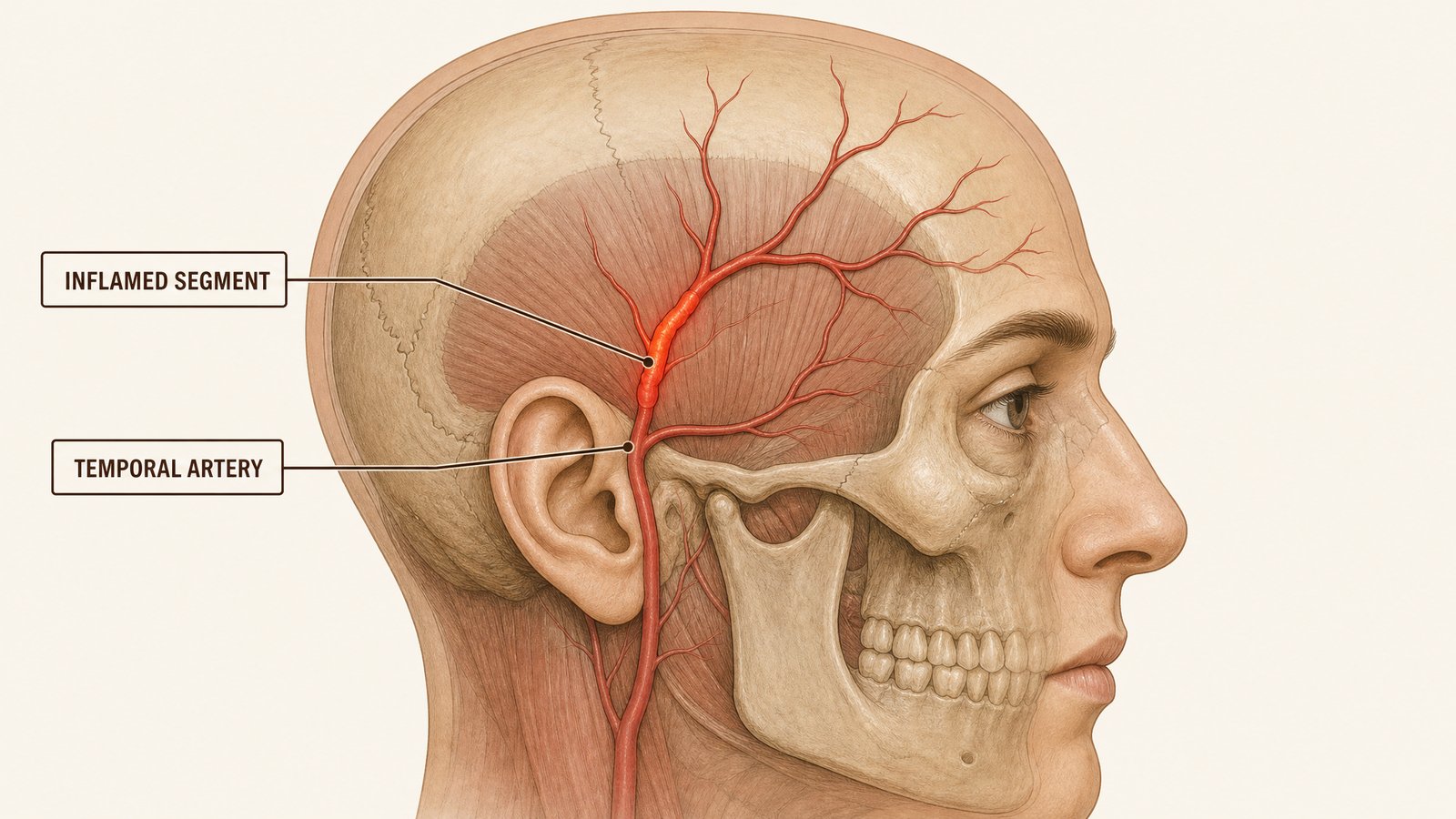
Cleveland Clinic notes that giant cell arteritis affects roughly 19 to 29 out of every 100,000 people over 50, and it's most common between ages 70 and 80. The reason it belongs on this list isn't rarity, it's the stakes: left untreated, it can cause sudden and permanent vision loss, sometimes within days of the first symptoms.
Look for tenderness at the temples or scalp. A headache that hurts when you brush your hair or rest your head on a pillow is a clue. So is jaw pain that worsens with chewing, or any blurry or double vision alongside the headache. This combination in someone over 50 deserves a same-day call to a doctor, not a wait-and-see approach. Steroid treatment works well, but it works best started early.
Other Headache Red Flags Worth Taking Seriously
A handful of other patterns don't fit neatly into the categories above but still deserve attention. A headache that wakes you up from a sound sleep, night after night, is different from one that happens to be there when you wake up. A headache that gets steadily worse over days or weeks, rather than coming and going, breaks the normal pattern most people are used to.
Any headache paired with slurred speech, sudden confusion, or weakness on one side of the body overlaps heavily with stroke symptoms, not just headache symptoms.
If any of that last group sounds familiar, learning to recognize a stroke fast matters more right now than finishing this article, because the response window for stroke treatment is measured in minutes. The same goes for sudden changes in eyesight. Sudden vision loss alongside a headache is its own emergency, whether or not the headache itself feels unusual.
When to Call 911
Call 911 or get to the nearest ER for a headache that:
- Hits full force within seconds, unlike anything you've felt before
- Comes with a fever and a neck that won't bend forward comfortably
- Follows a hit to the head and is getting worse, not better, especially with vomiting or confusion
- Is a new pattern for you after age 50, particularly with jaw pain, scalp tenderness, or vision changes
- Comes with slurred speech, weakness on one side, or sudden vision loss
Everything else, the tension headache after a long day, the dehydration headache after skipping water, the migraine you've had a dozen times before, is worth managing at home and mentioning at your next checkup. The goal isn't to treat every headache like an emergency. It's knowing which ones actually are, so you're not the person who waited out a subarachnoid hemorrhage because it felt rude to bother the ER.
Most headaches end with water, rest, and an over-the-counter pain reliever. A few end somewhere else entirely, and the difference usually comes down to recognizing the pattern early and not talking yourself out of getting checked. See what's inside The 1stHour Trauma Kit so the basics, a working flashlight for checking pupils, something to note symptoms and timing on, are already where you can reach them if tonight turns into one of those nights.
This content is for informational purposes only and does not constitute medical advice. If you're experiencing a severe or unusual headache, call 911 or seek emergency care immediately.


