Concussion Warning Signs: When a Bump on the Head Is an Emergency
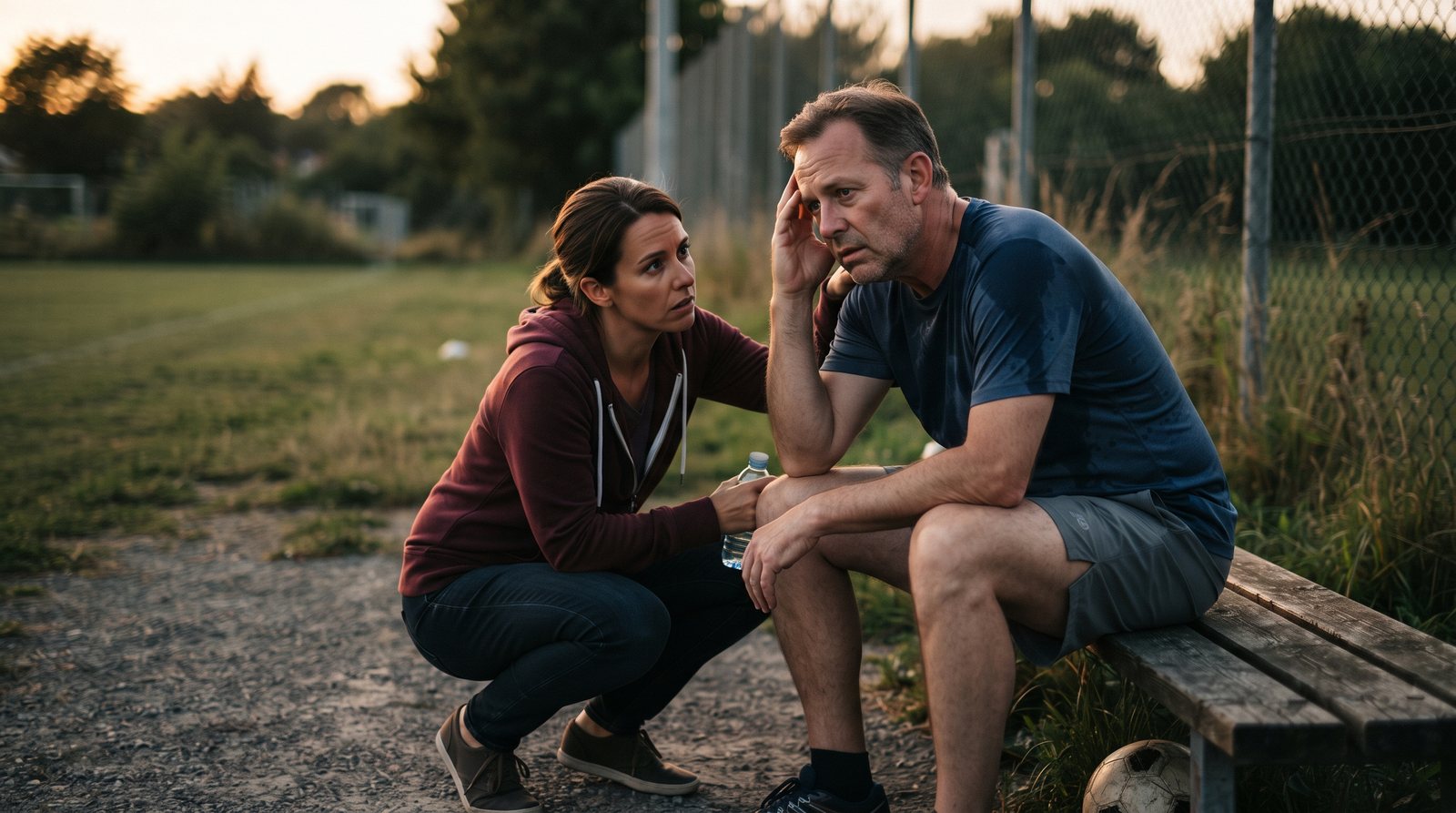
A kid takes an elbow to the head at a game and pops right back up. Someone slips on the ice and cracks the back of their head, then insists they're fine. A cyclist goes over the bars and walks it off. Most of the time, it really is just a bump. But head injuries have a way of hiding how bad they are, and the difference between "sleep it off" and "we needed to be at the hospital an hour ago" comes down to a handful of signs. Here is how to read them, what to watch for in the first hour and the first night, and the mistakes that turn a minor knock into a tragedy.
What a Concussion Actually Is (and Isn't)
A concussion is a mild traumatic brain injury. A bump, blow, or jolt to the head, or a hit to the body hard enough to snap the head around, makes the brain move inside the skull. That movement stretches brain cells and scrambles their chemistry for a while. The brain works, but not right, and not at full speed.
Here's the part people get wrong: you do not have to black out to have a concussion. Most people who get one never lose consciousness at all. You also can't see a concussion on a regular X-ray, and often not on a standard CT scan either. So the injury is real even when every test looks normal and the person is walking and talking.
The reason concussion warning signs matter so much is that the concussion itself is rarely the thing that kills someone. The thing that kills someone is the more serious injury hiding underneath, the one that looks like a concussion at first and then turns deadly. Telling those two apart is the whole job.
The Common Concussion Symptoms to Expect
Most concussion symptoms show up within minutes to a few hours and fall into four buckets. Knowing the normal picture helps you spot when something crosses the line into not normal.

Physical: headache, dizziness, nausea, blurry or double vision, sensitivity to light and noise, ringing in the ears, feeling generally off balance.
Thinking: feeling foggy or slowed down, trouble concentrating, trouble remembering the injury or the minutes right after it, answering questions slowly.
Mood: unusually irritable, sad, nervous, or emotional for no clear reason.
Sleep: drowsiness, sleeping more or less than usual, trouble falling asleep.
According to the CDC, these symptoms can last days to weeks and usually get better with rest. A person with a straightforward concussion is uncomfortable and out of sorts, but they stay awake, they make sense when they talk, and over the hours they hold steady or slowly improve. That word, improve, is the one to hold onto. Concussion symptoms should trend the right direction. When they trend the wrong direction, you're no longer dealing with just a concussion.
Concussion Danger Signs: When to Go to the ER Now
These are the red flags. If you see even one of them after a head injury, in an adult or a child, call 911 or get to an emergency room immediately. You do not wait to see if it passes.
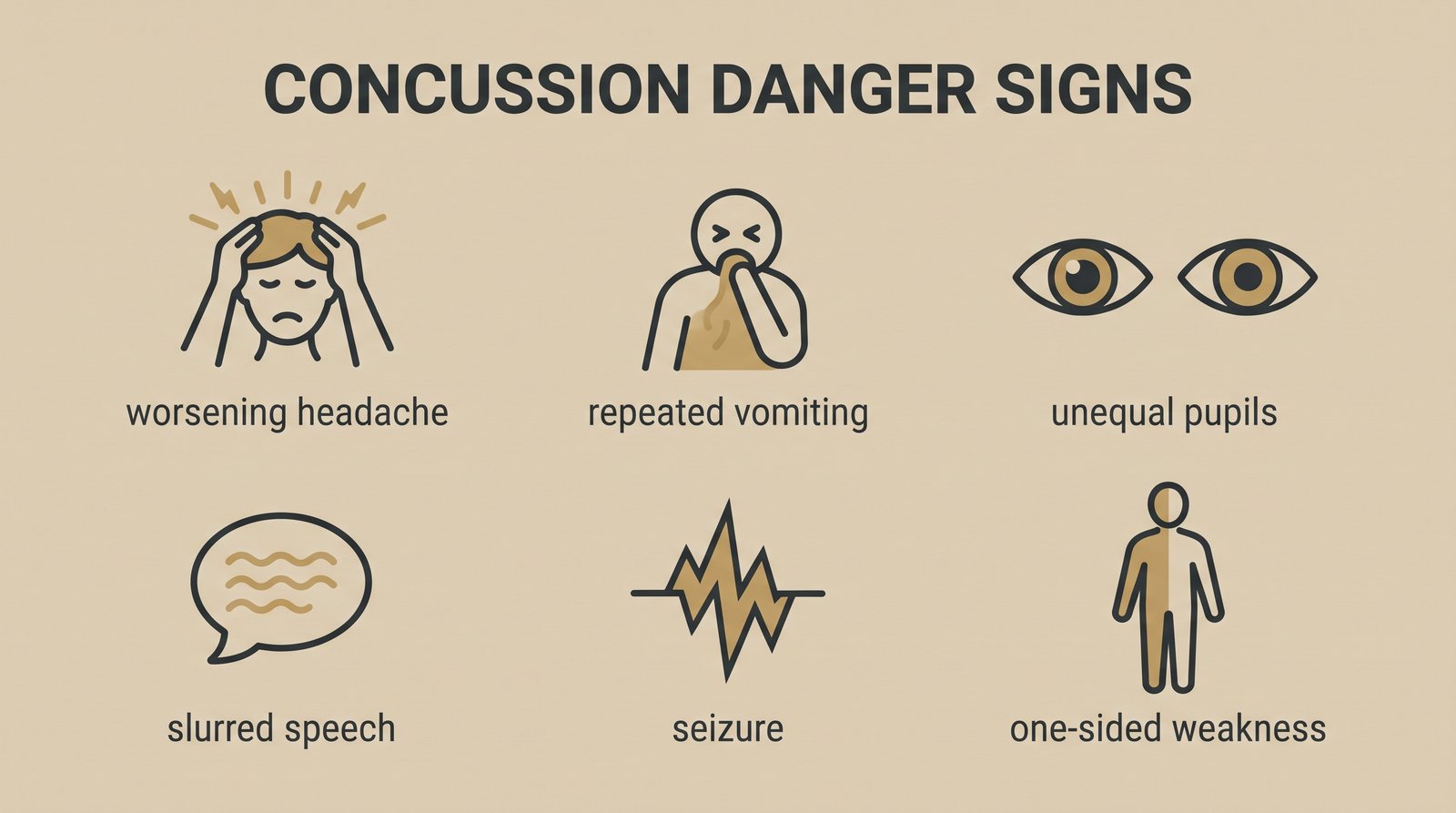
- A headache that keeps getting worse and won't ease up. A steady or growing pounding is very different from a headache that's slowly fading.
- Repeated vomiting or ongoing nausea that keeps coming back.
- One pupil larger than the other, or eyes that won't track together.
- Slurred speech, or talk that stops making sense.
- Weakness, numbness, or loss of coordination on one side of the body, trouble walking, or clumsiness that wasn't there before.
- A seizure or convulsion. Any seizure after a head hit is an emergency. If someone is seizing, our guide on what to do if someone has a seizure walks through the steps.
- Getting more confused, restless, or agitated, or the opposite: getting harder to wake, extremely drowsy, or unresponsive.
- Clear fluid or blood draining from the nose or ears.
- Loss of consciousness, even for a few seconds. A brief blackout doesn't always mean disaster, but it always means a professional needs to lay eyes on the person.
The CDC is blunt about this: you don't need all of these, and you shouldn't wait around collecting them. One is enough. Some of these signs overlap with a stroke, and the response is the same urgency. If you're not sure which you're looking at, our piece on how to recognize a stroke FAST covers the neurological red flags that demand a 911 call.
The "Lucid Interval": Why Talking and Alert Doesn't Mean Safe
This is the one that catches people, and it's worth understanding because it feels so counterintuitive. Sometimes a person hits their head, seems dazed for a moment, then perks up and acts completely fine. They talk, they joke, they say leave me alone. And then, minutes or hours later, they crash hard.
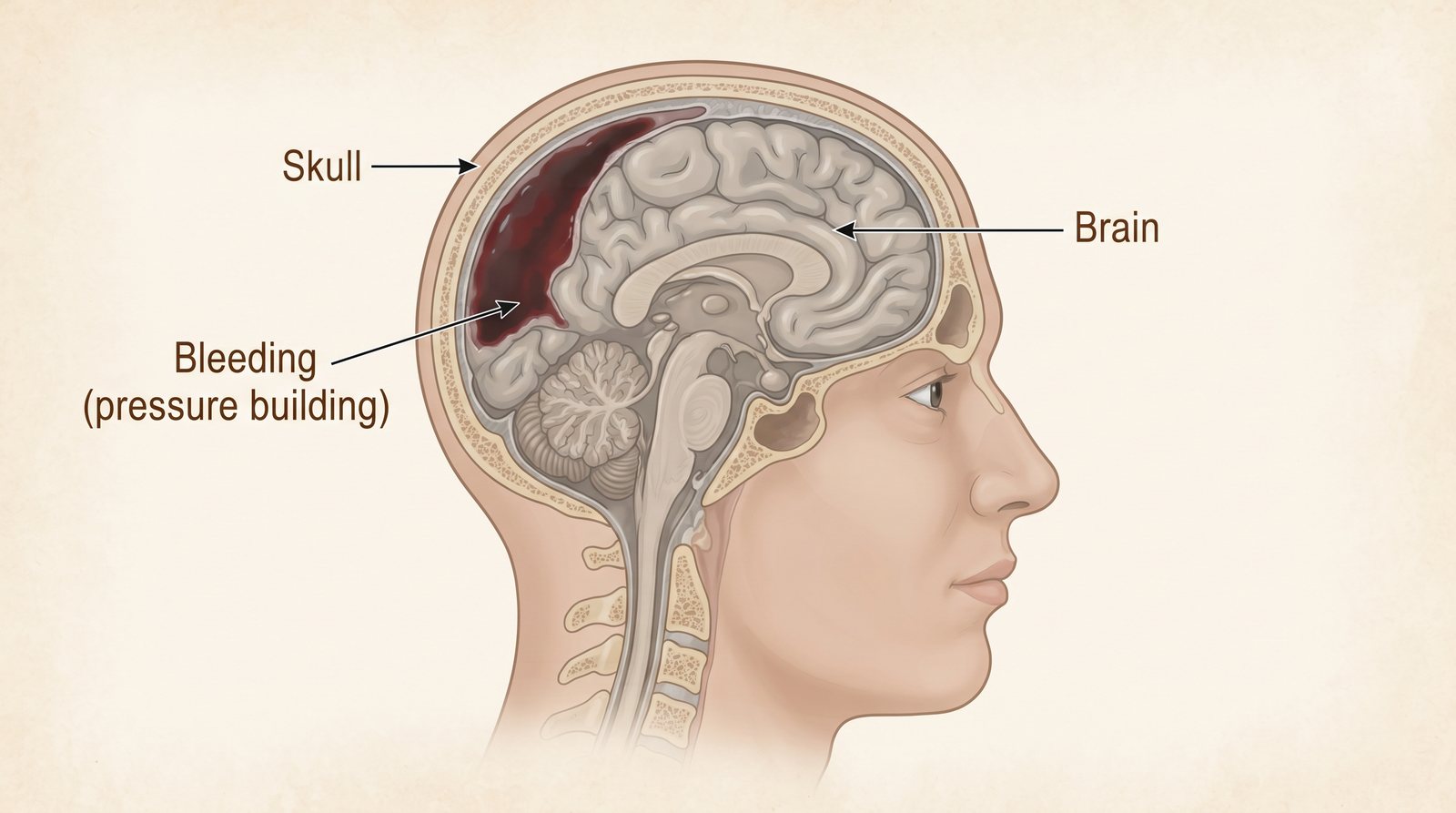
Doctors call that clear-headed stretch a lucid interval, and the reason behind it is chilling. In a serious injury like an epidural or subdural hematoma, a torn blood vessel is bleeding slowly inside the skull. For a while the brain has room to absorb the pressure, so the person seems okay. But blood keeps pooling with nowhere to go, and once the skull runs out of room, the pressure spikes fast. Johns Hopkins Medicine describes how the brain masks the damage until it suddenly can't, at which point deterioration can be sudden and severe.
This is exactly why "he seemed fine so we didn't worry about it" is such a dangerous sentence. Seeming fine right after a hard head hit is not the same as being fine. It's the reason you keep watching a person for hours, not minutes, even when the early signs looked mild.
How to Monitor Someone at Home for the First 24 Hours
If there are no danger signs and a doctor has cleared the person, or you're waiting to be seen for a mild knock, the first 24 hours are about watching, not treating. Here's a simple routine.

Keep them company. Don't leave someone alone after a head injury for the first several hours. You want a second set of eyes on them because they may not notice their own decline.
You can let them sleep. The old advice about keeping a concussed person awake all night is outdated. Rest is good for the brain. What matters is that you can rouse them. Wake them a couple of times through the night and confirm they wake normally, recognize you, and can answer a simple question. If you cannot wake them easily, that's a 911 situation.
Run through the danger-sign list every hour or two while they're awake. Worsening headache, vomiting, confusion, slurred speech, weakness, uneven pupils. Any new red flag means the plan changes and you head in.
Keep it quiet and easy. Dim lights, low noise, no screens, no workouts, no driving. The brain heals faster when it isn't being pushed.
What NOT to Do After a Head Injury
A few common instincts make things worse.
Don't send them back into the game, the ride, or the activity the same day. A second hit before the first heals can cause catastrophic swelling, especially in kids and teens. When in doubt, sit it out, all the way out.
Don't hand them alcohol or a sedative. Both dull the very alertness you're trying to monitor, and can mask a decline you needed to catch.
Go easy on painkillers at first. For the headache, acetaminophen is generally the safer early choice. Aspirin and ibuprofen can thin the blood and worsen any bleeding inside the skull, so hold off on those until a clinician has ruled out something serious.
And don't talk yourself out of the ER because the person is insisting they're okay. After a head injury, that judgment is exactly the thing the injury impairs. Trust the signs, not the reassurance. When a fall does more than rattle someone, our guide on car accident first aid covers the wider picture of assessing an injured person before help arrives.
Head injuries rarely give you a warning before they turn serious, which is why what you have on hand in that first hour matters. A trauma kit with a reliable light for checking pupils, gloves, and dressings for any scalp bleeding keeps you doing the assessment instead of digging through drawers. See what's inside The 1stHour Trauma Kit and keep one where the falls happen: the garage, the trunk, the sideline bag.
This content is for informational purposes only and does not constitute medical advice. Any head injury with danger signs is a medical emergency, call 911. This is not a substitute for professional evaluation or hands-on first-aid training.


