Portable Generator Safety: Where to Run It and What to Avoid
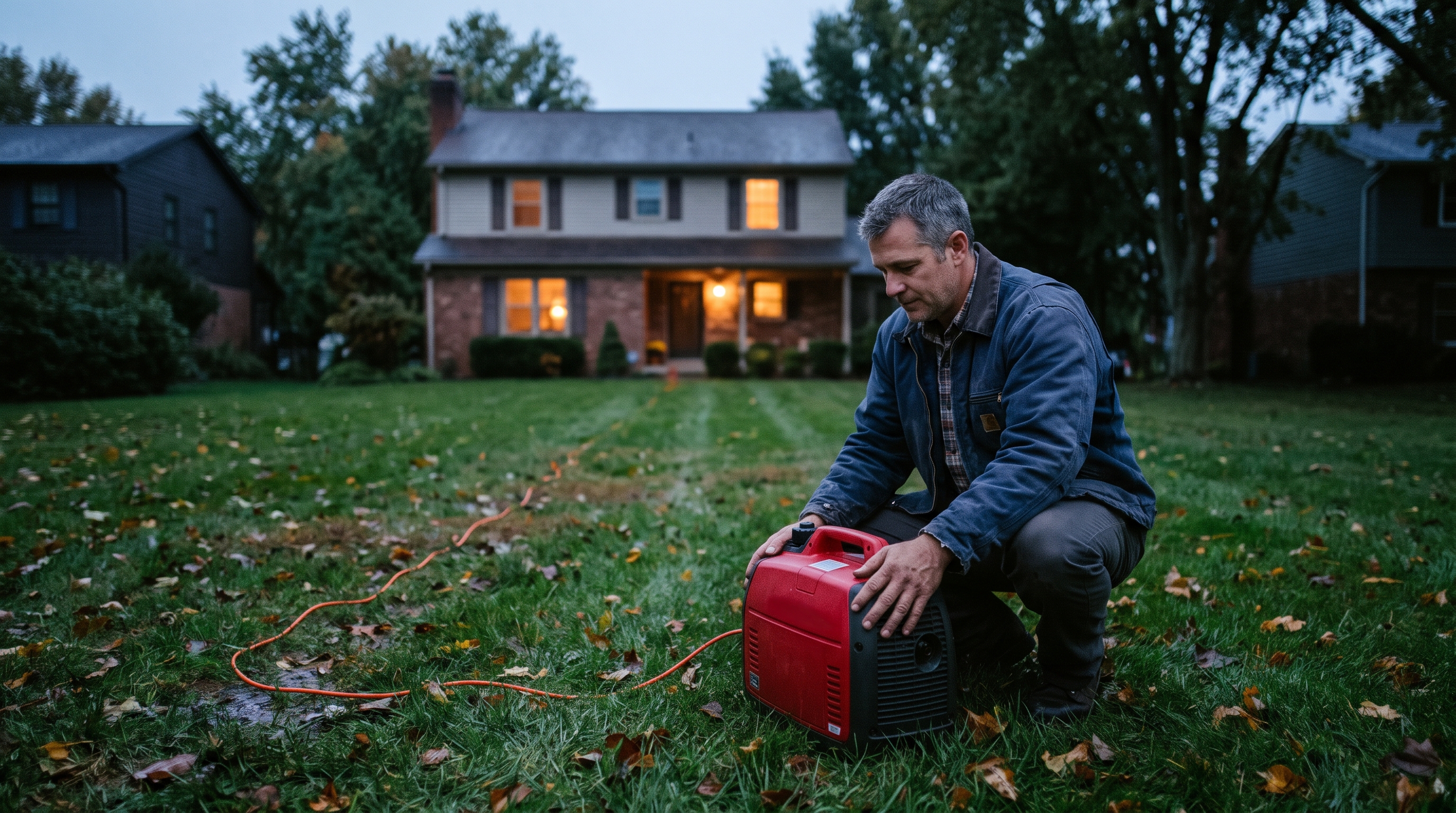
When the lights go out, a generator feels like the best thing you own. It also puts out carbon monoxide, a gas you cannot see or smell, and it can build up quickly in an enclosed space. The Consumer Product Safety Commission (CPSC) says nearly 100 people in the U.S. die every year from generator-related carbon monoxide poisoning. This guide covers the setup rules that prevent that, so you can use portable generator safety habits the first time you pull the cord.
Portable Generator Safety Starts With Where It Sits
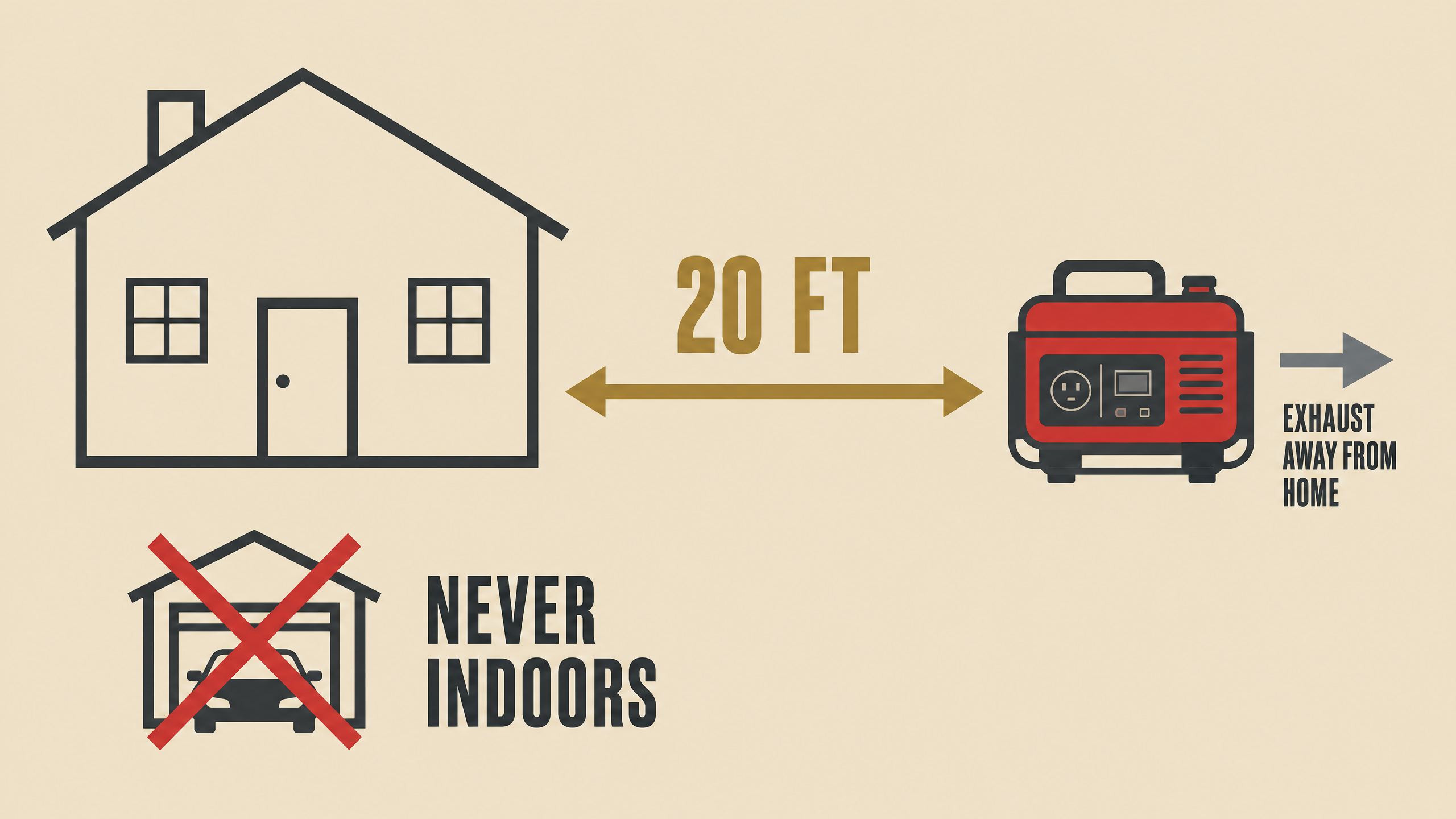
Placement matters more than anything else on this list. The CPSC says to run generators outdoors only, at least 20 feet away from the house. Point the exhaust away from doors, windows, and vents, so the fumes drift off instead of toward the house.
That also rules out the front porch and the carport. Both are close enough to let exhaust seep into the home. Pick an open patch of yard, and buy extension cords long enough to reach from there.
Why the Garage and the Open Window Do Not Work
People often assume that cracking the garage door is enough. It is not. The CPSC says never to operate a portable generator inside a home, garage, basement, crawlspace, shed, or other enclosed space, and that opening doors or windows does not provide enough ventilation.
A running generator puts out far more carbon monoxide than a car engine. In a small, closed space, that builds up fast, and fans do not fix it.
If you want to know what carbon monoxide does to the body, read our guide to carbon monoxide poisoning symptoms.
Power Your Home Without Backfeeding
Never plug a generator into a wall outlet to power the house wiring. This is called backfeeding, and it sends electricity back out onto the utility lines. It can seriously hurt or kill line workers repairing the outage, and it can start a fire in your own walls.
Run heavy-duty outdoor-rated extension cords from the generator to the appliances you need. If you want to power the whole house, have a licensed electrician install a transfer switch. That is a job for a professional, not a weekend project.
Keep all cords in good shape, without cuts or exposed wire. If someone does get shocked, our guide on electrical shock first aid explains what to do before you touch them.
Portable Generator Safety With Fuel, Fire, and Rain
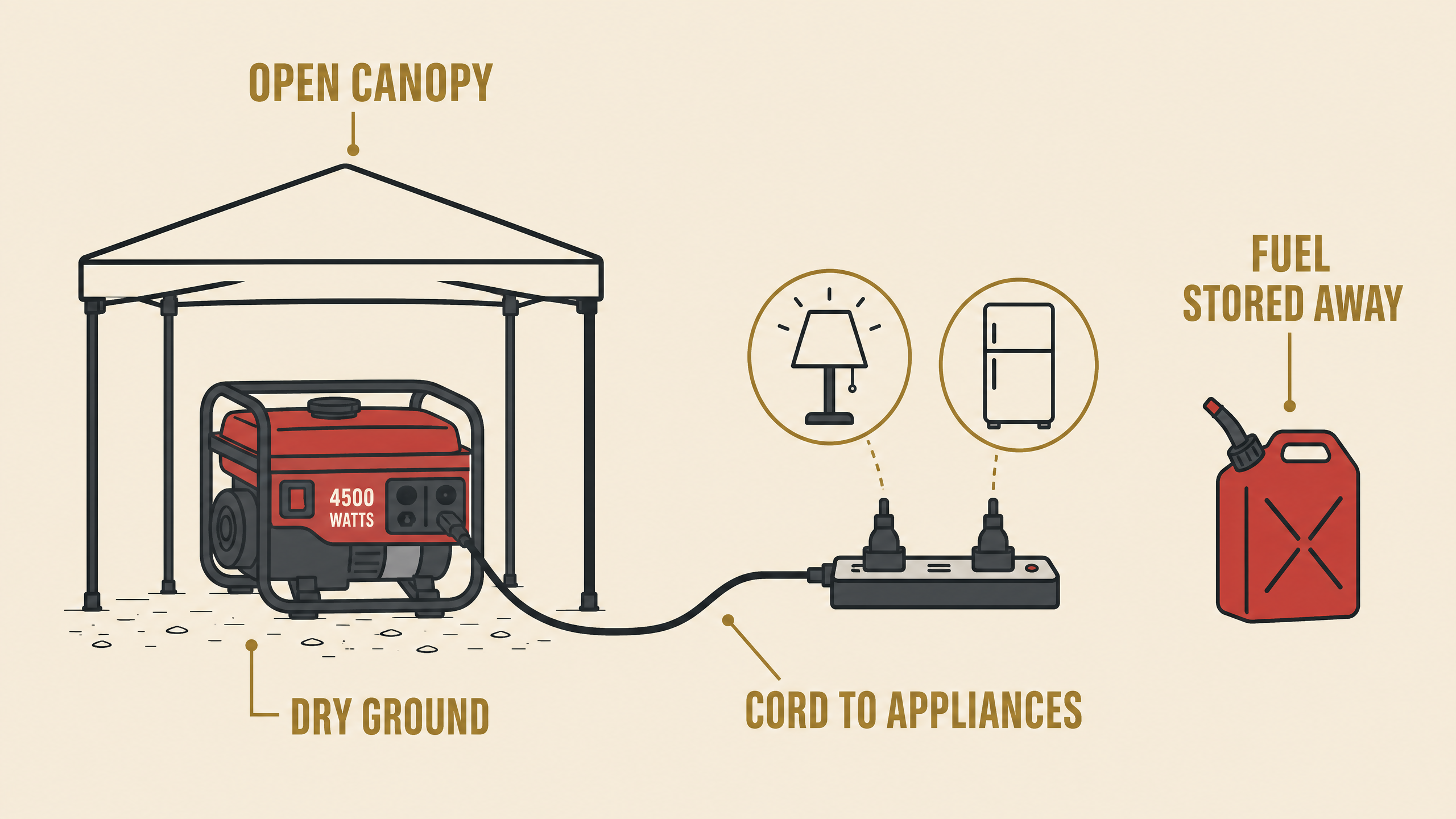
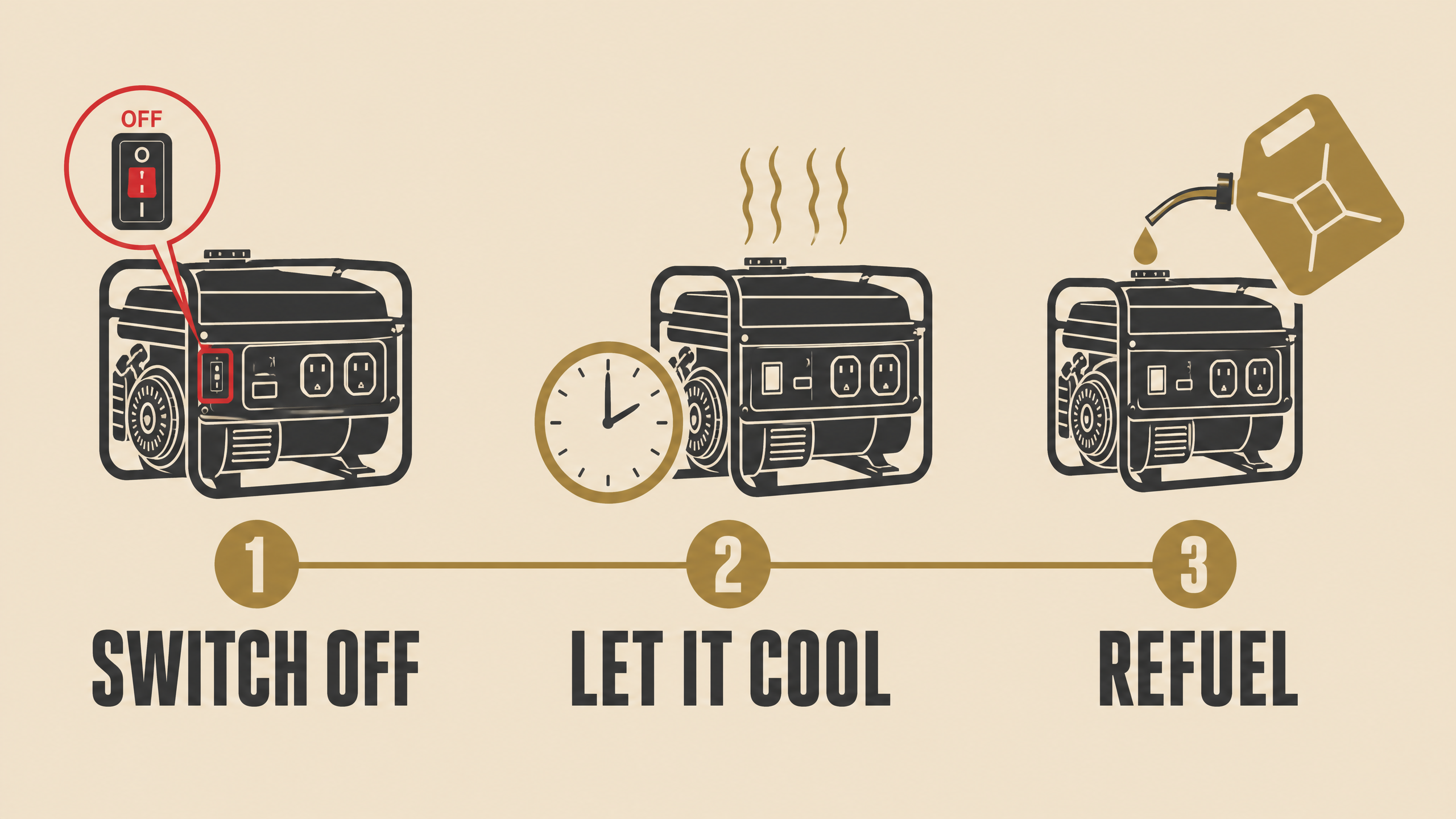
A generator runs hot. Spilled gasoline on a hot engine can catch fire, so turn the unit off and let it cool before you refuel. The CPSC also says to store fuel outside the living space, in approved containers, away from any fuel-burning appliance such as a gas water heater.
Water is the other problem. The Canadian Red Cross advises running a generator in a dry spot, sheltered from rain, and never in a flooded basement. A canopy-style cover works, as long as it is open on all sides. Dry your hands before you touch the controls.
If you do burn yourself on a hot engine, our burn first aid guide covers the first hour.
Put CO Alarms in Place Before the Power Goes Out
A generator is only safe if you can tell when something goes wrong. The CPSC recommends battery-operated or battery-backup carbon monoxide alarms on every level of your home and outside each sleeping area. Test them every month, and replace the batteries on schedule.
Do this before storm season, not during the blackout. Outages are when the alarms matter most, and plug-in models with no backup go quiet when the power does. If an alarm sounds, get everyone outside and call 911. Our piece on what to do when a carbon monoxide alarm goes off walks through it step by step.
For wider planning, see our power outage emergency plan, the hurricane prep checklist, and the winter storm prep checklist.
If You Feel Sick, Go Outside
Early carbon monoxide poisoning feels like the flu: headache, dizziness, nausea, weakness, or feeling unusually tired. If you notice any of these while a generator is running, do not wait to see if it passes. Get into fresh air right away and call 911.
Tell everyone else in the house, including anyone asleep. Do not go back in until emergency responders say it is safe.
Power outages are when small injuries happen in the dark. See what's inside The 1stHour Trauma Kit, built for the moments before help arrives.
This content is for informational purposes only and does not constitute medical advice. If you suspect carbon monoxide poisoning, get outside and call 911.


