Burn First Aid: What to Do (and Never Do) in the First Hour
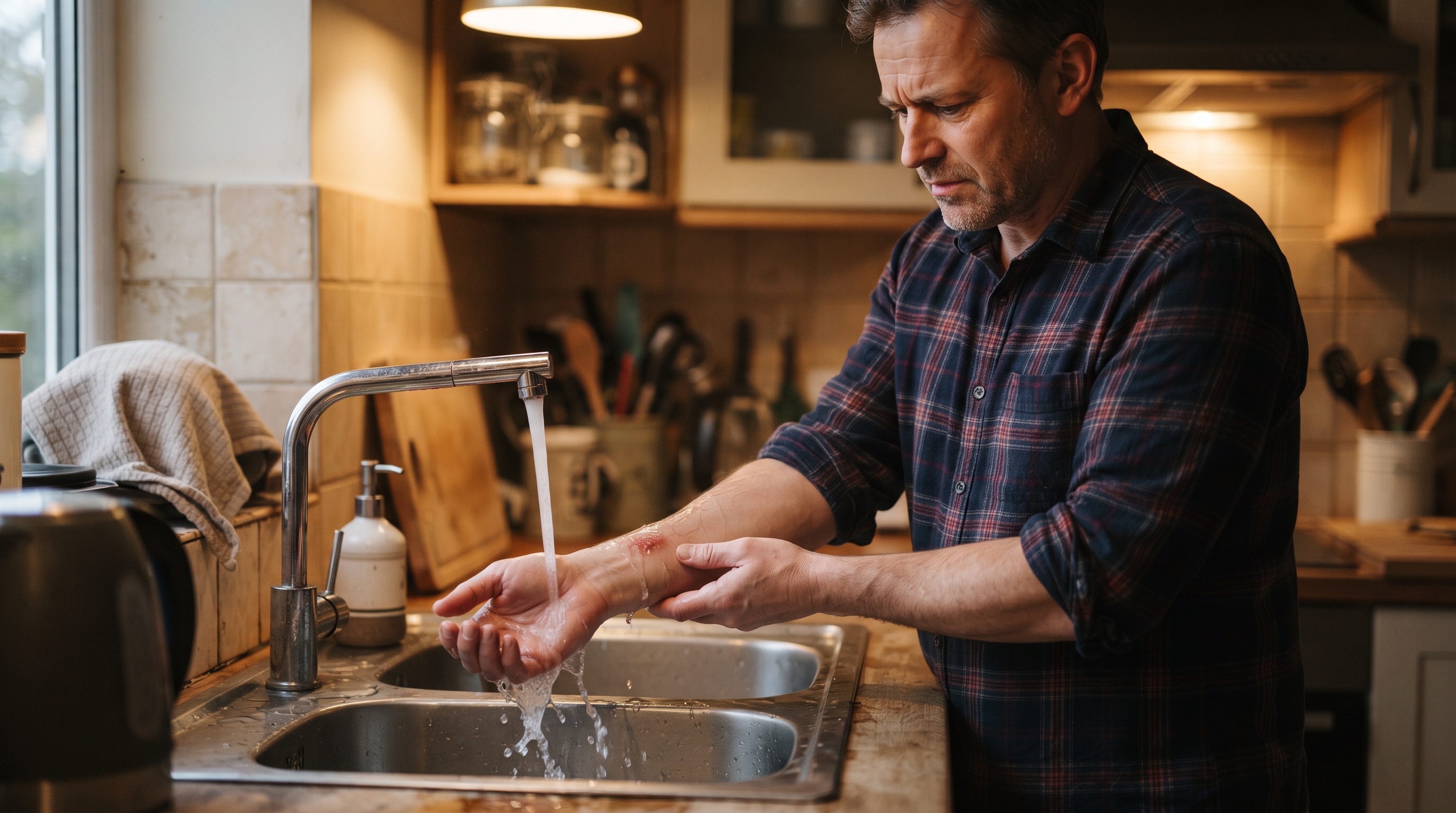
Most burns happen at home, and most of them happen in a normal moment. A hand brushes a hot pan. Coffee tips off the counter. A kid grabs the oven door. The pain comes fast and the panic comes right behind it, and that's usually when people reach for whatever folk remedy they grew up with. The trouble is that a few of those remedies make the injury worse. What a burn actually needs in the first hour is simple, and doing it right can be the difference between a mark that fades and one that scars. Here's the plan.
The First Move: Cool the Burn With Running Water
Get the burn under cool running water and keep it there for 20 minutes. That number surprises people. It feels like a long time when someone's in pain and you want to do something more active, but cool running water is the single most useful thing you can do for a fresh burn, and the clock matters.
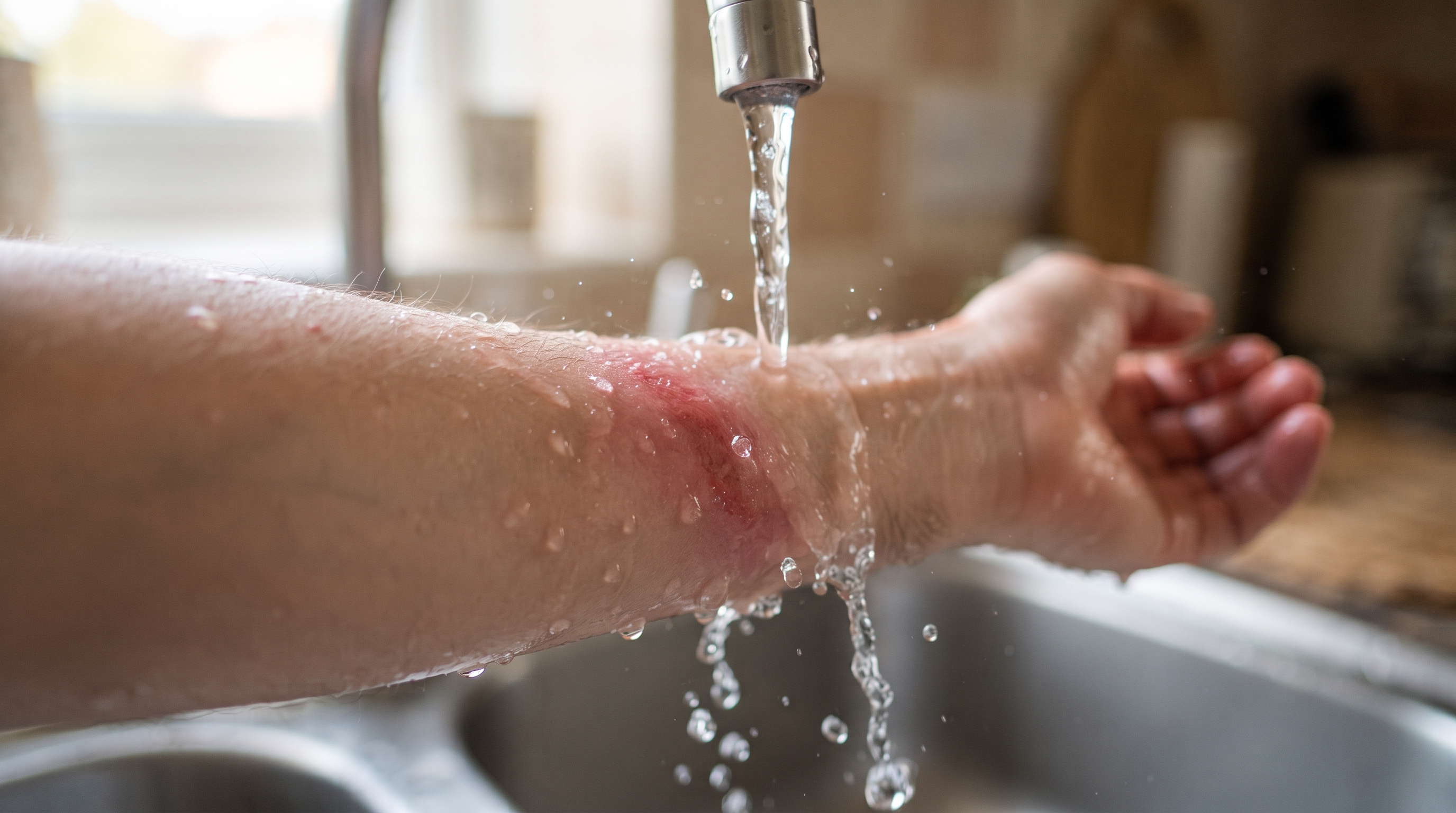
Cooling pulls heat out of the skin. A burn keeps cooking the tissue underneath for a while after the heat source is gone, so the faster you start cooling, the less deep the damage goes. Twenty minutes of cool water in the first three hours has been shown to reduce how bad the burn gets and how much it scars. Start immediately if you can, but it still helps even if a few minutes have passed.
Use cool water, not ice-cold. Lukewarm is fine if that's all you've got. A running tap, a shower, or a gentle hose all work. While the water runs, slip off any rings, bracelets, watches, or belts near the burn, because that area will swell and jewelry gets stuck fast. If clothing is stuck to the burn, leave it. Cut around it instead of pulling it free.
How to Tell How Bad a Burn Is
Knowing the depth of a burn tells you whether you're handling it at home or heading for help. There are three levels most people will run into.
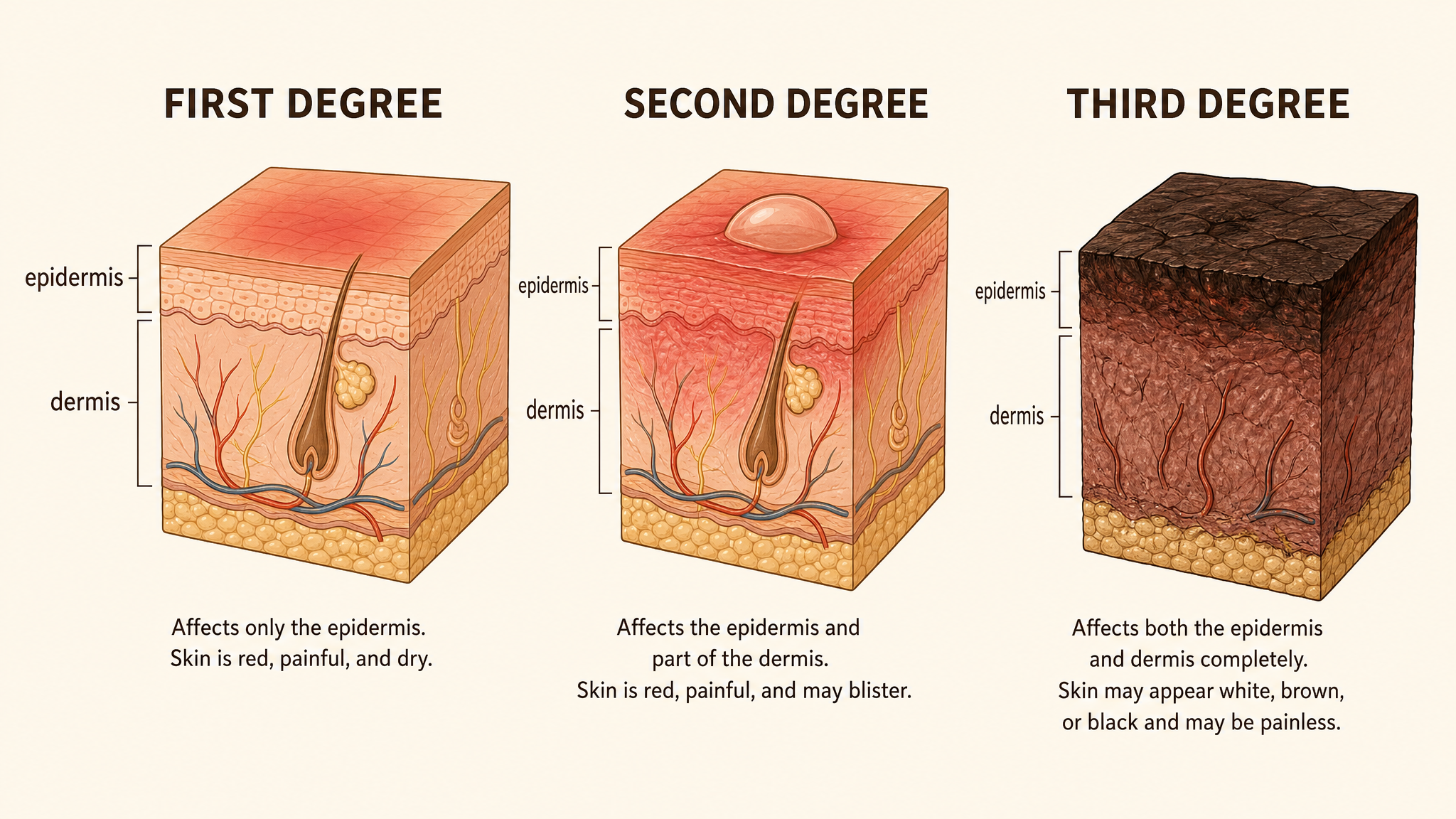
A first-degree burn affects only the top layer of skin. It looks red, feels sore, and there are no blisters. A mild sunburn is the classic example. These almost always heal on their own.
A second-degree burn goes deeper, into the layer beneath the surface. The skin turns bright red, swells, looks shiny or wet, and blisters form. It hurts, a lot. Small second-degree burns can often be managed at home, but bigger ones need medical attention.
A third-degree burn destroys both full layers of skin. Instead of angry red, it may look white, waxy, leathery, brown, or charred. Strangely, it can hurt less than a second-degree burn, because the nerve endings are damaged. A third-degree burn is always an emergency. Call 911.
After You Cool It: Cover, Protect, and Watch
Once you've cooled the burn for its full 20 minutes, the job shifts to keeping it clean and protected while it settles.
Cover it loosely. A layer of cling film laid over the burn works well and is what a lot of emergency services now recommend, because it won't stick to the wound and it keeps air off the raw skin, which cuts the pain. Lay it on in sheets rather than wrapping it tight around a limb, since the area will swell. A clean, non-stick dressing from a first aid kit does the same job. This is exactly the kind of moment a stocked home first aid kit earns its place on the shelf.
For the pain, an over-the-counter pain reliever like ibuprofen helps. Keep the burn slightly elevated if you can to ease swelling. Over the next day or two, watch for signs of infection: spreading redness, increasing pain, swelling, pus, or a fever. Any of those means it's time to see a doctor.
What Never to Put on a Burn
Some of the oldest burn "cures" are the ones that do real harm. If you clear these out of your head now, you won't reach for them under pressure.
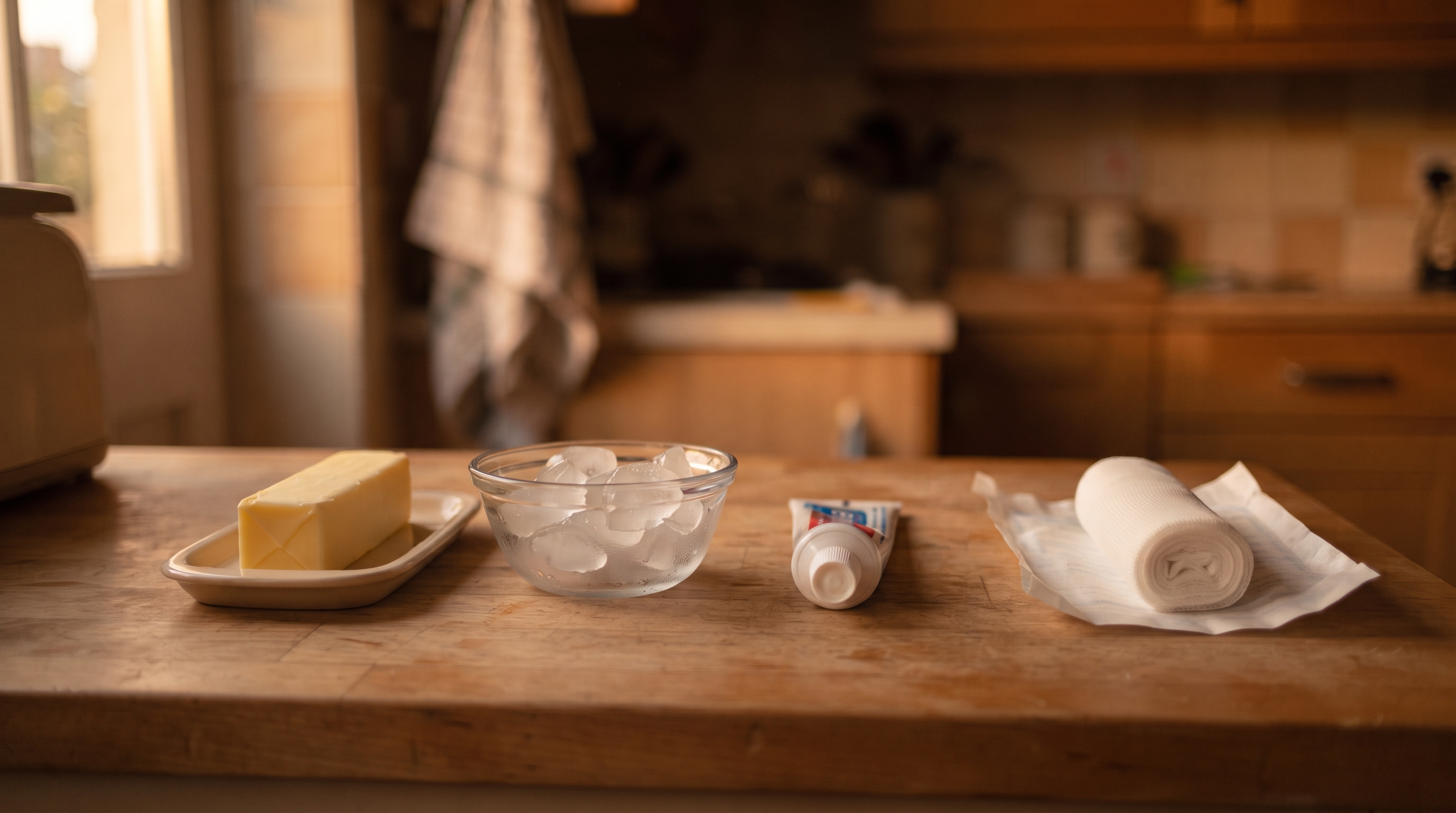
No butter, oil, or grease. It sounds soothing, but fat traps heat against the skin and keeps the burn cooking. It also gives bacteria something to grow in.
No ice or ice water. It feels like the logical opposite of a burn, but ice can freeze the already-injured tissue and cause a second injury on top of the first. Cool running water only.
Don't pop the blisters. A blister is a sterile bandage your body built for itself. Breaking it open exposes raw skin to infection. Leave it alone and let it do its job.
And skip the toothpaste, egg whites, and other kitchen remedies floating around the internet. None of them help, and several irritate the wound or invite infection. Cool water, a clean cover, and time are what actually work.
Chemical, Electrical, and Inhalation Burns Are Different
Not every burn comes from heat, and the ones that don't need a different first move.
For a chemical burn, get the chemical off first. Brush away any dry powder, then flush the area with running water for a good 20 minutes or longer, and remove any clothing or jewelry the chemical touched. Don't try to neutralize it with another substance. Just keep water moving over it and call for help. Chemical burns should always be evaluated by a professional.
For an electrical burn, safety comes before first aid. Do not touch a person who's still in contact with a live current, or you become the next victim. Shut off the power first. Electrical burns are deceptive: the skin damage you can see is often minor compared to the injury to muscle, nerves, and the heart underneath. Every electrical burn needs medical evaluation, and a shock can throw off the heart's rhythm, so call 911. If the person isn't breathing, this is when knowing the golden hour and basic CPR pays off.
If someone was in a fire in an enclosed space, watch for burns to the airway. Soot around the mouth or nose, a hoarse voice, coughing, or trouble breathing are warning signs that need emergency care right away, even if the visible burns look small.
When a Burn Needs the ER
Plenty of small burns heal fine at home. But some need a doctor, and a few need one right now. Get emergency help for a burn that is bigger than the palm of the person's hand, or one that is deep, white, leathery, or charred.
Go to the ER for burns on the face, hands, feet, a major joint, or the groin, even if they look small, because these areas are harder to heal and the stakes are higher. The same goes for any burn that wraps all the way around a limb, any chemical or electrical burn, and any burn from a house fire. Burns in the very young, the elderly, or anyone with a weakened immune system deserve a lower threshold for calling.
When you're not sure, make the call. A quick trip that turns out to be nothing beats a home-treated burn that gets infected or scars because it should have been seen. Deciding these things ahead of time, and knowing where your supplies are, is the whole idea behind a solid family emergency plan.
Burns don't wait for you to look things up. The people who handle them well are the ones who already knew the plan and had the supplies within reach. Cool water for 20 minutes, a clean cover, and no folk remedies will carry you through most of them. The 1stHour Trauma Kit packs 82 pieces of serious first-aid gear, including burn dressings and non-stick pads, into one grab-and-go case, so when a hot minute turns into a long hour, the right tools are already in your hands. See what's inside the kit.
This content is for informational purposes only and does not constitute medical advice. Serious burns can be life-threatening. Call 911 or seek professional medical care, and always follow the guidance of trained professionals.


