Winter Storm Prep: Your First-Hour Checklist Before the Roads Close
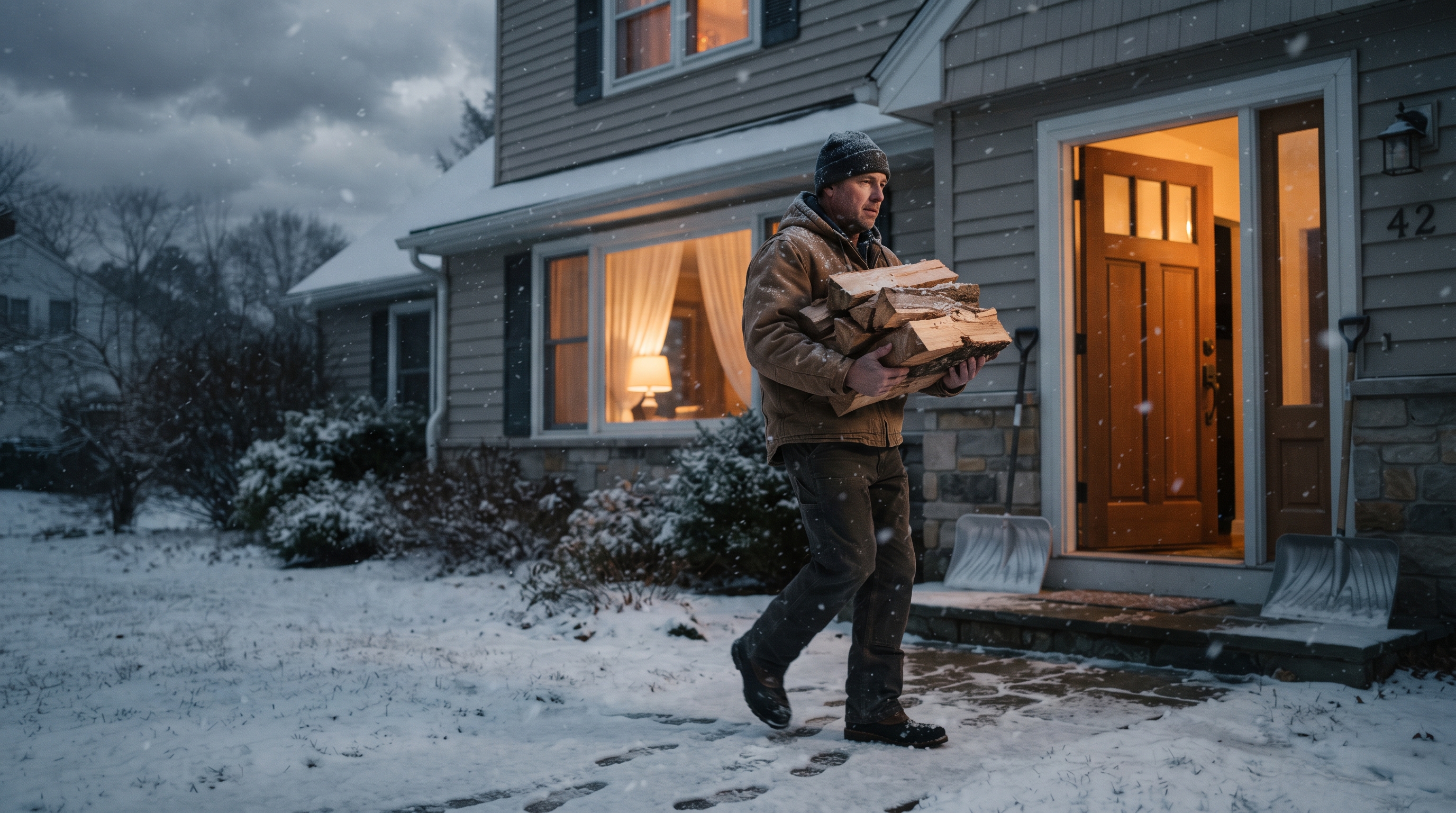
The forecast just changed. The storm that was supposed to brush past your county is now tracking straight at it, the grocery store is a madhouse, and the first flakes are due before dinner. This is the moment a winter storm preparedness checklist earns its keep. Not the season-long version with forty line items, but the compressed one: what actually matters when you have 60 minutes before the roads close. We built this list for exactly that hour. Work through it top to bottom and you will be in better shape than most households that had a full week of warning.
Why the Last Hour Beats the Last Minute
Winter storms rarely sneak up the way tornadoes do, but they punish procrastination in their own way. Roads do not close when the snow starts. They close when the plows fall behind, which can happen 30 minutes into a heavy band. After that, the storm controls your options. Whatever you did not buy, charge, fill, or fix is now settled until the roads reopen.
That is why the last hour beats the last minute. An hour is enough to cover water, heat, light, meds, and pipes if you move with a plan. It is not enough to learn as you go. Ready.gov's winter weather guidance says it plainly: once the storm arrives, the safest place is inside, off the roads. Everything below is designed to make staying inside survivable and even comfortable.
One mindset note before the list. You are not preparing for the snow. Snow is just water. You are preparing for what the snow takes away: power, heat, running water, open roads, and a pharmacy that answers the phone.
Water, Food, and Meds First
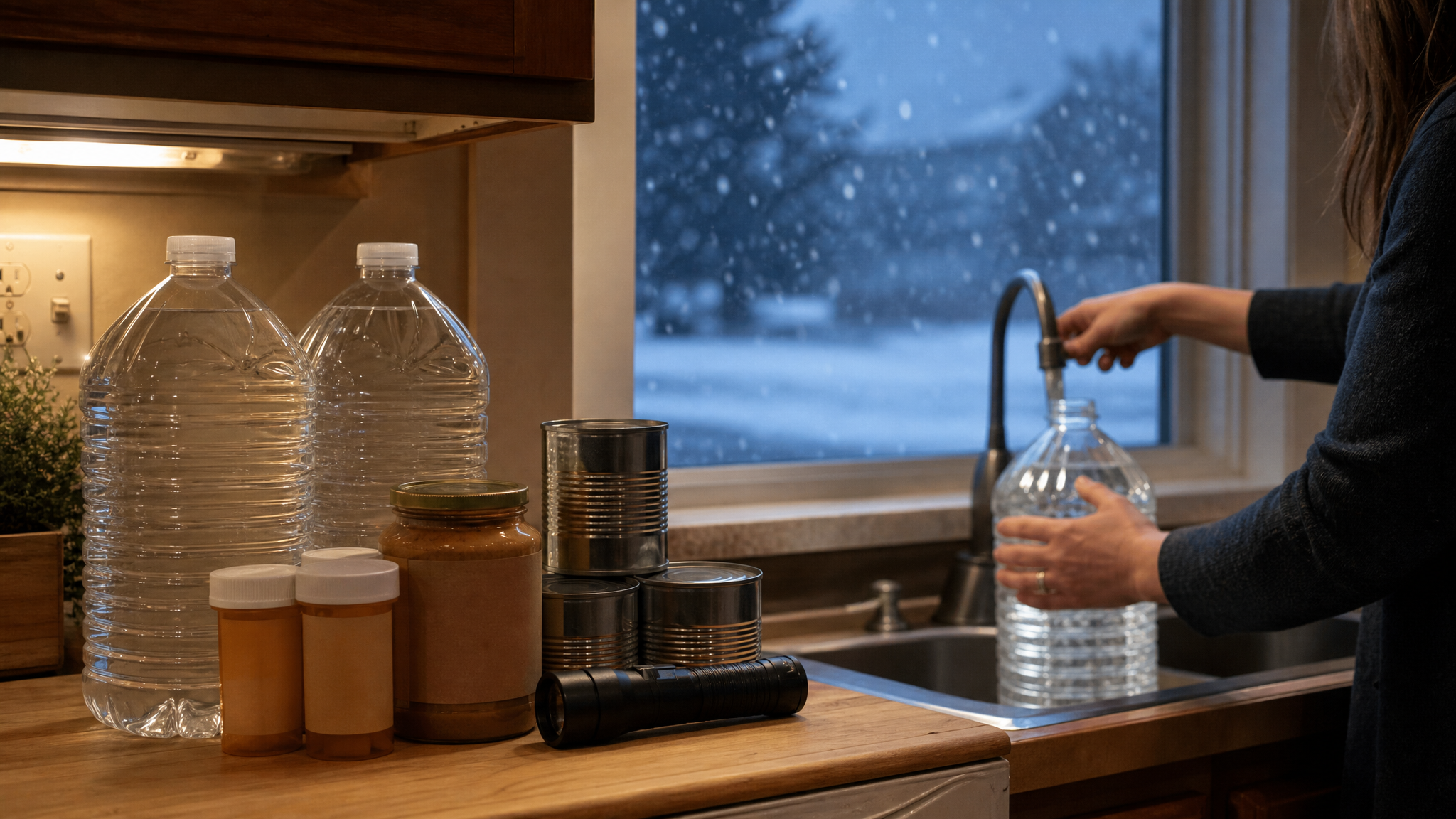
Start with the things you cannot improvise. Ready.gov's water guidance calls for one gallon per person per day, and in a winter storm the risk is real even with municipal water, because a burst main or a power failure at the treatment plant can take the taps offline. Fill your actual containers first, then get creative: clean pots, pitchers, the bathtub if you have a way to cover it. Three days per person is the floor.
Food is easier than people make it. You want calories that need no cooking: peanut butter, tortillas, canned beans, tuna, granola, dried fruit. Skip the milk-and-bread panic run. If the power holds, cook normally. If it fails, you eat sandwiches for two days and nobody suffers.
Medications are the item families new to snow country miss most often. If anyone in the house is within five days of running out of a prescription, call the pharmacy now, not after the storm. Insulin, heart medication, seizure medication, inhalers. The storm does not care that the refill was due Tuesday. While you are at it, pull your first aid supplies into one place you can find in the dark. If you have never audited that kit, our home first aid kit checklist shows what belongs in it and what is just taking up space.
Backup Heat Without the Carbon Monoxide Risk
Here is the hard truth about winter storms: the cold rarely kills people in their homes. The improvised heat does. Every major storm brings a wave of carbon monoxide poisonings from generators run in garages, charcoal grills pulled inside, and gas ovens left open for warmth. None of those are heat sources. They are slow-motion emergencies.
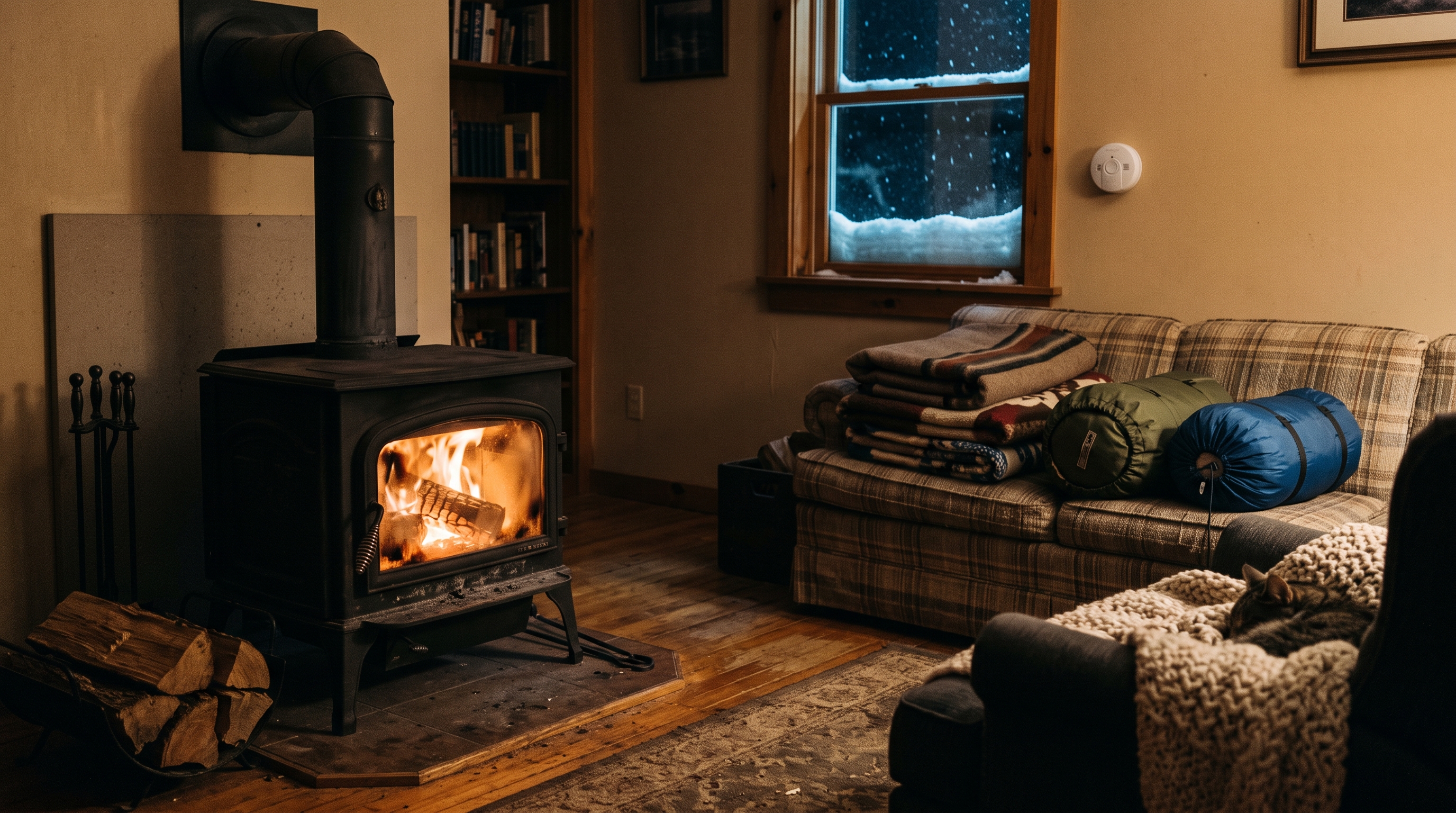
The CDC's winter storm preparation guidance is specific: if you plan to heat with a fireplace, wood stove, or kerosene heater, you need a battery-operated carbon monoxide detector near the heated area, tested monthly, and any fuel-burning equipment must vent outside. A generator stays outdoors, far from windows and doors, full stop.
Safe backup heat in the first hour looks like this. Bring firewood in now, while it is dry. Test the space heater and give it three feet of clearance in every direction. Find the extra blankets and sleeping bags and stage them in one room, because heating one room beats heating five. Check the CO detector's battery. If your only backup heat plan involves burning something without a chimney, your plan is blankets, and that is a fine plan.
Know the early signs of trouble anyway: headache, dizziness, nausea, confusion. They look like the flu and arrive without a smell. We cover what to do about them in our guide to carbon monoxide poisoning symptoms. And if someone does get dangerously cold in the days after, hypothermia first aid is a skill worth reading about before you need it.
Protect Your Pipes Before They Freeze
A burst pipe can do more expensive damage than the storm itself, and preventing one takes about four minutes. Water expands when it freezes. Trapped in a pipe with nowhere to go, it splits copper and PVC alike, and the flood starts when things thaw.
Your first-hour moves: open a slow, steady drip on faucets served by pipes that run along exterior walls. Moving water resists freezing. Open the cabinet doors under the kitchen and bathroom sinks so household air reaches the plumbing. Disconnect any garden hose still attached outside, because a connected hose traps water in the spigot and the pipe behind it. The CDC also recommends insulating exterior-wall water lines, which is a fall project rather than a last-hour one, but the drip and the cabinet doors work tonight.
One more step most people skip: find your main water shutoff and make sure you can actually turn it. It is usually in the basement, a crawl space, or near the water meter. If a pipe lets go at 2 a.m. in a blackout, knowing that valve's location is the difference between a puddle and a ruined floor.
Your Winter Storm Preparedness Checklist, Room by Room
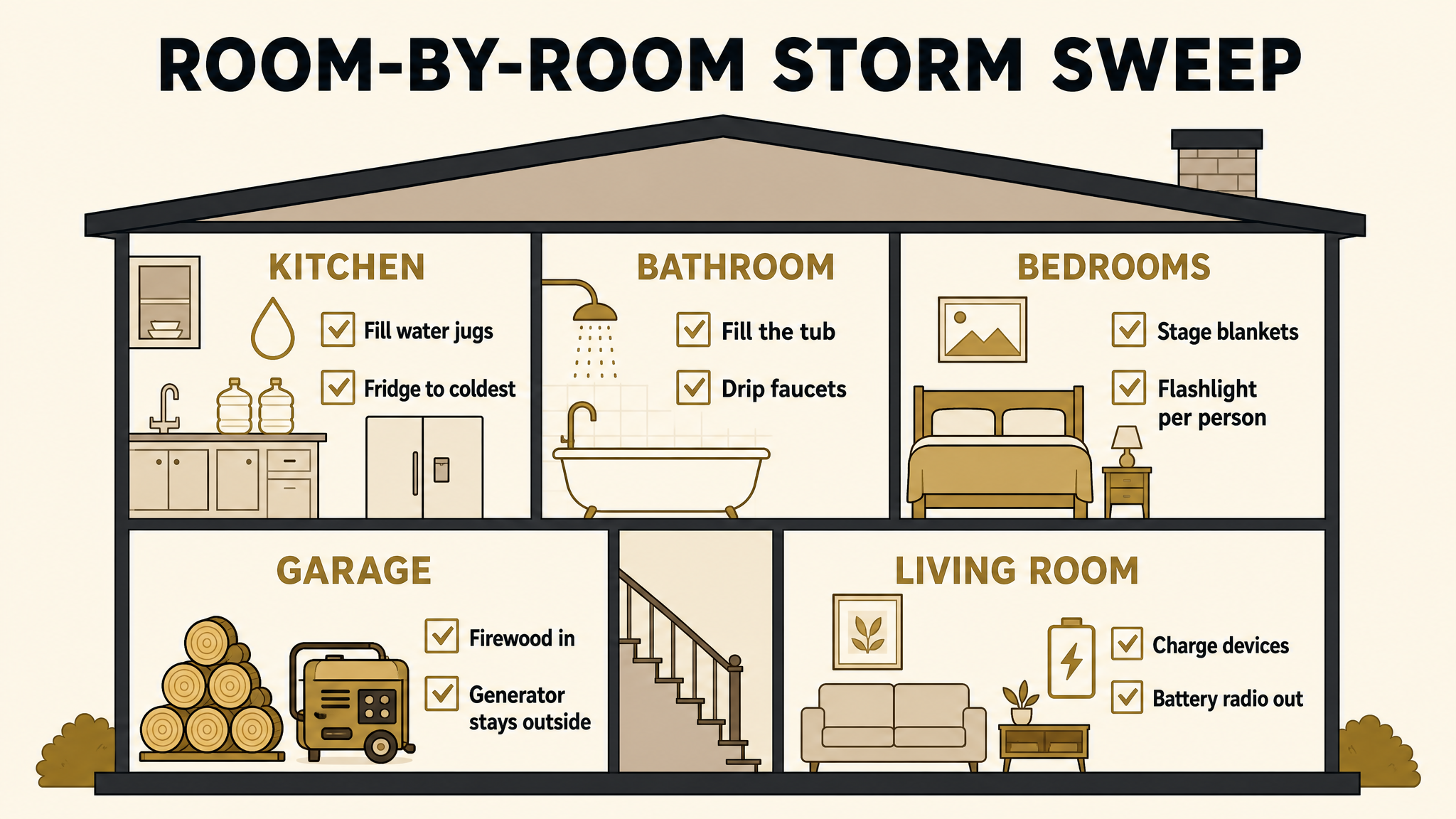
The fastest way to work a winter storm preparedness checklist under time pressure is by room, not by category. You walk each room once, do what that room needs, and move on.
Kitchen. Fill water containers and pots. Confirm the manual can opener exists. Turn the fridge and freezer to their coldest settings so food lasts longer if the power fails, and freeze a few water bottles to help.
Bathroom. Fill the tub if you have small children, big pets, or well water that depends on an electric pump. Tub water flushes toilets and washes hands. Drip the faucet if it sits on an exterior wall.
Bedrooms. Stage blankets, sleeping bags, and warm layers in the room you plan to heat. Put a flashlight where each person sleeps. Kids get their own; it doubles as comfort.
Garage and utility room. Bring in firewood. Move the generator's extension cords where you can find them, and confirm the generator itself stays outside. Locate the water shutoff. Check the snow shovel is by the door you will actually use.
Living room, last five minutes. Charge phones, backup batteries, headlamps, and anything with a port. Pull out the battery radio. Text a neighbor or relative your plan, especially anyone on your street who is older or lives alone. A two-line message before the storm beats a welfare check after it.
What Every Winter Storm Preparedness Checklist Forgets
The car. Even though you are staying home, fuel it now. The CDC recommends keeping the tank near full through winter, partly to avoid fuel-line ice and partly because after the storm your car may be your only heat source or your only way out. If a supply run goes wrong mid-storm, being stranded in your car in a snowstorm is its own survival problem, and the preparation for it happens in the driveway, not on the shoulder.
The power plan. Storm and outage go together, and most of the misery in a multi-day blackout traces to decisions made in the first 60 minutes. Our power outage emergency plan walks through that first hour when the lights go out; it pairs with this list like a left and right glove.
The people. Assign the kids one job each. A seven-year-old who is in charge of flashlights is calmer than one watching the adults hurry. And write the non-negotiables on paper: pharmacy phone number, utility outage line, the neighbor's cell. Paper works at 8 percent battery.
The last item on the list is the one you keep in a drawer: a kit that is already packed before the forecast turns. The 1stHour Trauma Kit is 82 pieces of serious first aid gear, built for the injuries that happen when people are shoveling heavy snow, splitting wood, and working in the dark. Storms reward the people who got ready before the warning. So does everything else.
This content is for informational purposes only and does not constitute medical advice. In any emergency, call 911 or your local emergency number.


