Carbon Monoxide Alarm Going Off: What to Do Right Now
You are asleep, or halfway through dinner, and the alarm starts. Maybe someone has a headache, maybe nobody does. It is tempting to silence it and wait to see what happens. Don't. This guide covers what to do in the first minute, how to tell an alarm from a chirp, and what to check once everyone is safe.
Carbon Monoxide Alarm Going Off: Treat It as Real
The CDC says carbon monoxide symptoms are often described as flu-like, and that sleeping or intoxicated people can die before they notice any. That is why the alarm matters. You cannot smell this gas, and by the time you feel bad, you may be too foggy to act.
Fire departments do note that an alarm can sound well before levels turn life-threatening. That is a reason to be glad it went off, not a reason to wait. Treat every alarm as a real one until someone with the right equipment says otherwise.
Carbon Monoxide Alarm Going Off: Steps to Take Right Now
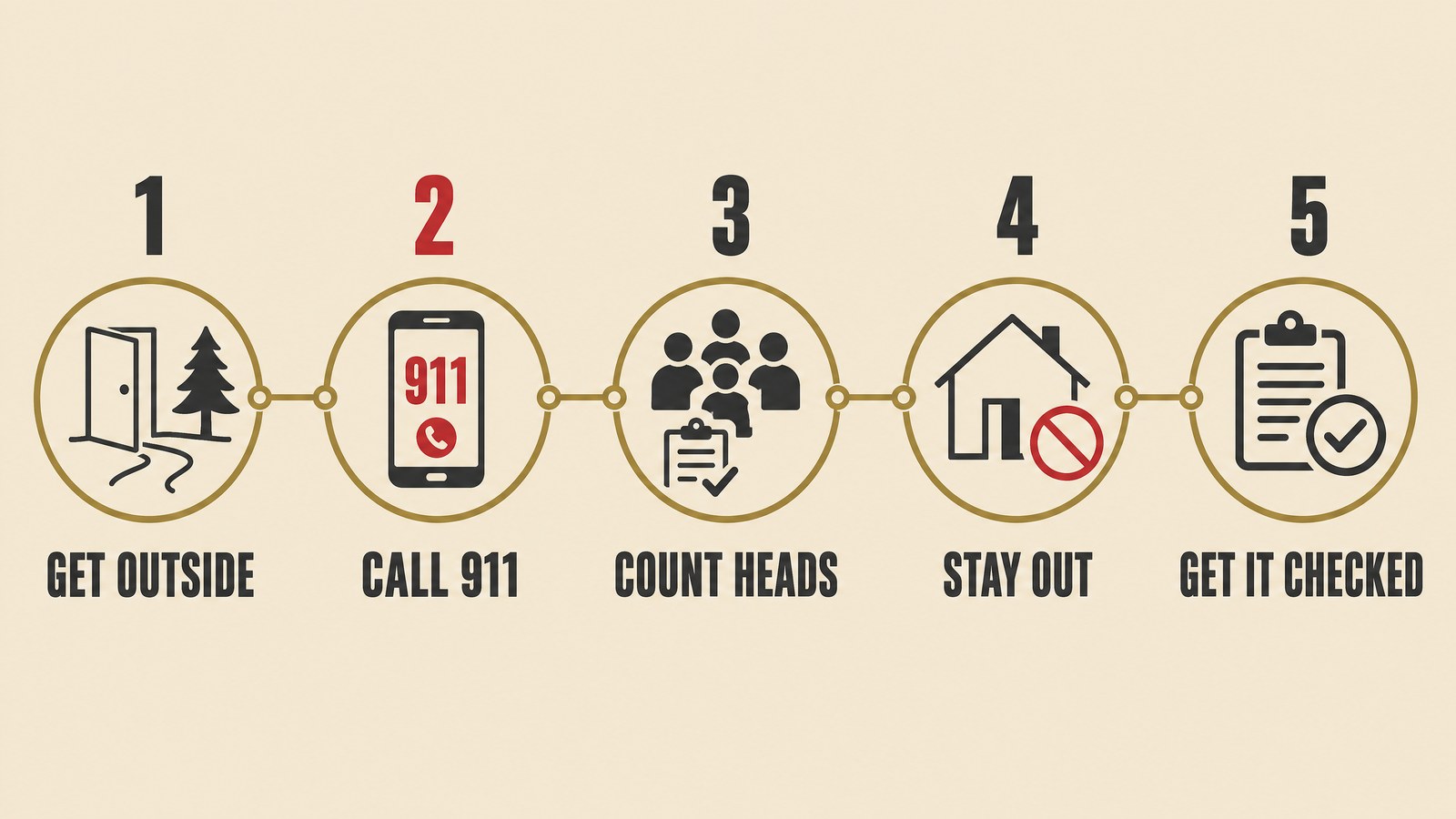
Here is the order that works for most homes.
- Move everyone to fresh air. Go outside, or at least to an open door or window, and take pets with you.
- Call 911 or your local fire department from outside.
- Count heads. Make sure every person and pet in the home is with you.
- Stay out. The Kidde help center says not to re-enter until emergency services arrive, the home has been aired out, and the fire department gives the all-clear.
- If the alarm sounds again within 24 hours, repeat these steps and call a qualified appliance technician to find the source and check the alarm.
Some local fire departments, like the City of Madison Fire Department, say that when nobody has symptoms you can shut off gas appliances, open doors and windows, and then call your gas utility. If anyone feels sick, even a little, they say to leave and call 911. Moving outside and calling for help first is the safer default, and nobody will fault you for it.
One more point. If your alarm has a digital display that shows a number, Kidde advises assuming it senses carbon monoxide, leaving the home, and calling 911.
Alarm or Chirp? How to Tell
Not every beep means carbon monoxide. Most alarms also signal a low battery or the end of their life with a short chirp, often once a minute, and that pattern is different from the alarm sound.
The catch is that the patterns vary by brand. Your manual lists them, and it is worth reading it once now instead of at 3 a.m. If you are not sure which sound you are hearing, treat it as an alarm and go outside. A false alarm costs you a few minutes. A missed one can cost far more.
A chirp still needs attention. Replace the batteries, and if it keeps chirping, the unit may be past its life span. The CDC says to replace detectors per the maker's instructions or about every 5 years.
Common Sources of Carbon Monoxide at Home
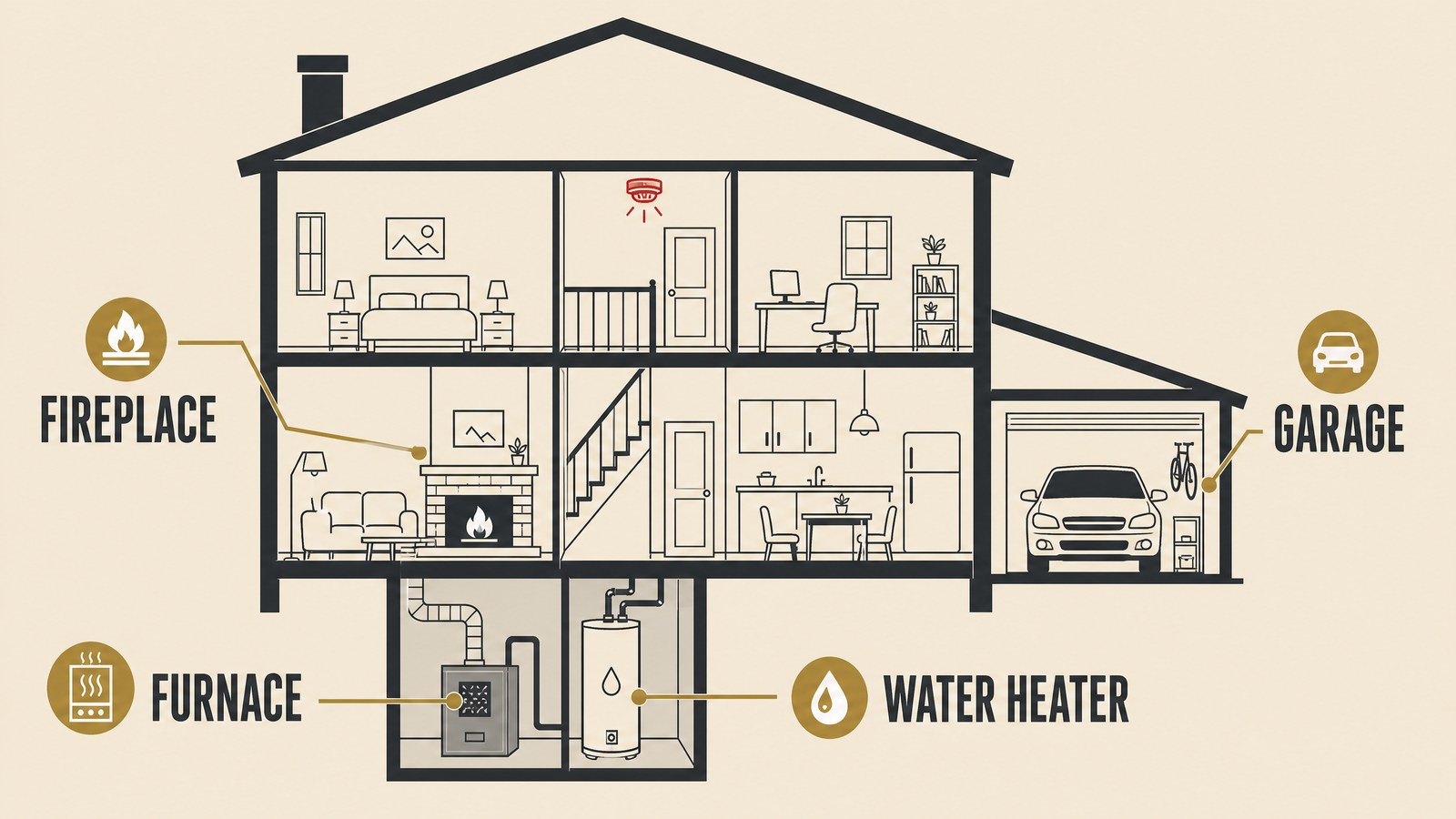
Anything that burns fuel can make carbon monoxide. In a house, the usual suspects are a furnace, a water heater, a gas stove or oven, a fireplace, and a car running in an attached garage. Kidde specifically says to check whether a vehicle is or was running in an attached garage or next to the home.
Generators deserve their own warning, especially during storm outages. The CDC says never to run one inside your home or garage, even with doors and windows open, and to keep it more than 20 feet from windows, doors, and vents.
You are not the one to find or fix the source. Leave that to the fire department, your gas utility, or a licensed technician. If you also smell gas, that is a separate emergency, and our guide on what to do if you smell gas covers it.
Symptoms to Watch For After You Are Out
Once you are in fresh air, check on everyone. The CDC lists headache, dizziness, weakness, nausea, vomiting, chest pain, and confusion. Tell the responders about any of them, even if they seem mild or have started to fade.
Babies, older adults, and people with heart disease, anemia, or breathing problems are more likely to get seriously ill. Our full guide to carbon monoxide poisoning symptoms explains what to look for and when to go to the ER.
Smoke and carbon monoxide often show up together in a fire. If there was any smoke, our piece on smoke inhalation symptoms is worth a read too.
Keep Your Alarms Ready
The CDC recommends battery-operated or battery backup CO detectors near every sleeping area. Check the batteries when you change your clocks in spring and fall, and write the install date on the unit so you know when it is due for replacement.
Then make the alarm part of your plan. If you already have a fire route, add this to it: the same exit, the same meeting spot. Our house fire escape plan guide shows how to build one, and a stocked home first aid kit near that exit saves time when seconds count.
An alarm gets you out. For the minutes after, See what's inside The 1stHour Trauma Kit, built for the moments before help arrives.
This content is for informational purposes only and does not constitute medical advice. If your carbon monoxide alarm sounds, get everyone outside and call 911.


