Smoke Inhalation Symptoms That Show Up Hours Later
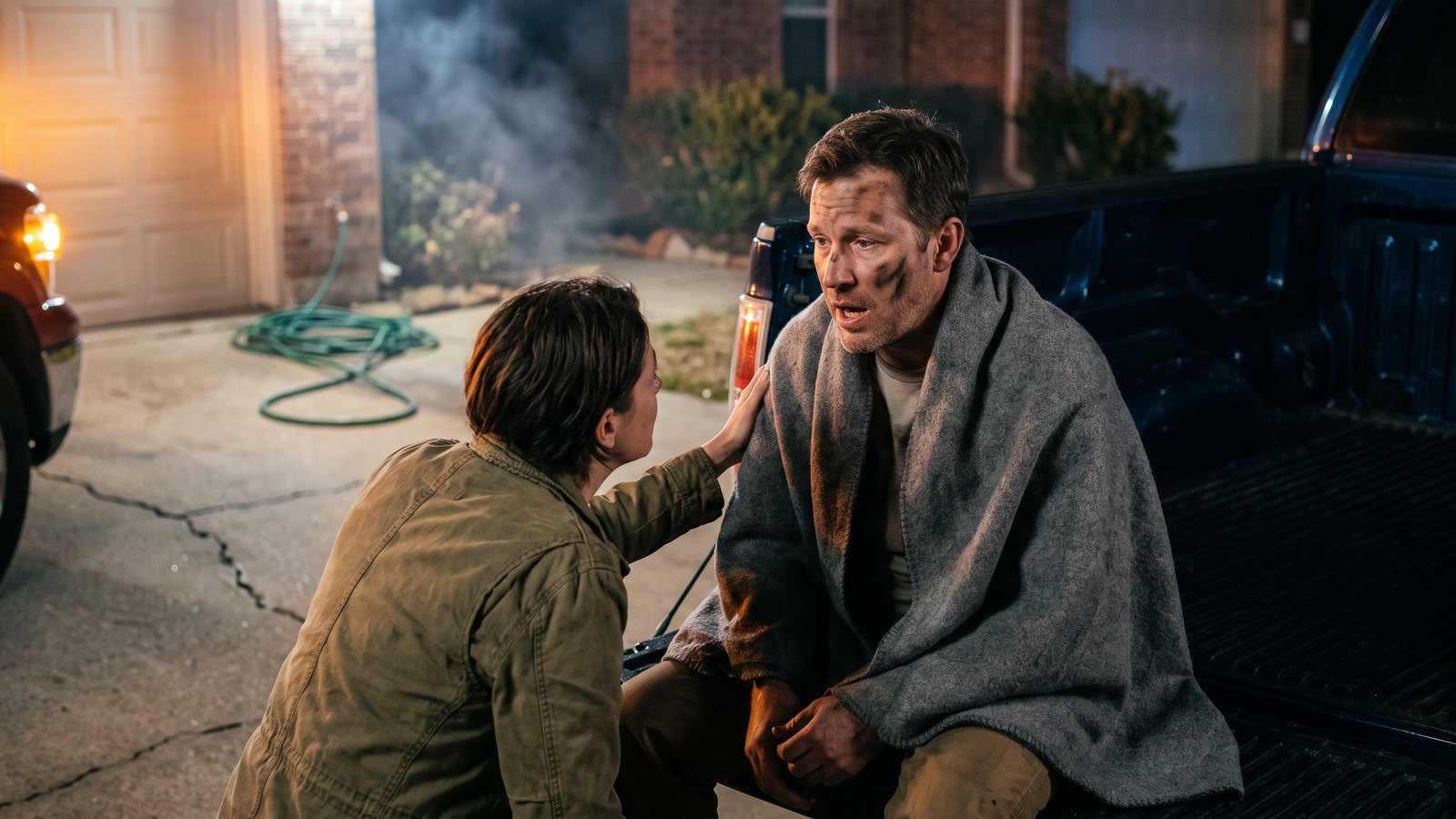
Most people get this wrong in the same direction. They judge smoke inhalation by how the person looks in the first ten minutes. If the coughing settles down and nobody is gasping, everyone relaxes and goes to bed. That is the part that catches families out.
The heat and chemicals do their damage on contact, but the body's response to that damage builds slowly, and the worst of it often arrives long after the fire trucks have left. Smoke, not flame, is the leading cause of death in house fires. Here is what we tell people to watch for right away, what tends to appear later, and where the line sits between monitoring someone at home and calling 911.
Smoke Inhalation Symptoms: What to Look For First
In the first few minutes after someone comes out of smoke, run through this list out loud. You are not looking for one symptom. You are looking for a pattern.
- Coughing, especially a cough that will not clear
- Hoarse voice, a raspy voice, or a voice that sounds smaller than usual
- Soot or black flecks around the nose and mouth, or black streaks in what they cough up
- Shortness of breath, or breathing that sounds noisy
- Headache, nausea, or vomiting
- Confusion, unusual irritability, or trouble following a simple question
- Chest tightness or a racing heart
- Burning or watering eyes and a sore throat

Split that list into two groups in your head. Cough, hoarseness, soot, and noisy breathing point to the airway itself being irritated or swelling. Headache, nausea, and confusion point to poisoning, because the gases in smoke have already gone through the lungs and into the blood. Both matter. They just get treated differently, and the second group is easier to miss because it looks like a bad day rather than an emergency.
One more thing. Ask them to talk. Not a nod, not a thumbs up. Ask a question that needs a full sentence to answer. A voice change is the single most useful early sign you can get for free, and you will only catch it if you have heard them speak.
Why Smoke Inhalation Symptoms Can Show Up Hours Later
Smoke is not one thing. It is hot gas carrying soot particles and a load of chemicals released by whatever happened to be burning. When someone breathes it, three separate injuries start at once, and only one of them announces itself immediately.
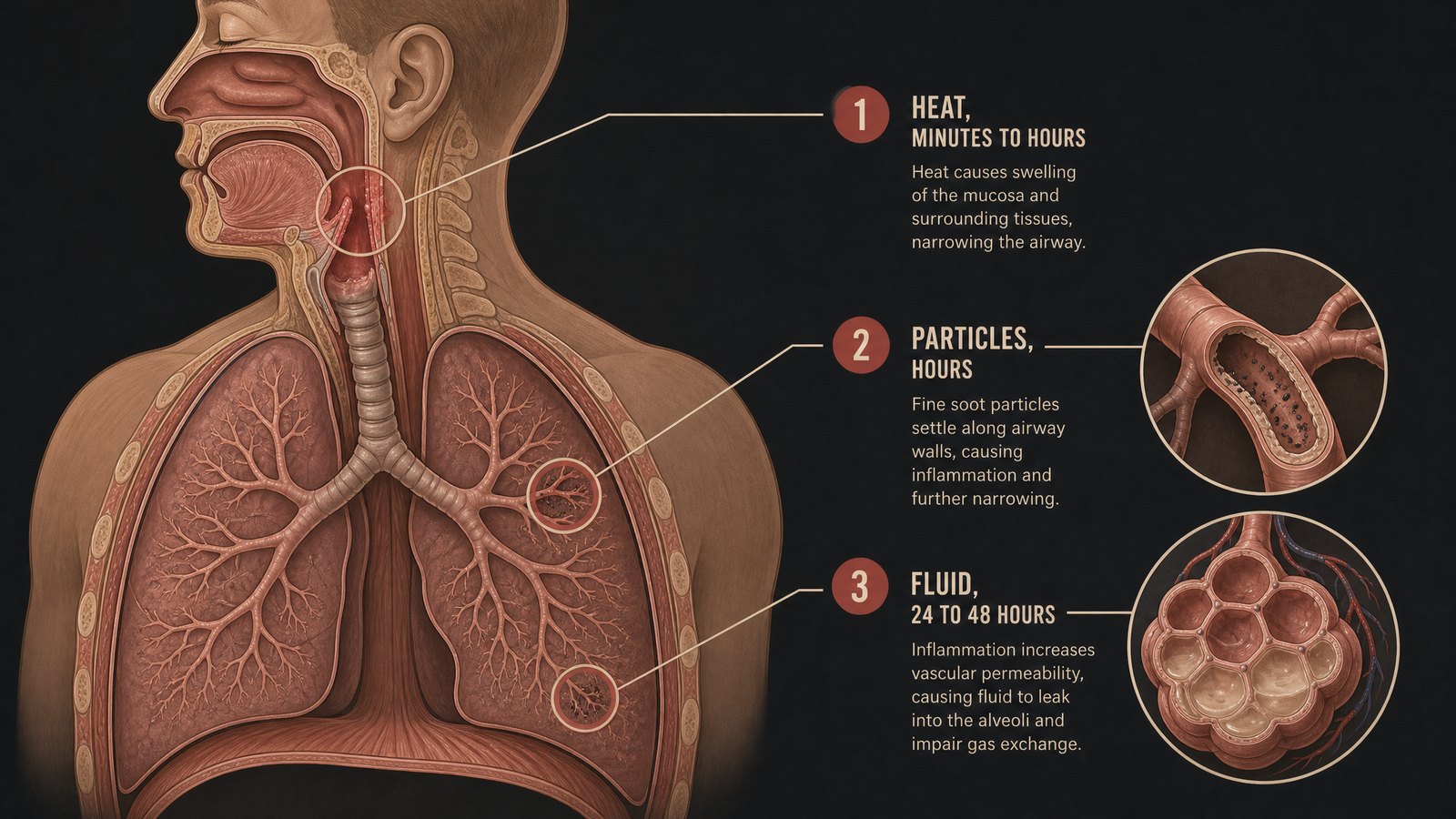
The heat scalds the upper airway, which reacts the way any burned tissue does. It swells. Swelling in the throat takes time to build, and a passage that was wide enough at minute five can be uncomfortably narrow by hour two.
Then the particles. Soot lands deep in the lungs and the body treats it as an invasion, sending an inflammatory response into the small airways. That response pulls fluid into places air is supposed to be.
The timing here is well documented. Reviews of toxic smoke exposure describe pulmonary edema developing 24 to 48 hours after exposure, and some cases progressing from mild throat irritation to serious fluid buildup within 3 to 30 hours. Acrolein, the most common toxin in smoke after carbon monoxide, produces delayed lung fluid on a lag of 40 minutes to 8 hours depending on the dose.
And the gases keep working after the person is out in fresh air. Carbon monoxide is already bound to their blood, and that does not undo itself quickly.
The practical result is the pattern that shows up over and over in the medical literature. A patient arrives looking fine, gets sent home, and deteriorates as delayed swelling or lung fluid sets in. Medscape notes that patients with smoke inhalation injury may appear symptom-free on arrival and go on to develop significant signs as much as 36 hours after exposure. Standard guidance for a significant toxic smoke exposure is observation for 24 to 48 hours, precisely because feeling fine at hour one predicts very little about hour twelve.
The Delayed Smoke Inhalation Timeline: Hour 0 to Hour 36
Think about the day and a half after exposure in stages. What is unremarkable early becomes meaningful later.
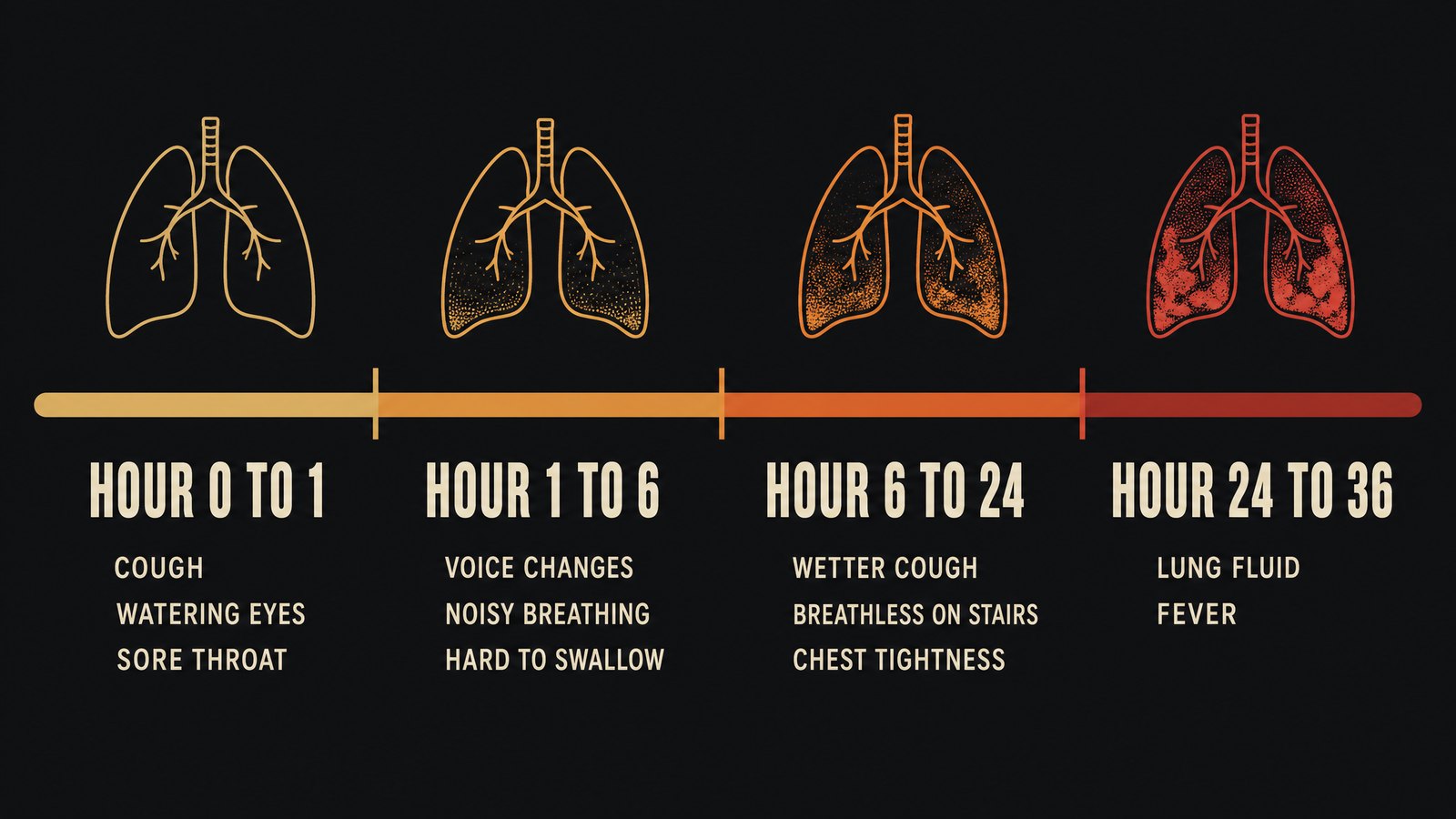
Hour 0 to 1. Coughing, streaming eyes, a scratchy throat, and a taste of smoke are all expected. Get the person into clean air and sitting upright. This is the window where you check the voice and look inside the mouth for soot.
Hour 1 to 6. This is when upper airway swelling tends to declare itself. The signs are a voice getting worse rather than better, a whistling or crowing sound on the way in, difficulty swallowing, or drooling. Any of those is a 911 call, not a wait.
Hour 6 to 24. The deep lung response builds here. Watch for a cough that is getting wetter or more frequent, breathlessness on tasks that were easy in the morning, chest tightness, or a need to sit forward to breathe comfortably. Someone who could climb the stairs at dinner and cannot at midnight has changed, and that change is the information.
Hour 24 to 36. Still inside the window. Fluid can arrive this late, and so can a fever from a developing chest infection. Day two is not a free pass.
The rule underneath all of this is simple. In the day and a half after a smoke exposure, you are not looking for symptoms to be bad. You are looking for them to be worse than the last time you checked. Trend beats snapshot.
Airway Burn Signs That Change the Urgency
Some findings move the situation out of monitoring territory immediately, because they suggest the airway itself was burned and is going to swell.
- Singed nasal hairs or singed eyebrows
- Soot in the nostrils, on the tongue, or in the back of the throat
- Hoarseness, a muffled voice, or barely any voice at all
- A high-pitched noise when breathing in
- Drooling, or saying it hurts to swallow
- Burns on the face, lips, or neck
- Anyone who was in an enclosed space with smoke, or who was unconscious at any point
If you see these, call 911 and say the words "possible airway burn." The reason for urgency is mechanical rather than dramatic. A swelling throat gets harder to secure the longer you wait, and paramedics would much rather manage that early than arrive to a closed airway. Facial and neck burns need their own attention, and how you handle the skin injury matters alongside the breathing.
Carbon Monoxide and Cyanide: The Part a Pulse Oximeter Misses
Here is the trap. Plenty of households now own a fingertip pulse oximeter, and after a smoke exposure someone will clip it on, see 98 percent, and treat that as an all clear.
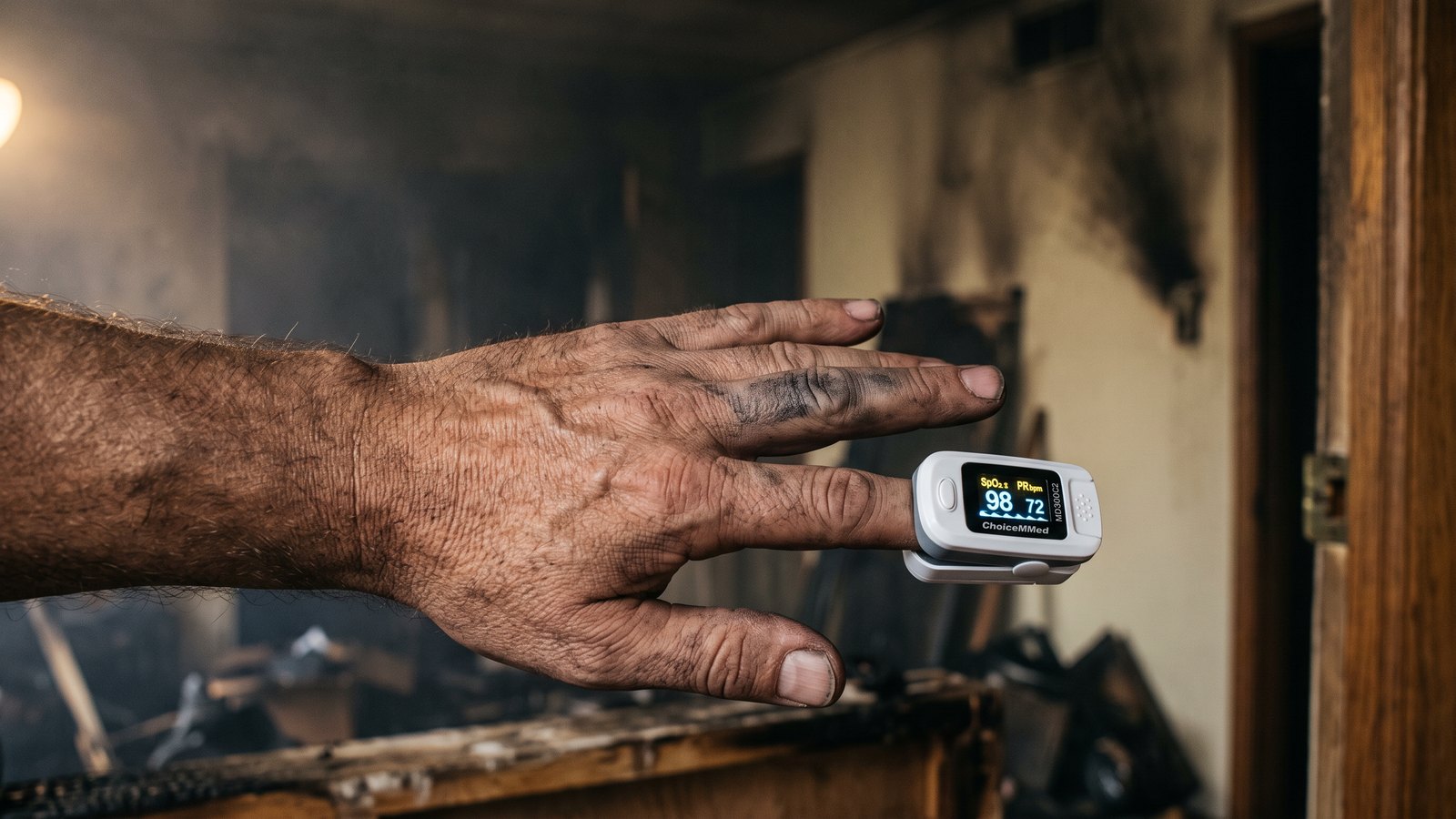
It is not one. A standard pulse oximeter cannot tell the difference between hemoglobin carrying oxygen and hemoglobin carrying carbon monoxide. Someone with a serious carbon monoxide load can read a perfectly normal number while their tissues are starved. That reading is worse than no reading, because it talks people out of going in.
Carbon monoxide is the most common killer in smoke, and modern house fires add a second one. Burning synthetics like nylon, polyurethane foam, and wool release hydrogen cyanide, which blocks cells from using the oxygen that does reach them. Both of these show up as vague, systemic misery rather than a breathing problem: headache, nausea, dizziness, weakness, poor judgment, and eventually confusion or collapse.
The tell that beats any home device is how many people are affected. If two people who were in the same room both have headaches, or the dog is unsteady, or everyone feels better the moment they step outside, treat that as gas exposure and get checked. Carbon monoxide poisoning has its own set of symptoms worth learning properly, and they overlap enough with the flu that people talk themselves out of the right answer regularly.
When to Call 911 vs When to Watch
Call 911 now if there is:
- Trouble breathing, noisy breathing, or a high-pitched sound on inhaling
- A hoarse, muffled, or lost voice
- Confusion, drowsiness, a seizure, or any loss of consciousness
- Burns on the face or neck, or soot in the mouth or nose
- Chest pain
- Blue or gray lips, face, or fingertips
- Any exposure in an enclosed space, or a rescue where the person had to be carried out
Get seen today, even without those, if the person:
- Has asthma, COPD, heart disease, diabetes, or kidney disease
- Is over 65
- Took in a heavy lungful, or was in the smoke for more than a few minutes
- Is coughing up anything black
- Is pregnant
The CDC flags people with chronic heart or lung conditions and adults over 65 as being at higher risk of a serious response to smoke, so their threshold for getting checked should be lower than everyone else's. Someone whose asthma is now flaring needs their inhaler and a real evaluation, not a quiet lie-down, and it is worth knowing what to do about an asthma attack with no inhaler in reach before you are standing in that situation.
Monitor at home, actively, if the exposure was brief, the person's voice is normal, there is no soot in the mouth, breathing is quiet and comfortable, and they are thinking clearly. Active monitoring means something specific. Check on them every couple of hours for the first 12, sleep somewhere you would hear them, and have one person actually responsible for it rather than assuming someone will notice. If any item on the 911 list appears, or if things are simply trending the wrong way, stop monitoring and go. Cleveland Clinic is blunt about the bar here: if you have been in a fire or think you inhaled a large amount of smoke, get seen.
Recovering From Mild Smoke Inhalation
For a genuinely mild exposure, recovery is mostly about giving the airway a clean environment and time.
Get outside or into filtered air and stay there. Sit upright rather than lying flat, because it makes breathing easier and helps the lungs clear. Drink water through the day to keep secretions loose. Skip cigarettes, vapes, woodstoves, and anything else that puts more particulate through the same tissue for at least a few days.
Expect the cough to outlast everything else. A few days is common and a couple of weeks is not unusual, often with dark phlegm early on as the lungs clear what they caught. What should not happen is progress running backward. Breathlessness that returns after improving, a fever on day two or three, chest pain, or coughing up blood all mean going back to be seen. Airways that were irritated once are more vulnerable to infection for a while afterward.
If you live somewhere fire season is an annual event, the useful work happens before the smoke arrives. Having a wildfire evacuation plan your household has actually rehearsed beats improvising in a hurry, and our guide to the home first aid kit covers what should already be stocked and current before you need to grab it.
Ready before you need it. Nobody plans for the hour after a fire. What decides how that hour goes is whether the supplies you need are already in the house and already organized, or scattered across three drawers. The 1stHour Trauma Kit puts 82 pieces of real gear in one place you can grab in the dark, so the first hour is spent helping instead of hunting.
This content is for informational purposes only and does not constitute medical advice. If you suspect smoke inhalation, call 911 or your local emergency number. Do not use this article to rule out an airway injury, carbon monoxide poisoning, or any other consequence of smoke exposure.


