Asthma Attack Without Inhaler: What to Do While You Wait
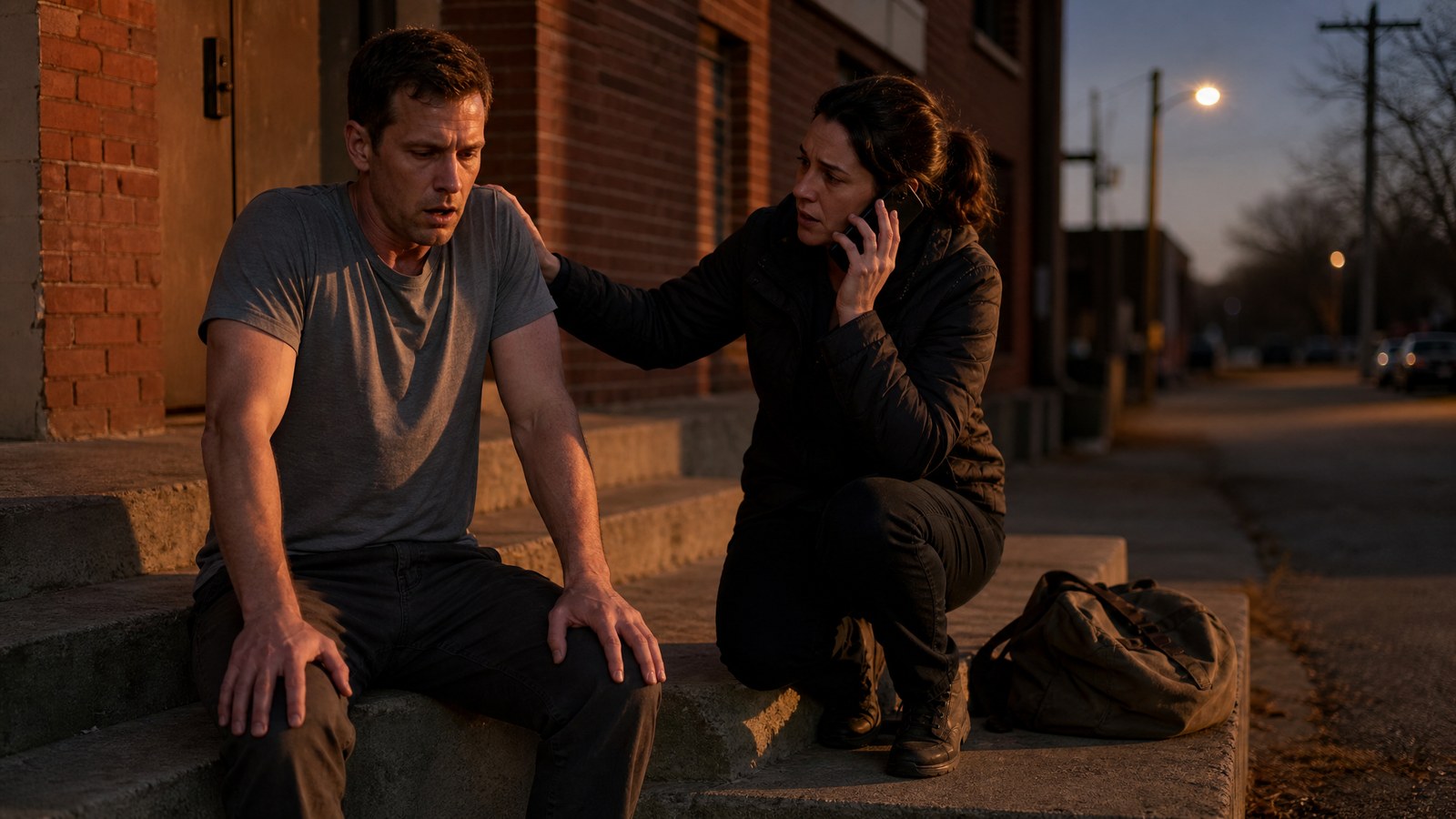
Almost everyone who has had asthma for a while has had the moment. The pocket is empty, the glovebox has an inhaler from two winters ago, and the chest is already starting to tighten. It is a bad feeling and it makes people do unhelpful things, mostly because the internet is full of remedies that sound plausible and do nothing. So here is the honest version: there is a short list of things that help, a shorter list of numbers that mean you stop trying to manage it yourself, and a long list of folk fixes worth ignoring. We will go through all three.
Sit Up First, Then Get Away From the Trigger
Two moves, both free, both working within seconds.
Sit up straight. Not reclined, not hunched over your knees, not lying down. The American Lung Association's asthma first-aid guidance opens with exactly this step, before anything involving medication: help the person to an upright position. Slouching and lying flat both compress the chest and push the diaphragm up into space the lungs need. It is a small mechanical penalty and you cannot afford it right now.
Then leave whatever started it. Cold dry air, cat, mold in a basement, smoke, fresh paint, a run in high pollen. This is the step people skip because it feels like an overreaction to walk out of a room. Walk out of the room. If the trigger is outdoor air, get inside. If it is something inside, get outside. Every extra minute of exposure is more inflammation stacking on top of the airway narrowing you are already dealing with.
One more thing about that ALA page, because it matters more than any breathing trick: when a quick-relief inhaler is not available, its instruction is to seek medical help, and to never leave the person alone. That is the entire framing for this article. Everything below is what you do while help is on the way.
What to Do in an Asthma Attack Without Inhaler Access
Six steps, in order.
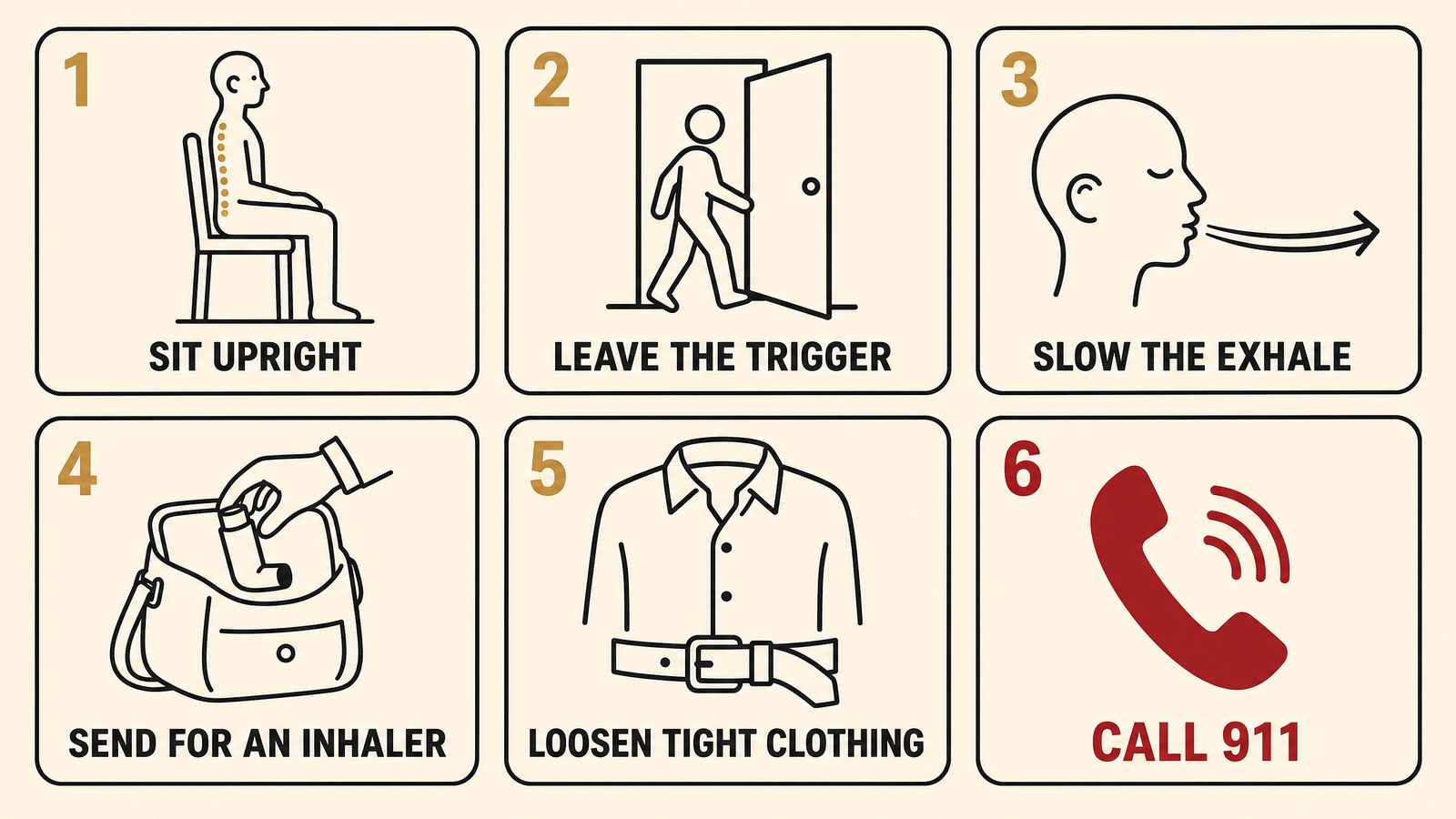
- Sit upright and stop moving. Physical exertion raises oxygen demand you cannot meet right now.
- Get clear of the trigger. Different room, different air, different building.
- Slow the exhale. Pursed-lip breathing, covered in detail below. Long out, short in.
- Ask someone to check for a backup inhaler. A neighbor, a coworker, a bag in the car, the office first aid cabinet. Someone else searches while you sit still and breathe.
- Loosen anything tight. Collar, belt, bra strap, waistband. Not a cure, but every bit of chest expansion counts.
- Call 911 if the picture is not clearly improving in a few minutes, or if any of the warning signs below are present. Waiting to see is not a plan when the trend is the wrong direction.
Somebody staying with you is not on this list as a comfort measure. It is there because an attack that is getting worse takes away your ability to make the call yourself, and because panic narrows decision-making down to almost nothing exactly when you need to be thinking clearly. A second person who is not the one struggling to breathe is a functional part of the response.
What Is Actually Happening in Your Airways
Worth understanding, because it explains why posture and slow breathing help at all.
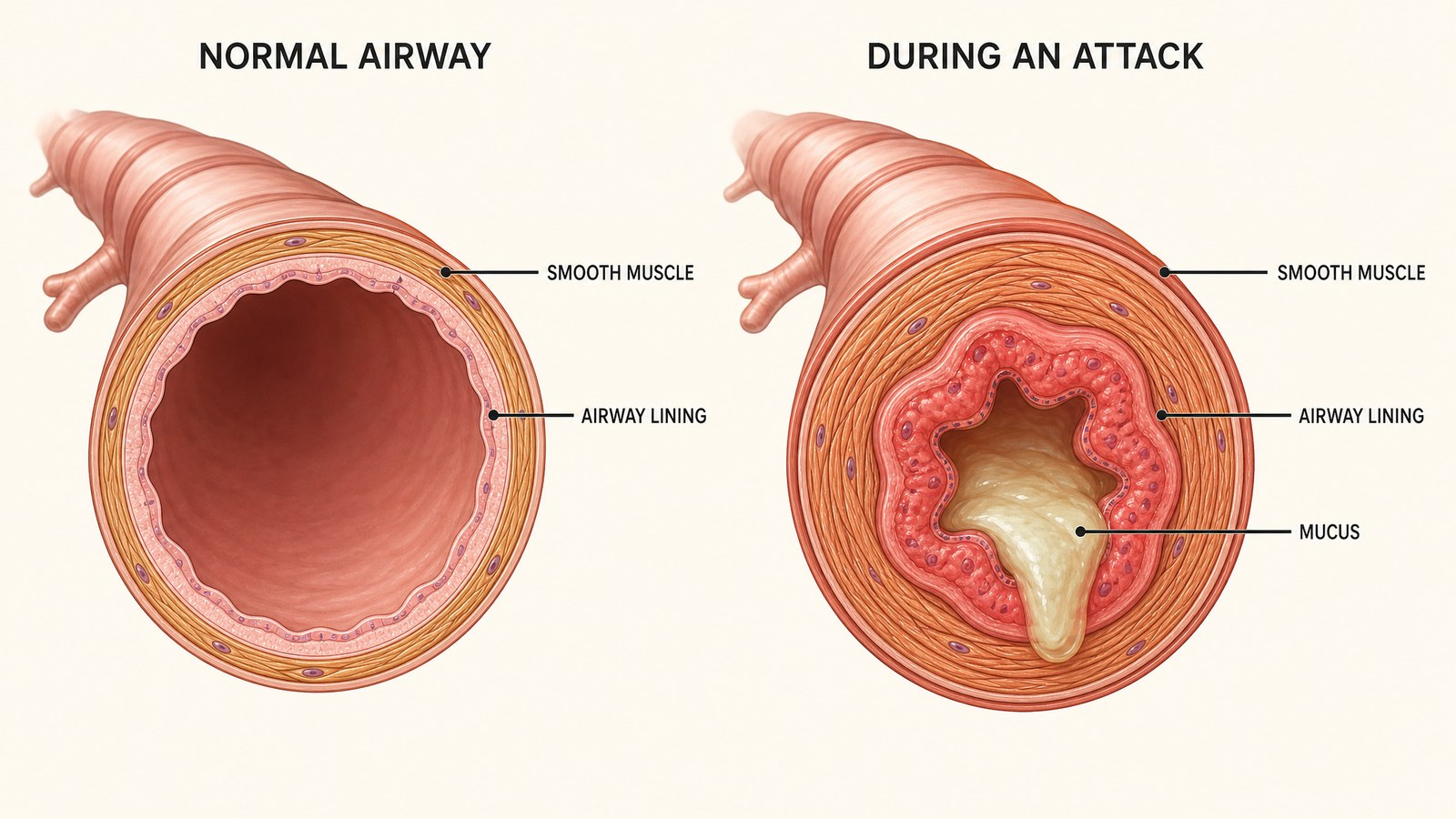
Three things happen at once during an attack. The smooth muscle wrapped around your bronchial tubes contracts and squeezes them narrower. The lining of those tubes swells. And they produce thick mucus that takes up more of the space that is left. A tube that was already small gets smaller from three directions.
Here is the part that surprises people: the harder problem is usually getting air out, not in. The narrowed, floppy airways collapse a little on exhalation, which traps stale air in the lungs. The lungs stay partly inflated, there is less room for a fresh breath, and the sensation is suffocation even though the chest is fairly full. That is why fast panicky breathing makes things worse. Each rapid shallow breath adds a little more trapped air on top of the last one.
Slow your exhale and you give those airways time to empty before the next breath goes in. That is not a relaxation technique. It is a mechanical fix for a mechanical problem.
Breathing Techniques That Give You Room to Work
Pursed-lip breathing is the one to know. In through the nose for about two counts, then out through pursed lips, like you are blowing out a candle slowly, for about four. The pursed lips create a small back-pressure that helps hold the airways open on the way out so they empty more completely. Keep the exhale longer than the inhale. Do not force it, do not push hard at the end, just let it run long.
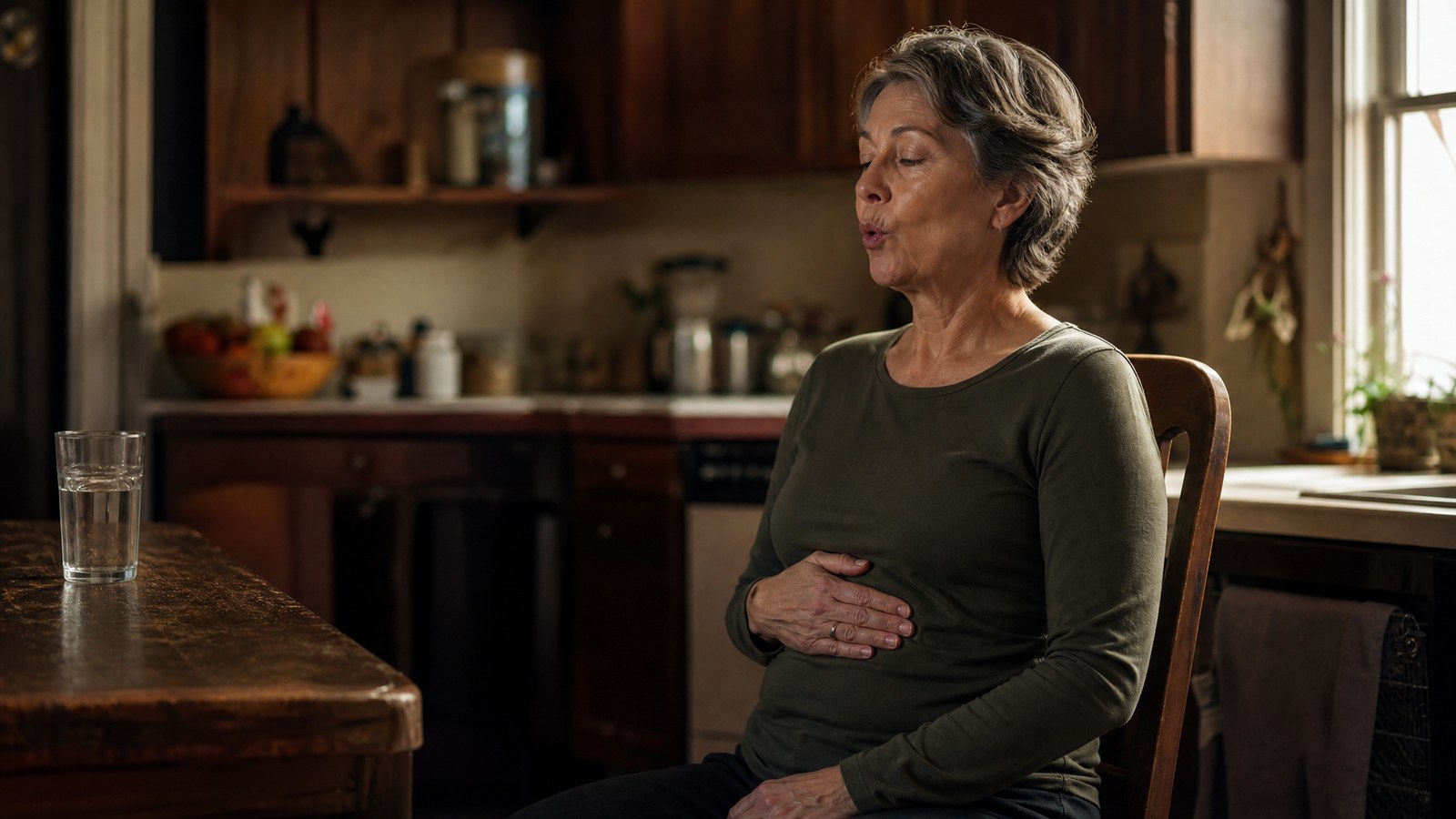
Nasal breathing on the way in has a second benefit, which is that your nose warms and humidifies air before it reaches irritated airways. Cold dry air is a trigger on its own, and mouth-breathing feeds it straight in.
Belly breathing helps too, and pairs with sitting up. Hand on the stomach, feel it move outward on the inhale, keep the shoulders and upper chest quiet. Attacks pull people into shoulder-and-neck breathing, which is exhausting and moves very little air.
What to skip: breath-holding of any kind, and rebreathing into a paper bag. The bag advice comes from hyperventilation and panic attacks, which is a different problem entirely. During an asthma attack it does nothing useful and cuts your available oxygen. If you are ever unsure whether you are watching asthma or an allergic reaction closing an airway, treat it as the emergency and call.
Caffeine Is the Only Kitchen Remedy With Real Evidence
This one is real, and it is smaller than the internet suggests.
A Cochrane review of caffeine for asthma pooled seven trials covering 75 people with mild to moderate asthma. Caffeine is chemically related to theophylline, an old asthma drug, and it does relax airway smooth muscle. The reviewers found it modestly improves airway function for up to four hours, with roughly a 5% average improvement in FEV1 in the first two hours.
Five percent. Compare that to what a couple of puffs of albuterol does and you can see the shape of it. So the practical read is this: if you are stuck without an inhaler and there is a strong coffee or a can of caffeinated soda in reach, drinking it is reasonable and it is backed by something. It is not treatment. It does not change whether you call 911. And if you are already having trouble swallowing or staying upright, skip it entirely.
Two side notes. Caffeine can raise your heart rate, which is uncomfortable when you are already anxious and short of breath, so keep it to a normal serving. And if you have a lung function test coming up, caffeine can skew the result, which is why clinics ask you to avoid it beforehand.
Asthma Attack Without Inhaler: When It Becomes a 911 Call
Stop managing and start dialing when you see any of these. The ALA's list is short and specific: not breathing, unconscious, lips turning blue, struggling to breathe with the person hunched over or their ribs visibly pulling in, or other signs of distress.
Add these to it:
- The sentence test. Can they say a full sentence without stopping for air? Speaking in single words or three-word bursts means severe obstruction. This is the most useful bedside check there is and it takes five seconds.
- Color change. The Asthma and Allergy Foundation of America describes cyanosis across different skin tones rather than assuming everyone turns blue: look at the tongue, lips, the skin around the eyes, and the fingertips or nail beds, which go grayish or whitish on darker skin and bluish on lighter skin. Checking only for "blue lips" on a dark-skinned person will miss it.
- Retractions. Skin pulling in at the neck, between the ribs, or under the ribcage with each breath. That is accessory muscles doing work the diaphragm can no longer manage alone.
- A quiet chest. Wheezing that fades away while the person clearly gets worse is not improvement. Too little air is moving to make the sound.
- Confusion, drowsiness, or a sudden calm in someone who was agitated a minute ago. That is often falling oxygen and rising carbon dioxide, and it is late.
If breathing stops altogether, start chest compressions and stay on the line with dispatch.
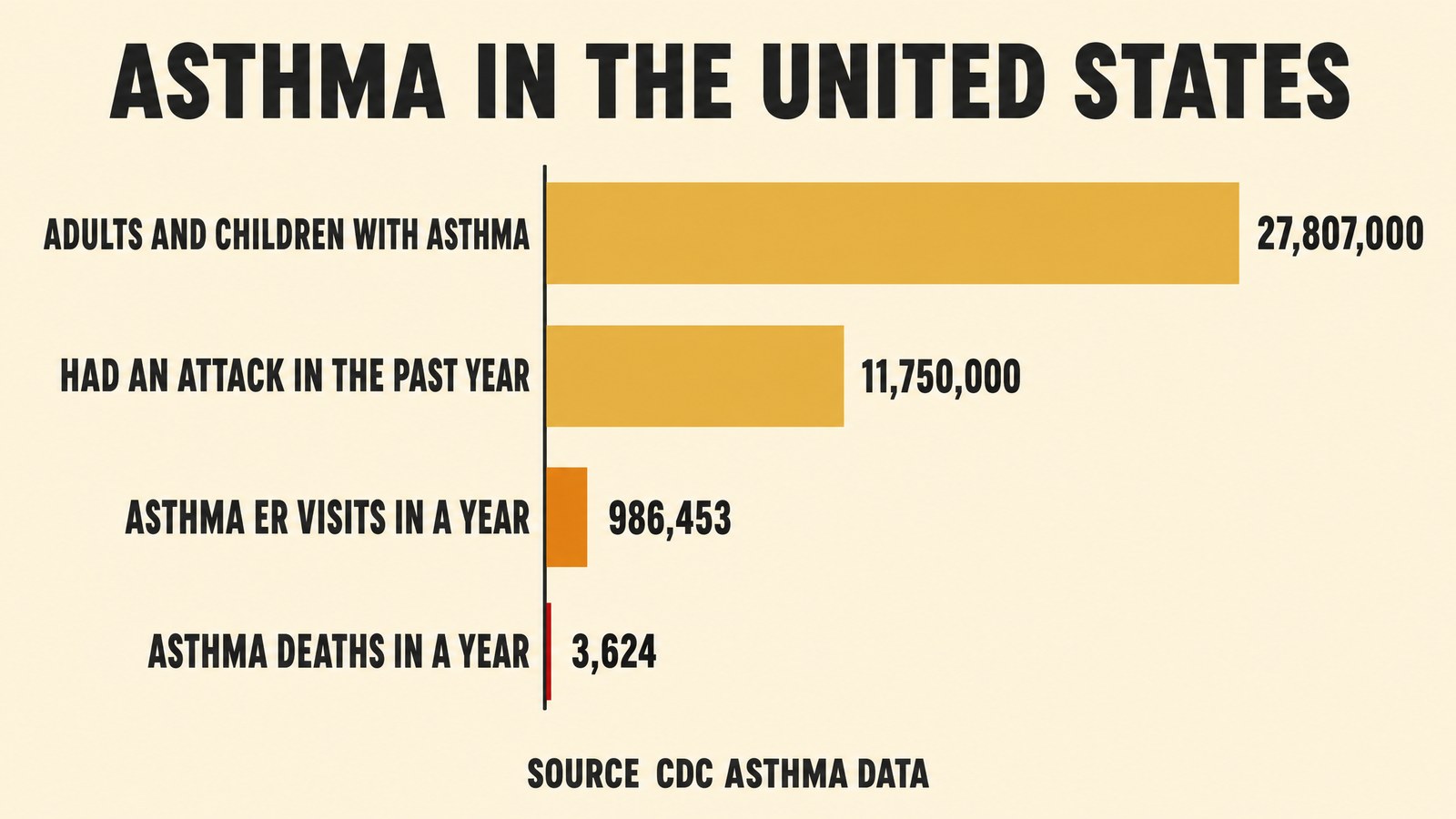
One thing worth knowing before you hesitate over whether it is bad enough: attacks like this are not unusual. CDC's most recent asthma data counts 27.8 million Americans with current asthma, and 42.3% of them, about 11.75 million people, had at least one attack in the past year. There were 986,453 emergency department visits with asthma as the primary diagnosis in 2020. And 3,624 people died of asthma in 2023, nearly all of them adults, with 1,663 of those deaths in the 65-and-over group. Ambulance crews handle this constantly. You are not wasting anyone's time.
The Things People Try That Make It Worse
- Steam and hot showers. Popular advice, no evidence for an acute asthma attack, and hot humid air is a trigger for a fair number of people. It also puts an unsteady person in a wet enclosed space.
- Essential oils, eucalyptus, menthol rubs. Strong scents are a well-known asthma trigger. Inhaling a volatile oil into inflamed airways is a bad trade.
- Somebody else's rescue inhaler, if a nurse or medic is not directing it. This is a judgment call in a genuine emergency, and it is not one to make casually from a blog post. Call 911 and tell dispatch what you have available.
- A preventer inhaler used as a rescue. The brown, orange, or purple daily controller inhaler does not open airways in the moment. If that is all you can find, it will not help fast enough to count.
- Driving yourself. An attack that is getting worse impairs you as much as alcohol would. Call the ambulance.
- Waiting it out. The most common mistake, and the one most likely to matter. Attacks build, sometimes over hours, and the window where a decision is easy closes.
Attacks Happen Away From Home. Plan For That.
Everything above is damage control. The fix is being three feet from a working inhaler, always, and that is a logistics problem rather than a medical one.
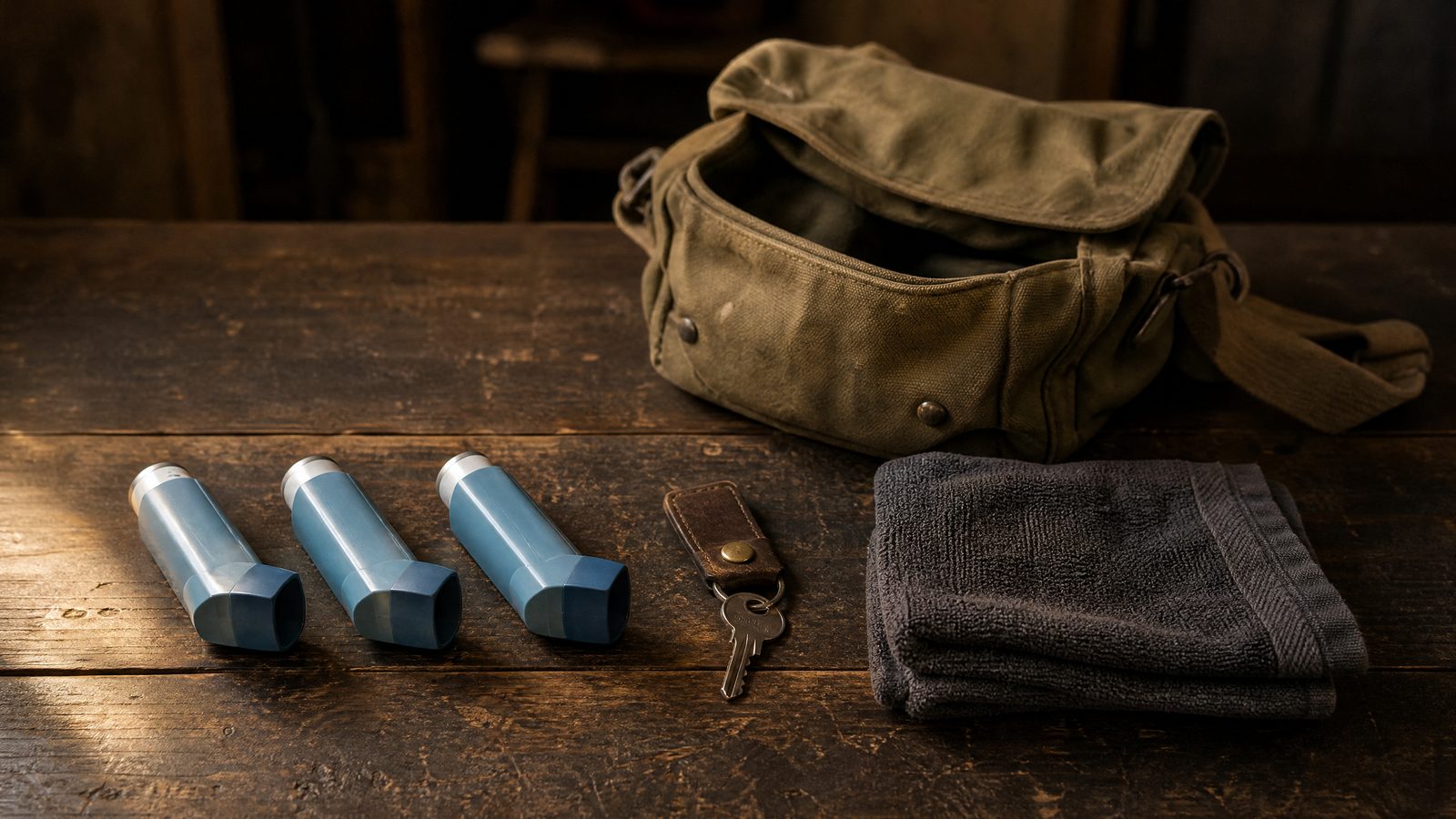
Ask for a second and third prescription and stage them. One lives on your person or in your bag and never leaves it. One stays in the car. One stays at work, at the gym, at your parents' house, wherever you regularly spend hours. Check the expiration dates twice a year, when the clocks change, and check the dose counter too, because a half-empty canister still sprays propellant after the medicine is gone.
If you have an asthma action plan from your doctor, photograph it and keep it in your phone. If you do not have one, get one at your next appointment. It is a one-page document that tells anyone standing next to you exactly what to do, and it removes guesswork at the worst possible time. Same logic applies to your home first aid kit and your car kit: the supplies only help if they are where the emergency happens.
The pattern in almost every first-hour emergency is the same. The outcome tracks how prepared the space was before anything went wrong. Rescue medication is one piece of that, and the rest is the gear that handles everything else the hour throws at you: the fall, the cut, the burn, the long wait in a driveway. The 1stHour Trauma Kit puts 82 pieces of real medical equipment in one case, organized so a stranger can find what they need without instructions.
This content is for informational purposes only and does not constitute medical advice. Nothing here is a substitute for prescribed asthma medication or an asthma action plan from your doctor. If someone is struggling to breathe, call 911.


