House Fire Escape Plan: Your First 2 Minutes

Most of us have a plan for the fire alarm at work and none for the one at home. That is backwards, because a house fire moves fast and it usually starts when people are asleep or distracted. The good news is that a house fire escape plan takes about twenty minutes to make. This guide walks through each piece, so you can build yours tonight.
Why a House Fire Escape Plan Starts With Two Minutes
The American Red Cross says you may have as little as two minutes to escape a home fire. That is not much time to find shoes, wake a child, or work out which door is closest. In that window, people fall back on whatever they have practiced.
That is the whole point of a plan. You are not trying to be calm in the moment. You are trying to make the first two minutes automatic, so your body already knows where to go.
Build Your House Fire Escape Plan: Two Ways Out of Every Room
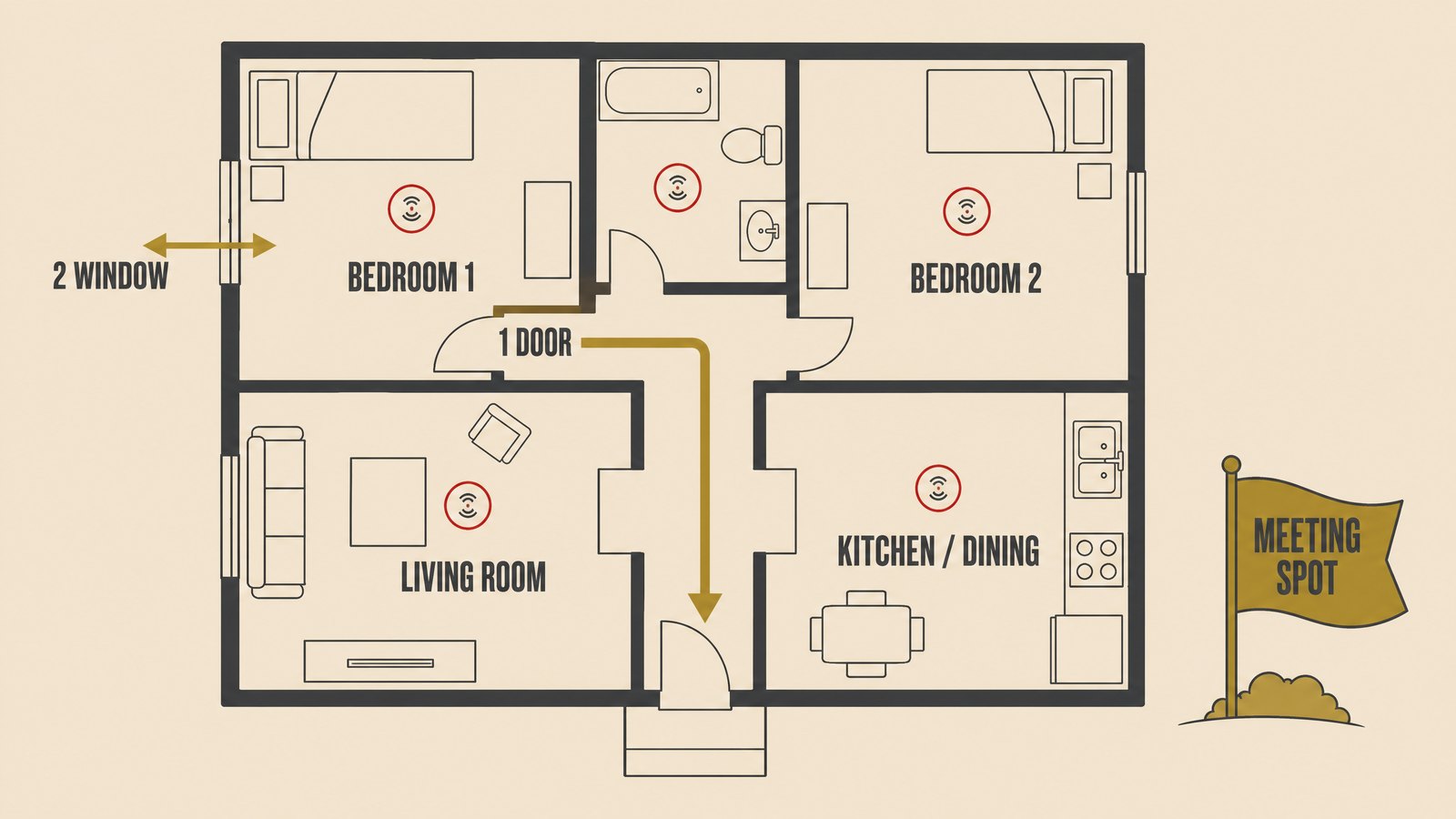
Start with a sheet of paper and sketch each floor of your home. Mark every door and window. Then find two ways out of every room, especially the bedrooms.
The Red Cross puts it plainly: everyone should know two ways out of every room. Usually that is the door and a window. Check that the windows open, that screens come off, and that nothing is parked in front of them.
Next, look at your smoke alarms, since they are what start the plan. The Red Cross recommends testing them once a month and having them on every level, including inside and outside sleeping areas. Alarms that are ten years old or older should be replaced, because the sensors lose sensitivity over time.
Then decide who helps whom. The Los Angeles Fire Department suggests assigning specific people to wake children and older adults. If someone in your home uses a wheelchair or walker, plan their route first and make sure it works.
Get Low and Go: Moving Through Smoke
Smoke rises, so the cleaner air is near the floor. The Red Cross advice is short: get low and go. That means dropping to your hands and knees and crawling toward the exit.
Smoke is often what hurts people first, not flames. If you want to know what breathing it does to the body, read our guide to smoke inhalation symptoms.
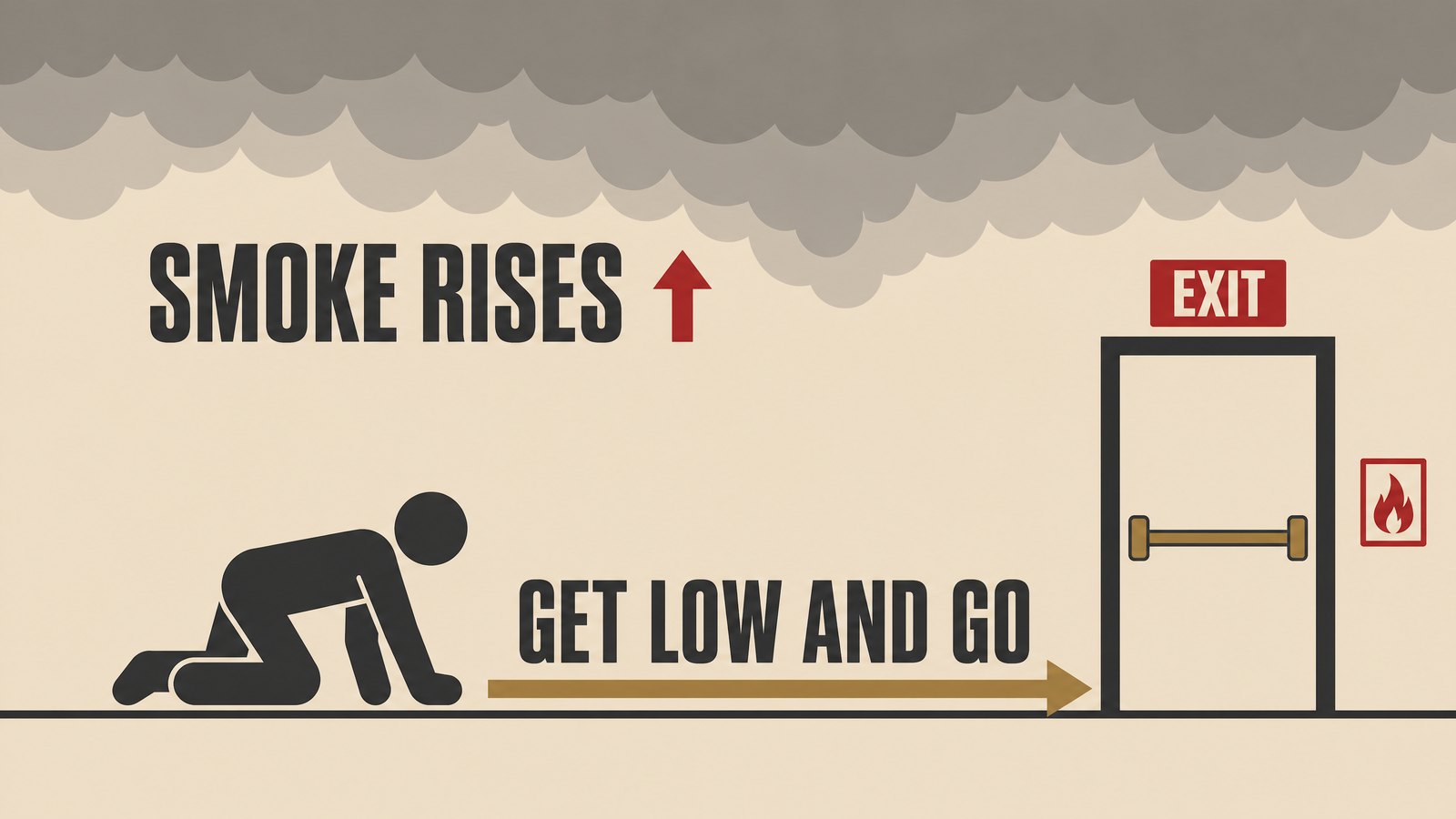
Closed doors help too. The LA Fire Department recommends sleeping with bedroom doors closed to slow the spread of fire, and teaching everyone to close doors behind them as they leave. A shut door buys time for the people still inside.
Pick One Meeting Spot Outside
Once you are out, you need to know everyone else is out. Choose one spot a safe distance from the house, like a neighbor's porch, a mailbox, or a specific tree. The Red Cross suggests a neighbor's house or a landmark.
Pick it ahead of time and make sure every person in the home can name it. When firefighters arrive, the first question is who is still inside. A clear meeting spot lets you answer in seconds.
If you are building a bigger household plan, our family emergency plan guide covers contacts, supplies, and what to do if you get separated.
Run a Two-Minute Home Drill
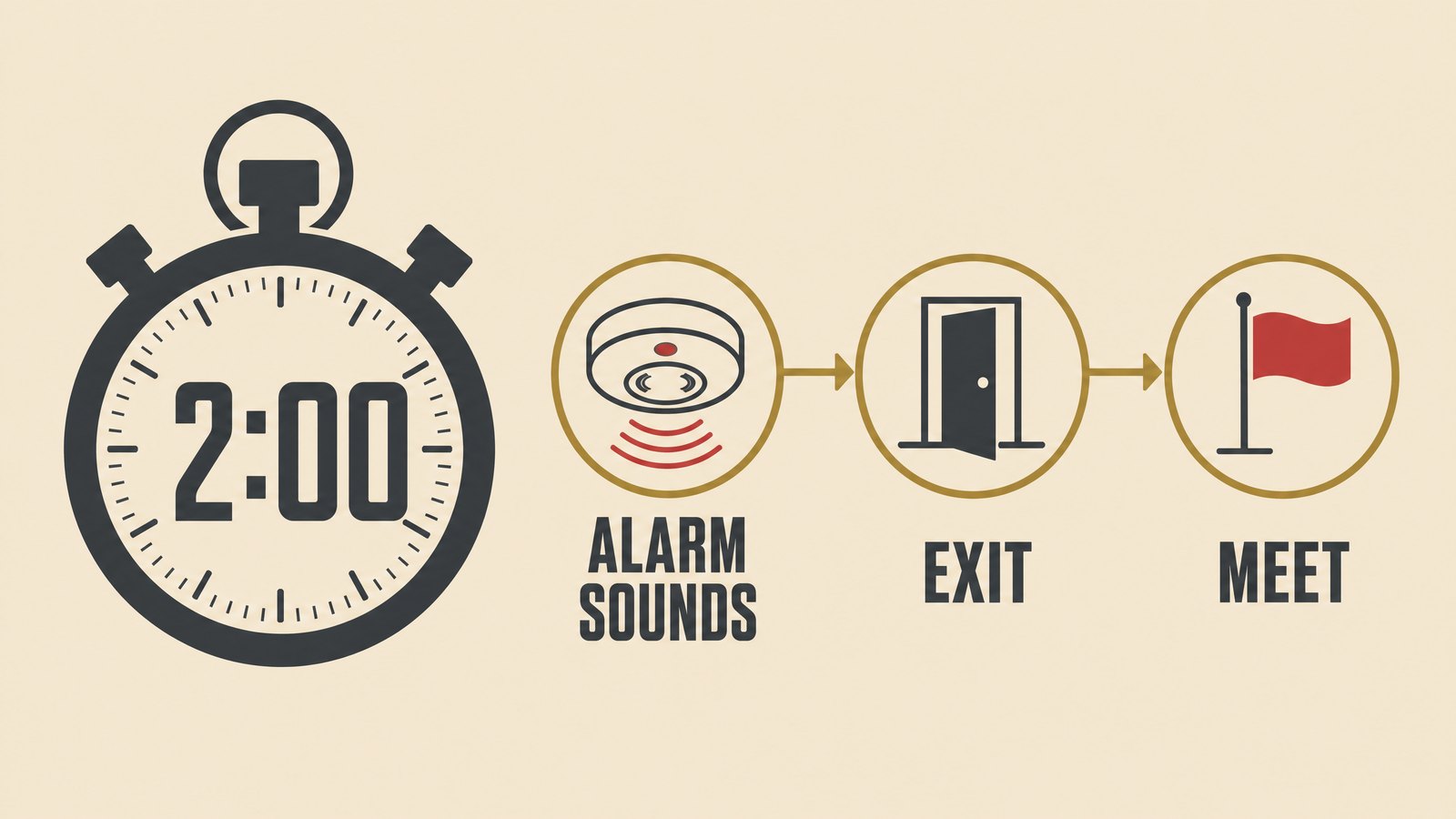
A plan on paper is only half done. The Red Cross says the goal is for everyone to be out in less than two minutes, and it recommends practicing. It also suggests rehearsing with your household twice a year.
Make the drill realistic. The LA Fire Department suggests starting in the sleeping areas with the room dark, beginning with the smoke alarm sounding, and following the full route to the meeting spot. Time it. If it takes longer than two minutes, find out why and fix that step.
Children need extra practice. Teach them what the alarm sounds like and talk through what to do, without making it scary. Our piece on keeping kids calm in an emergency has wording that works.
Kitchens are where many home fires begin, so it is worth knowing what to do in a grease fire before it happens.
Once You Are Out, Stay Out
This is the hardest rule to follow and the most important one. The Red Cross puts it in three words: get out, stay out, and call for help. Never go back inside for anything or anyone.
That includes pets, phones, and wallets. Firefighters have the gear and training to go in. You do not. Call 911 from outside or from a neighbor's phone, tell them whether anyone is still inside and where they sleep, and wait at your meeting spot.
Afterward, check on everyone for coughing, headaches, or trouble breathing, and tell the responders about it. Keeping a home first aid kit stocked and easy to find helps in the minutes before help arrives.
A fire plan covers the escape. For the minutes after, See what's inside The 1stHour Trauma Kit, built for the moments before help arrives.
This content is for informational purposes only and does not constitute medical advice. If there is a fire, get everyone out and call 911.


