How to Talk to Kids About Emergencies Without Lying to Them
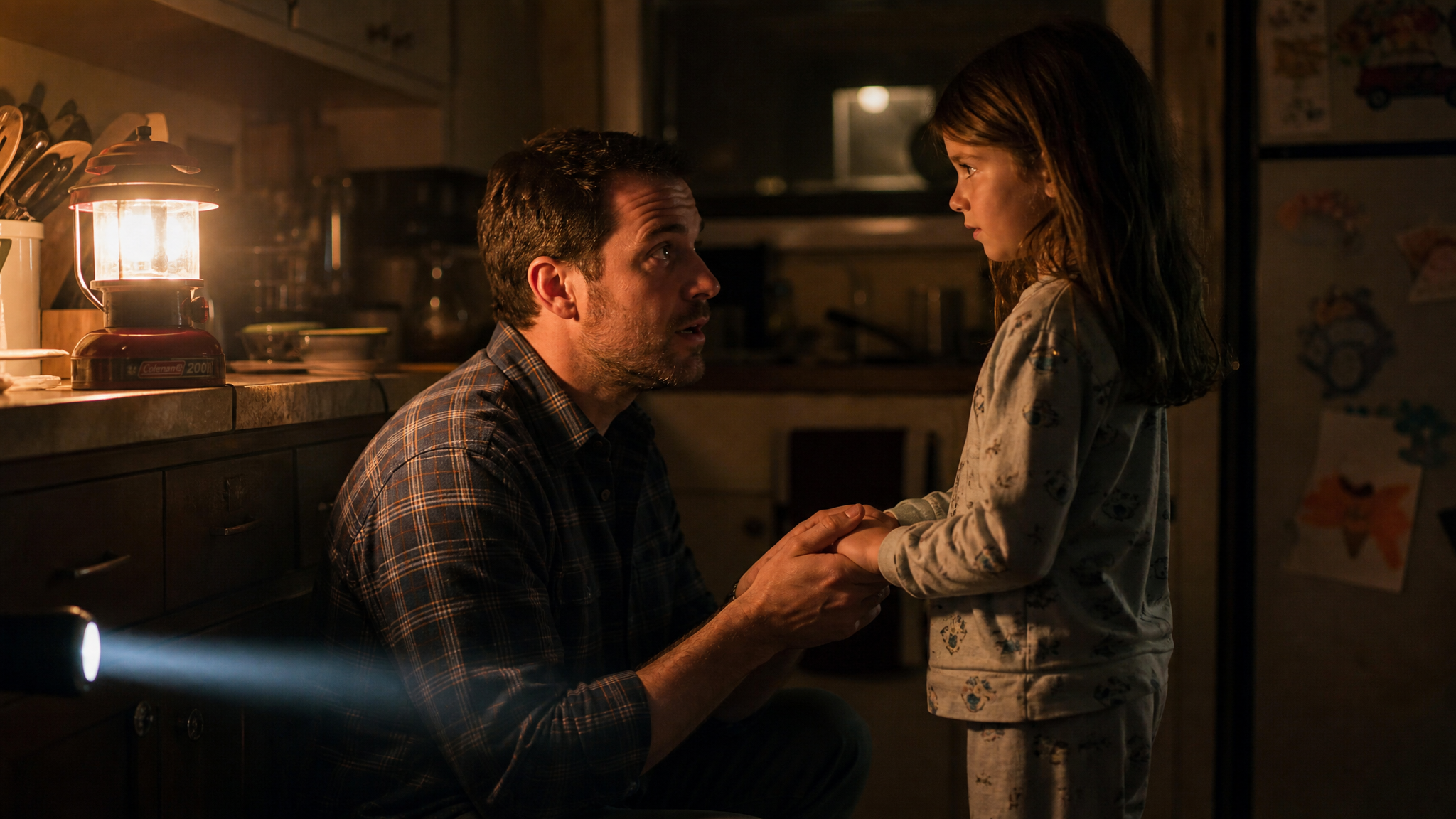
Your kid is watching your face right now, even if the emergency is still just a siren in the distance or a knock at the door. Before they understand what's happening, they're reading you. That's not a flaw in how children process fear. It's how they've always worked, and it means the first thing you control in any emergency isn't the situation, it's your own face and voice. Learning how to talk to kids about emergencies starts there, not with a script. You need a few honest sentences, sized to your kid's age, and something for their hands to do. That's most of the job.
Why Kids Look at You Before They Look at the Danger
Small children don't have the reference points to judge a situation on its own. A loud noise, a flashing light, strangers in uniforms in the living room, none of that means anything until they check a trusted adult's face for the verdict. Psychologists call this social referencing. Your kid does it without knowing the term, dozens of times a day, and in a real emergency they'll do it faster and lean on it harder.
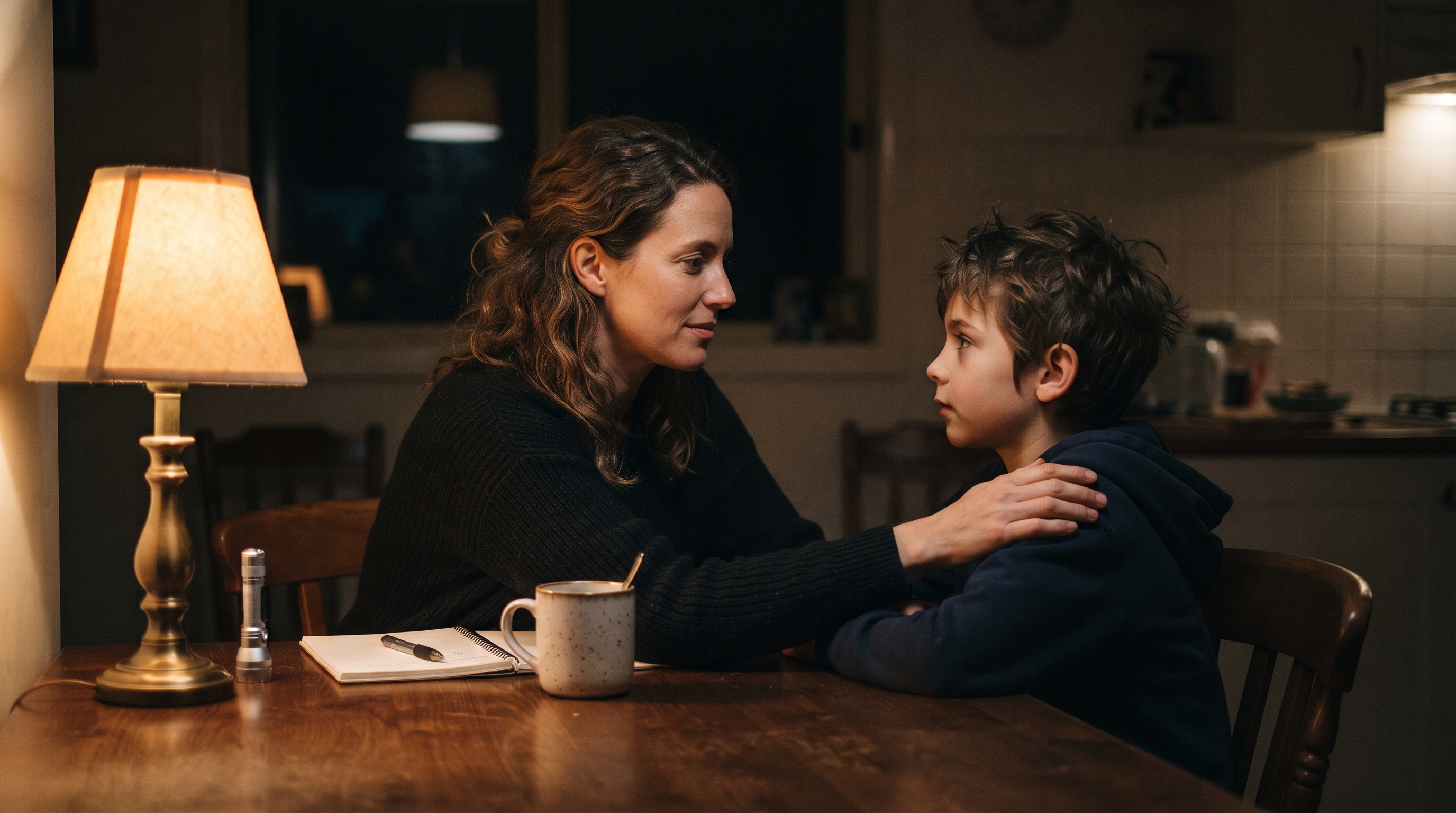
This is why the advice to "stay calm for the kids" isn't a platitude. It's the actual mechanism. If your voice shakes and your movements are jerky, your child's nervous system registers danger even if your words say "we're fine." If your voice is level and your hands are doing something purposeful, like packing a bag or checking a flashlight, that reads as safety regardless of what's actually happening outside. You're not performing calm. You're regulating your own body first, because that regulation is the information your kid is actually using.
How to Talk to Kids About Emergencies, Age by Age
"Age-appropriate" gets thrown around a lot without anyone saying what it means in practice. Here's the breakdown that actually holds up.
Toddlers and preschoolers (2-5): Keep it to what they can see and touch. "The wind is strong tonight, so we're going to sleep in the basement, and you get to bring your blanket." No causal explanations about weather systems. Short sentences, physical reassurance, a job like holding the flashlight.
Elementary age (6-10): They can handle a real explanation and they'll usually ask follow-up questions. "There's a fire near the hills, and firefighters are working on it. We're leaving now so we're not near the smoke. Here's what you're bringing." Answer the questions they actually ask. Don't volunteer worst-case details they didn't ask for.
Tweens and teens (11+): Treat them like a junior partner. They've likely already seen something on their phone, so pretending there's no bad news doesn't build trust, it costs you credibility for next time. Give them real information and a real role, whether that's watching a younger sibling or double-checking the go-bag list.
Talking to Kids About Emergencies: Words That Help, Words That Backfire
The instinct to say "nothing bad is going to happen" comes from love, but it's a promise you can't keep, and kids remember broken promises longer than they remember scary moments. When the storm does knock out power, or the ambulance does take grandpa away, that sentence becomes the thing they stop trusting.
Say what's true and knowable instead: "This is scary, and we're going to get through it together." "I don't know exactly what happens next, but I do know what we're doing right now." "It's okay to be scared. Being scared doesn't mean something's wrong with you." These sentences don't promise an outcome. They promise your presence, which is the one thing you can actually deliver.
Skip the minimizing, too. "It's nothing" or "don't be such a baby" teaches a kid to hide fear instead of managing it, and a hidden fear tends to show up later as a stomachache or a meltdown that seems to come from nowhere.
Answering Questions You Don't Have Good Answers To
Kids ask the questions adults dodge. "Is Grandma going to die?" "Is our house going to burn down?" You often don't know. Say that. "I don't know yet, and that's hard to sit with. What I do know is what we're doing right now to be safe." Naming uncertainty out loud, instead of deflecting with "everything's fine," models something most adults never got to see modeled for them: that you can hold a scary unknown without falling apart.
If a question is genuinely beyond what they need right now, a short redirect works better than a lie. "That's a grown-up question I'm still figuring out. Let's focus on getting your shoes on."
Building a Family Drill Kids Actually Remember
Drills stick when they feel like practice, not punishment or a horror movie preview. Keep it matter-of-fact: "We're going to practice what we do if the smoke alarm goes off," not "if there's ever a fire, here's how you might die." Run it during daylight, let them ask questions mid-drill, and give every kid old enough a job, whether that's carrying the family's medical info card or checking that the dog's leash is by the door.
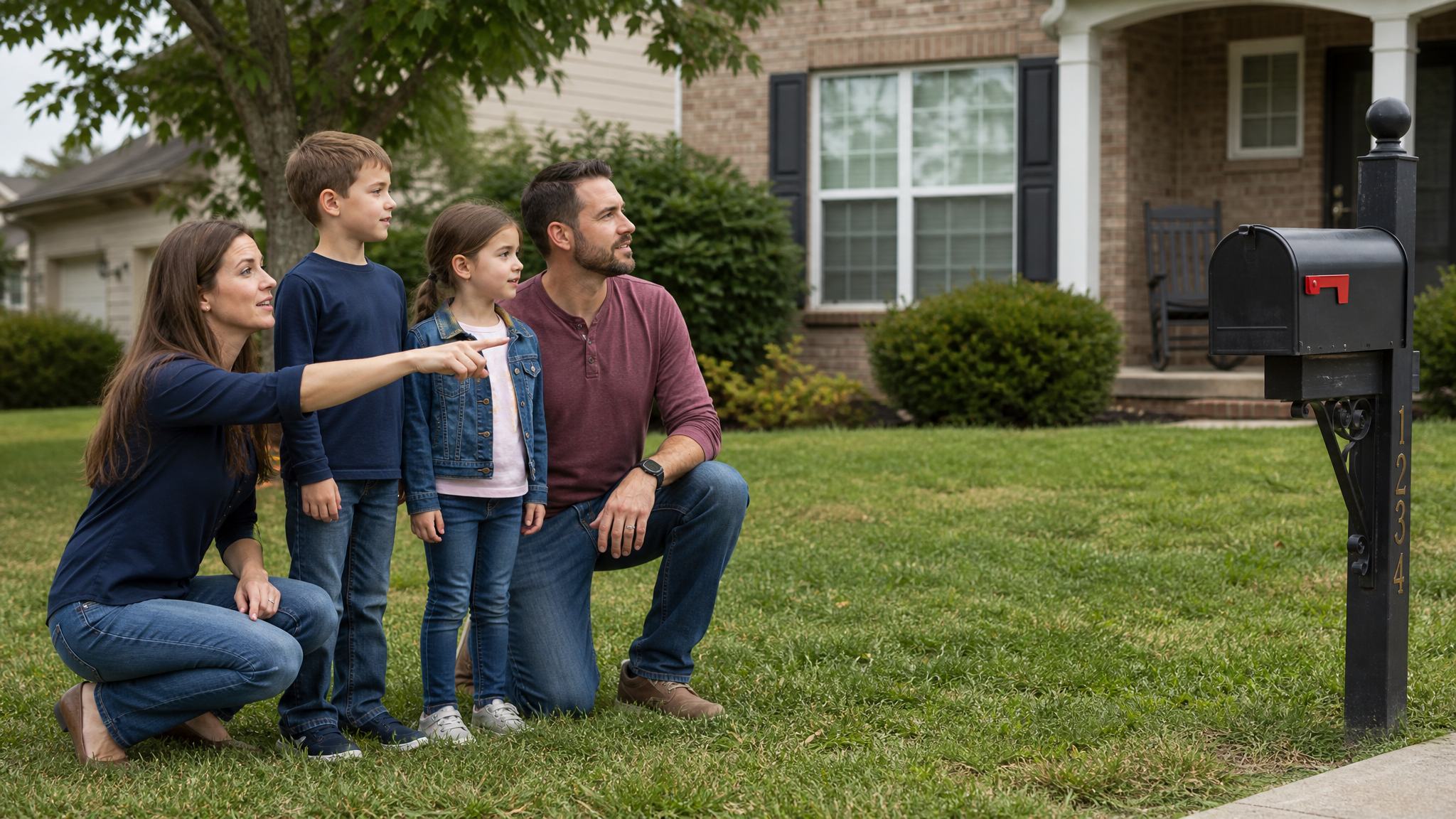
A family emergency plan built around this same principle, honest but not frightening, gives the whole household a shared script instead of five people improvising in a panic. And if your kids are old enough to help with actual first aid, teaching them the basics without scaring them turns "watching helplessly" into "having a job."
Watching for Signs They're Not Okay After It's Over
The emergency ending doesn't mean the fear ends with it. Regression, clinginess, trouble sleeping, and repetitive play about the event (kids re-enacting the fire truck or the flood over and over) are normal in the days and weeks after. That's the nervous system processing, not a sign you did something wrong.
What's worth a closer look: symptoms lasting more than a month, a kid who won't talk about it at all when they normally would, or fear that's spreading to unrelated situations. The CDC's guidance on children and emergency preparedness and Ready.gov's resources on helping children cope both cover this territory well, and both point toward the same thing we've found true in practice: consistency and routine do more repair work than any single conversation. If you're not sure whether what you're seeing is normal, a pediatrician or school counselor is a reasonable first call, not a last resort.
It's also worth understanding why adults freeze up in these moments too. The neuroscience behind why your own brain locks up under stress explains a lot about why staying calm for your kid takes real effort, not just good intentions. And if the event was serious enough to leave a mark, the psychological aftermath of a disaster walks through what's normal recovery and what's worth getting help for.
None of this replaces having your hands on the right gear when the moment actually arrives. A home first aid kit checklist is a good place to start if yours hasn't been checked in a while. And for the kind of injury where seconds matter more than words, the 1stHour Trauma Kit is built so the person closest to the emergency, you, has what's needed to act instead of stand there wishing they had it. See what's inside the kit.
This content is for informational purposes only and does not constitute medical or psychological advice. If you or your child are struggling after a traumatic event, talk to a pediatrician, school counselor, or mental health professional.


