Grease Fire: What to Do and Never Do in the First 30 Seconds
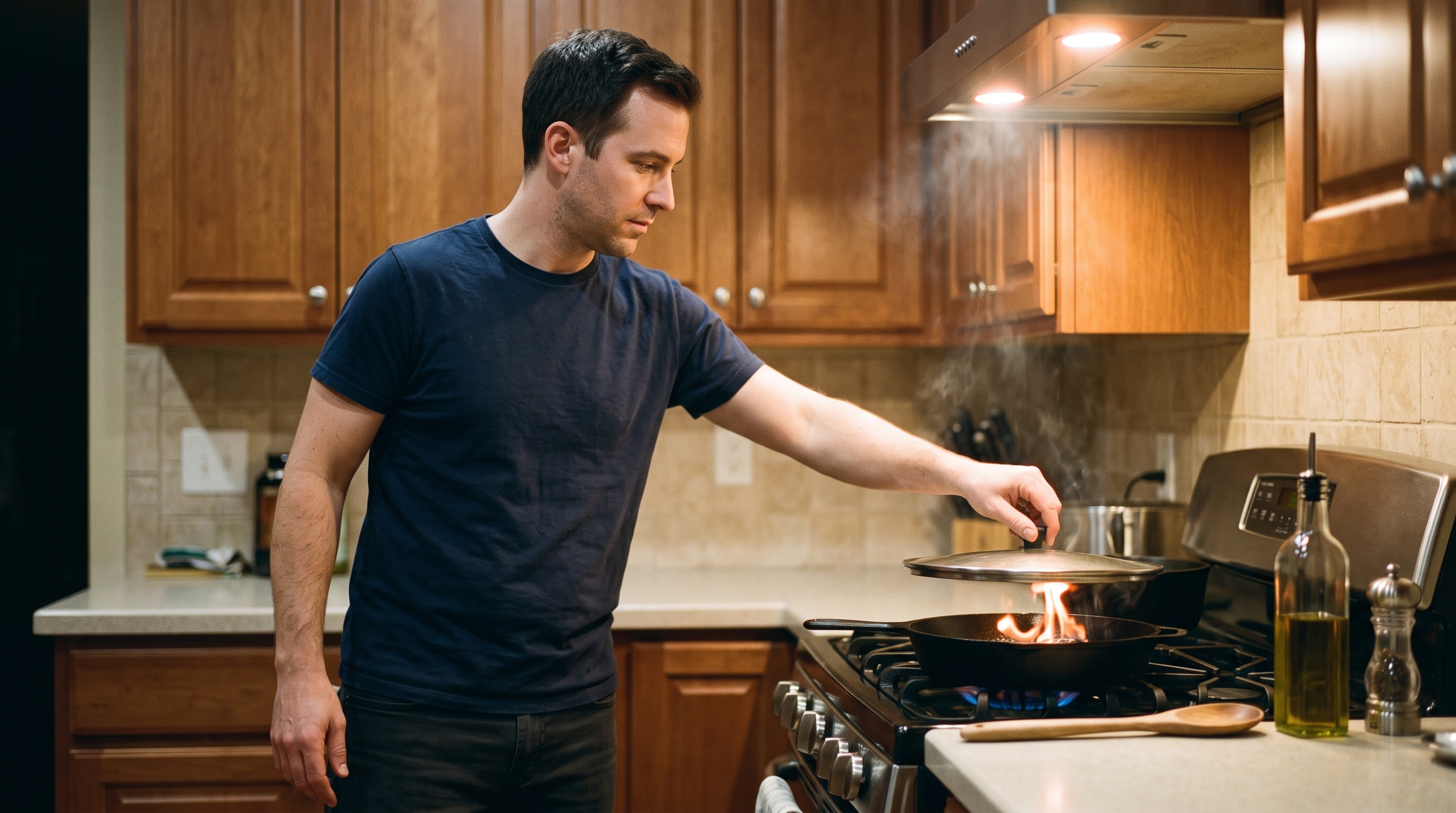
A pan of oil is smoking, then it flares. You have seconds, and your hands want to do the wrong thing. If you are searching grease fire what to do, here is the short version you can run in your head: heat off, lid on, stay back. The rest of this guide explains why each step works and what to do when it doesn't.
Grease Fire: What to Do, Step by Step
Small pan fires are the ones you can stop. Move calmly and keep your body back from the flames.
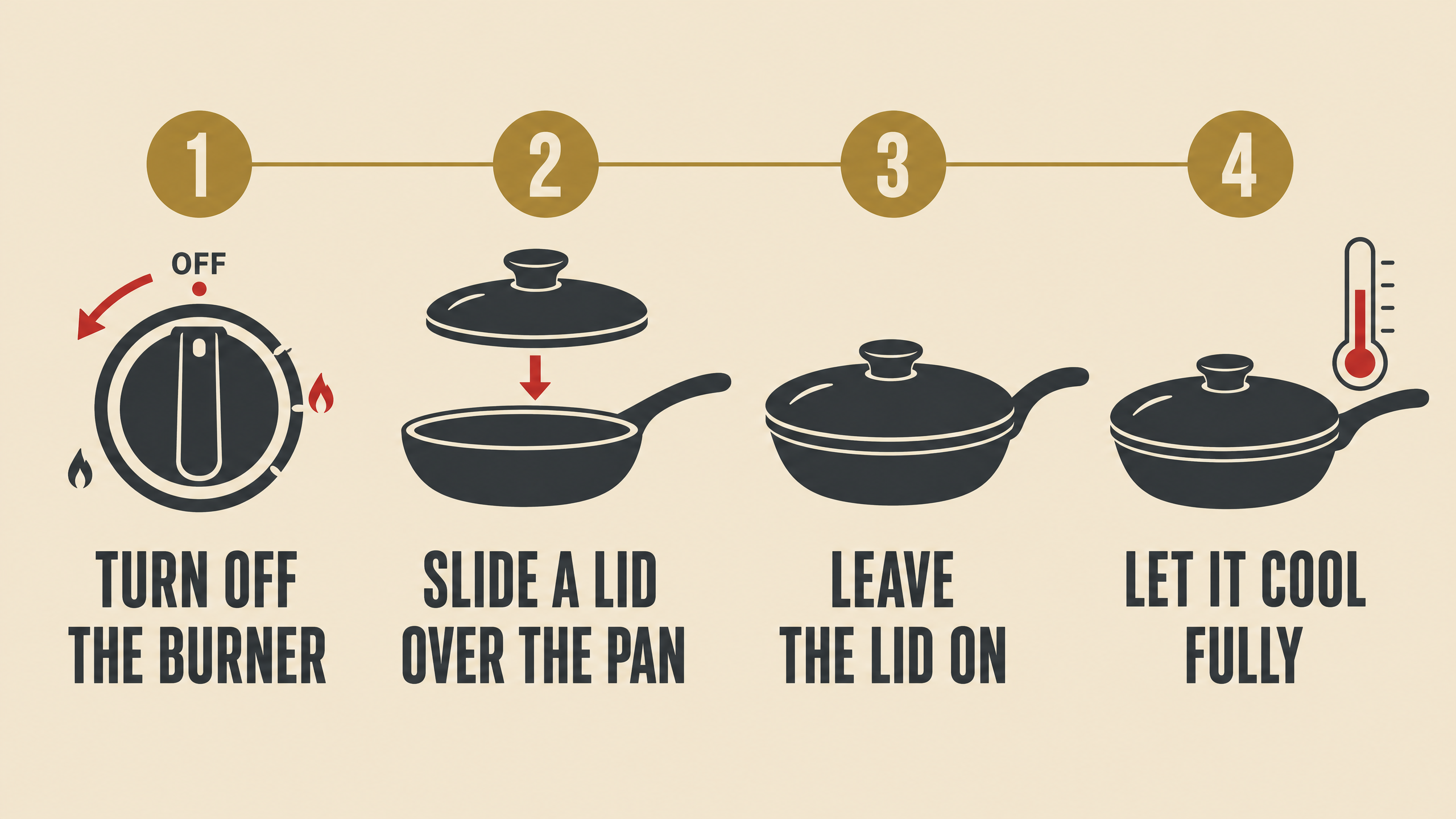
- Turn off the burner. Cutting the heat stops the oil from getting hotter.
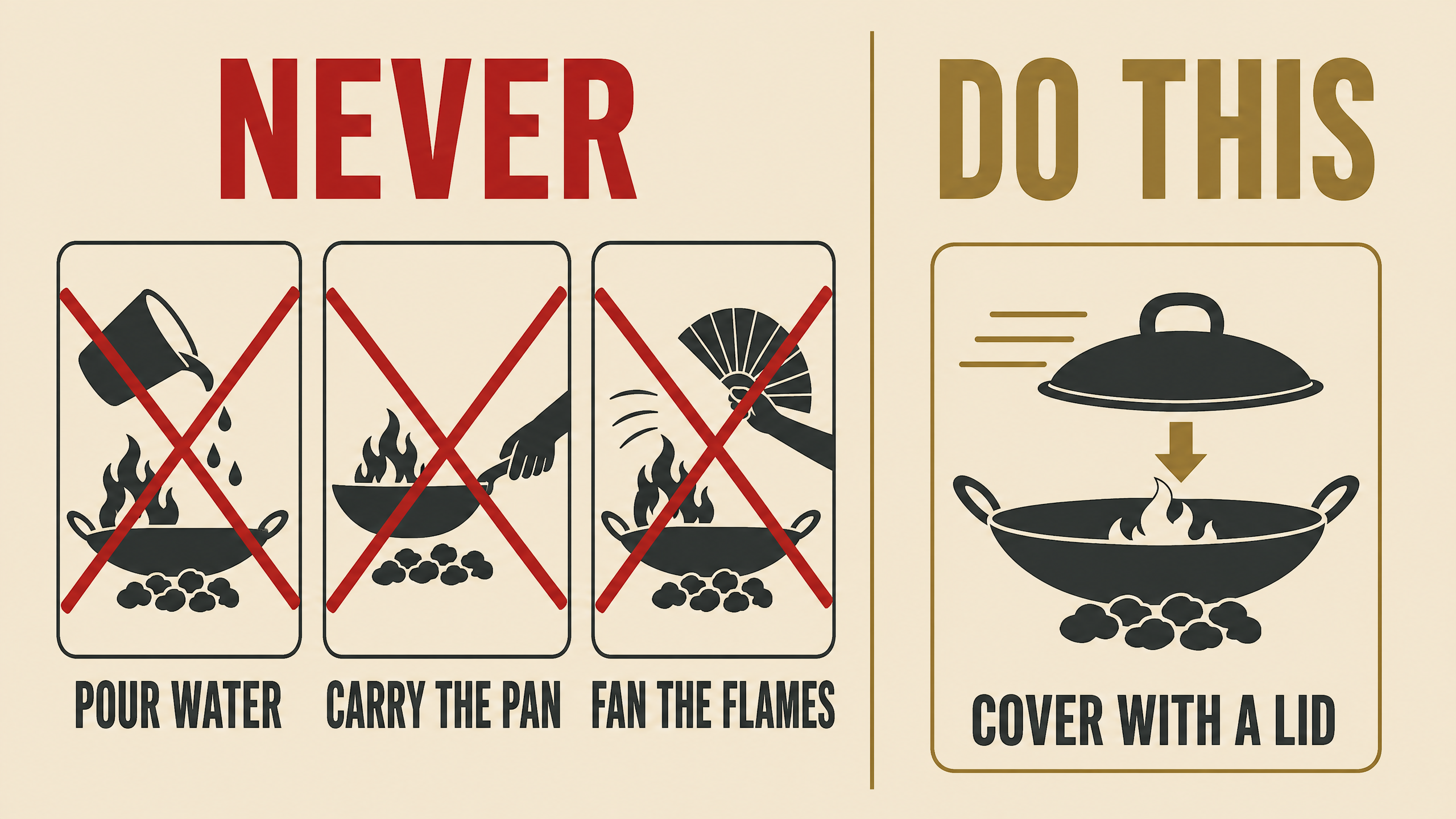
- Slide a lid over the pan, or use a metal baking sheet. Lower it from the side, away from your face.
- Leave the lid in place. Do not peek. The fire needs air, and the lid takes it away.
- Wait until the pan is fully cool before you lift the lid. Oil can reignite while it is still hot.
Indiana's state fire safety guidance, based on NFPA data, says to smother small grease fires by sliding a lid over the pan and turning off the stovetop, then to leave the lid on and not try to carry the pan away.
If you have baking soda, a small amount thrown on a small flame can help smother it. Flour and sugar are not safe substitutes, because they can burn or flare. A lid is still the better first move.
What Never to Do in a Grease Fire
Most injuries happen in the first few seconds, when people grab the wrong tool. The NFPA figures cited by Indiana's fire safety office say more than half of cooking fire injuries happen when people try to put the fire out themselves.
- Never use water. Miami-Dade Fire Rescue warns that water on a grease fire causes a violent reaction and makes things much worse. Water sinks below the oil, turns to steam, and throws burning grease outward.
- Never carry the pan to the sink or outside. You can spill burning oil on yourself and spread the fire to the floor.
- Never fan the flames with a towel or oven mitt.
- Never lean over the pan to see how bad it is.
Grease Fire: What to Do When the Flames Spread
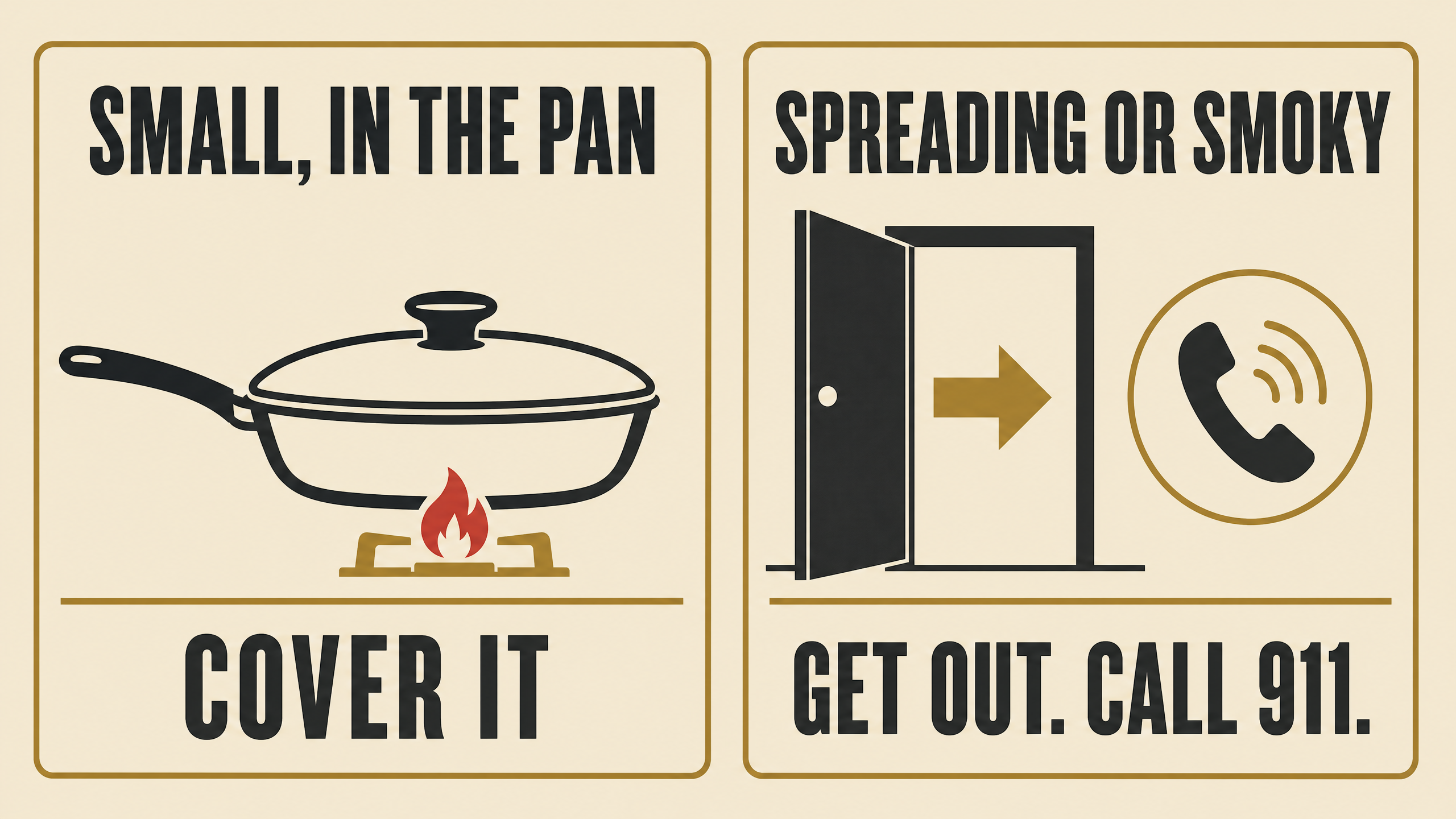
Some fires are too big for a lid. Leave if the flames reach cabinets or the range hood, if smoke is filling the room, or if you can't get to the pan without crossing the fire.
Get everyone out, close the kitchen door behind you if it is safe, and call 911 from outside. Do not go back in for pets or belongings. The American Red Cross says you may have as little as two minutes to escape a home fire, and its rule is simple: get out, stay out, and call for help.
A fire extinguisher can be a good backup, but only if you know how to use it and the fire is small. Miami-Dade Fire Rescue notes that an ABC-rated extinguisher works on grease fires. Stand with your back to the exit, aim at the base of the flames, and sweep side to side. Stop and leave if it doesn't work quickly.
An oven fire is different. Turn off the heat and keep the oven door closed. The flames run out of air on their own.
Treat Burns and Smoke Right Away
Even a quick flare can burn a hand or forearm. Run cool water over a burn for at least 20 minutes, and skip ice, butter, and other home remedies. Our guide to burn first aid covers when a burn needs the ER.
If you breathed in smoke, watch for coughing, a hoarse voice, or trouble breathing. Those can show up later, so read our guide to smoke inhalation symptoms and get checked if anything seems off.
Prevent the Next One
NFPA says cooking is the leading cause of home fires and home injuries, and that unattended cooking is the leading cause of kitchen fires. The NFPA numbers cited by Indiana's fire safety office count more than 158,000 cooking fires a year from 2017 to 2021.
A few habits cut your risk:
- Stay in the kitchen while you fry, sear, or boil. Set a timer if you step away briefly.
- Keep lids, a baking sheet, and baking soda within reach of the stove.
- Dry food before it goes into hot oil, since water droplets make oil spit.
- Heat oil gradually. If it starts smoking, turn the burner down.
- Keep towels, paper bags, and packaging away from burners.
Deep frying oil can pass 400 degrees Fahrenheit, according to the USDA figure in the same guidance, so give it your full attention.
Be Ready Before Dinner
Know where your extinguisher is, and make sure everyone in the house knows how to leave fast. Our guide to building a family emergency plan covers exits and meeting spots, and our home first aid kit checklist shows what to keep stocked for burns and cuts.
Burns and kitchen accidents happen fast, and the first hour sets the tone for recovery. See what's inside The 1stHour Trauma Kit, built for the moments before help arrives.
This content is for informational purposes only and does not constitute medical advice. In an emergency, call 911.


