What to Do If You Smell Gas in Your Home

You are making dinner, or walking in from the garage, and there it is: a sulfur smell like rotten eggs. Most of the time it is a small thing, like a pilot light that blew out. Sometimes it is not. Nobody can tell the difference by sniffing, so treat every strong gas smell as real. This guide covers what to do if you smell gas, what to leave alone, and what comes after.
What to Do If You Smell Gas, Step by Step
Speed matters more than being sure. Natural gas can build up in a closed space, and a single spark is enough to ignite it. So the plan is to go, not to investigate.
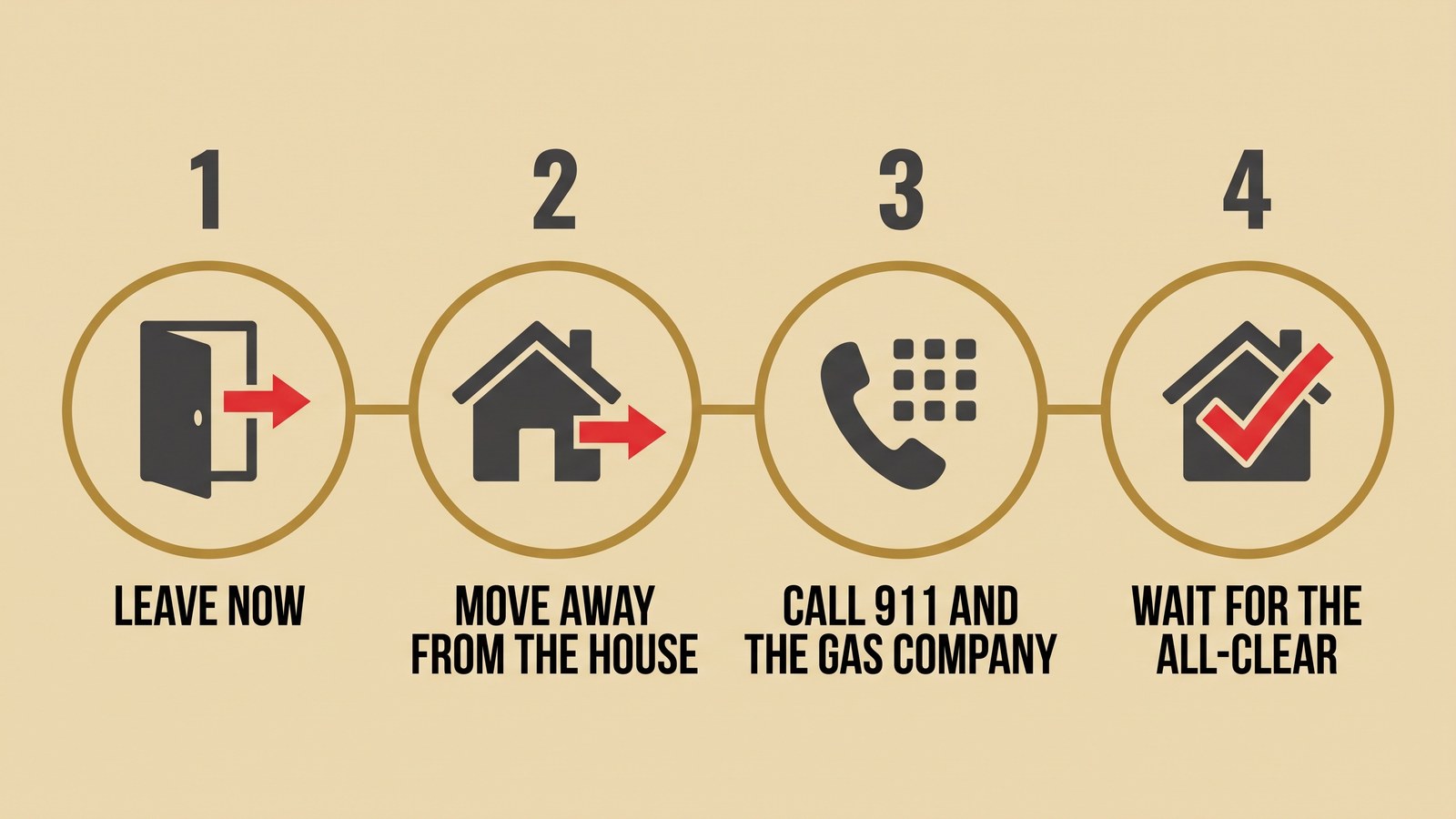
- Stop what you are doing and don't light anything. Skip the switches.
- Get everyone out, including pets if they are right next to you. Open a window or door as you leave if it is safe to do so.
- Move away from the house, well past the door and the windows.
- Call 911 and your gas utility from outside, or from a neighbor's home.
- Wait outside. Don't go back in until the gas company or emergency crews tell you it is safe.
The Pennsylvania Public Utility Commission gives the same sequence: leave immediately, call 911 and the gas utility from a safe distance, and stay out until personnel say it is safe to return.
Why You Shouldn't Touch Switches or Phones Inside
It feels odd to be told not to flip a switch or grab your phone. The reason is simple. Switches, appliances, and even a phone can make a tiny spark. In a room with enough gas in the air, that spark can be the ignition source.
The Connecticut Public Utilities Regulatory Authority lists the things to avoid: smoking, matches, candles, light switches, electrical equipment, doorbells, and elevators. It also says not to touch thermostats or appliance controls.
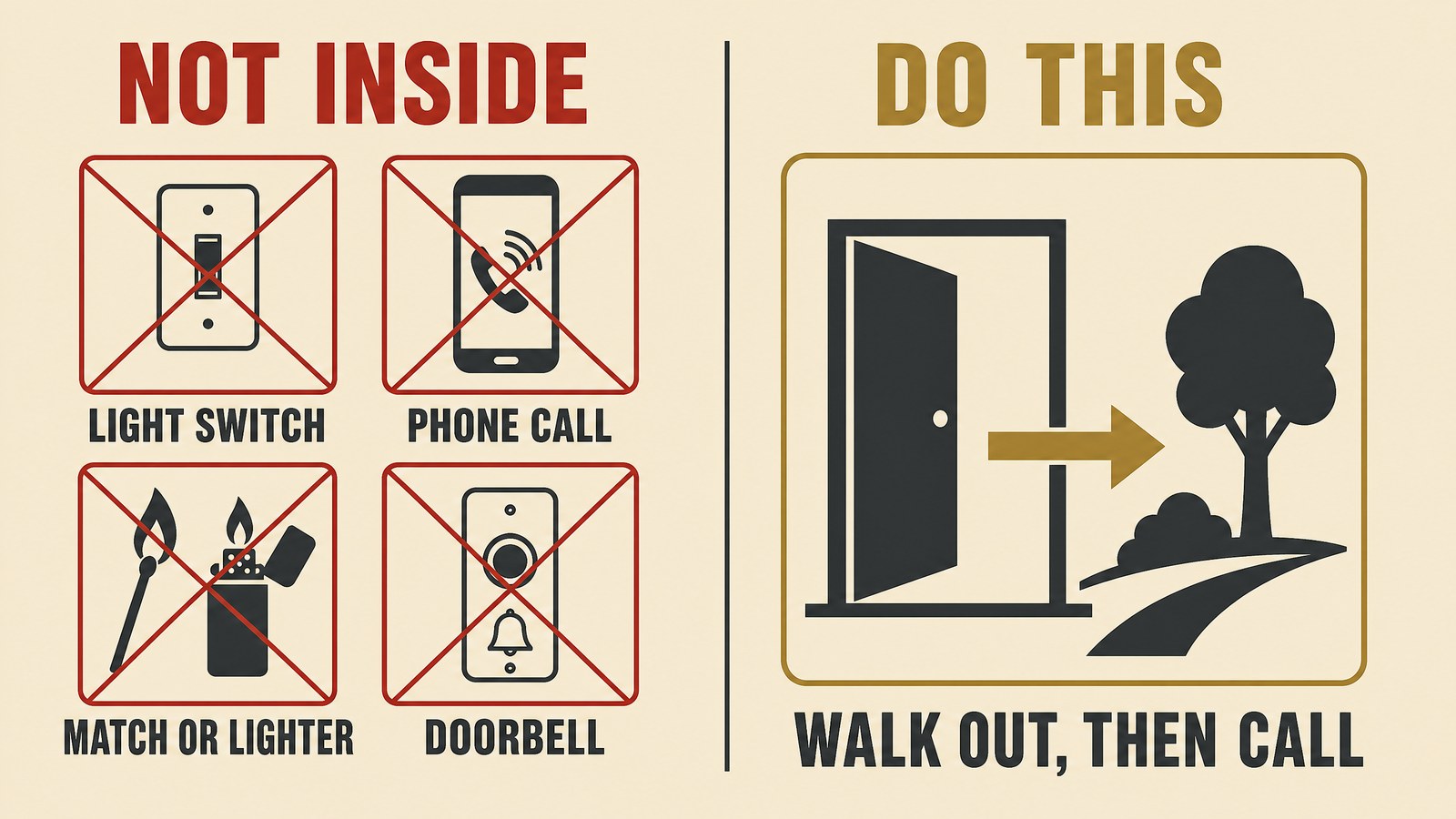
So no garage door opener, no doorbell on your way out, and no turning the fan on to clear the air. Don't start the car if the smell is in an attached garage. Walk out, then make the call.
What Gas Smells Like and What Else to Watch For
Natural gas has no smell of its own. Utilities add a chemical, mercaptan, so that leaks are easy to notice. Poison Control describes the result as a smell like rotten eggs.
A strong odor is the main sign, but not the only one. The Connecticut regulator also tells people to call right away if they hear gas escaping, and to report a smell outdoors without trying to find the source.
Your body can give you a hint too. Poison Control lists nausea, vomiting, headache, and dizziness among the symptoms of breathing natural gas. Heavier exposure can cause confusion and passing out. If anyone in the home feels sick, get them into fresh air and tell the 911 dispatcher right away.
If you are not sure whether you are smelling gas or something else, our guide to household chemical fumes covers the other common culprits.
What to Do If You Smell Gas but Only Faintly
A faint smell near the stove can mean a burner was left slightly open or a pilot light went out. The Connecticut regulator notes this is sometimes all it is. Even so, don't hunt for the cause with your face near the burner.
Turn the knobs to off if you can reach them without leaning over the stove. Then open windows and doors and step outside for a few minutes. If the smell is still there when you return, or if it was strong from the start, call the gas company from outside and wait for them.
One rule has no gray area. Never relight a pilot light or turn the gas back on after it has been shut off for a safety reason. Call the utility, and let a technician check the line first. The Connecticut regulator also says its utilities offer free emergency service around the clock to stop gas leaks, so there is no reason to wait and see.
After You Are Outside
Stay out until you hear from the utility or the fire department, even if the smell seems to fade. Don't trust your nose to tell you it has cleared, because your sense of smell can tire out after a few minutes.
Take a headcount. If someone has a headache or feels dizzy, keep them seated in fresh air and mention it when you call 911. Poison Control also offers free, confidential advice at 1-800-222-1222 if you have questions about exposure.
Gas is not the only thing in a house that you can't see coming. A carbon monoxide leak has no smell at all, which is why we wrote about carbon monoxide poisoning symptoms. If a kitchen fire is what you are worried about, read what to do in a grease fire.
Make a Plan Before You Ever Smell It
The people who handle this well are the ones who already know where they are going. Pick a spot outside, at the curb or a neighbor's porch, where everyone meets. Keep your gas utility's emergency number in your phone. Our guide to building a family emergency plan walks through exits and meeting points, and our home first aid kit checklist covers what to keep on hand.

Gas leaks, burns, and sudden injuries all start with the same few minutes of not knowing what to do. See what's inside The 1stHour Trauma Kit, built for the moments before help arrives.
This content is for informational purposes only and does not constitute medical advice. If you smell gas or suspect a leak, leave the building and call 911.


