Chemical Fumes Exposure Symptoms: What to Do Right Away
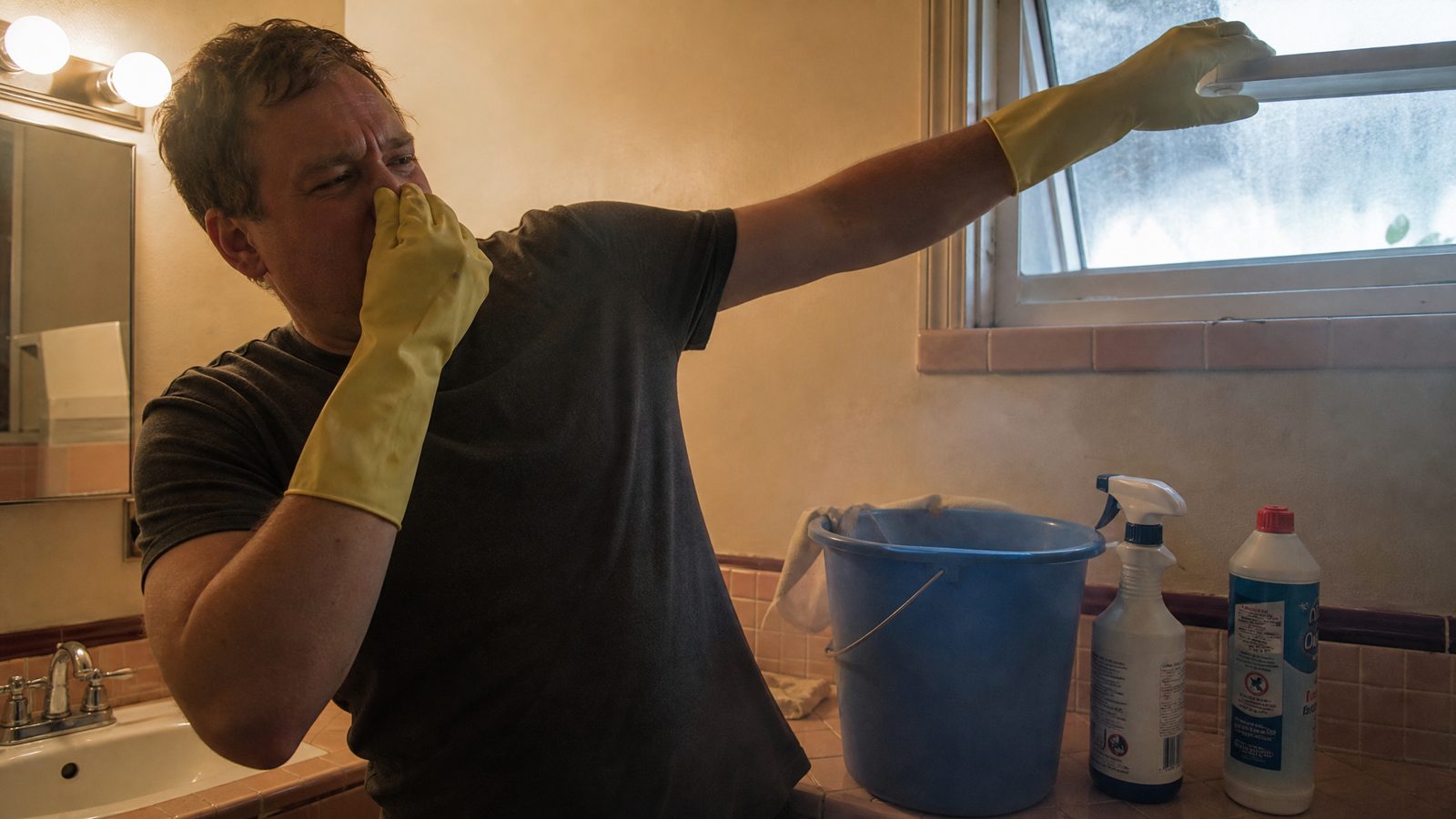
You reach for two cleaners under the sink, figure combining them will cut the job in half, and pour them into the same bucket. Thirty seconds later your eyes are stinging and you can't catch a full breath. That's not an allergic reaction to a new scent. It's a chemical reaction, and depending on what you mixed, it can put you in the emergency room.
Most people know not to drink bleach. Fewer people know that bleach reacts violently with things sitting right next to it on the same shelf, ammonia-based glass cleaner, vinegar, a toilet bowl cleaner. This isn't a rare accident. Household cleaning products are consistently the second most common category of poison exposure calls in the country, and mixing two of them by hand is one of the easiest ways to end up on that call.
What Happens When You Mix Bleach and Ammonia
Bleach and ammonia are the pairing most people have heard warned about, though usually without knowing why. Bleach's active ingredient, sodium hypochlorite, reacts with ammonia to produce chloramine gas. That gas is what does the damage.
Ammonia hides in more products than the bottle labeled "ammonia." Many glass and window cleaners contain it. So do some interior paints. Urine contains ammonia too, which is a detail worth knowing if you clean a litter box, a diaper pail, or a toilet with bleach right after.
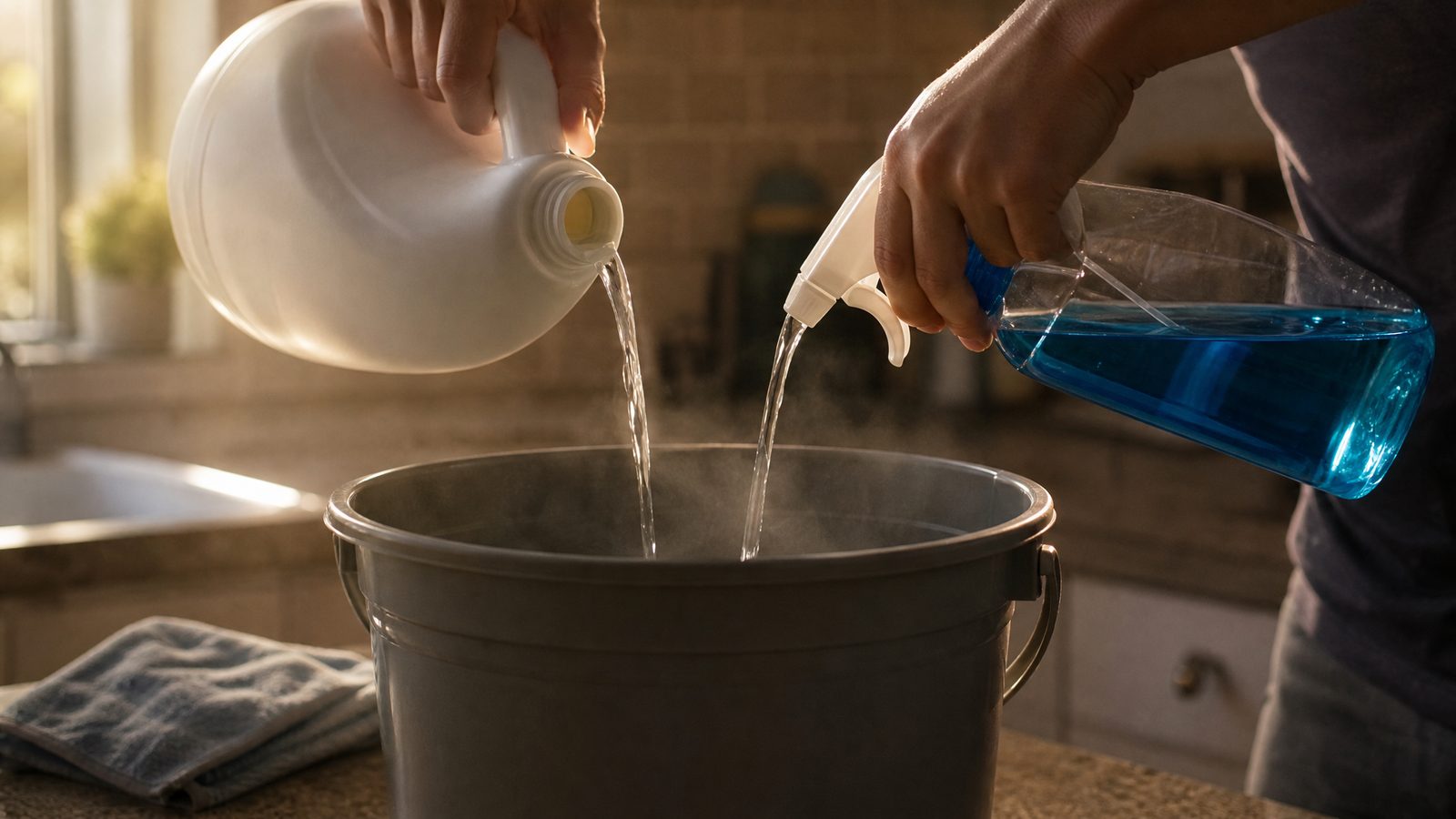
Chloramine gas doesn't need a big spill to cause a problem. A small amount of bleach splashed into a bucket that still has glass cleaner residue in it can produce enough gas to send someone into a coughing fit within a closed bathroom. According to the Washington State Department of Health, chloramine exposure causes coughing, nausea, shortness of breath, watery eyes, chest pain, and throat and eye irritation. In cases with heavier exposure, it can progress to pneumonia and fluid in the lungs.
What Happens When You Mix Bleach and an Acid
The second pairing is less commonly talked about but just as dangerous: bleach mixed with an acid. Vinegar counts as an acid. So do a lot of toilet bowl cleaners, drain cleaners, rust removers, and some automatic dishwasher detergents. When bleach meets any of these, it releases chlorine gas.
Chlorine gas is the same chemical used in old chemical warfare and, at lower concentrations, in swimming pools. According to the CDC, even low-level, short exposure almost always irritates the eyes, throat, and nose, and causes coughing and breathing problems. Higher exposure brings chest tightness, more severe breathing trouble, and fluid buildup in the lungs. The CDC's own chlorine fact sheet states plainly: household chlorine bleach can release chlorine gas if mixed with certain other cleaning products, and warns not to mix household cleaners at all.
This one catches people off guard because vinegar feels harmless. It's the "natural" cleaner a lot of households reach for specifically because it feels safer than bleach. Using it as a follow-up rinse in the same bucket you just bleached is exactly the setup that produces the gas.
Chemical Fumes Exposure Symptoms to Watch For
The symptoms of chemical fumes exposure follow a fairly consistent pattern, whether the source is chloramine, chlorine gas, or another reactive mix. Mild to moderate exposure typically brings:
- Coughing that starts suddenly and doesn't ease with a sip of water
- Watery, burning, or stinging eyes
- A raw or scratchy feeling in the throat and nose
- Shortness of breath or a tight feeling in the chest
- Nausea, sometimes with vomiting
- Dizziness or a headache that comes on fast
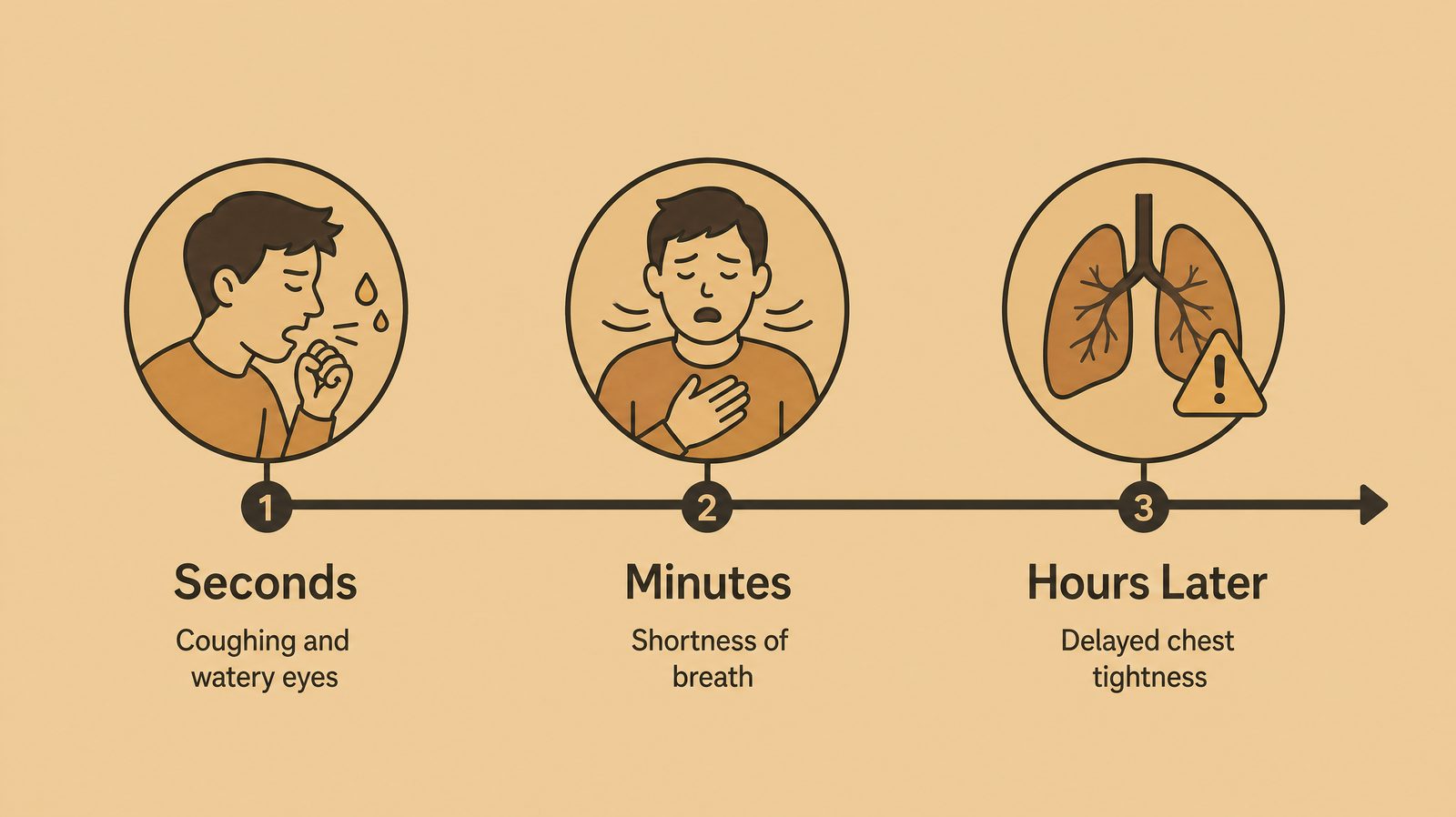
Symptoms usually show up within seconds to a few minutes of the mix happening, though sensitivity varies. People with asthma or other lung conditions tend to react faster and harder to the same amount of exposure. Heavier exposure can bring on wheezing, blue-tinged lips or skin, and real difficulty breathing rather than mild discomfort. That combination is what turns a "step outside and it'll pass" situation into a 911 call.
One more thing worth knowing: some symptoms show up late. A person can breathe in fumes, feel okay for a couple of hours, and then develop chest tightness or shortness of breath overnight as fluid builds in the lungs. Don't treat "I feel fine now" as the final word if the exposure was significant.
What to Do About Chemical Fumes Exposure Symptoms Right Away
The first move is always the same: get out. Leave the room, and if you can, open a window or door on your way past it without lingering to do so. Don't stop to clean up the mess or rinse the bucket. That can wait.
Once you're in fresh air, here's the sequence that matters:
- Get everyone else out of the area too, including pets.
- Prop the door open and, if it's safe to reach without going back in, turn on a fan or open more windows to ventilate the space.
- Remove any clothing that got splashed and rinse exposed skin or eyes with plain water for several minutes.
- Call Poison Control at 1-800-222-1222. They're free, available 24/7, and can tell you within a minute or two whether your specific symptoms need an ER visit or just monitoring at home.
- Call 911 if breathing is getting worse instead of better, if there's chest pain, or if anyone is confused, coughing up pink or white fluid, or loses consciousness.

Don't try to neutralize the fumes with another chemical. Don't go back in to "air it out faster" by fanning the room from the doorway. Let it clear on its own with the door open and stay out until the smell is gone.
If you swallowed something rather than just breathing in fumes, don't try to make yourself vomit. That can cause additional damage on the way back up. Poison Control will walk you through the right response for what was actually swallowed. For a broader look at handling an accidental poisoning in the first few minutes, this walkthrough of first response steps covers the same call-first, panic-later approach.
If chemical fumes have triggered breathing trouble before and you or someone in your house deals with asthma, it's worth knowing what to do during an asthma attack without an inhaler, since irritant gas is a common asthma trigger separate from the exposure itself. Fumes that got into your eyes during the mix deserve their own attention too. Eye injury first aid covers rinsing technique in more detail than the quick steps above.
Other Cleaning Product Combinations Worth Avoiding
Bleach and ammonia, and bleach and acids, cause most of the serious incidents, but they aren't the only risky pairings under a typical sink.
Hydrogen peroxide and vinegar seem like a reasonable "natural" combo, since both are mild on their own. Mixed together, they form peracetic acid, which is corrosive and can irritate skin, eyes, and airways. Oven cleaner, which is usually a strong lye-based product, shouldn't be combined with anything else either. Pool chemicals, calcium hypochlorite or sodium hypochlorite, react the same way household bleach does and shouldn't be mixed with other pool or cleaning products.
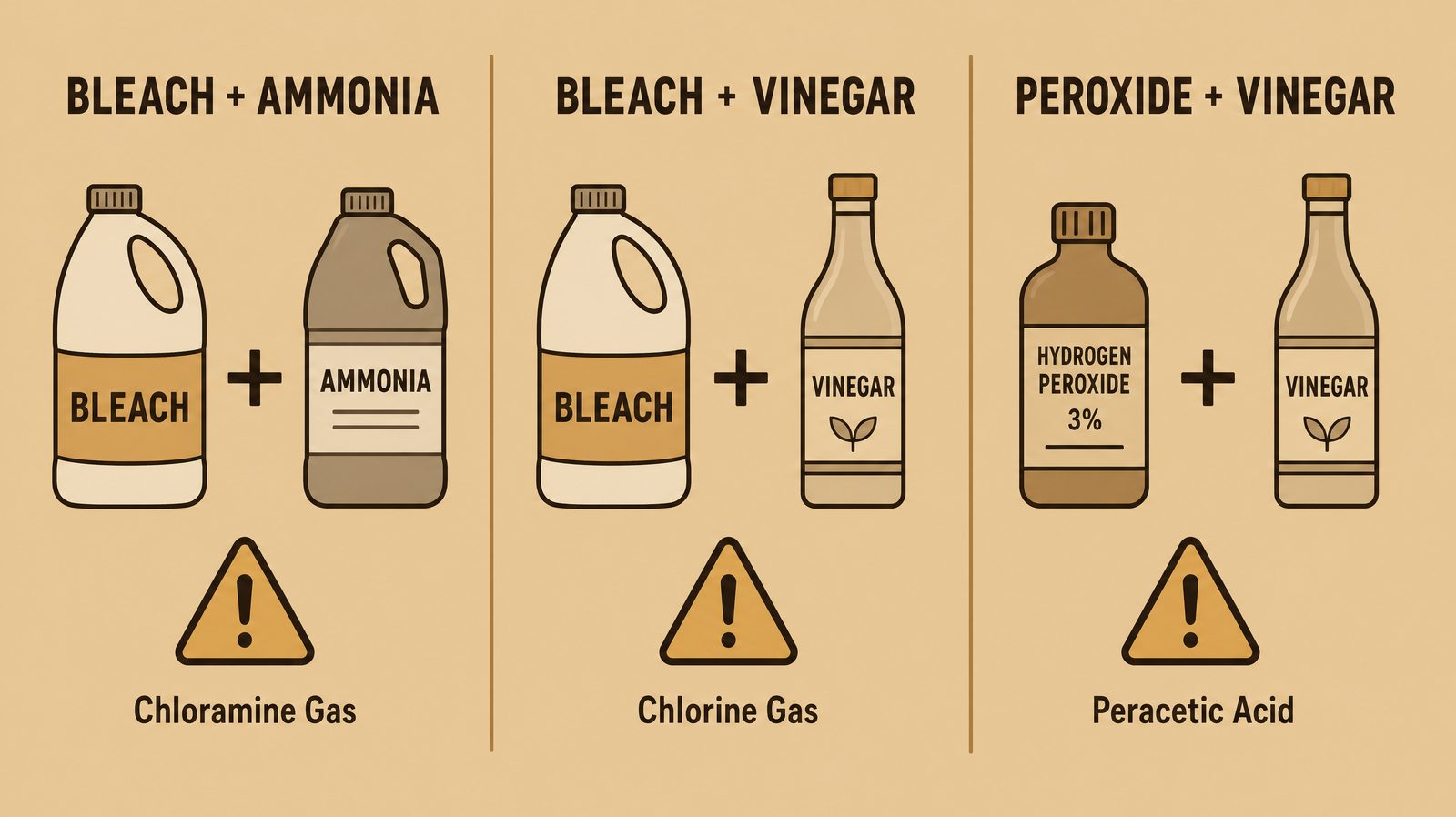
The pattern across all of these: two products that are each fine to use on their own can become something else entirely once they're in the same bucket, spray bottle, or drain. If a label doesn't explicitly say a product is safe to combine with another, treat it as a "no."
How to Avoid This in Your Own Cleaning Routine
The fix here isn't complicated, it's just a habit most people never built. Use one cleaning product at a time. Finish with it, rinse the surface with plain water, and let it dry before switching to a different product on the same spot.
Keep the bathroom or kitchen window open, or a fan running, any time you're using a strong-smelling cleaner, bleach especially. Fumes concentrate fast in a small, closed bathroom in a way they never do in an open kitchen.
Store cleaners so that bleach isn't sitting directly next to ammonia-based glass cleaner or an acid-based drain opener. A cluttered under-sink cabinet makes it easy to grab two bottles at once without meaning to combine them. Read labels before using a "new to you" cleaning product, especially anything marketed for tough jobs like drain clogs, rust, or grout, since those often contain acids.
And if you've got kids, remember that a cleaning bucket left out with residue from two different products in it is functionally the same hazard as mixing them on purpose. Rinse and put things away as you go rather than leaving a "cleanup station" sitting out.
When to Call for Help
Call Poison Control at 1-800-222-1222 anytime you've been exposed to fumes from mixed cleaning products, even if symptoms seem mild. Call 911 or get to an ER if you notice any of the following:
- Breathing that's getting harder, not easier, after leaving the area
- Chest pain or a tight, crushing feeling in the chest
- Wheezing in someone with no history of asthma
- Confusion, fainting, or loss of consciousness
- Coughing up pink or white-tinged fluid
Most exposures resolve within a day once someone gets to fresh air and the mild irritation passes. The goal isn't to panic over every strong-smelling cleaner. It's knowing the two combinations that actually cause the dangerous reaction, and having a plan for the few minutes right after it happens.
A chemical fumes scare in your own bathroom has a way of reminding you how fast a calm afternoon turns into an emergency. See what's inside The 1stHour Trauma Kit, because the dizziness, coughing fit, or a fall while getting out of a fume-filled room fast can leave you needing basic first aid just as much as a phone call to Poison Control.
This content is for informational purposes only and does not constitute medical advice. If you're experiencing breathing difficulty or other severe symptoms after chemical exposure, call 911 or your local poison control center immediately.


