Eye Injury First Aid: What to Do (and Never Do) When Something Gets in the Eye

You're under the sink, a wrench slips, and something metallic flicks up into your eye. Or a kid's elbow catches you wrong during a pickup game. Or a splash of cleaner gets past your safety glasses because you weren't wearing any. Eye injury first aid isn't one skill. It's three different responses depending on what actually happened, and the wrong one can turn a manageable injury into a permanent one.
That's the part most people miss. The instinct to rub, flush, or apply pressure feels helpful in the moment, but it's the right move for one kind of injury and the wrong move for another. Here's how to tell the difference and what to actually do in the first few minutes.
Eye Injury First Aid Is Different for Every Cause
Most eye injury guidance online treats "something happened to my eye" as one situation. It isn't. A chemical splash, a piece of debris, and a blunt hit each damage the eye differently, and each one has a first move that would be the wrong call for the other two.
Flushing works for chemicals and often for loose debris. It's the wrong move for an embedded object, where water pressure can drive it deeper. Pressure works to slow ordinary bleeding almost everywhere else on the body. On the eye, pressure can force the contents of a ruptured eyeball out through the injury. Knowing which situation you're in matters more than knowing any single technique.
The good news: you can sort almost every eye injury into one of three buckets within the first ten seconds. Something got splashed in. Something got stuck in. Or something hit the eye hard. Each one gets its own section below.
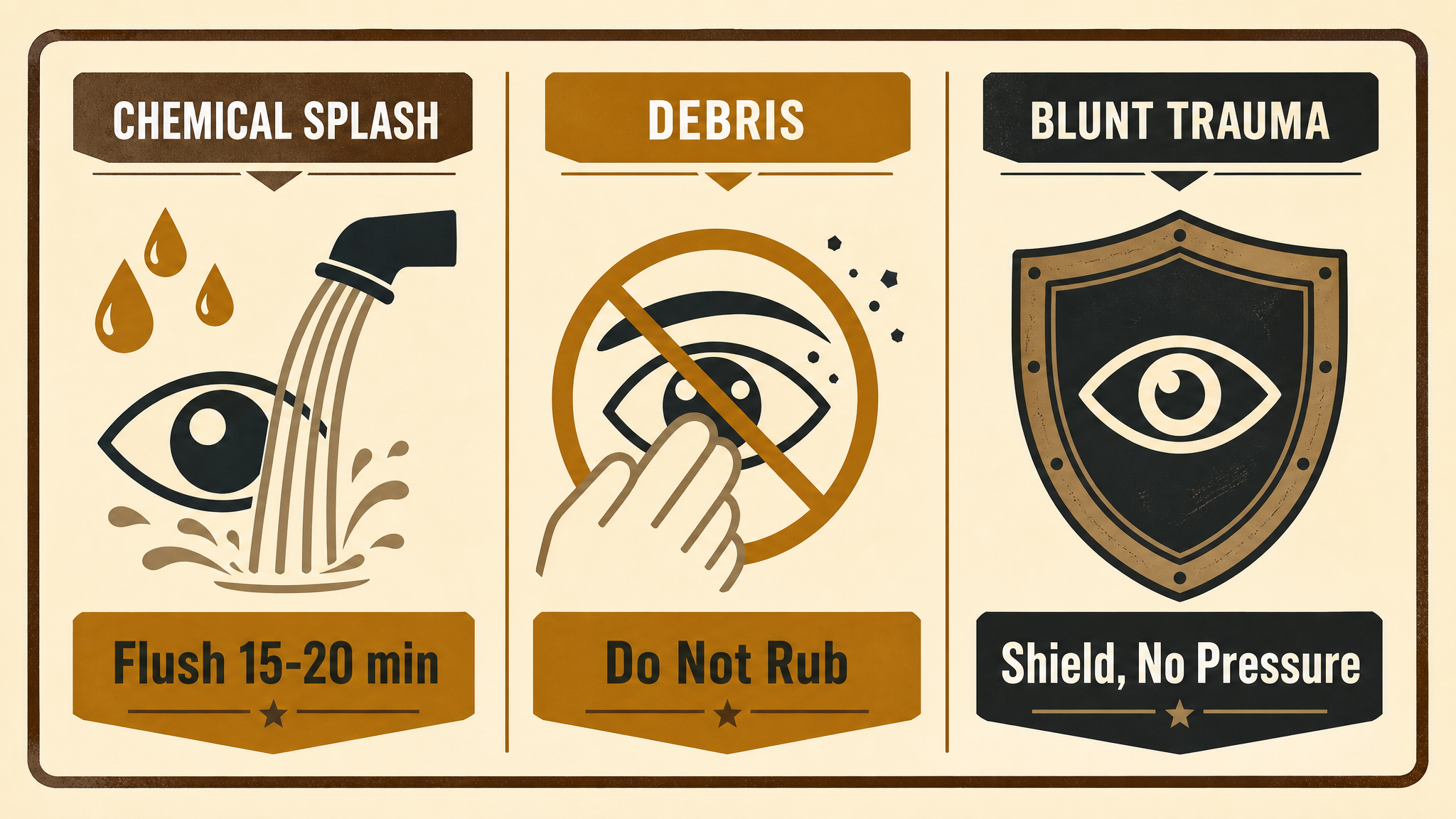
Chemical Splash in the Eye: Flush First, Flush Long
If a chemical, cleaning product, or irritant gets into the eye, the first move is water, immediately, and for longer than feels necessary.
Tilt the head so the affected eye is lower and to the side, hold the eyelid open with your fingers, and run a gentle, steady stream of clean lukewarm water across the eye from the inner corner outward, so it doesn't run into the other eye. Keep going for 15 to 20 minutes. Not 15 to 20 seconds. Minutes. According to Mayo Clinic, continuous irrigation for that full window is the single biggest factor in how much damage a chemical burn to the eye actually causes.
If you're wearing contact lenses, try to remove them once the flush is underway, either during a brief pause or while a second person keeps water running on the eye. Don't stop flushing to hunt for the lens case. Getting the lens out matters less than keeping water on the eye the entire time.
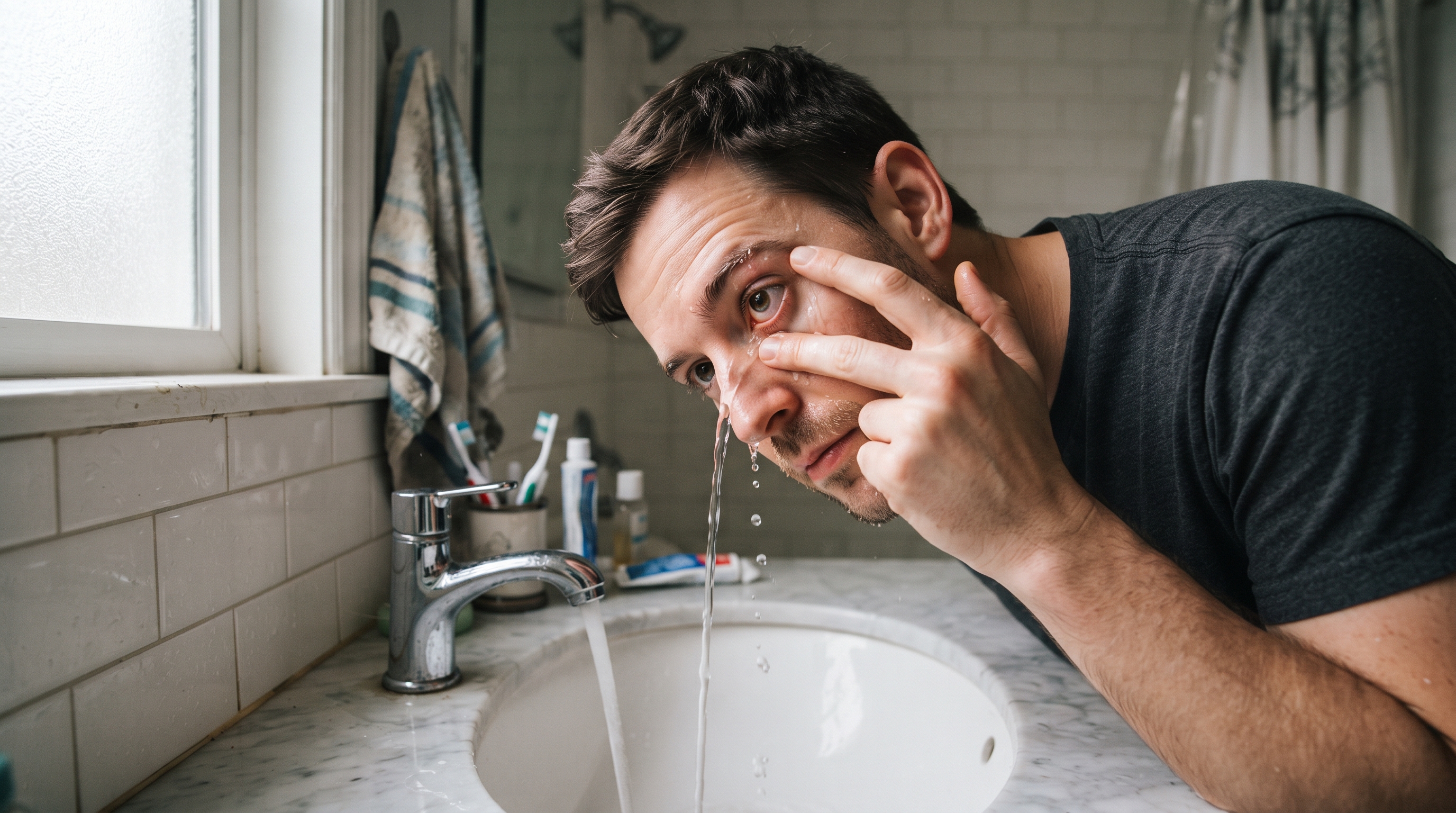
While you're flushing, have someone call Poison Control at 1-800-222-1222 or start driving toward urgent care, whichever gets you moving faster. Our guide to accidental poisoning first aid covers what Poison Control can walk you through on the phone for chemical exposures beyond the eye itself, and the same principle applies here: they're often faster and more useful than a walk-in clinic for figuring out next steps.
Once you're done flushing, don't put anything else in the eye. No ointments, no eye drops other than saline, no home remedies. Cover the eye loosely with a clean cloth and get seen by a doctor, even if it feels better after the flush. Some chemical damage doesn't show its full extent for hours.
Something Stuck in Your Eye: Debris and Foreign Objects
Sawdust, a fleck of metal, a bit of grit that blew in on a windy day. Most of these are loose on the surface of the eye and will flush right out. Some are embedded, and those need a completely different approach.
Try this first: don't rub. Rubbing grinds a loose particle against the cornea and can turn a minor irritation into a scratch. Instead, blink several times to let tears do the work, or gently pull the upper eyelid down over the lower lid and let the lashes brush the object loose. If that doesn't clear it, flush with clean water the same way described above, tilting the head so water runs from the inner corner out.
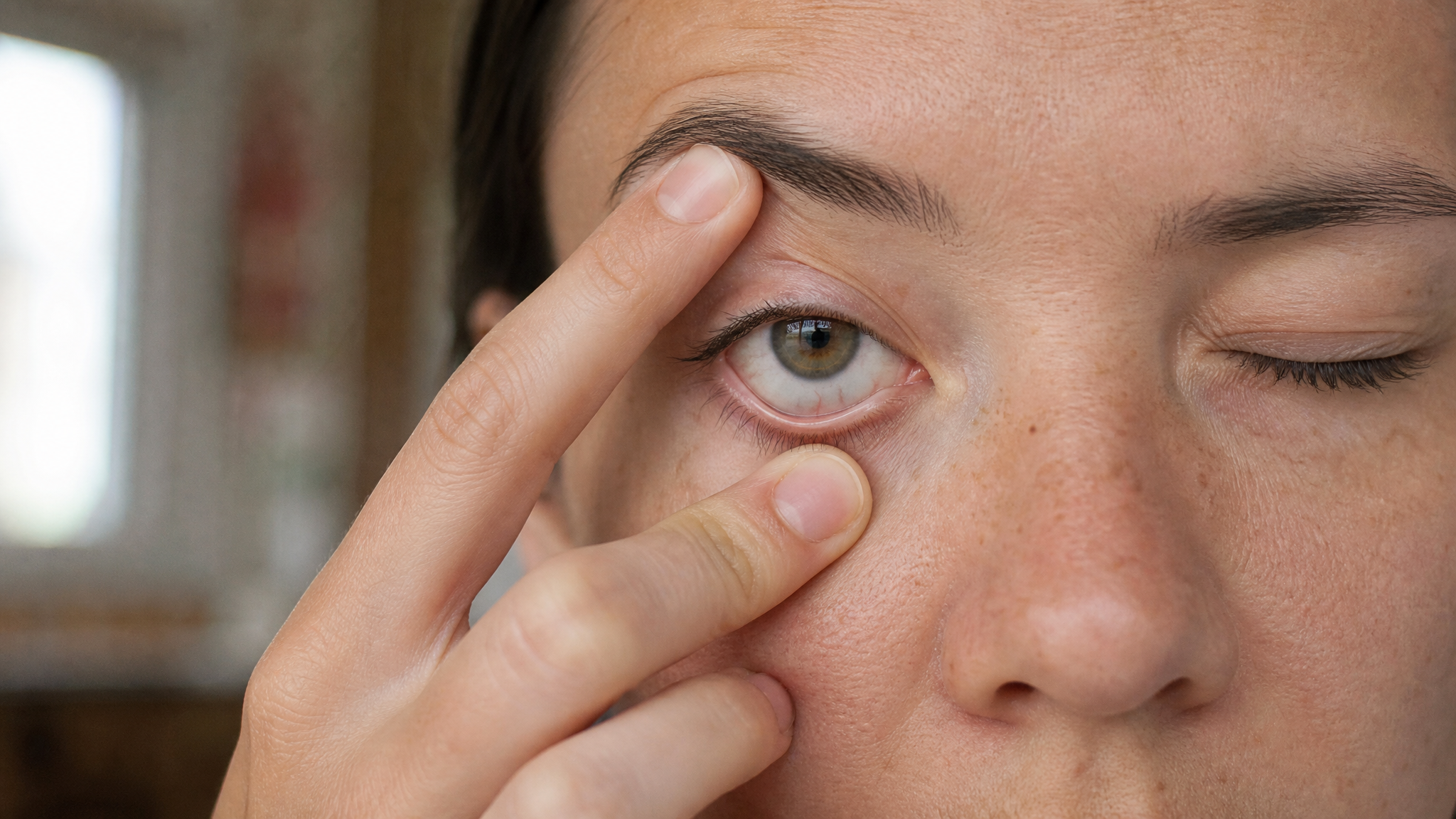
If you can see something embedded in the eye itself, not just floating on the surface, stop trying to remove it and stop flushing aggressively. Water pressure can push an embedded object deeper or shift it in a way that causes more damage. Cover the eye loosely without pressing on it, cover the other eye too if you can (both eyes move together, so this limits movement in the injured one), and get to an ER. This is one of the few first-aid situations where doing less is the correct call.
A shard that's gone through the surface behaves a lot like a puncture wound anywhere else on the body: the entry point looks small, but what's happening underneath matters more than what you can see. If you want the broader version of that principle, our post on how to treat a puncture wound covers why "leave it in place, get help" beats trying to pull something out yourself.
A Hit to the Eye: Why Pressure and Rubbing Make It Worse
A ball, an elbow, a cabinet door swinging back. Blunt trauma to the eye is the injury most people handle wrong, because the instinct that works for bruises everywhere else on the body doesn't apply here.
Apply a cold compress to the surrounding skin and brow bone to control swelling, never directly to the eyeball, and never with pressure. If the eye looks bruised, swollen, or the person is seeing double or has blurry vision, that's a normal reaction to get checked, not a reason to panic. But watch for the signs that mean this is more serious than a black eye:
- The pupil looks irregular, pointed, or a different shape than the other eye
- There's visible bleeding inside the eye itself (blood pooling in front of the iris)
- The person can't move the eye in some directions
- Vision is significantly worse than before the hit, not just blurry from swelling
- Something looks like it's protruding from the eye that shouldn't be there
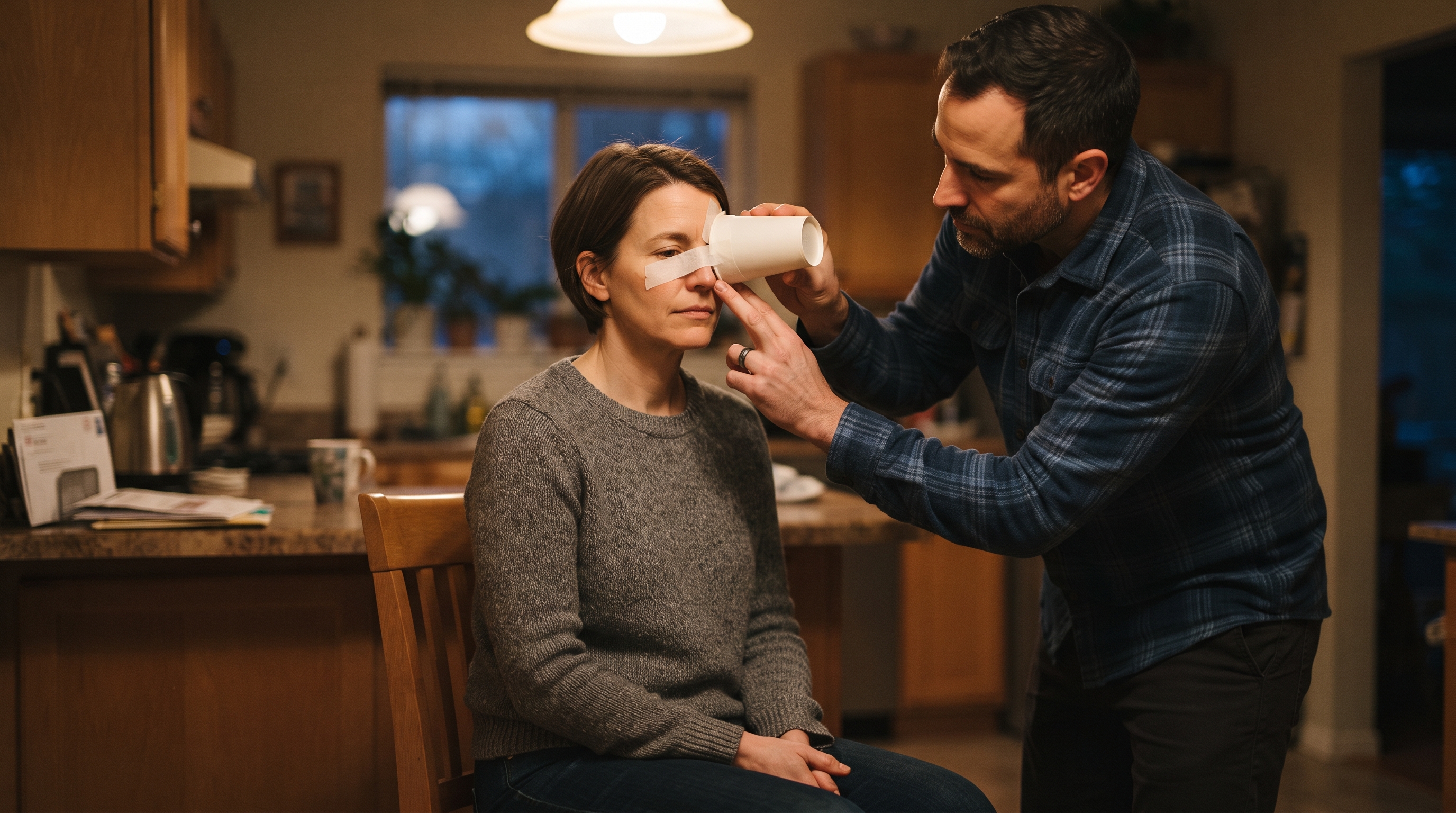
Any of those point toward a possible ruptured globe or orbital fracture, and the move is a rigid shield, not a soft bandage. The bottom half of a paper cup, taped gently around the bones of the eye socket without touching the eyeball itself, works as an improvised shield until you reach care. The goal is to stop anyone, including the injured person, from pressing on the eye by accident. Don't rinse it, don't apply ointment, and don't try to straighten anything that looks out of place.
Even a hit that seems minor deserves a same-day check if vision changes at all. Retinal detachment can follow a blow that looked mild at the time and show symptoms hours or days later, which is a different timeline than most injuries where the worst of it shows up immediately.
Contact Lenses and Eye Injuries: When to Take Them Out
The general rule is to remove contacts as soon as it's safe to do so, but "safe" changes depending on what happened.
For chemical splashes, get the lens out during flushing if you can, since chemicals can pool underneath a lens and keep burning the eye longer than they would without one. For debris or foreign objects, remove the lens first if it's just floating loose and easy to reach, but don't dig around under it if you can't see clearly what you're doing. For blunt trauma where you suspect something more serious, like a possible rupture, leave the lens alone entirely and let the ER handle removal. Touching the eye at all in that scenario carries more risk than the lens does.
If you wear contacts regularly, keep a spare pair of glasses somewhere you can grab fast. It sounds unrelated to first aid until you're standing at a sink with one eye swollen shut, unable to see well enough to find your lens case.
When Eye Injury First Aid Isn't Enough: Signs You Need the ER
Home care covers a real slice of eye injuries: minor debris that flushes out clean, small chemical exposures caught fast, bumps that don't affect vision. But eye injury first aid has a ceiling, and knowing where it is matters as much as knowing the techniques themselves.
Get to an ER or call 911 if any of these apply:
- Vision loss, even partial or temporary
- Severe pain that doesn't ease after the first response steps
- Visible blood inside the eye, an irregular pupil, or anything protruding from the eye
- A chemical exposure to a strong acid, alkali, or industrial cleaner, regardless of how the flush seemed to go
- An embedded object of any kind
- Persistent double vision, light sensitivity, or a sensation that something is still in the eye after flushing thoroughly
According to the American Academy of Ophthalmology, roughly 90% of eye injuries are preventable with proper eyewear, and even injuries that look minor at first can hide damage that only shows up on a proper exam. If you have any doubt about how serious it is, that's a good enough reason to get it looked at, not a reason to wait and see.
Eye injuries are also one of those cases where a head injury and an eye injury can happen together, especially with falls or car accidents. If someone took a hit hard enough to affect the eye, it's worth checking for the broader signs covered in our concussion warning signs guide too.
Most eye injury situations come down to having the right supplies within reach and a clear head about which of the three protocols actually applies. Clean gauze, saline, and something to shield the eye without pressing on it go a long way, and they're exactly the kind of items that sit unused in a junk drawer until the day you need them fast. That's the whole idea behind the 1stHour Trauma Kit: 82 pieces organized so you're not digging through a cabinet while someone's eye is swelling shut. If your current setup could use an update, our home first aid kit checklist is a solid place to start.
This content is for informational purposes only and does not constitute medical advice. If you've experienced an eye injury, seek professional medical attention, especially for chemical exposure, embedded objects, or any change in vision. In a medical emergency, call 911 immediately.


