Recovery Position: How to Place an Unresponsive Person Safely
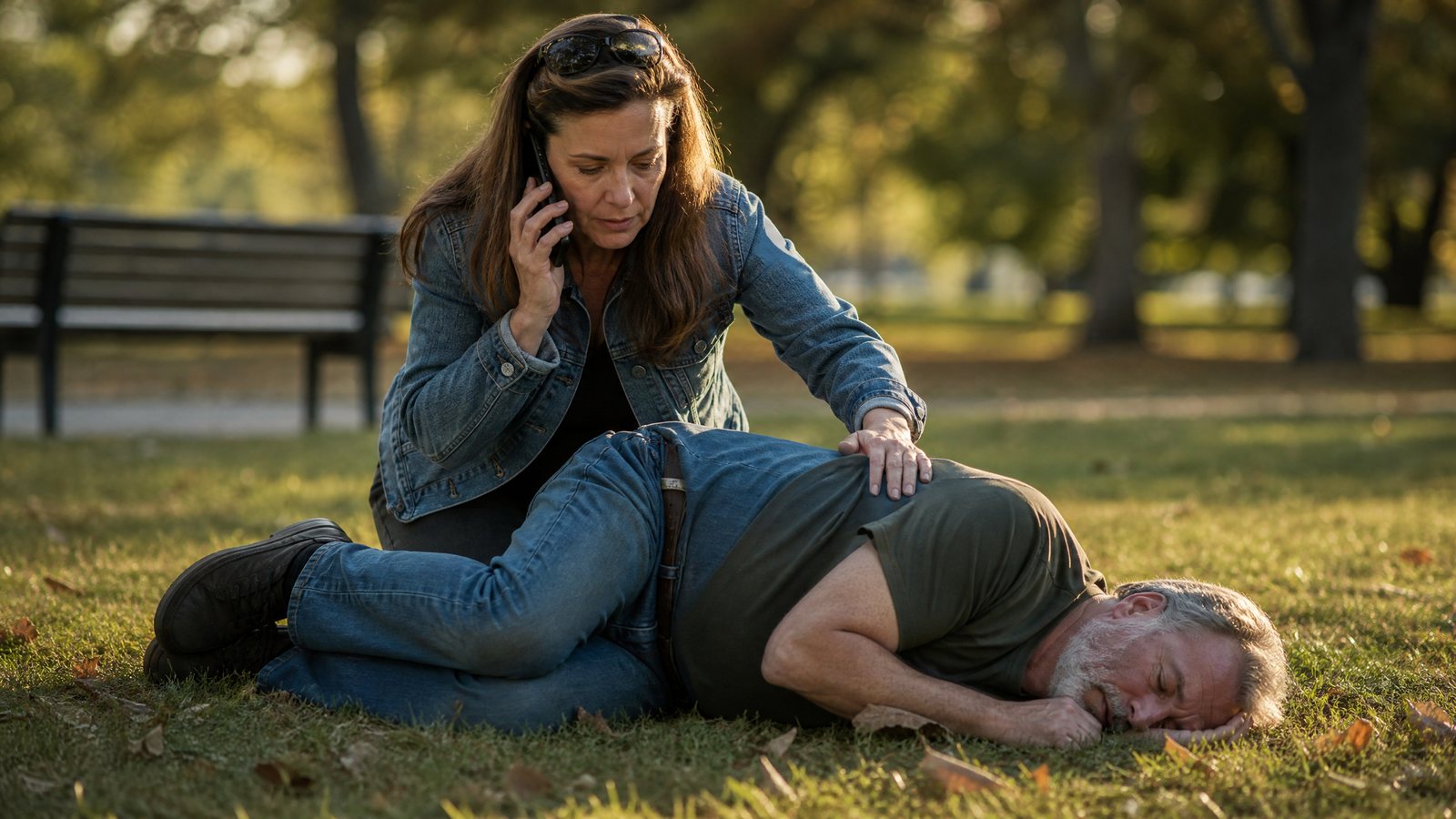
You find someone on the floor. They will not answer you, but their chest is rising and falling. You cannot fix whatever caused it, and help is minutes away. What you can do is keep their airway clear until it arrives. This guide covers the recovery position, how to do it, and the situations where you should skip it.
When to Use the Recovery Position
An unresponsive person loses control of the muscles that keep the airway open. The tongue can fall back, and vomit or fluid can pool in the throat. Lying on the side lets fluid drain out of the mouth instead of down the windpipe.
The 2024 American Heart Association and American Red Cross first aid guidelines say a side-lying position is reasonable for someone with decreased alertness who is breathing normally. That is the whole test. The person is not responding, and they are breathing normally.
Check first. Tap their shoulder, speak loudly, and watch the chest for up to 10 seconds. Slow, snoring, gasping, or absent breathing is not normal breathing.
Recovery Position: How to Roll Someone Step by Step
Do this on a firm surface, with the person on their back. Take your time, because a slow, controlled roll is safer than a fast one.
- Kneel beside them and straighten their legs. Remove glasses and bulky items like keys or a phone from their pockets.
- Place the arm nearest you at a right angle to their body, elbow bent, palm facing up.
- Bring their far arm across the chest and rest the back of that hand against their cheek nearest you. Keep holding it there.
- With your other hand, pull their far knee up until the foot is flat on the floor.
- Keep the hand against the cheek, and pull on that raised knee to roll them toward you onto their side.
- Adjust the top leg so the hip and knee are both bent at right angles. This keeps them from rolling forward or back.
- Tilt the head back gently and lift the chin so the airway stays open. Adjust the hand under the cheek to hold that angle.
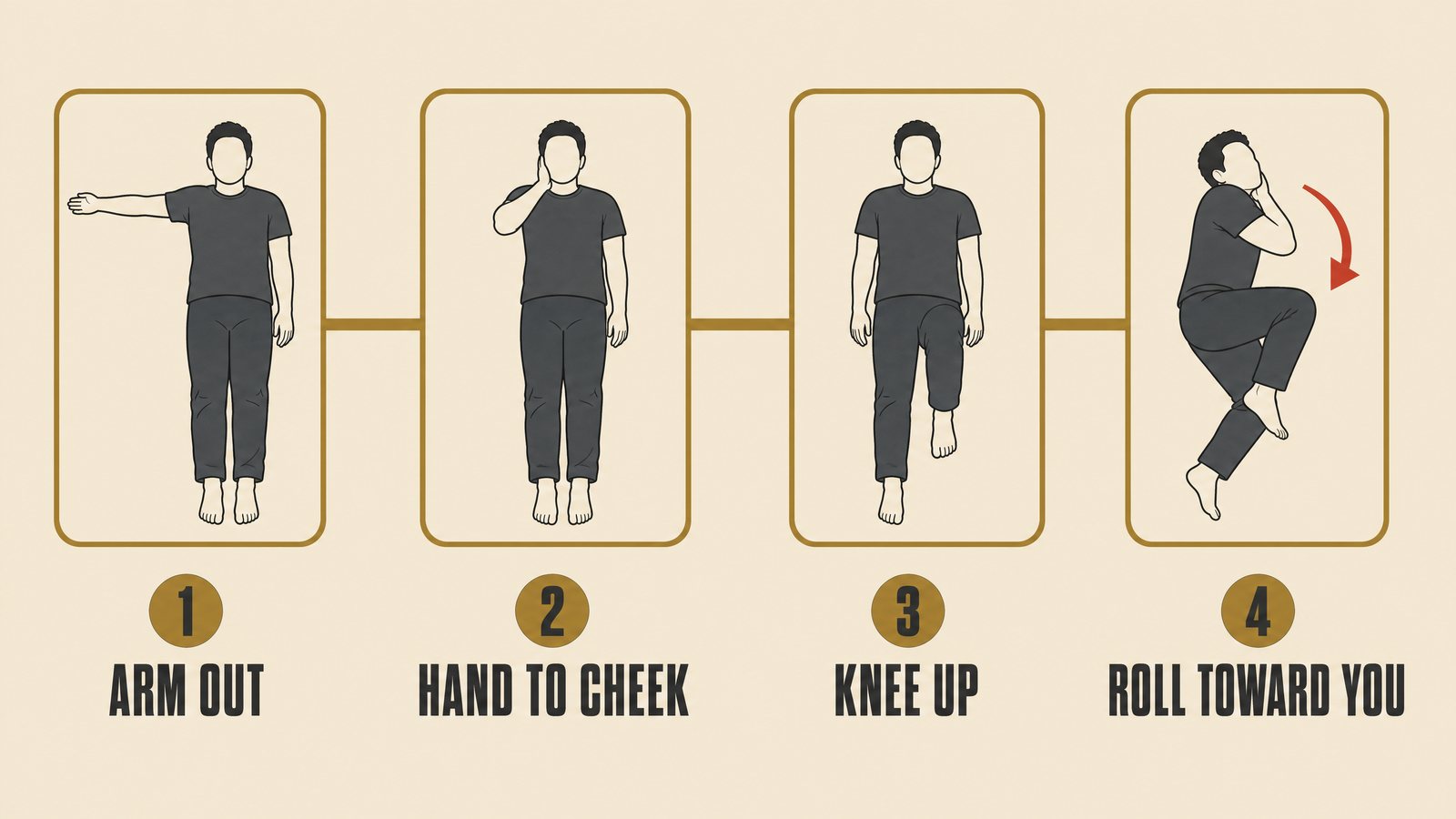
St John Ambulance describes the same sequence in its recovery position guidance, and notes it keeps the airway open and lets vomit drain away.
When Not to Use the Recovery Position
The most important exception is breathing. If the person is not breathing, or is only gasping, they need CPR on their back, not a side position. The AHA guidelines also warn that the recovery position has been linked to delayed recognition of respiratory arrest. That is one reason you keep watching their chest after you roll them.
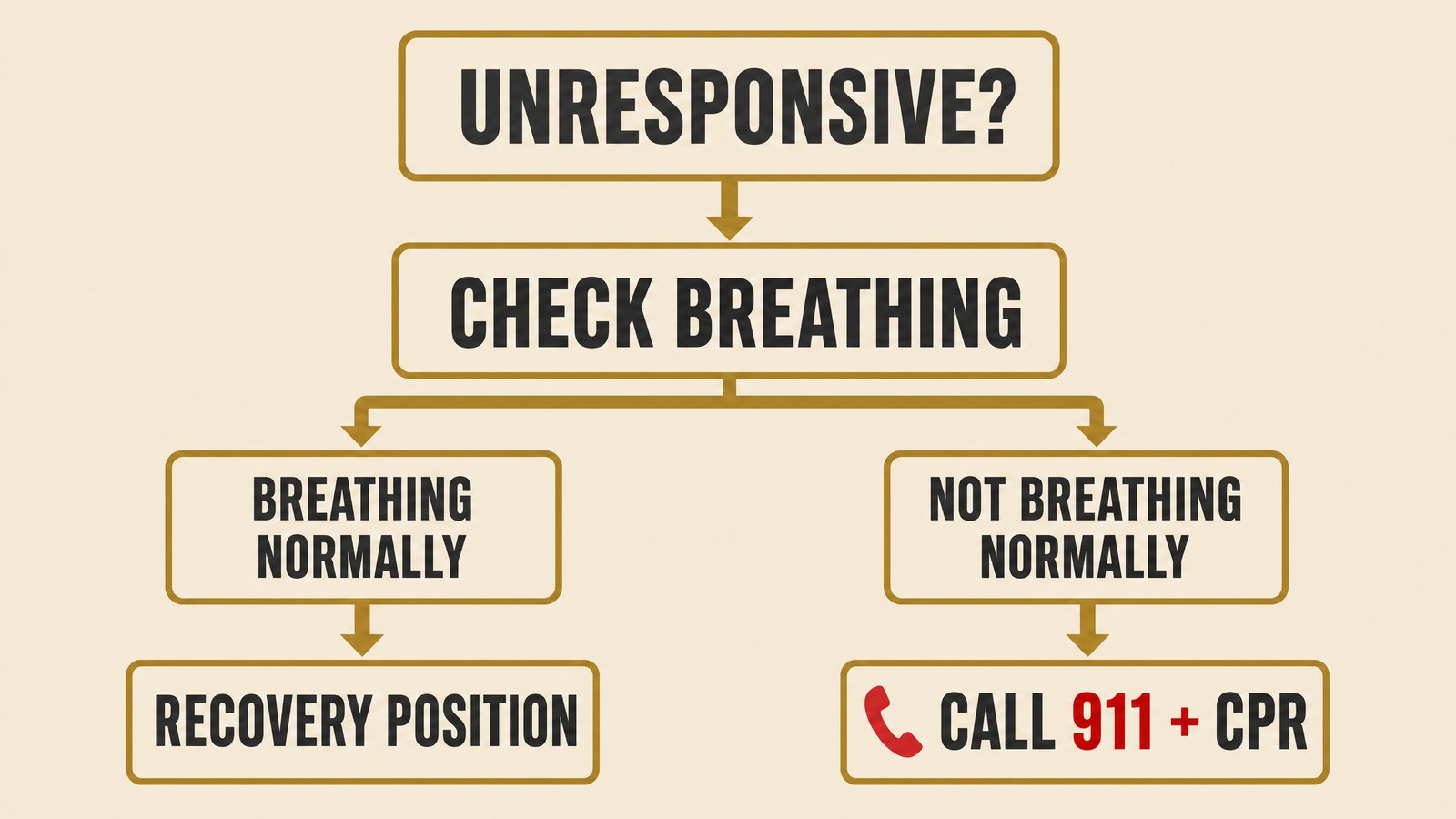
If breathing is not normal, call 911 and start hands-only CPR, and use an AED if one is nearby. Our guide to how to use an AED walks through it.
Recovery Position and Spinal Injury
Think twice if the person could have a spine, neck, hip, or pelvic injury. A fall from a height, a car crash, or a hard blow to the back are the usual clues. The AHA guidelines say people with a possible spine injury should generally be left in the position they were found. MedlinePlus gives the same advice in its unconsciousness first aid guide: leave them where they are while they keep breathing.
The exception is vomiting. If they vomit, roll the whole body at once to the side, with one person supporting the head and neck in line with the spine. Our article on fall from height first aid covers what else to watch for after a serious fall.
What to Do After They Are on Their Side
Call 911 right away if no one has already. Then stay with the person and keep watching them.
- Keep checking that they are breathing normally. If breathing stops, roll them onto their back and begin CPR.
- Keep them warm with a coat or blanket.
- Do not give food or drink, and do not leave them alone.
- If they stay in this position for about 30 minutes, St John Ambulance advises rolling them onto their other side.
- Tell the paramedics what you saw, when they went down, and anything you know about medications or alcohol.
This position fits many situations. Think of someone who is out after a seizure once the shaking stops, a person who cannot be woken from alcohol poisoning, or someone who faints and does not come around quickly. In every case, the rule is the same. Breathing normally means side. Not breathing normally means back, and CPR.
The first minutes decide how the next hour goes. See what's inside The 1stHour Trauma Kit, built for the moments before help arrives.
This content is for informational purposes only and does not constitute medical advice. Take a first aid course for hands-on practice, and call 911 in any emergency.


