Fall From Height First Aid: What to Do in the First Few Minutes
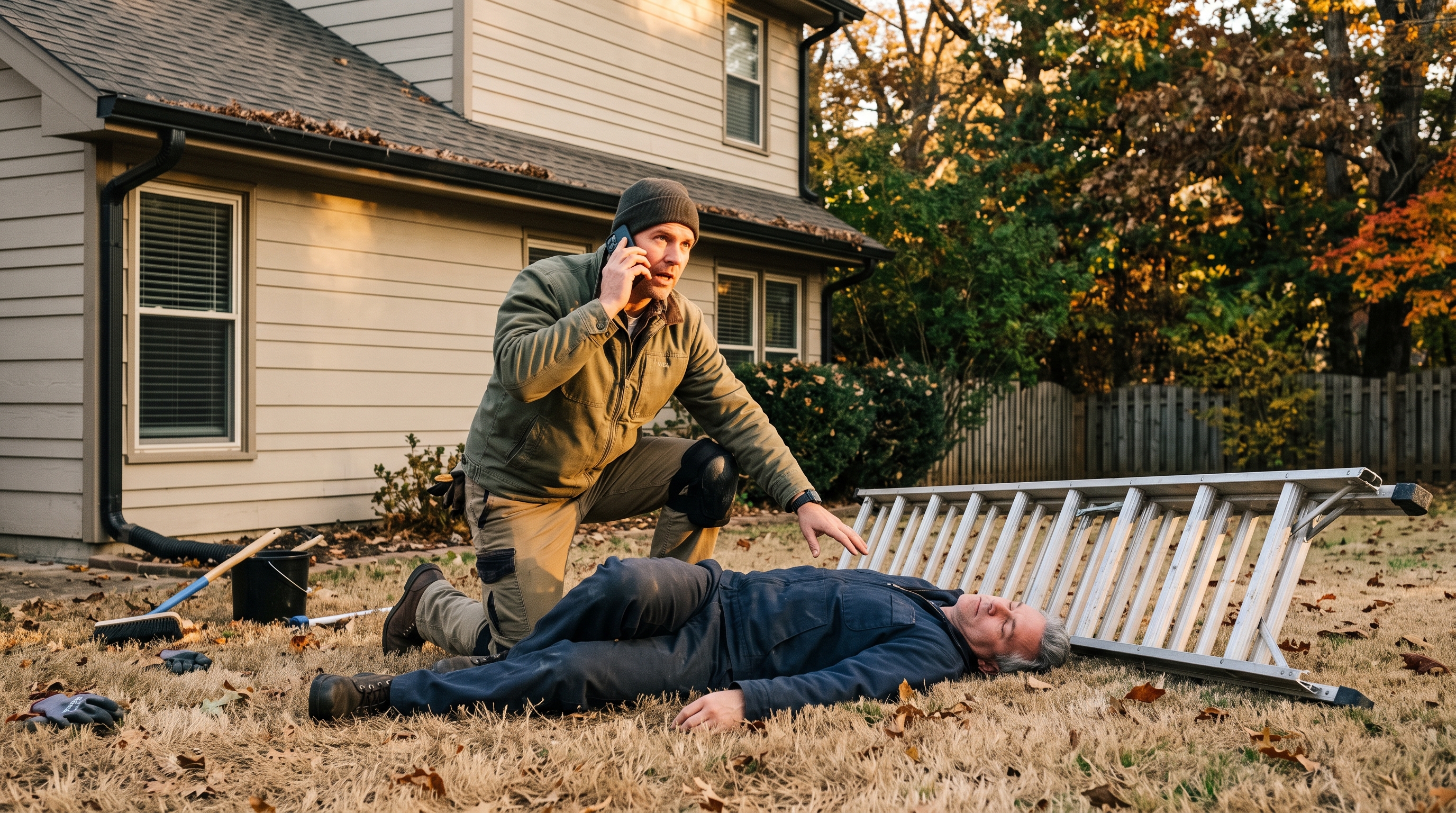
Somebody just went off a ladder, a roofline, a loft, a deck that wasn't as sturdy as it looked. Maybe it's ten feet, maybe it's twenty-five. You heard the thud, or you saw it happen, and now you're standing over them with your heart going and no idea what the right first move is. Every instinct says to help them sit up, get them off the ground, get them inside. Fall from height first aid runs almost opposite to instinct on that first point, and knowing that difference in the next sixty seconds matters more than anything else you'll do before paramedics show up.
Fall From Height First Aid Starts With Not Moving Them
The reason isn't caution for its own sake. A fall from height puts the spine through forces it isn't built for, and a fractured or unstable vertebra can be sitting there doing no damage at all, right up until the moment someone bends, twists, or lifts that person the wrong way. According to Mayo Clinic, moving someone with a suspected spinal injury can cause permanent paralysis that the original injury wouldn't have caused on its own. That's the whole reason this rule exists: the damage from a bad move can outlast the damage from the fall.
You don't need to diagnose anything to follow this rule. Any fall from a height greater than the person's own standing height, any fall onto a hard surface, any fall where they landed on their head, neck, or back, gets treated as a possible spinal injury until a paramedic says otherwise. That's true even if they're talking to you and seem mostly fine. Adrenaline hides pain extremely well in the first few minutes.
The only exception is immediate danger. If there's fire, a structure about to collapse, rising water, or traffic bearing down, get them clear using the flattest, straightest drag you can manage, supporting the head and neck as close to in-line with the spine as possible. Outside of that, stillness is the safer bet, even when it feels like doing nothing.
How to Check Responsiveness Without Making Anything Worse
Before anything else, find out if they're conscious and how alert they are. You don't need medical training for this, just a simple order of steps.
Start by talking to them from close range: say their name, ask if they can hear you, ask what happened. If they answer clearly, that's the best sign you can get right now. If they don't respond to your voice, try a firm verbal command, "open your eyes," and watch for any response at all, even a flicker. If there's still nothing, a gentle pinch on the back of the hand or a squeeze of the shoulder can tell you whether they respond to pain, without requiring you to move their spine to check.
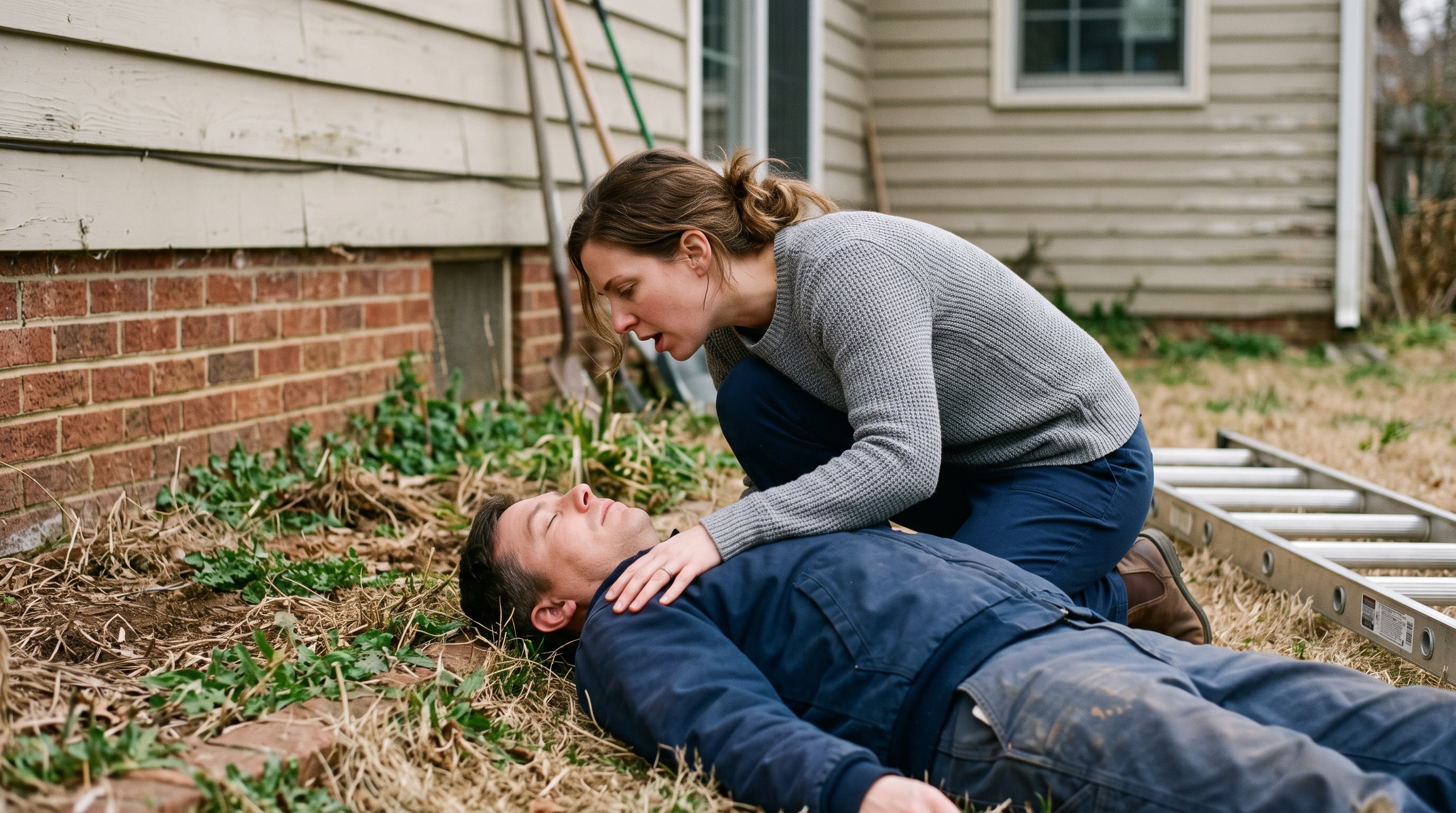
If they don't respond to voice or pain, that's a serious sign and 911 needs to know it the moment you call. Keep an eye on breathing the entire time you're doing this. If breathing stops or becomes irregular and gasping, and you have training, CPR takes priority over spinal precautions, following the sequence in our golden hour trauma guide. If they're breathing on their own, even shallow or fast, let them stay exactly where they landed.
What a Dangerous Fall Actually Looks Like
Not every fall carries the same risk, and it helps to know which signs mean this is serious. CDC data on occupational ladder falls shows that roofs and ladders are the two most common sources of fall injuries on the job, and that most non-fatal falls happen from surprisingly modest heights of six to ten feet, not from dramatic multi-story drops. Height alone doesn't tell the whole story.
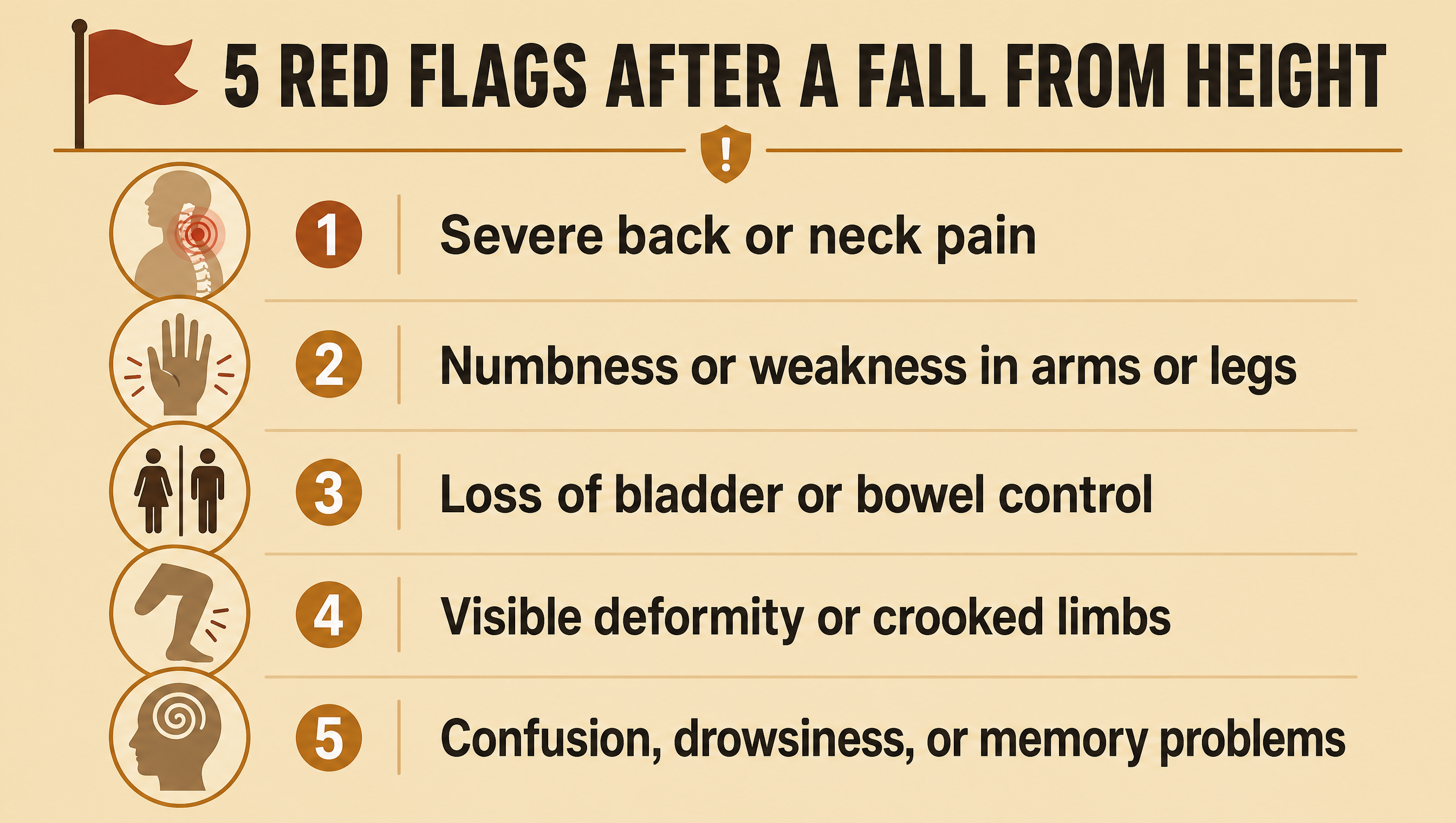
Watch for severe pain in the neck or back, numbness or tingling in the arms or legs, weakness or an inability to move a limb, loss of bladder or bowel control, or an obviously deformed limb or visible bone. Any confusion, repeated vomiting, or a pupil that looks different from the other one points toward a head injury on top of everything else, worth a look at our concussion warning signs guide once the immediate situation is under control. A visible fracture with bleeding needs pressure applied directly to the wound, following the same principles in our guide to stopping severe bleeding, all without shifting the person's spine to reach it.
OSHA's fall prevention data lists falls as the leading cause of death on construction sites, which says less about your specific ladder and more about how often people underestimate what a "short" fall from a roof edge or the top rungs can do to a body.
Fall From Height First Aid While You're Waiting for Rescue
This is the part most first-aid advice skips, and it's the part that actually matters if you're on a rural property, at the top of a two-story roofline nobody can easily reach, or somewhere the ambulance has real distance to cover. Rural EMS response data shows average response times running well past the roughly seven-minute national urban average, sometimes approaching thirty minutes depending on location. If you're on acreage outside town, plan on that kind of wait, not the response time you'd get downtown.
Stay with them and keep talking, even if they're not fully alert. It helps orient them and gives you a running check on whether their responsiveness is getting better or worse. Keep them warm with a jacket or blanket laid over them, not tucked underneath in a way that requires rolling them. Watch for signs of shock: pale or gray skin, cold sweat, rapid breathing, a weak or racing pulse. If shock signs appear, elevating the legs slightly can help, but only if you can do it without moving the torso, neck, or head at all.

If they're on a roof or somewhere access is genuinely difficult, call 911 immediately and tell the dispatcher exactly what you're dealing with. Fire departments often have the ladder trucks and rope rescue gear that a standard ambulance crew doesn't carry, and dispatch can send the right resources the first time instead of a second call twenty minutes in.
When It's Actually Safe to Help Them Move
There are situations where limited movement is fine. If the person is fully alert, has no neck or back pain, no numbness or tingling anywhere, and the fall was from a low height like the bottom two rungs of a ladder, they may just have a sprain or bruise. Even then, let them decide when they're ready rather than pulling or lifting them up.
If you're genuinely unsure, treat it as a spinal injury. It costs you nothing extra to be cautious for another ten or fifteen minutes until paramedics arrive with a backboard and collar. It costs everything to guess wrong.
Calling 911 for a Fall: What to Tell Them
When you call, lead with the essentials: fall from approximately how many feet, what surface they landed on, whether they're conscious, whether they can move their arms and legs, and any visible injuries. Mention if the location is hard to access, a roof, a rural address, a spot a standard ambulance can't reach directly, so dispatch can route the right equipment from the start. Stay on the line if they ask you to; dispatchers can often walk you through checking pulse, breathing, or positioning while help is on the way.
A fall from a ladder or a roofline is exactly the kind of moment the 1stHour Trauma Kit was built around: gauze and pressure dressings for the bleeding, a blanket for shock, gloves so you're not managing an open wound bare-handed, all in one bag instead of scattered across a garage. If your setup at home is thinner than that, our home first aid kit checklist is a good next stop.
This content is for informational purposes only and does not constitute medical advice. If someone has fallen from a height, call 911 immediately. Do not move a person you suspect has a spinal injury unless they are in immediate danger.


