Poison Ivy Rash Treatment: What Works in the First Hour
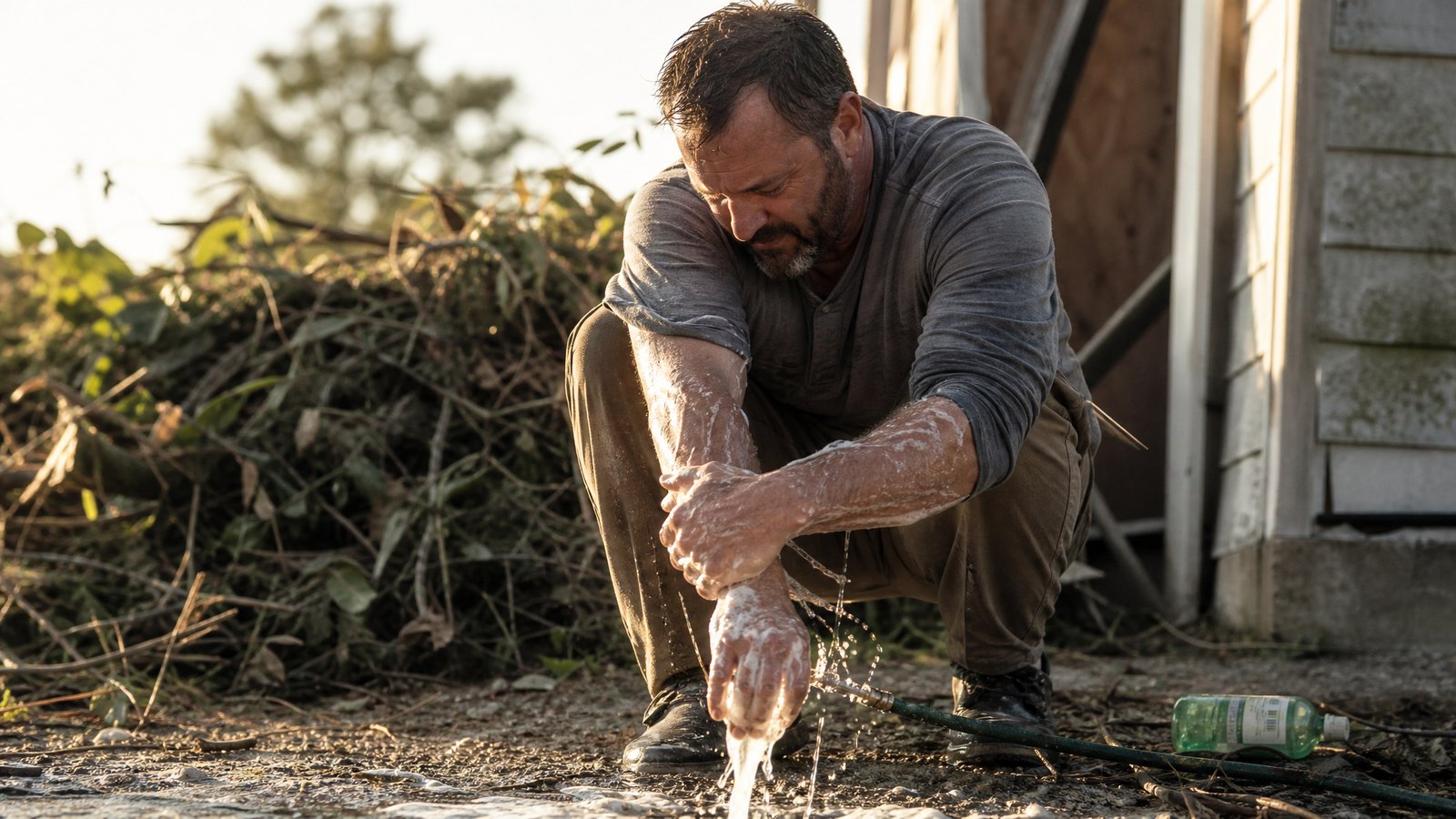
You cleared brush along the fence line on Saturday. Tuesday morning there is a red streak up your forearm that itches like a bad idea, and you are standing in the bathroom wondering what you are supposed to put on it.
Here is the honest version. By the time the rash shows up, the window where you could have prevented it has already closed. That does not mean nothing helps. It means the useful information splits in two: what to do in the minutes after you touch the plant, and what to do in the weeks after the rash arrives. Most articles only give you the second half. So we are going to start with the part almost nobody gets to in time, because it is the only step that changes the outcome.
Poison Ivy Rash Treatment Starts With a Wash, Not a Cream
The rash is not caused by the plant touching you. It is caused by urushiol, an oily resin in the sap of poison ivy, oak and sumac. Urushiol is not an irritant that burns on contact. It is an allergen your immune system has to recognize first, which is why the rash arrives a day or two late and why your first exposure years ago may have produced nothing at all.
That delay is the whole opportunity. Urushiol sits on the surface of your skin for a short stretch before it binds to skin proteins, and once it binds, no amount of washing pulls it back out. Estimates for that window vary, and there is no stopwatch you can trust, but the practical range everyone works with is roughly 10 to 30 minutes. Wash inside it and you may get away with a mild rash or none. Wash three hours later and you are just cleaning your arm.
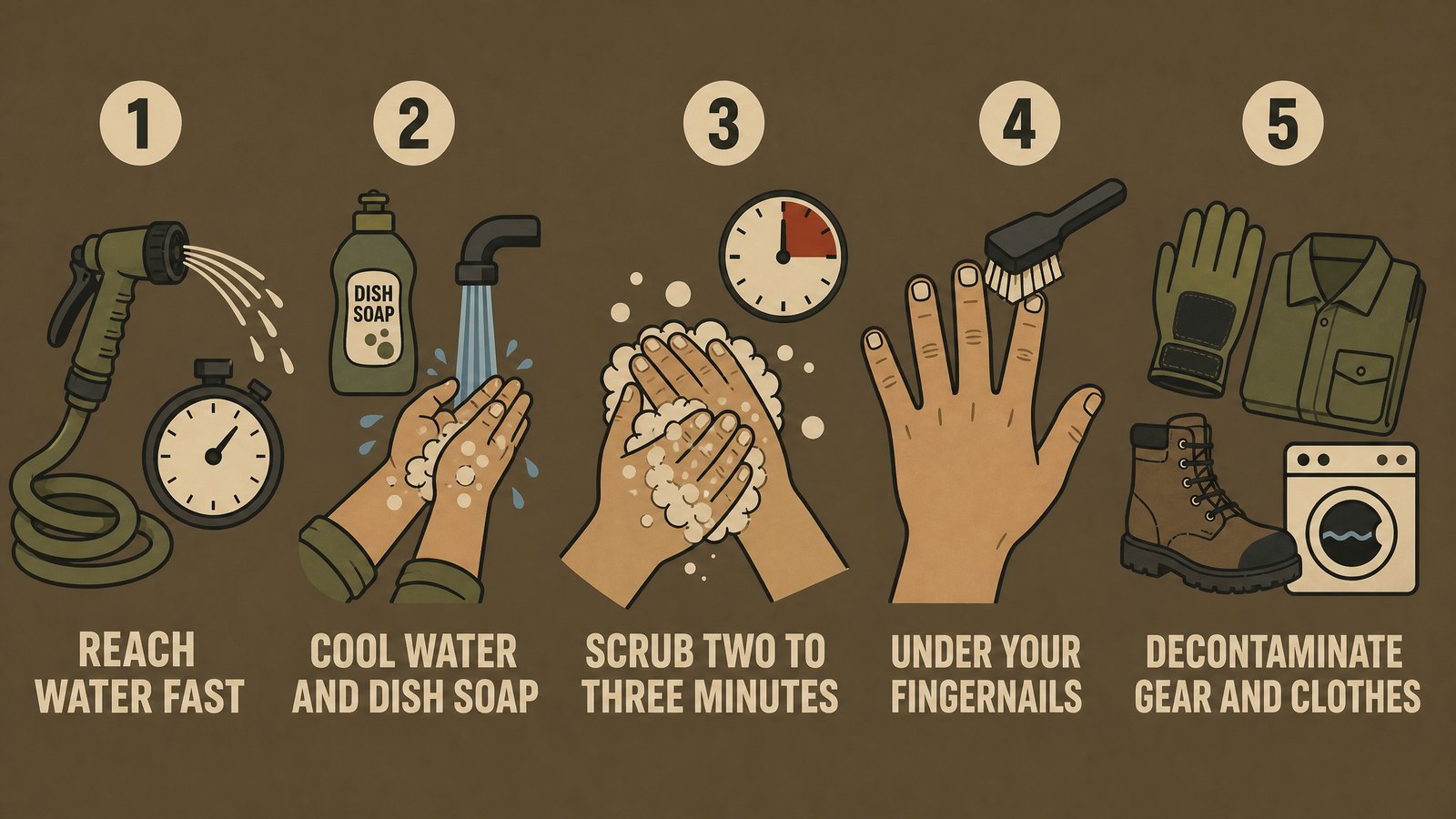
Speed matters more than what you wash with. Here is the procedure:
- Get to water fast. A garden hose, a utility sink, a stream, a water bottle. Do not walk inside and touch three door handles on the way.
- Use cool or lukewarm water and a real degreaser. Dish soap made for hand-washing dishes is what the American Academy of Dermatology names specifically, because urushiol is an oil and you are trying to lift an oil. Rubbing alcohol works too. So does a dedicated product like Tecnu if you keep one in the truck.
- Wash for two to three minutes, and rinse a lot. A quick pass smears the oil around instead of removing it. Let the rinse water run off, not pool.
- Get under your fingernails. This is where people fail. Urushiol packs under nails and then goes wherever your hands go, which is usually your face.
- Deal with everything else that touched the plant. Clothes into the wash on their own, gloves and boots wiped down, tool handles scrubbed, the dog rinsed if the dog was with you. Urushiol stays active on surfaces for months, sometimes longer.
That last one is why people get a second rash a week later and swear it spread on its own. It did not. Their gloves were still coated.
Cool Water, Not Hot: The Mistakes That Spread It
A few of the standard reflexes actively make this worse.
Hot water. It feels wonderful on an itch and it is the wrong call in the wash window. Hot water opens pores and moves the oil deeper instead of off. Once the rash is established and the urushiol is long gone, a warm shower is not going to reinfect you, but during the wash it is working against you. Keep it cool.
Scratching. Fingernails break the skin, and broken skin over a rash is how a nuisance becomes a bacterial infection that needs antibiotics. It is also self-perpetuating: scratching releases histamine, which increases the itch. If you cannot stop yourself at night, that is what the oral antihistamine is for.
Popping blisters. Leave them. Intact skin is the best dressing you will find. This is also where the most persistent myth lives, so let us kill it: blister fluid does not contain urushiol and does not spread the rash. Harvard Health says it plainly. What spreads a rash is unwashed hands, unwashed clothing, and contaminated tools.
Assuming a rash that keeps appearing means it is traveling. New patches showing up over the following days usually mean either uneven urushiol exposure at the start, or a fresh contact from something you have not decontaminated yet. Go find the second source.
Poison Ivy Rash Treatment That Actually Calms the Itch
Once the rash is up, you are managing symptoms while your immune system finishes what it started. Nothing over the counter shortens the rash meaningfully. What good treatment buys you is sleep and intact skin, and both of those matter more than they sound.
Cool compresses. A cool wet cloth for 15 to 20 minutes, several times a day. Cheap, dull, and the most reliable thing on this list.
Colloidal oatmeal baths. A lukewarm soak takes the edge off widespread rash better than spot treatment does. Do not make it hot.
Calamine lotion. Dries weeping blisters and reduces itch. It looks ridiculous and it works.
Hydrocortisone cream, 1%. Useful early, on limited areas. It is a weak steroid, so it will not do much against a severe rash covering a leg.
Oral antihistamines at night. Diphenhydramine helps you sleep through the worst of it. Skip the topical antihistamine creams; they can cause their own allergic reaction on already-angry skin.
Skip the folk cures. Bleach, gasoline, undiluted vinegar and steel wool all show up in yard-work advice and all of them turn a contact rash into a chemical burn.
If the rash is extensive, on the face, or simply not manageable, a provider can prescribe a stronger topical steroid or a tapering course of oral prednisone. That is a real option rather than a last resort, and it is worth calling about sooner than most people do.
How Long a Poison Ivy Rash Lasts, Week by Week
Knowing the shape of it keeps you from panicking on day four when it looks worse than day two. Because it will.
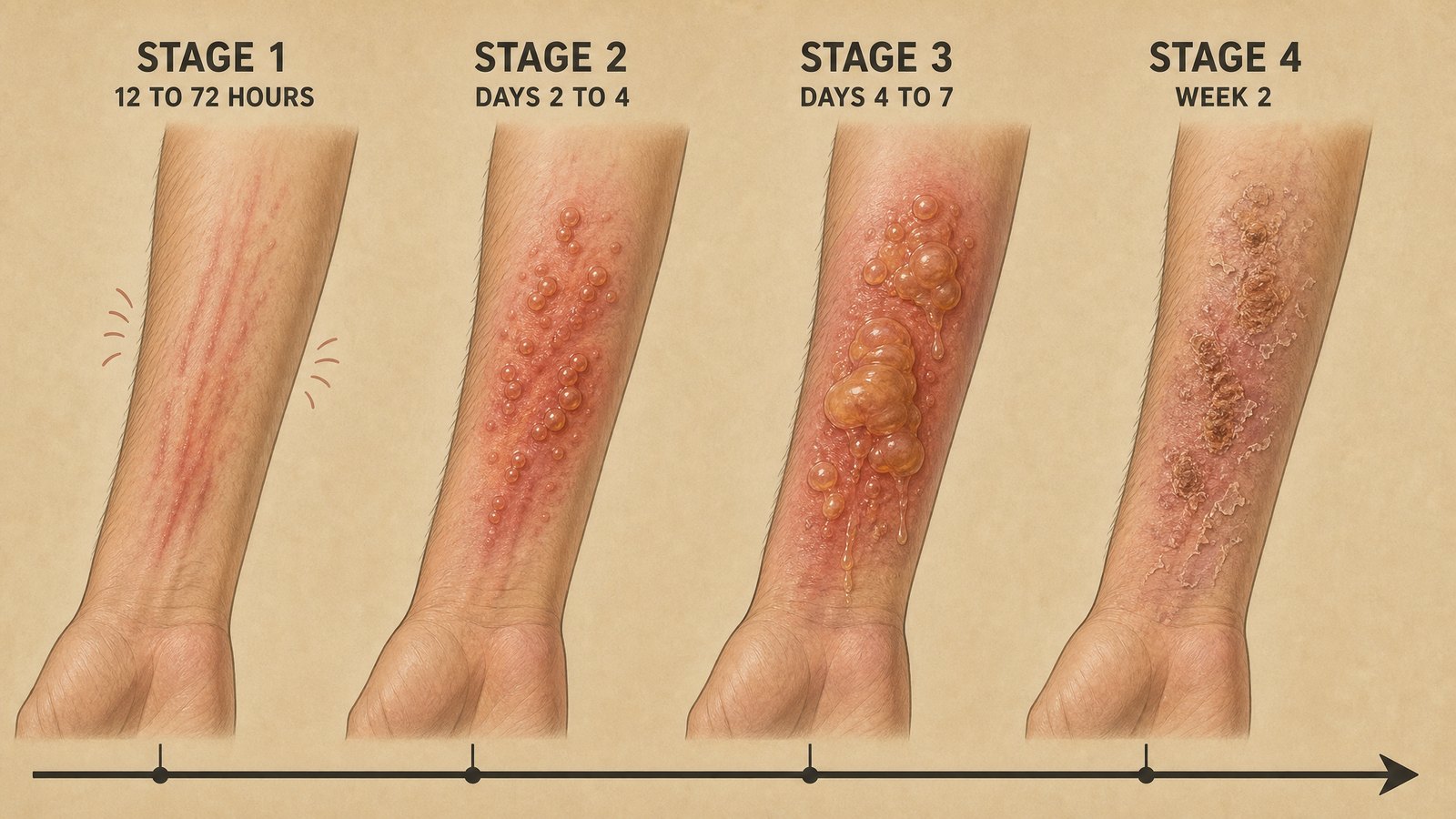
12 to 72 hours after exposure. Itching starts, then redness, then the streaky or patchy pattern that follows wherever the plant dragged across you. On a first-ever exposure it can take a week or more to appear.
Days 2 to 4. Swelling builds. Small blisters form and may join into larger ones. This is the stage that looks alarming and is usually still normal.
Days 4 to 7. Peak. Blisters weep and then begin to dry. The itch is at its worst, which is when people scratch and get themselves an infection.
Week 2. Crusting and flaking. The color fades unevenly and it looks patchy and unattractive rather than angry.
Weeks 2 to 3. Resolved for most people. Severe reactions can run longer, and discoloration where the rash was can linger for a while after the skin itself has healed.
Roughly 85% of people react to urushiol at all, and the American Academy of Dermatology puts the number affected in the US as high as 50 million a year. About 10 to 15% react severely, and if that is you, you already know it and should be calling a provider early rather than waiting out the timeline above. Cleveland Clinic puts typical resolution at one to three weeks.
Never Burn the Plant: The Exposure That Reaches Your Lungs
This is the one that deserves more than a footnote, and it is the reason we cover poison ivy at all as a first-hour topic.
Do not burn poison ivy. Urushiol does not break down in the flame. It rides the smoke and the ash, and inhaling it puts the allergen on the lining of your airway and lungs, where you cannot wash it off, apply calamine to it, or see what is happening. Reported consequences include blistering in the throat and lungs and respiratory failure. A 2022 case report in the medical literature documented two people who went into cardiopulmonary arrest and died after exposure to smoke from burning poison ivy.
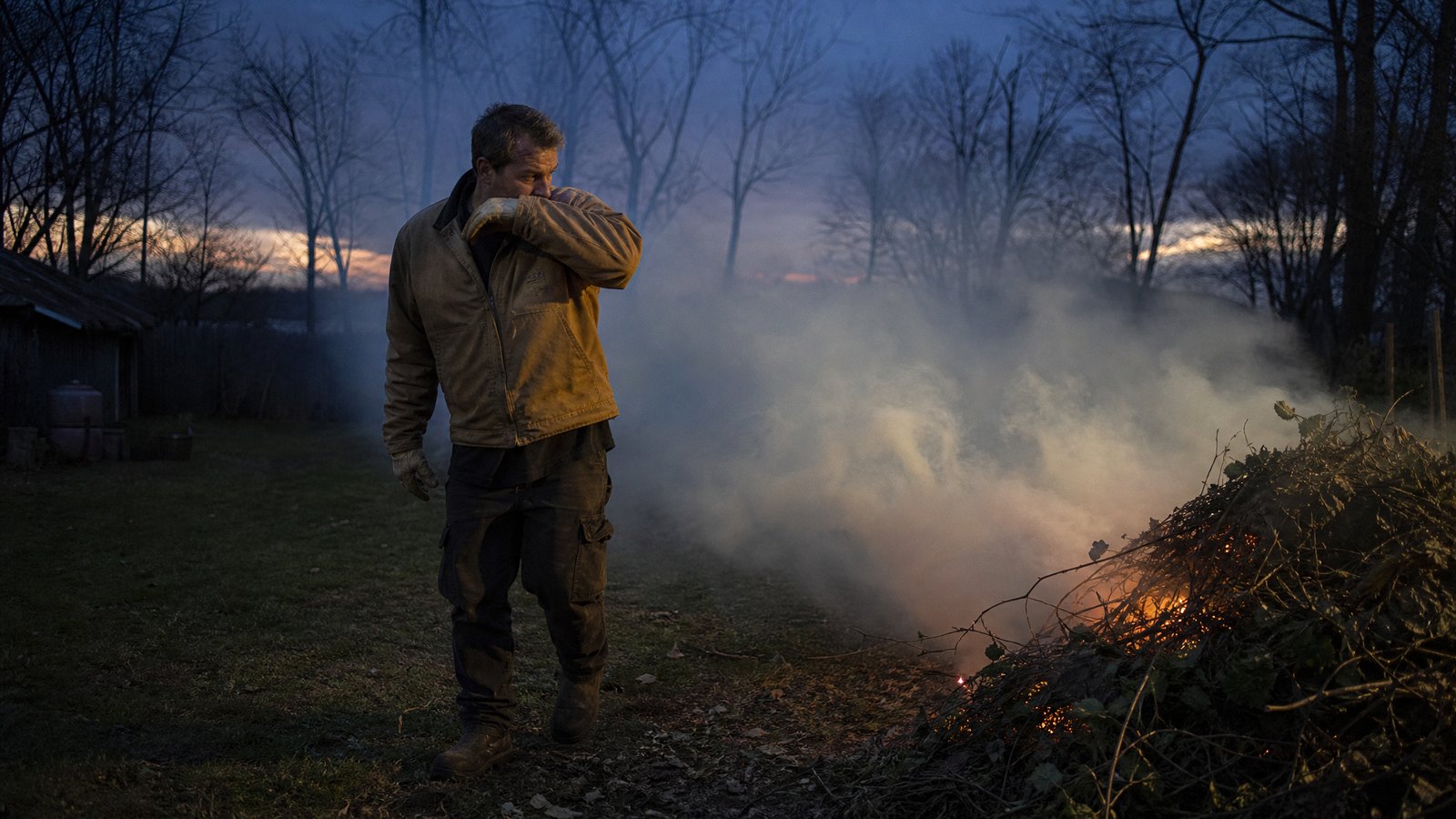
It does not require standing in the fire. A neighbor's brush pile drifting the wrong way is enough. CDC guidance for outdoor workers lists not burning these plants as a basic control, alongside washing tools and clothing.
If someone has inhaled smoke from a burning brush pile and starts coughing, wheezing, or reporting throat tightness or trouble breathing, treat that as an airway emergency and call 911. It is the same urgency as an asthma attack with no inhaler in reach, and if it comes with facial swelling or hives it belongs in the same bucket as anaphylaxis first aid.
What to do with the vines instead: cut them, bag them, and put them out with yard waste per your local rules, wearing gloves you are willing to decontaminate afterward. Never a fire, and not a mower or a string trimmer either, which aerosolizes the sap.
When a Poison Ivy Rash Needs a Doctor
Most cases never need one. These do.
Call 911 or go now if:
- Breathing is difficult, or the throat or tongue feels tight
- There is swelling of the face, lips or eyelids that is closing an eye or affecting speech
- Hives are spreading across the body along with faintness or a racing pulse
- Someone has inhaled smoke from burning poison ivy and is coughing or short of breath
Get seen the same day or next day if:
- The rash is on your face, eyelids, mouth or genitals
- It covers a large area, roughly a palm's worth or more across several parts of the body
- There are signs of infection: increasing redness, warmth, pus, a red streak running from the rash toward your body
- You have a fever or chills, or you feel unwell in general
- The itch is bad enough that you cannot sleep or work through it
- You have reacted severely to poison ivy before
Call your provider within a week if:
- There is no improvement after 7 to 10 days of proper home care
- The rash is still spreading after a week despite decontaminating everything
- You are pregnant, immunocompromised, or managing a condition like diabetes that slows healing
A rash with a spreading red margin, warmth and fever is not a poison ivy question anymore. It is a skin infection question, and the reasoning is the same as sizing up any wound going the wrong direction, whether that is spider bite symptoms or whether that swelling is still normal after a sting.
What Keeps You Out of This Next Season
Prevention here is boring and it works, which is the usual pattern.
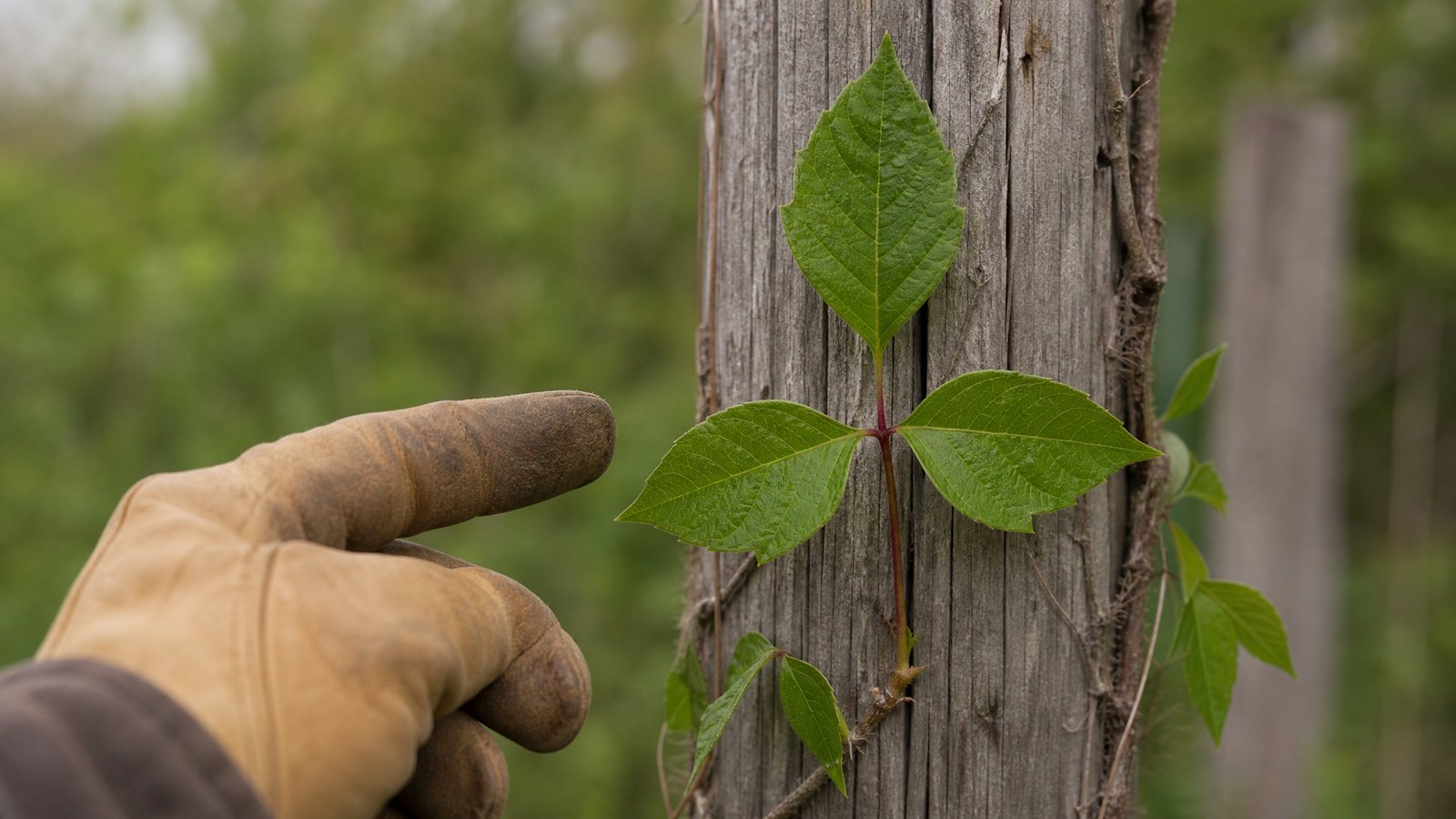
Learn the leaf. Three leaflets on a single stem, the middle one on a longer stalk than the two beside it. Glossy in spring, red in fall, and it climbs as a hairy vine up trees and fence posts. Poison oak and sumac carry the same urushiol. "Leaves of three, let it be" is a rhyme that has earned its keep.
Dress for it. Long sleeves, long pants, boots and gloves for brush work. Sleeves over glove cuffs, not tucked inside.
Keep a wash kit where the work happens. A bottle of dish soap and a jug of water in the truck bed or the shed does more good than anything in the medicine cabinet, because it is available inside the window.
Decontaminate the gear, every time. Clothes washed separately. Gloves, boots, saws, loppers and mower decks wiped down with soapy water or alcohol. Urushiol on a tool handle in October will still raise a rash in April.
Look at your skin when the work is done. Same habit that helps you check your skin after the work is done for ticks. Ten seconds in front of a mirror, while you can still do something about what you find.
Most of what this needs in the first hour is unglamorous: water, soap, something cold, gauze for the blisters that break anyway. Our home first aid kit checklist covers what actually earns a place in the box, and a wash bottle is on it.
A rash you are managing for two weeks is a wound-care problem, and wound care goes badly when the supplies are spread across three rooms. The 1stHour Trauma Kit puts that side of it in one place: 82 pieces of real medical equipment, organized so you are not hunting for gauze at 11pm with a flashlight in your teeth.
This content is for informational purposes only and does not constitute medical advice. If a rash is on your face or genitals, covers a large area, shows signs of infection, or follows exposure to smoke from burning poison ivy, seek medical care.


