Bee Sting First Aid: When Swelling Becomes an Emergency

Most stings are a bad twenty minutes and then a week of itching. That's the honest version. But the reason people search this at 4pm on a Saturday with one hand is that the sting site keeps getting bigger, and nobody told them where the line is between a normal reaction and a real one. So that's what this post is about: what to do in the first minute, and how to read what happens after.
Bee Sting First Aid in the First 60 Seconds
Move first. If you got stung near a nest, more stings are the immediate risk, not the one you already have. Walk away calmly rather than swatting. Swatting and thrashing is what turns one sting into six.
Then get the stinger out fast. A honeybee's stinger stays in your skin, still attached to a venom sac, and it keeps pumping. The AAAAI puts the target at 30 seconds. That's not a precise cutoff so much as a reminder that speed beats technique here. A sloppy scrape at five seconds is better than a careful one at two minutes.

Wash it with soap and water. Ice it. Then sit down somewhere and pay attention to how you feel for the next half hour, which is the part most people skip. CDC's NIOSH guidance for outdoor crews says to have someone stay with the person who got stung, specifically so there's a witness if a reaction starts. Good rule for a backyard too.
One more thing worth saying out loud: don't scratch it. NIOSH lists that plainly, because scratching makes the swelling worse, makes the itching worse, and opens the door to infection.
How to Remove a Bee Stinger Without Making It Worse
The tool matters less than the motion. You want to scrape sideways, flicking the stinger out of the skin, not pull it out like a splinter.
What works:
- A fingernail
- The edge of a credit card or driver's license
- A folded piece of gauze wiped across the spot
What doesn't: tweezers, or your thumb and forefinger. Both grip the venom sac, and squeezing a venom sac does exactly what you'd expect. Cleveland Clinic's guidance is blunt about it, pinching the stinger injects more venom.
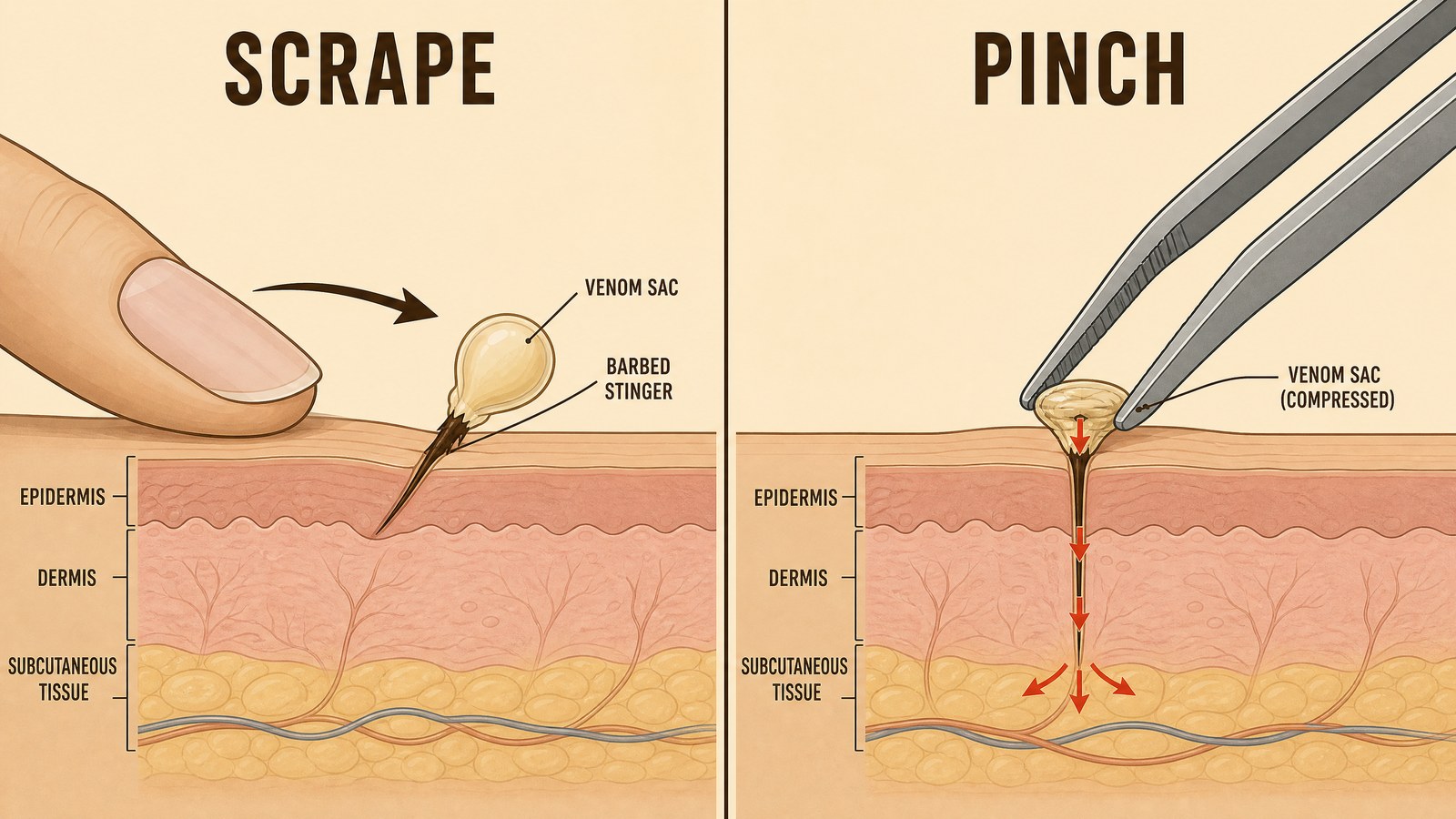
If you can't find a stinger, you may not have been stung by a bee at all. Honeybees leave the stinger behind and die. Wasps, yellow jackets and hornets have smooth stingers, keep them, and can hit you again and again. That distinction matters less for treating the wound and a lot for what you do next, because a yellow jacket you've annoyed is still in the area and still interested.
What Normal Bee Sting Swelling Looks Like
Here's the timeline that would have saved most people the panic search.
A normal sting hurts sharply for a few minutes to a few hours, then goes red and puffy and itchy around the site. The swelling usually gets worse before it gets better, often peaking a day or two in. Cleveland Clinic puts the typical clear-up at two to three days, and notes it can take seven to ten days for the skin to look normal again.
Some people get what allergists call a large local reaction. The swelling spreads well past the sting, sometimes several inches across, sometimes enough to swell a whole hand or forearm. It looks alarming. It can keep growing for two or three days. On its own, spreading swelling around the sting site is not anaphylaxis, and it isn't a reason to call 911.
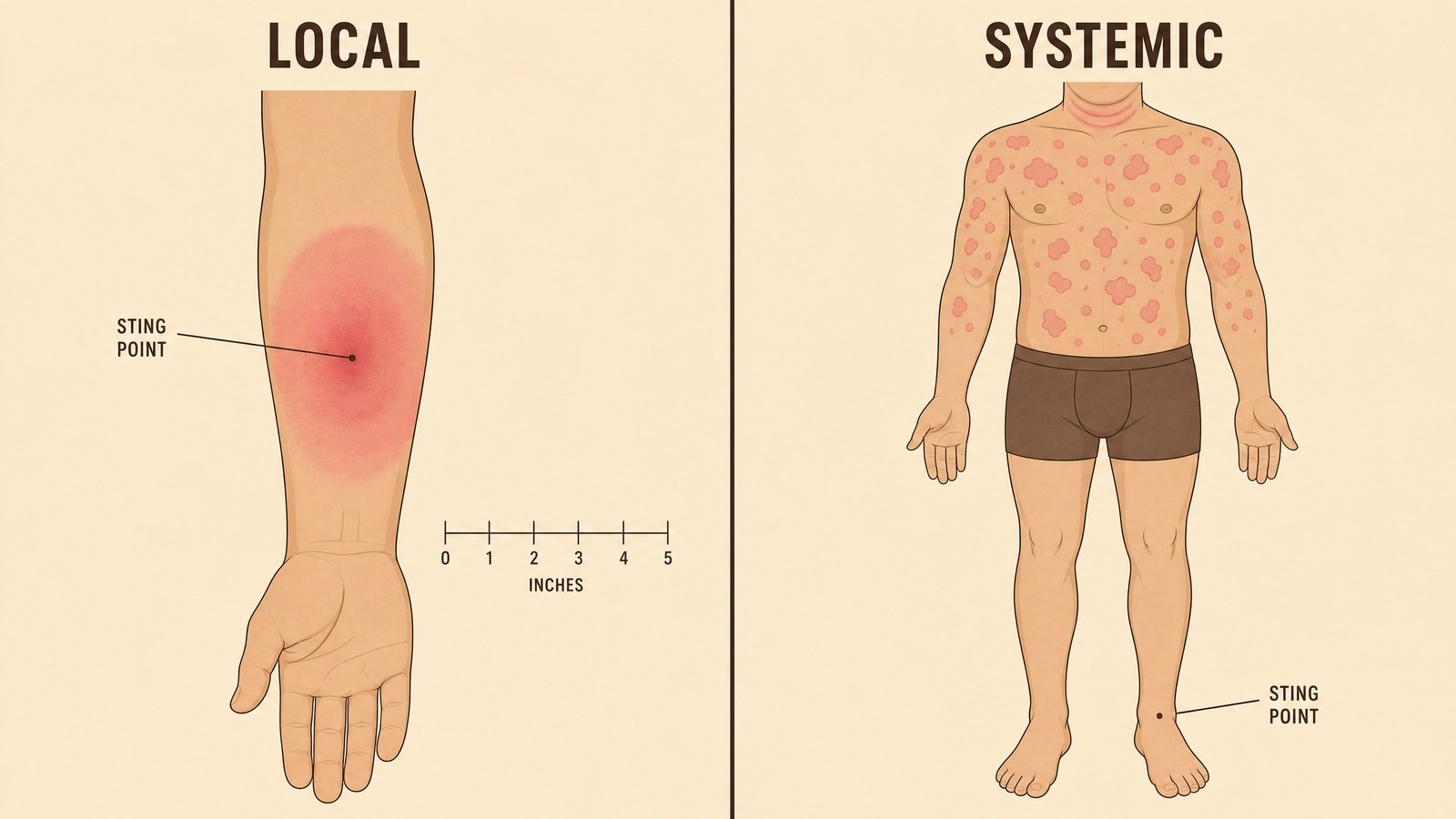
What separates the two isn't size. It's whether the reaction stayed local. Big swelling on the arm you got stung on is a local reaction. Hives on your back after a sting on your ankle is a systemic one. That's the distinction to hold onto.
Elevate the limb, keep a cold compress on it, and leave any blisters alone. If the swelling is still expanding after a few days, or the site starts looking infected instead of just angry, that's a call to your doctor rather than an ER trip. The same rule we apply to puncture wounds applies here: watch the trend, not the snapshot.
The Signs That Turn a Sting Into a 911 Call
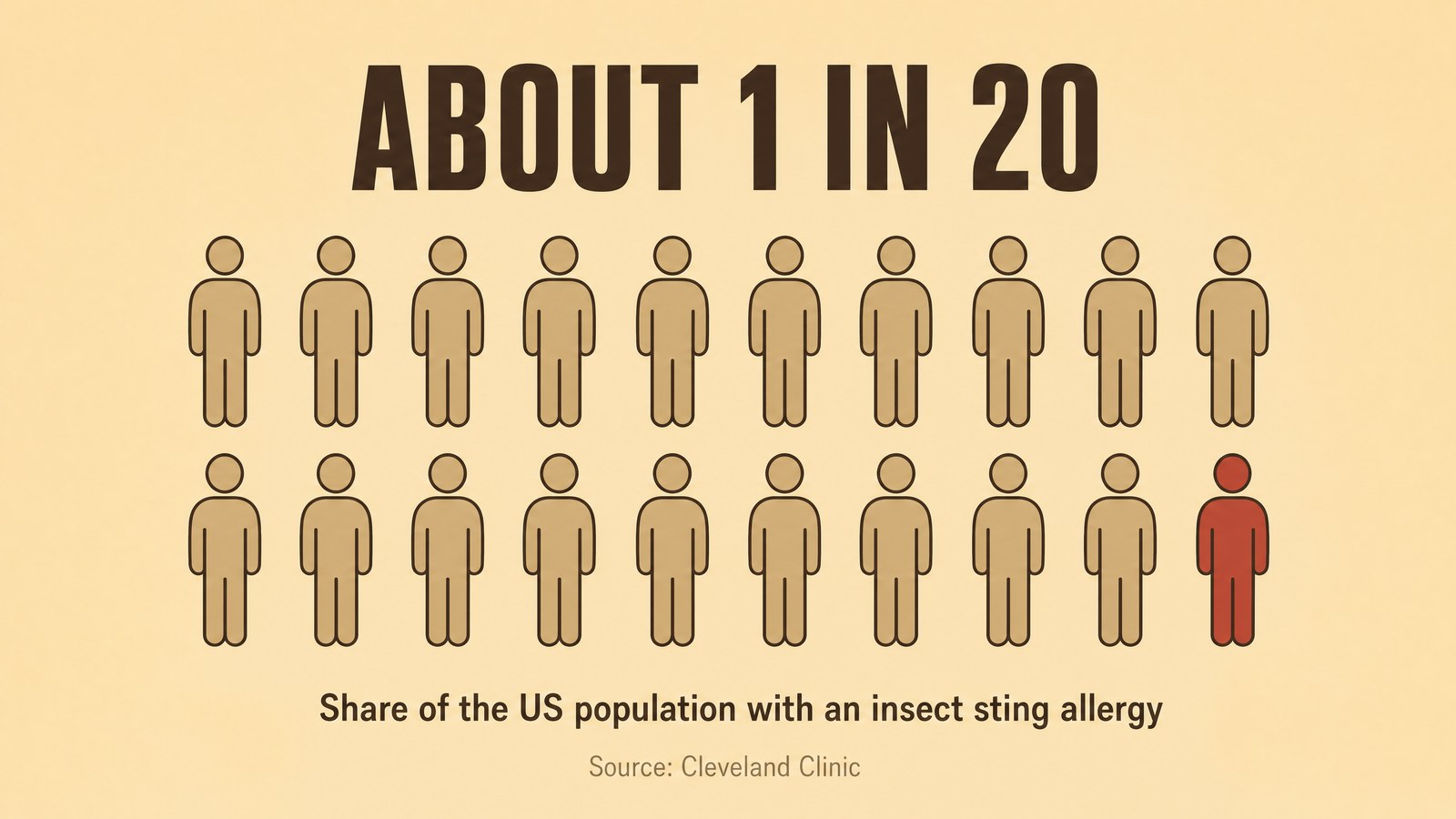
About 5% of people in the US have an allergy to insect stings. For that group a sting is a different event entirely, and it moves fast, usually inside the first ten to thirty minutes.
Call 911 for any of these:
- Trouble breathing, wheezing, or a tight feeling in the chest
- Swelling of the tongue, throat, or lips, or trouble swallowing
- Hives or a rash showing up somewhere other than the sting site
- Swelling across the whole body
- Dizziness, lightheadedness, or feeling like you're about to pass out
- A racing pulse
- Stomach cramps, vomiting, or diarrhea after a sting
If there's a prescribed epinephrine auto-injector on hand and the person is having those symptoms, use it. Don't hold it back to see if things settle. And don't treat the injection as the end of it. The AAAAI is clear that epinephrine is a rescue medication only, that a second dose is needed roughly a third of the time, which is why two devices get prescribed, and that somebody still has to get that person to an emergency room. We wrote a full walkthrough of that sequence in our post on anaphylaxis first aid if you want the detail.
One caution: never assume a calm reaction last time means a calm reaction this time. Allergy to venom can show up on a sting you were fine with before.
Bee Sting First Aid for Multiple Stings
Volume is its own problem, separate from allergy. A dozen stings puts a lot more venom in a person than one does, and someone with no allergy at all can end up genuinely sick from a swarm of stings, with nausea, headache, and vomiting. Kids, older adults, and anyone with heart or breathing problems have less room to absorb that.
If someone takes a large number of stings at once, treat it as a medical problem and not a first-aid problem. Get them away from the nest, get the stingers out, and get them evaluated.
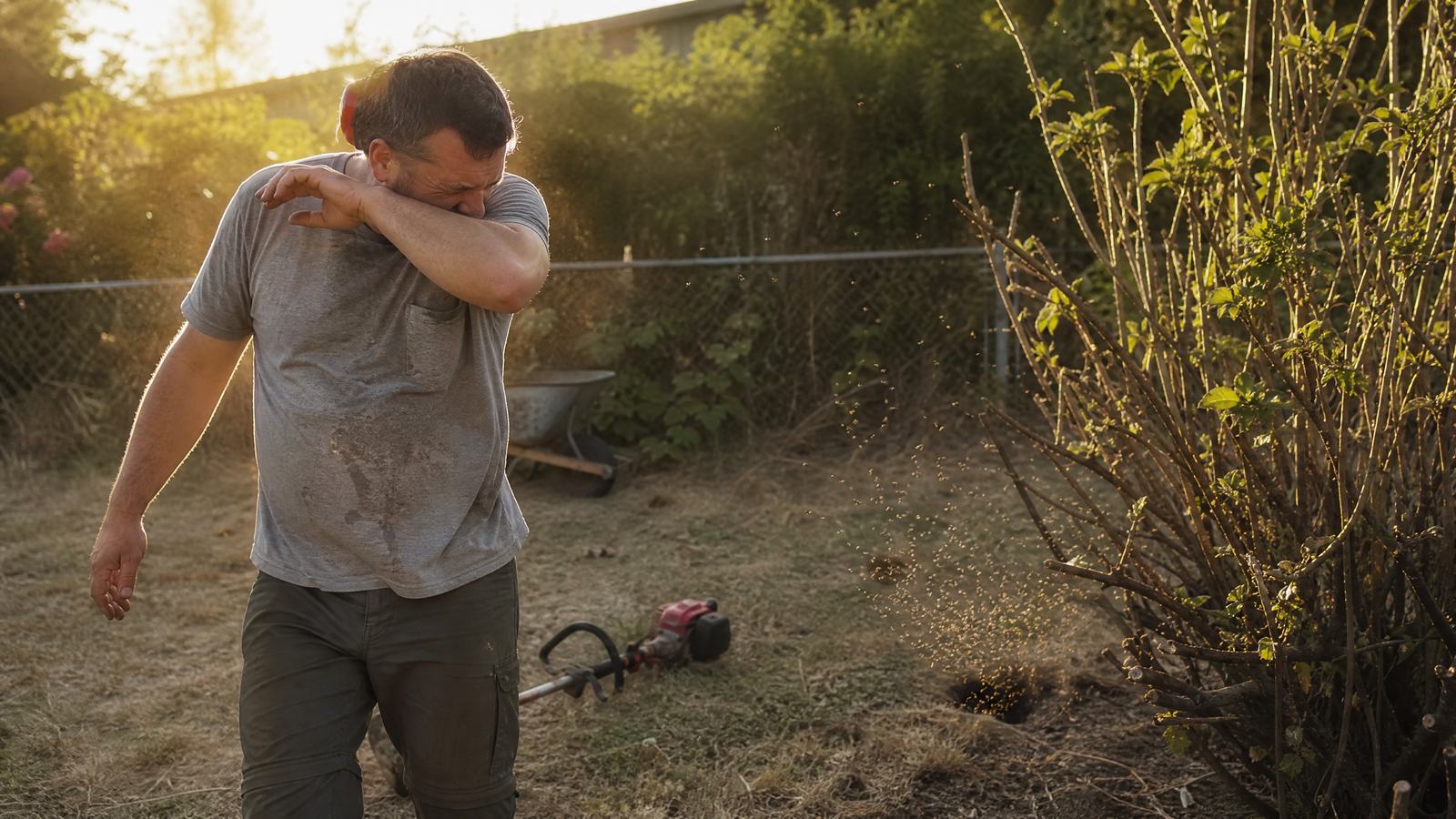
Two practical notes from experience. Yellow jackets nest in the ground, which is why lawnmowers and string trimmers set off so many multiple-sting incidents. And stings inside the mouth or throat, usually from drinking out of an open can outdoors, go straight to the emergency room regardless of allergy history, because swelling in an airway is a mechanical problem.
What to Keep on Hand Before the Next One
Nothing on this list is exotic, which is the point.
- An instant cold pack, because the freezer is often a hundred yards away
- An oral antihistamine, taken as directed on the label
- Hydrocortisone cream or calamine lotion for the itch
- Gloves and gauze, which double as your stinger scraper
- The prescribed epinephrine auto-injectors, if anyone in the house has been prescribed them, in date and where people can find them
The pattern we see over and over is that the supplies exist somewhere in the house but nobody can locate them in the moment. That's the real argument for one kit in one place instead of a drawer here and a bathroom cabinet there. If you want to see how we think about it, our home first aid kit checklist covers what earns its space and what just collects dust.
Stings are also one of a small handful of outdoor injuries worth learning cold before the season starts, alongside how to remove a tick and snake bite first aid. They all happen far from a hospital, and they all reward having decided in advance.
Most of what you need for a sting is small and cheap. What's harder to buy is having it all in one place when a Saturday in the yard goes sideways. The 1stHour Trauma Kit was built around that idea: 82 pieces of real medical equipment, organized so you're not reading labels while somebody's arm swells.
This content is for informational purposes only and does not constitute medical advice. If you have symptoms of a severe allergic reaction after a sting, call 911 or your local emergency number right away.


