Hives vs. Anaphylaxis: How to Tell a Rash From a Severe Allergic Reaction

Someone eats a bite of something new, gets stung, or takes a new medication, and a few minutes later red welts start climbing their arms. Is this a nuisance or an emergency? The difference between hives vs anaphylaxis is not the rash. It is everything that shows up with the rash. This guide gives you a plain way to tell them apart and a clear point at which to stop waiting.
Hives vs Anaphylaxis: What Each One Looks Like
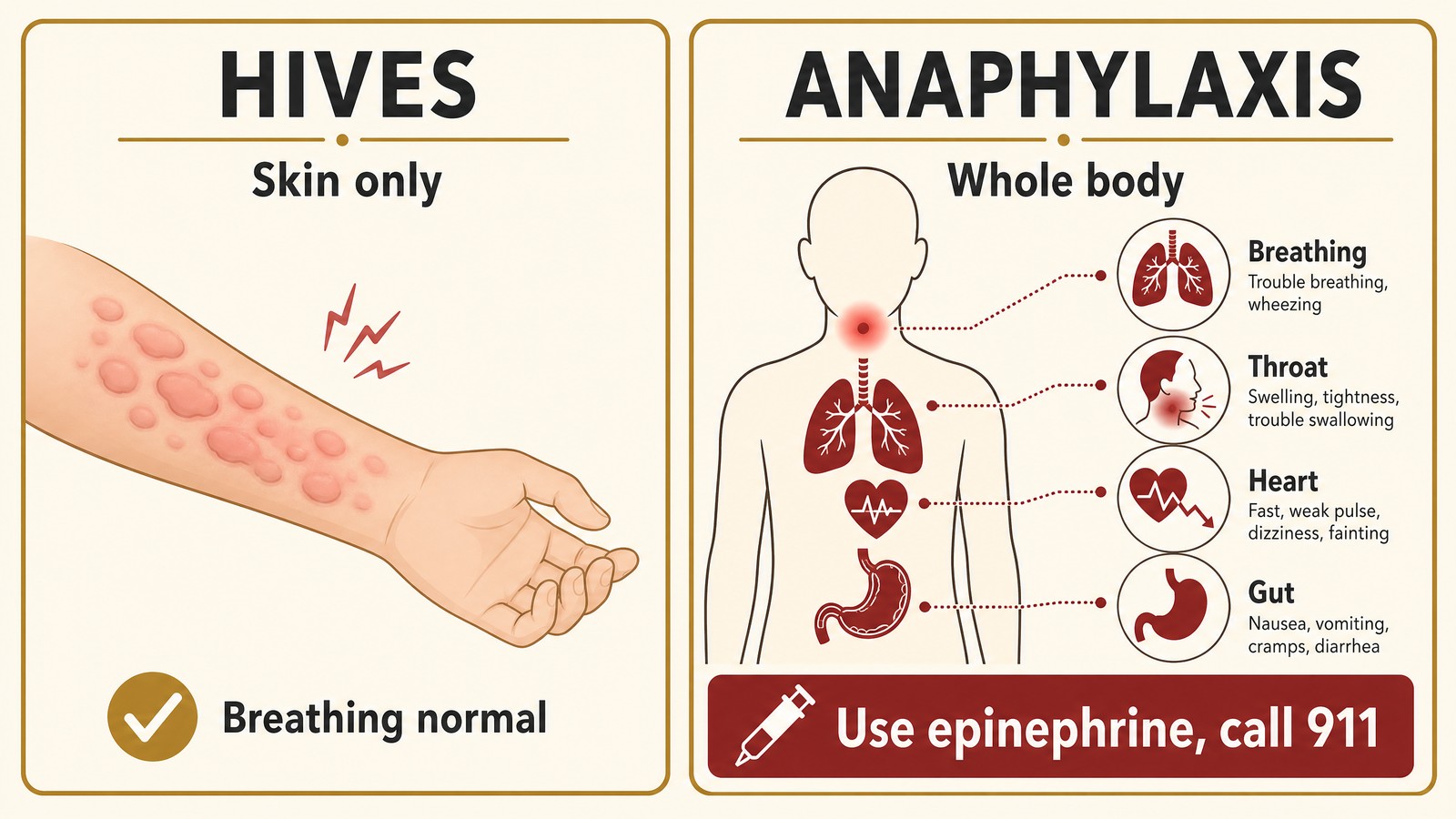
Hives are itchy welts. According to Mayo Clinic, they can be red, skin-colored, or purplish depending on skin tone, and most fade within 24 hours. Individual welts can appear, vanish, and reappear in a new spot. The person is itchy and annoyed, but they are breathing normally, talking normally, and acting like themselves.
Mayo Clinic also describes angioedema, which is deeper swelling, often around the lips, eyes, or face. Swelling of the tongue or throat can block the airway, which is why swelling above the neck deserves more respect than a rash on the arms.
Anaphylaxis is different in kind, not just in degree. The American Red Cross lists swelling of the face, neck, tongue, or lips, hives, trouble breathing, shock, and a change in responsiveness among the signs. It often starts within minutes of contact with a trigger such as a food, an insect sting, or a medication.
Hives can be part of anaphylaxis, and that is the trap. A rash is the most visible sign, so people watch the skin and miss the breathing.
Hives vs Anaphylaxis: Signs Hives Have Turned Dangerous
Look past the skin. Ask yourself whether the reaction is reaching any other part of the body. A skin-only reaction is hives. A reaction that involves skin plus breathing, plus the gut, or plus circulation is anaphylaxis.
Watch for any of these alongside hives, itching, or flushing:
- Trouble breathing, wheezing, a high-pitched sound when breathing, or chest tightness
- Swelling of the lips, tongue, or throat, or a voice that turns hoarse
- Trouble swallowing or a feeling that the throat is closing
- Dizziness, fainting, a weak and fast pulse, or pale, clammy skin
- Repeated vomiting, severe stomach cramps, or diarrhea soon after contact with a trigger
- Confusion, slurred speech, or sudden anxiety that feels out of proportion
One severe sign is enough. You do not need a full checklist. If a person with a known allergy has been exposed to the trigger and anything on this list appears, act on it.
Timing matters too. Symptoms usually come on fast, within seconds to minutes, though some reactions build over a longer stretch. A reaction that is getting worse is a reaction that needs treatment now. If you are unsure whether you are looking at a heart problem or an allergic one, our guide to warning signs of a heart attack covers that other emergency.
When to Use Epinephrine Without Waiting
Epinephrine is the treatment for anaphylaxis. Mayo Clinic says to give it right away when it is available, because immediate use can stop a reaction from getting worse.
This is where people lose time. They wait to see whether the swelling spreads. They take an antihistamine first and watch the clock. Antihistamines can ease itching, but they do not treat a closing airway or falling blood pressure. They are not a substitute for epinephrine.
A simple rule works for most people who carry an auto-injector: if the person has hives and any breathing, throat, circulation, or gut symptom, inject. If the person is known to have a severe allergy and was just exposed to the trigger, and they are getting worse, inject. If you are on the fence, the risk of giving epinephrine you did not strictly need is far smaller than the risk of holding it back during anaphylaxis. Follow the directions on the device and the plan from the person's doctor.
If you are helping someone else, ask whether they carry an auto-injector. Many people with known allergies do, and many will tell you where it is even when they are struggling to speak.

What to Do While 911 Is on the Way
Call 911 as soon as you suspect anaphylaxis. Do not wait to see whether the epinephrine worked first. If you are alone, put the phone on speaker so your hands stay free. If you cannot talk safely, our guide on how to text 911 explains the options.
Then work through these steps:
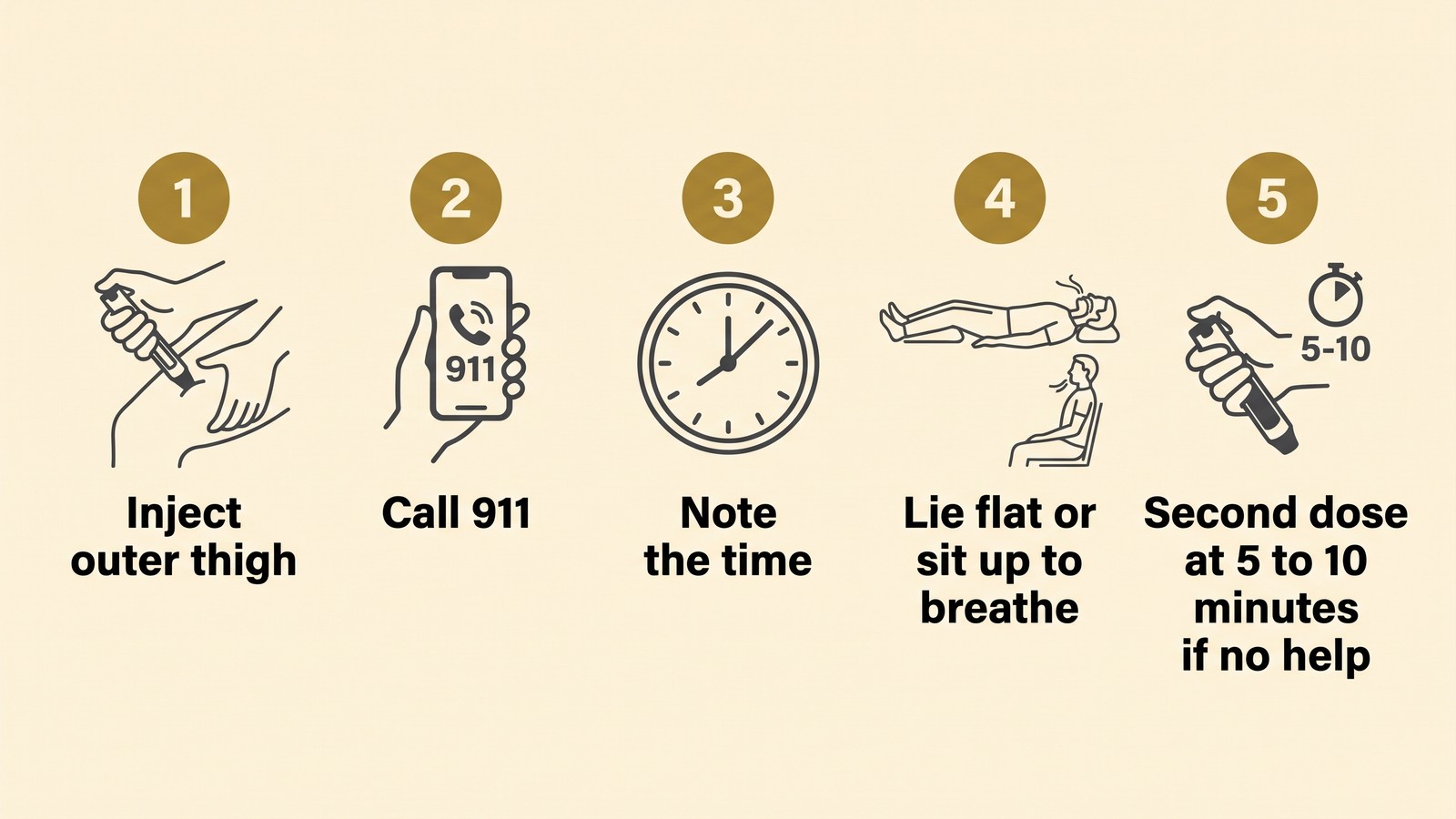
- Give the epinephrine. Remove the safety cap, press the injector firmly into the middle of the outer thigh, and hold it for the time printed on the device. It can go through clothing.
- Note the time. Tell the dispatcher and the paramedics when the dose was given.
- Position the person. If they feel faint, have them lie flat with their legs raised. If they are struggling to breathe, let them sit up. If they are vomiting, turn them onto their side.
- Stay with them. Do not let them walk around, stand up suddenly, or drive themselves anywhere.
- Give a second dose if needed. The Red Cross says that if symptoms are still present 5 to 10 minutes after the first dose and help has not arrived, a second dose from a new device can be given.
- Be ready to start CPR. If the person stops responding and is not breathing normally, follow our hands-only CPR guide. If they are unresponsive but breathing, the recovery position keeps the airway open.
Expect the person to go to the hospital even if they feel fine after the injection. Symptoms can return hours later as the medication wears off, so emergency teams usually want to watch someone for a period of time after a reaction. Our post on anaphylaxis first aid goes deeper on what happens after the first few minutes.
When It Is Only Hives: What to Do at Home
Most hives are not anaphylaxis. If the person is breathing easily, has no swelling of the mouth or throat, and feels well apart from the itch, you can usually manage it at home while you watch closely.
- Move them away from the suspected trigger, and stop the food or medication if it is clearly the cause.
- Cool compresses and loose clothing can calm the itch.
- An over-the-counter antihistamine may help with itching, and the label will tell you the right dose.
- Stay with the person for the first hour and recheck breathing, voice, and swelling every few minutes.
Call a doctor if hives last more than a few days, keep coming back, or show up with a fever or joint pain. If any breathing, throat, dizziness, or stomach symptom appears at any point, you are no longer dealing with hives alone. Switch to the anaphylaxis steps above.
If someone in your life has a known severe allergy, plan before the next exposure. Check that auto-injectors are in date, keep two together, and make sure the people around that person know where they are. Add them to your home first aid kit list and to your travel bag.
Allergic emergencies move fast, and the first hour before help arrives is yours to use well. See what's inside The 1stHour Trauma Kit, built for the moments before help arrives.
This content is for informational purposes only and does not constitute medical advice. In an emergency, call 911 immediately. This article is not a substitute for hands-on training or guidance from your doctor.


