How to Text 911 When You Can't Safely Talk
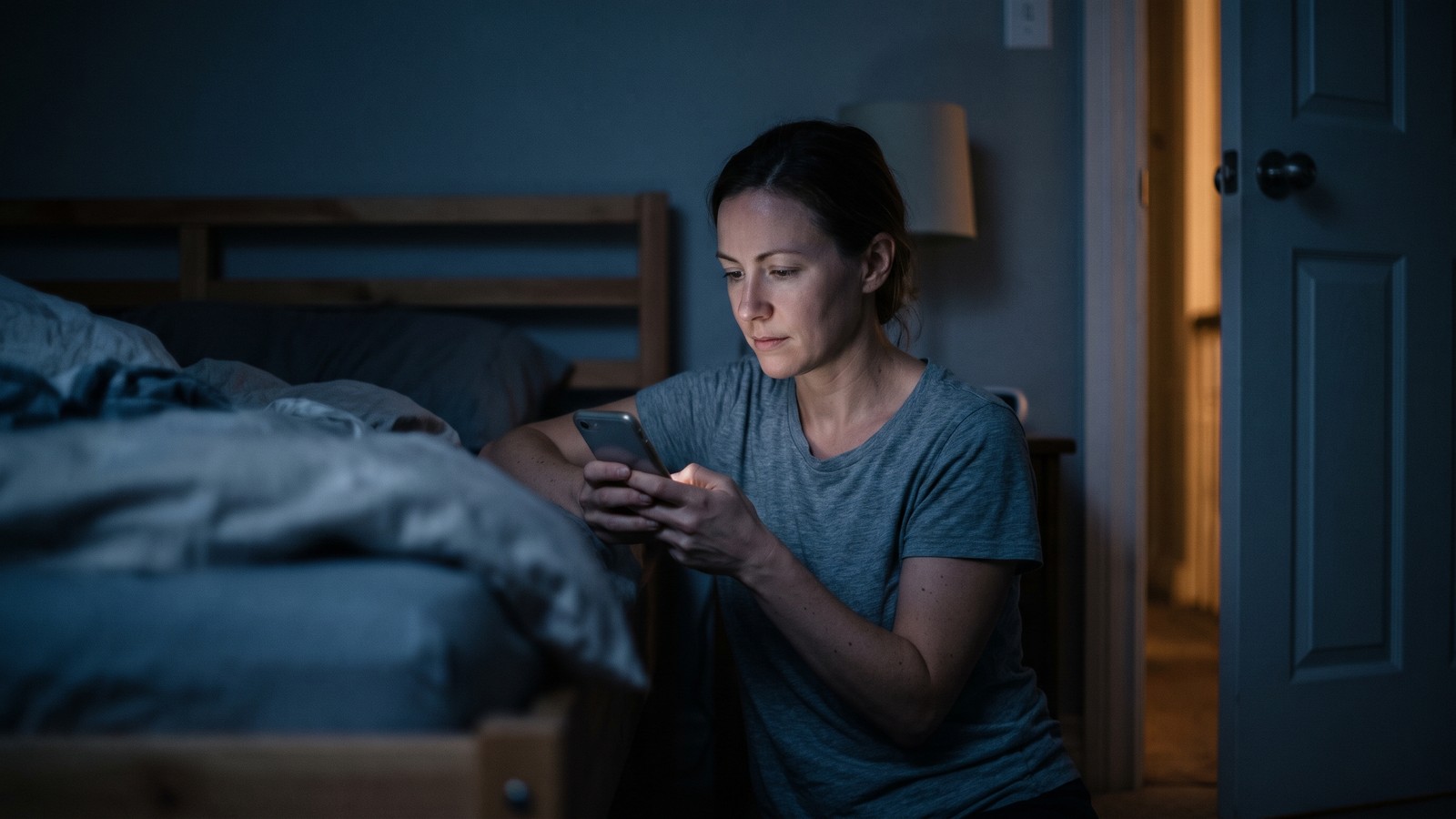
Maybe an intruder is in the next room. Maybe you are in a car with someone who is angry, or you are deaf and a voice call is not an option. In moments like these, a phone call can be impossible or unsafe. This guide covers how to text 911, what to type first, and what to check before you ever need it.
Can You Text 911? Where It Works and Where It Doesn't
Text-to-911 is real, but it is not a national guarantee. According to the FCC's text-to-911 facts, carriers must deliver emergency texts to a 911 center once that center asks for the service. Whether your local center has asked is a separate question, and the answer differs by county.
Your carrier matters too. You need a text or data plan, and location services on your phone should be turned on. Some systems also have trouble while you are roaming.
If you text 911 where the service is not offered, you should get an automatic bounce-back message. It tells you to contact emergency services another way. That reply costs you a few seconds, so do not assume texting will work until you have checked.
The FCC's advice is short: call if you can, text if you can't. A voice call gives the 911 call taker your location and lets them hear what is going on. Texting is slower, back and forth, one line at a time.
How to Text 911 Step by Step
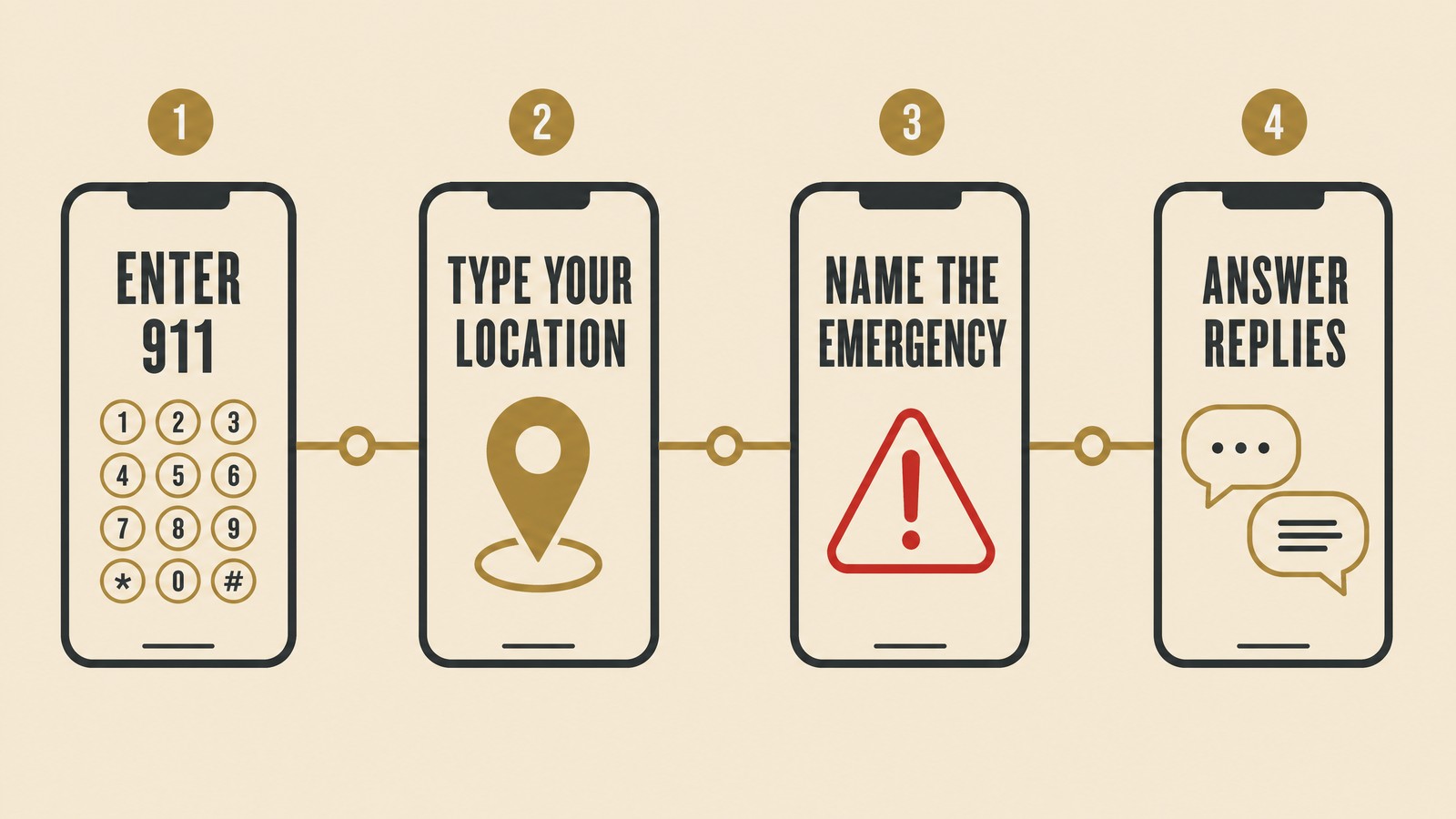
If you cannot speak safely and your area supports it, do this:
- Open your messaging app and enter 911 as the recipient. Do not add anyone else, because group texts do not work.
- Type your location first. Use a street address, cross streets, a mile marker, or a business name.
- Type the emergency in a few plain words, such as "break in, need police" or "car fire, need fire and ambulance."
- Send it, then keep your phone close and watch for a reply.
- Answer every question the call taker asks, as briefly as you can.
- Stay where you are safe, and stay on the thread until they tell you help has arrived.
Turn your ringer and vibration off if silence keeps you safe, but leave the screen awake and keep checking it. A reply you miss is a delay you cannot afford.
How to Text 911: What to Say in the First Message
The first message does the most work. The 911 center may not be able to pin down your location from a text the way it can from a call, and accuracy varies by carrier. The Orange County Fire Authority's text-to-911 guide says to give your location and a brief description of the emergency, and to say whether you need police, fire, or an ambulance.
Here are a few examples:
- "123 Maple St Apt 4, Dayton OH. Someone breaking in. Need police."
- "I-70 mile marker 112 eastbound. Car crash, one person hurt. Need ambulance."
- "Cannot speak, hiding in bedroom. 88 Lake Rd. Need police."
Keep the words simple. Skip slang, abbreviations, and emojis, since the call taker has to read it quickly and may be working across a language gap. Many centers currently handle text in English only, so write in plain English if you can.
Do not send photos or video. They do not go through. If something changed, such as the person leaving or a fire spreading, send one short line about it.
Text 911 for Deaf and Hard of Hearing Callers
For people who are deaf, hard of hearing, or have a speech disability, texting is often the better route when it is offered. The National Association of the Deaf notes that text-to-911 matters most for people who cannot use a voice call, and that where it is missing, a TTY or telecommunications relay service is the fallback.
If you rely on text, find out now whether your county accepts it. Your carrier or your county's 911 website can tell you in a few minutes. Write down the answer where family members can see it, and save your home address in a note on your phone so you can paste it fast.
When Texting Makes Sense
Texting earns its place when speaking would put you at risk or simply cannot work. A person hiding from an intruder, someone being held in a vehicle, or a person in a very loud place may all be better served by a quiet message. So is anyone who cannot speak because of an injury, a medical event, or a speech disability.
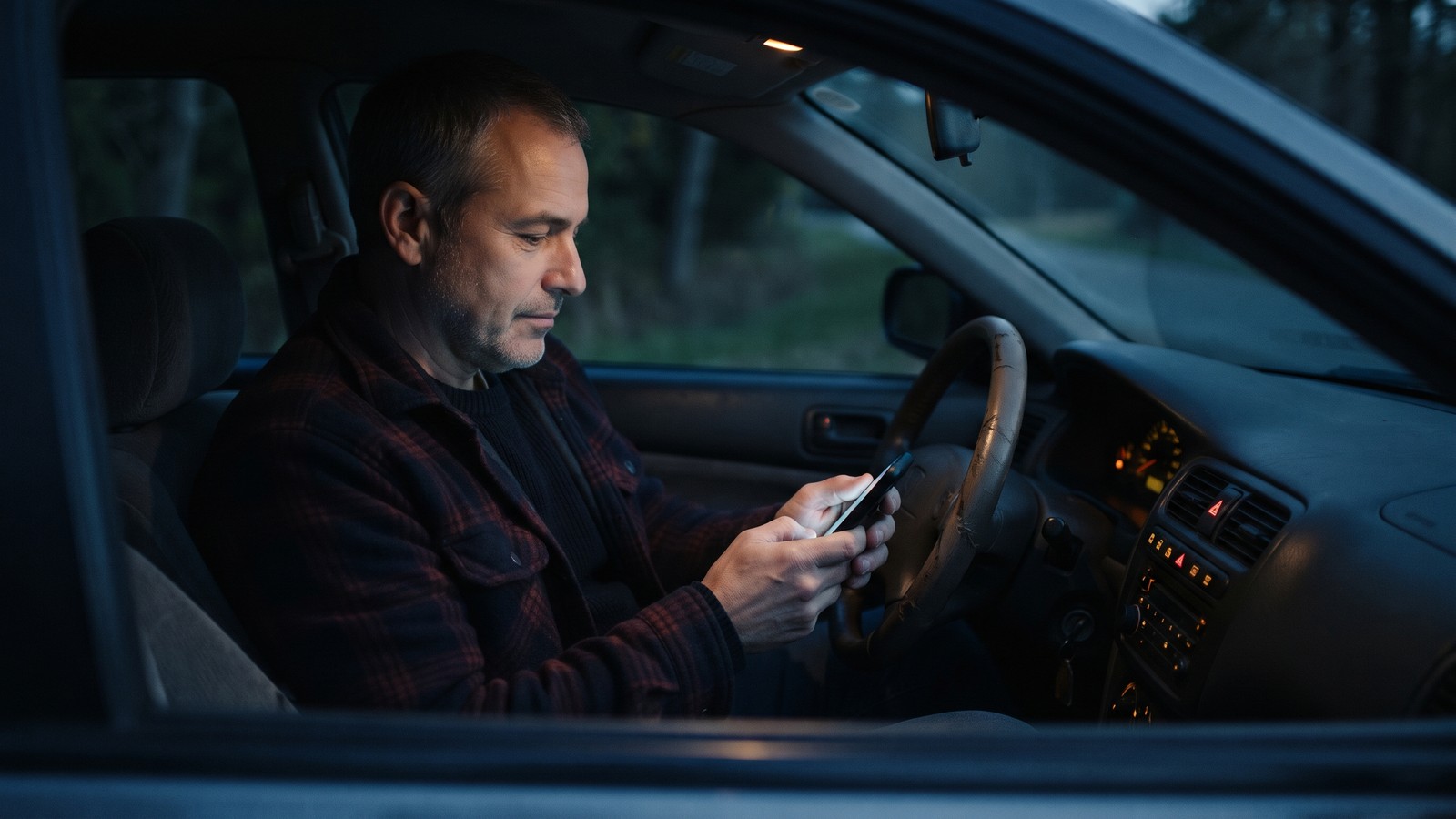
It also helps when the signal is poor but a short text can still squeeze through. A text uses far less data than a call, so it sometimes goes out when a call will not connect. That is not a promise, though, and you should treat it as a backup plan.
When you are unsure, try the call first if it is safe. If it drops or you cannot talk, switch to a text and put your location in the first line.
Limits of Texting 911
Texting has costs, and it is worth knowing them before you choose it.
Messages can arrive out of order or with a delay. Location may be less exact than on a voice call. A text cannot carry background sound, so the call taker cannot hear a fight, a baby crying, or a smoke alarm. And if your signal is weak, a text may fail without a clear warning.
If you can speak quietly and safely, a call is usually still better. Some people call and leave the line open, then answer yes or no questions the call taker asks. That works when speaking is risky but a whisper is not.
For medical emergencies, texting does not replace first aid. If someone is not breathing or is bleeding badly, calling gets you instructions you can follow while you work.
Check Before You Need It
You can find out whether your area supports text-to-911 today, without sending a test to 911. Search your county name with "text to 911," or ask your wireless carrier. Then add the answer to your family emergency plan, next to your meeting spots and contact list.
Teach everyone in the house the short version. Location first, emergency second, plain words. Kids and older relatives can learn it in a minute, and it is the same whether the problem is a house fire or a carbon monoxide alarm.
It is also a good moment to look over your home first aid kit, since the minutes before help arrives are yours to use.
The first minutes decide how the next hour goes. See what's inside The 1stHour Trauma Kit, built for the moments before help arrives.
This content is for informational purposes only and does not constitute medical or legal advice. Text-to-911 availability varies by location, so confirm yours with your county or carrier, and call 911 whenever you safely can.


