What to Do If You Fall Through Ice: How to Get Out and How to Help
Ice looks solid right up to the moment it is not. A cracking sound, a lurch, and then cold water up to your chest. Most people who fall in can get out if they know the moves, and most rescuers get hurt because they rush. This guide covers what to do if you fall through ice, how to help someone who has, and how to judge ice before you step on it.
What to Do If You Fall Through Ice: The First Minute
The cold hits hard and your first instinct will be to thrash. Slow it down. Get your breathing under control before you do anything else. Our guide to cold water shock explains why that first gasp is so dangerous and how to ride it out.
Then take stock:
- Keep your winter clothes on. The Minnesota DNR says heavy clothes will not drag you down. They can trap air that gives you warmth and flotation.
- Call out. If anyone is near, shout for help. If your phone is in a pocket and you can reach it without letting go of the ice, a call can wait until you are out.
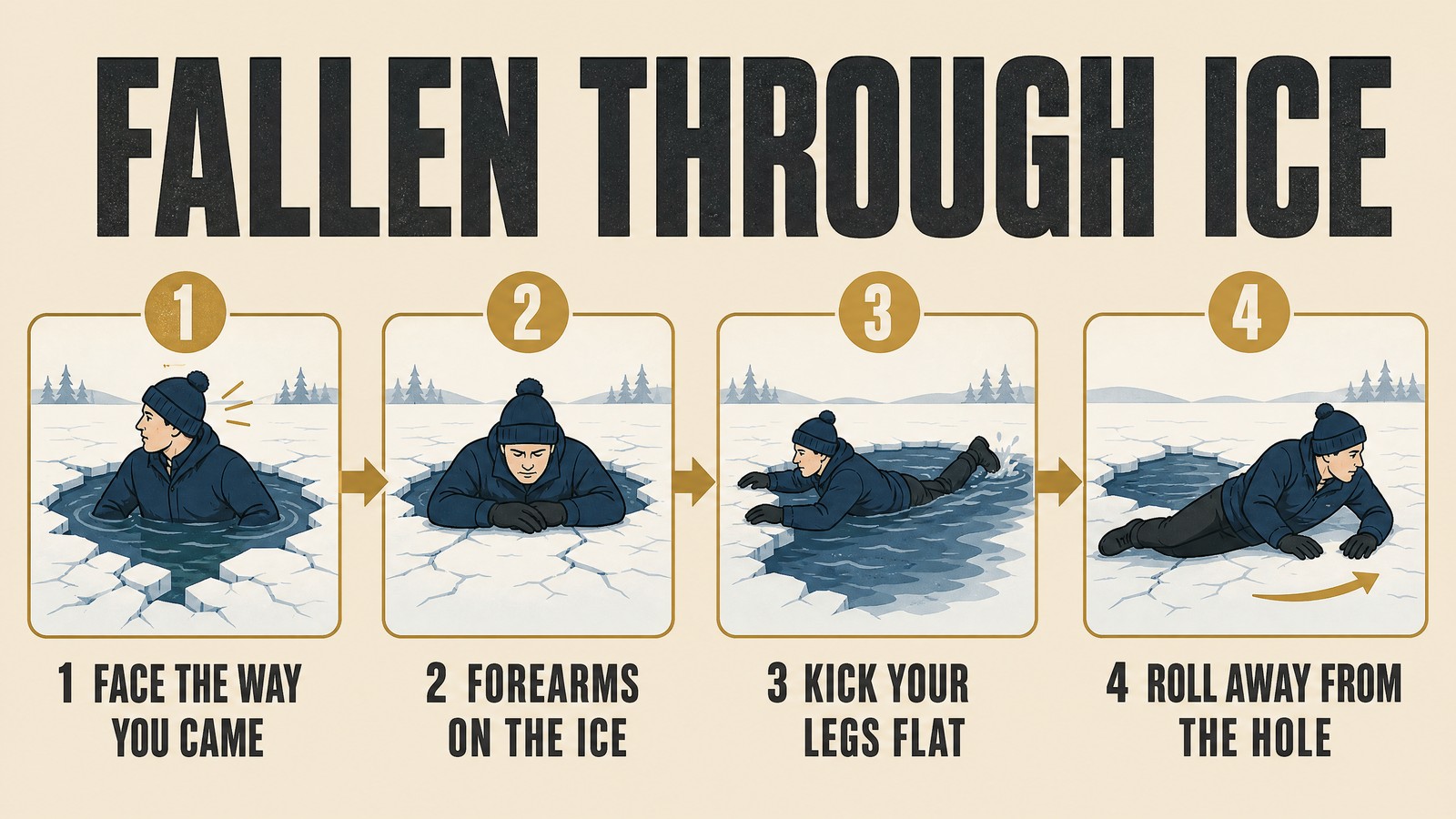
- Face the way you came. That is probably the strongest ice, according to the DNR. The Canadian Red Cross adds that ice near the break is weak, so do not pull straight up onto the edge you just broke. Work toward the direction you walked in from and test each bit of ice with your arms.
How to Get Out If You Fall Through Ice
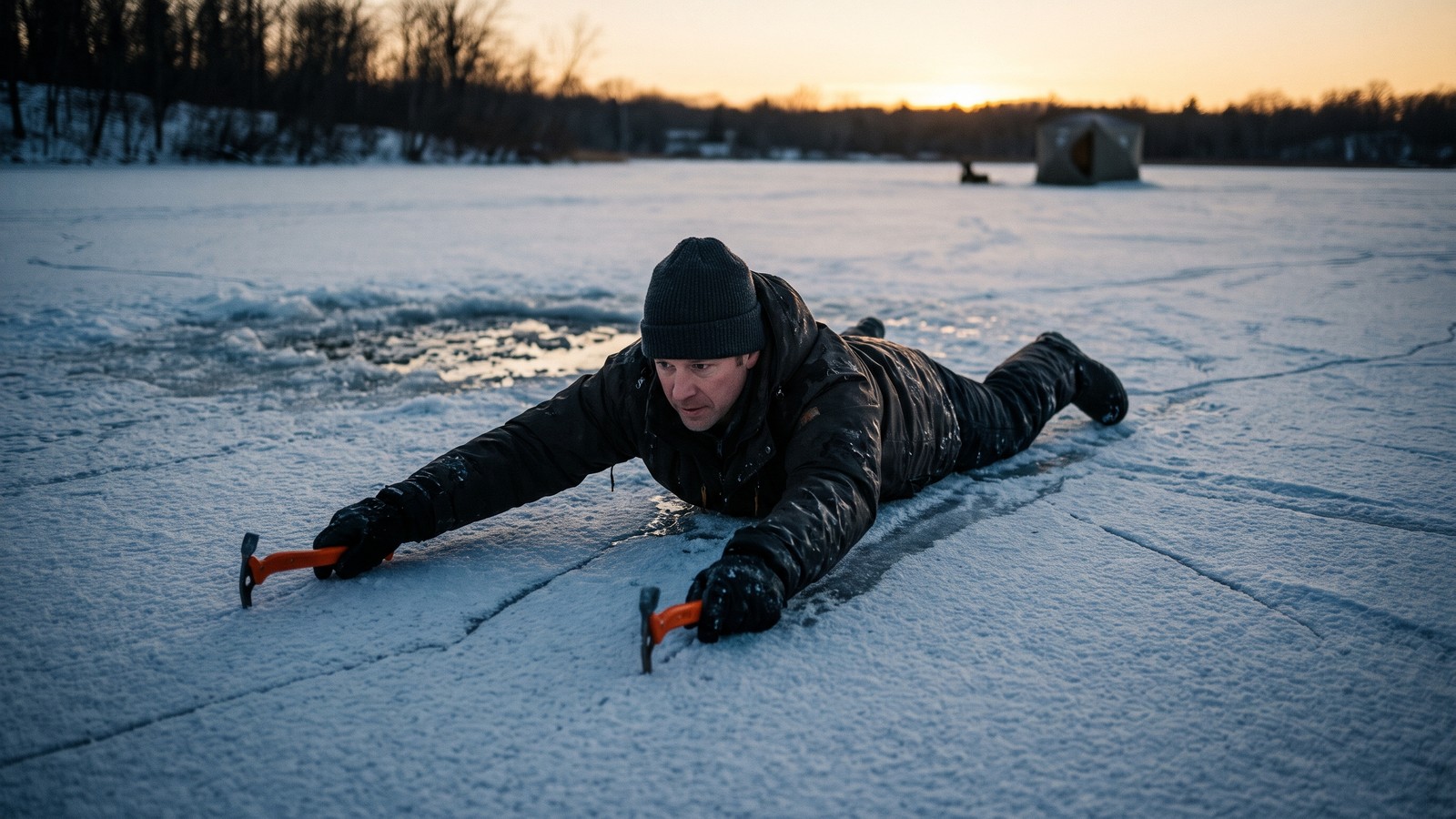
Think of it as swimming onto a table. You want your body flat and moving forward, not climbing up.
- Put your hands and forearms on the unbroken ice. Reach forward without pushing down hard.
- Kick your legs. Kick steadily until your body floats up behind you, lying flat on the surface.
- Dig in if you have picks. Ice picks, nails, or sharpened screwdrivers give the grip the DNR says you need to pull yourself onto the ice. Many ice anglers wear a pair around the neck for this reason.
- Drain if your clothes are heavy. If wet clothes hold a lot of water, the DNR says you may need to lift yourself partway out on your elbows and let the water run off before moving forward.
- Stay flat and roll away. Once you are out, do not stand up. Roll or crawl away from the hole with your arms and legs spread wide to share your weight.
- Look for the shore. Make sure you head the right way, then keep moving to land.
If the ice keeps breaking, rest your arms on it and kick again. Try a spot a little further along. Each try uses up strength, so stay calm and keep your moves small.
What to Do If You See Someone Fall Through Ice
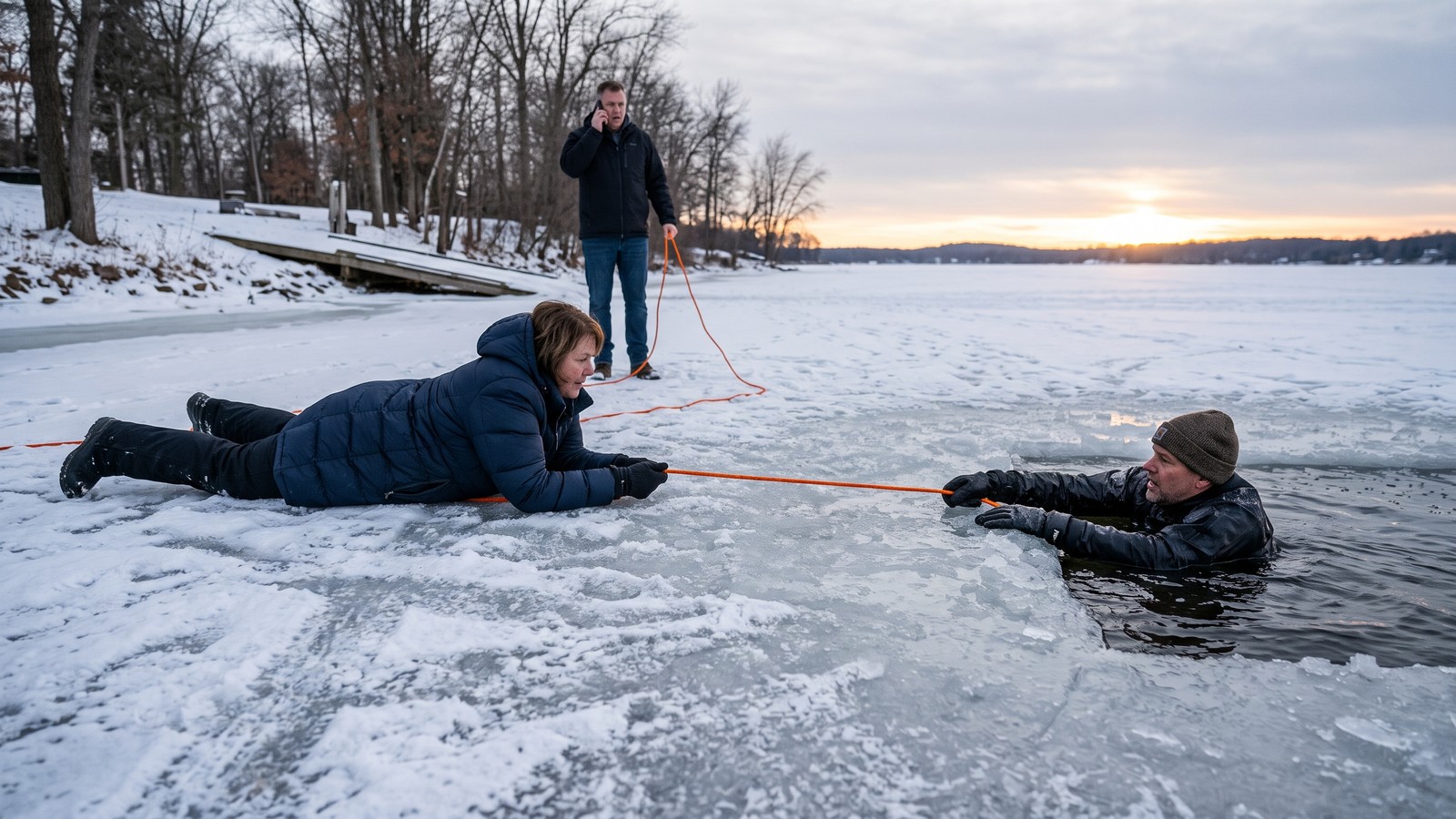
Your goal is to help without becoming a second victim. The DNR is blunt about this: resist the urge to run to the edge of the hole, because that most often ends with two people in the water. Use a short checklist in this order.
- Call 911 first. Someone nearby probably has a phone. If you are not sure how to describe where you are, our guide on how to text 911 covers the basics.
- Shout to the person. Tell them to fight and that help is coming.
- Reach. From shore, hold out a rope, ladder, branch, or jumper cables. If the person starts to pull you in, let go and start over.
- Throw. Toss one end of a rope or something that floats. Have them tie it around themselves before the cold weakens their grip.
- Row. A light boat pushed across the ice ahead of you works as a bridge, according to the DNR.
- Go last. The DNR says an untrained person should not go out on the ice unless every other option has been ruled out. If you must go, the Red Cross says to wear a life jacket, carry a long pole or branch to test the ice ahead, and lie down and crawl near the break.
If the person is out of reach, keep talking to them and wait for the crews. Well-meaning heroics by untrained rescuers sometimes end in two deaths, and the DNR says so plainly.
Dogs are the hardest case. The DNR advises against risking your life to save a pet. Call for help and keep your own feet on solid ground.
After You Are Out: Warm Up and Get Checked
Getting out of the water is only the first win. Wet clothes keep pulling heat from your body, and cold can make you confused and clumsy fast.
Get to a warm, dry, sheltered spot and change out of wet clothing as soon as you can. The Red Cross notes that someone who has gone through the ice may be having a cold-related emergency. Our guides to hypothermia first aid and frostbite first aid cover warming and what to watch for.
Handle a very cold person gently. The DNR warns that the shock of chilled blood returning to the heart may trigger a dangerous heart rhythm, and that moderate to severe cases need medical attention. If the person is confused, shivering hard, or very drowsy, call 911. If they are not breathing, start hands-only CPR and keep going until help arrives. Our guide on how to help a drowning person has more on water emergencies.
How to Check Ice Before You Walk on It
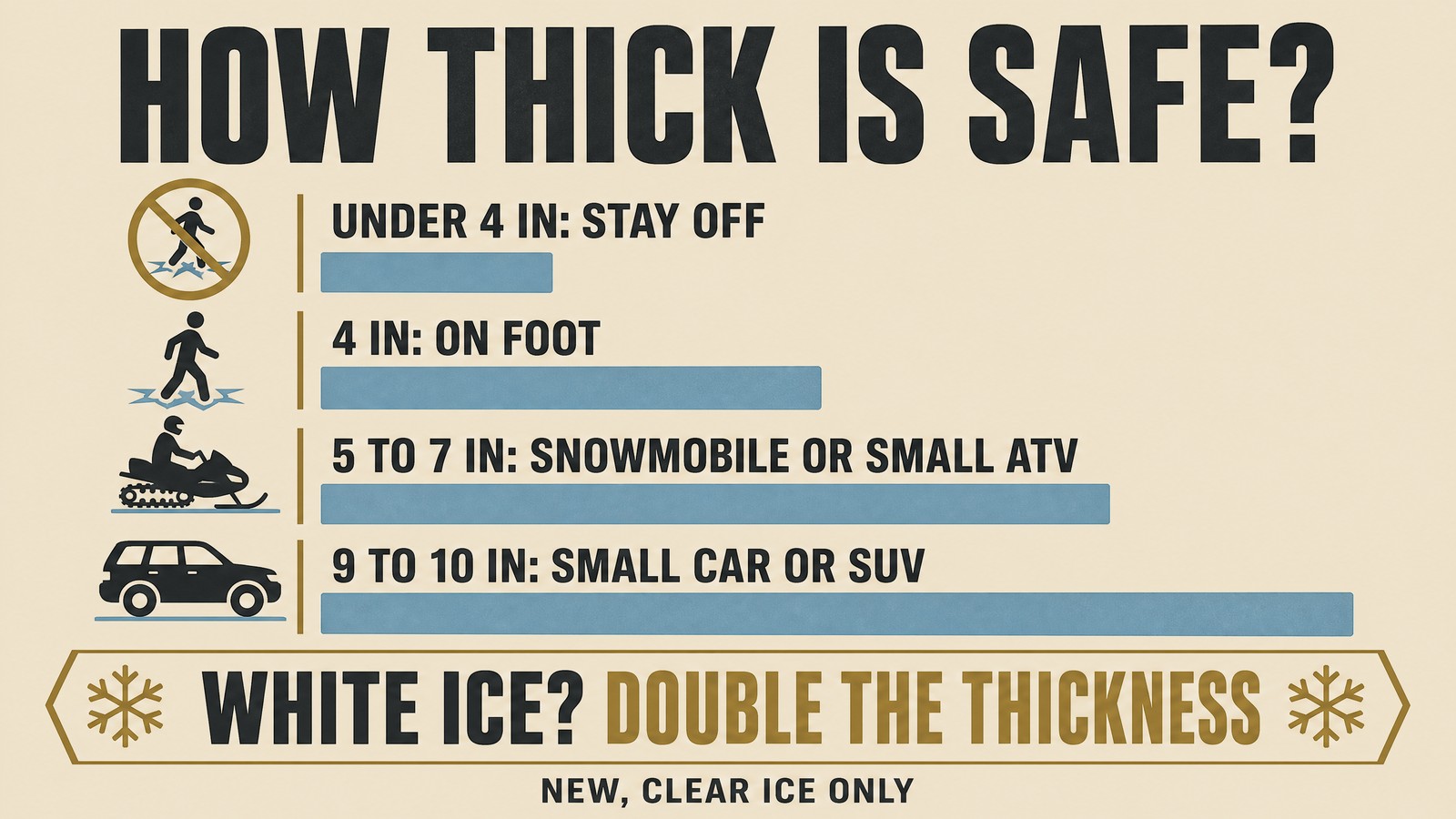
The best rescue is the one you never need. The DNR publishes thickness guidelines for new, clear ice only. Under 4 inches, stay off. At 4 inches, ice is considered fine for fishing or other activity on foot. Snowmobiles and small ATVs need 5 to 7 inches, and a small car or SUV needs 9 to 10 inches.
Two cautions matter more than the numbers. White ice, which forms when snow melts and refreezes, is only about half as strong as clear ice, so the DNR says to double the thickness on white ice. And ice is rarely the same thickness across a lake. The DNR notes it can be two feet thick in one spot and an inch thick a few yards away.
Keep a few habits. Drill test holes as you go. Stay off ice near inlets, moving water, and old cracks. Tell someone where you are going and when you will be back. Wear a flotation jacket and carry picks. Skip the lake altogether after a warm spell.
Most ice emergencies come down to the first few minutes and the choices made in them. Stay low, move slowly, and let the person with the rope stay on shore.
When help is minutes away, what you can do in the first hour changes everything. See what's inside The 1stHour Trauma Kit, built for the moments before help arrives.
This content is for informational purposes only and does not constitute medical advice. In an emergency, call 911 immediately. This article is not a substitute for hands-on training or professional ice rescue instruction.


