How to Help a Drowning Person Without Becoming a Victim Yourself
Most people picture drowning as a loud, splashy struggle. Arms waving, someone yelling for help, plenty of time to react. Real drowning almost never looks like that. It's quiet, it's fast, and it often happens a few feet from people who never notice. Every year in the United States about 4,000 people die from drowning, which works out to roughly 11 a day. The hard truth is that a lot of those deaths include the would-be rescuer, the parent or friend who jumped in on instinct and got pulled under too. This guide covers what drowning really looks like, how to help without dying yourself, and what to do once you get the person out.
What Drowning Actually Looks Like (Not the Movies)
There's a name for what a drowning body does on its own: the instinctive drowning response. When someone can't keep their mouth above water, their arms go out to the sides and press down, like they're trying to climb an invisible ladder. They can't wave. They can't call out, because the mouth is barely clearing the surface long enough to breathe, let alone shout. Their body stays vertical, head tilted back, and there's no kicking to speak of.
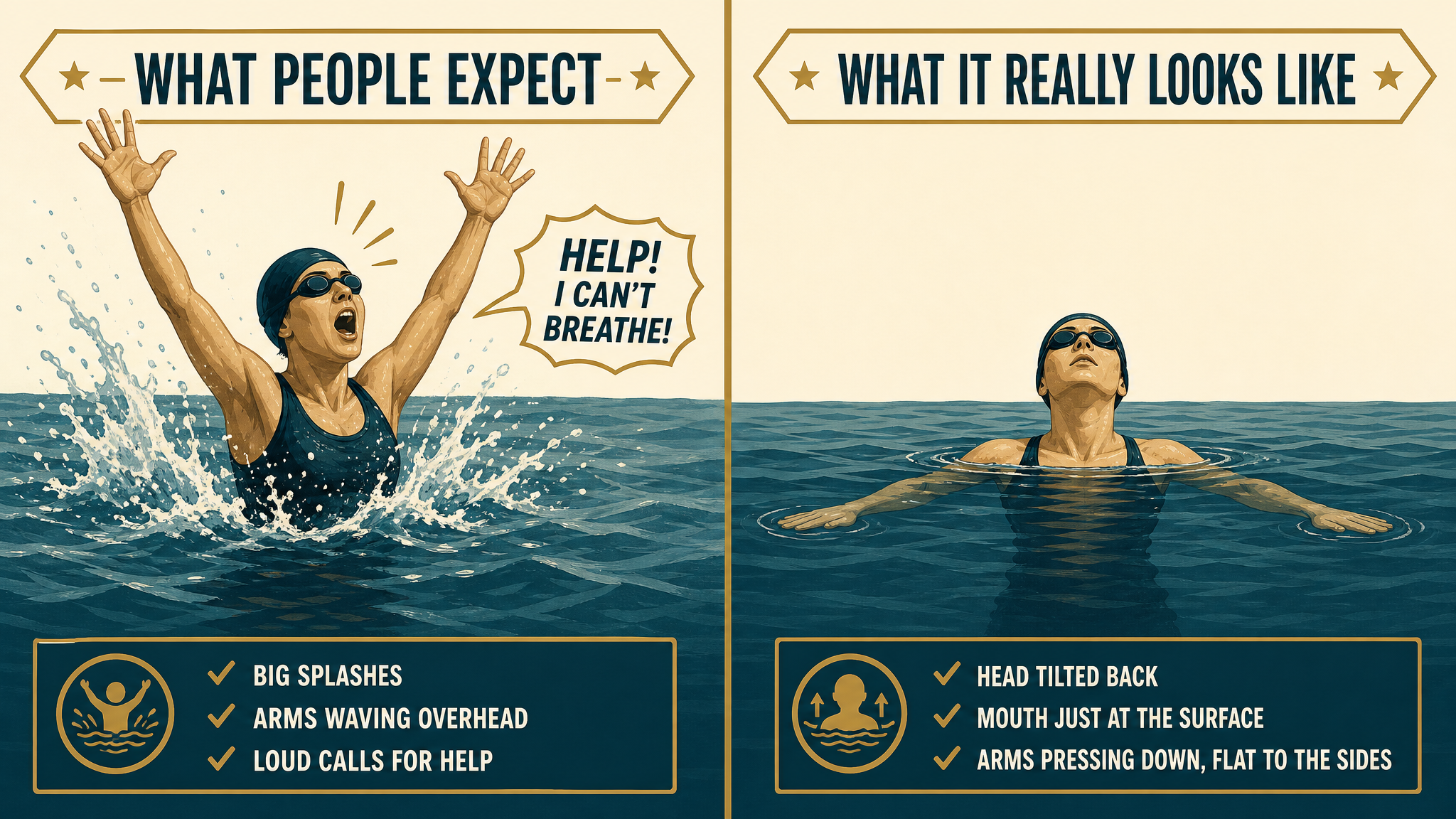
From ten feet away, it can look like someone treading water or bobbing around. That's the trap. A person in real trouble usually has 20 to 60 seconds on the surface before they go under for good. No drama, no noise, just a quiet figure that suddenly isn't there.
Kids are even harder to read. A child who's drowning often makes no sound at all. If a young swimmer goes still and low in the water, or their face is tilted up with a blank look, treat it as an emergency and move. It's better to interrupt a kid who was only playing than to hesitate on one who wasn't.
Reach or Throw, Don't Go: The Rule That Keeps You Alive
The Red Cross teaches four words that have saved more rescuers than anything else: reach or throw, don't go. It sounds almost too simple, but it's built on a brutal fact. A drowning person is not thinking. They are pure panic and reflex, and they will grab anything that floats, including you, and shove it down to push themselves up. Strong swimmers drown this way every summer.
So you help from dry land or the edge whenever you possibly can.
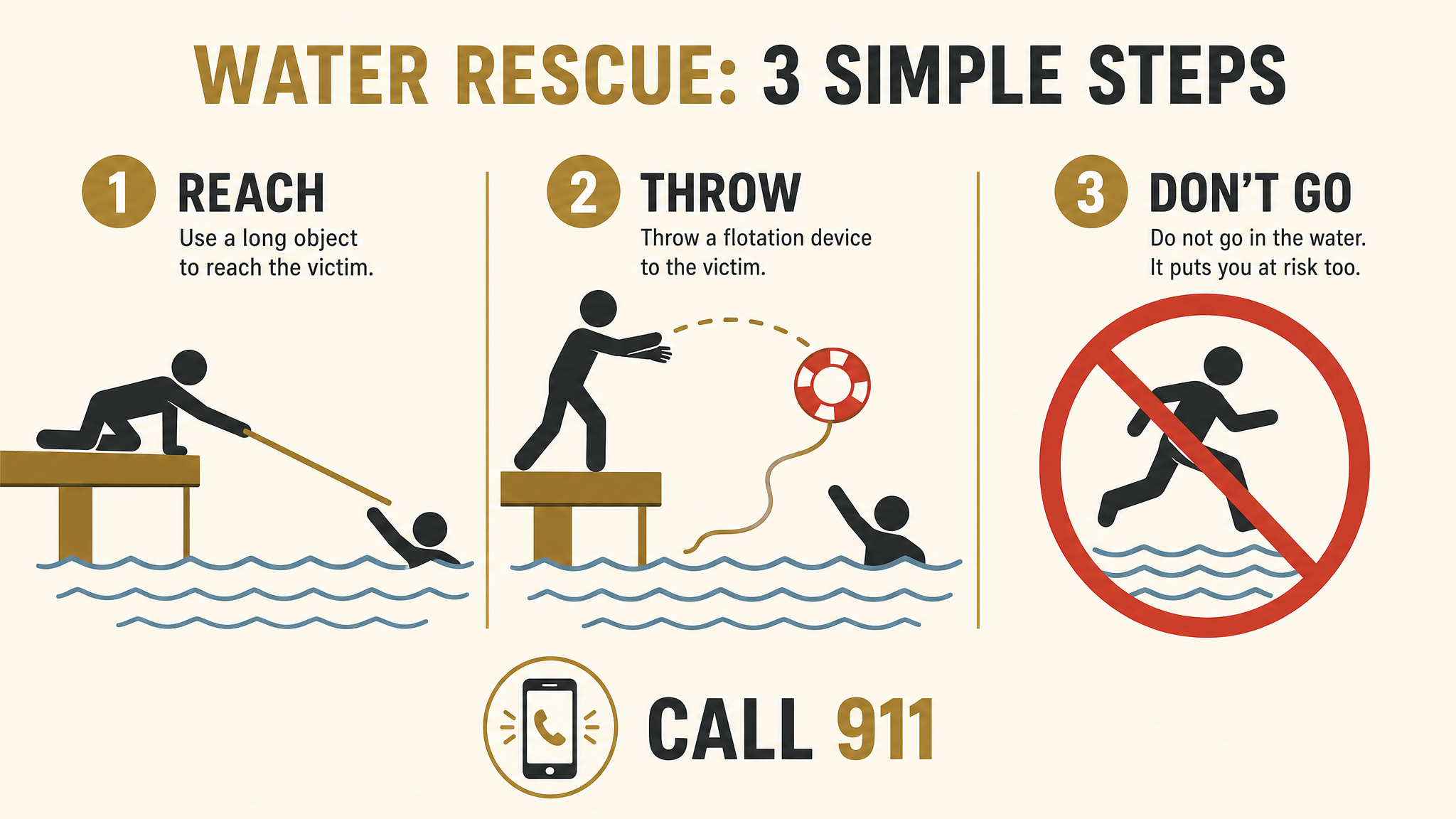
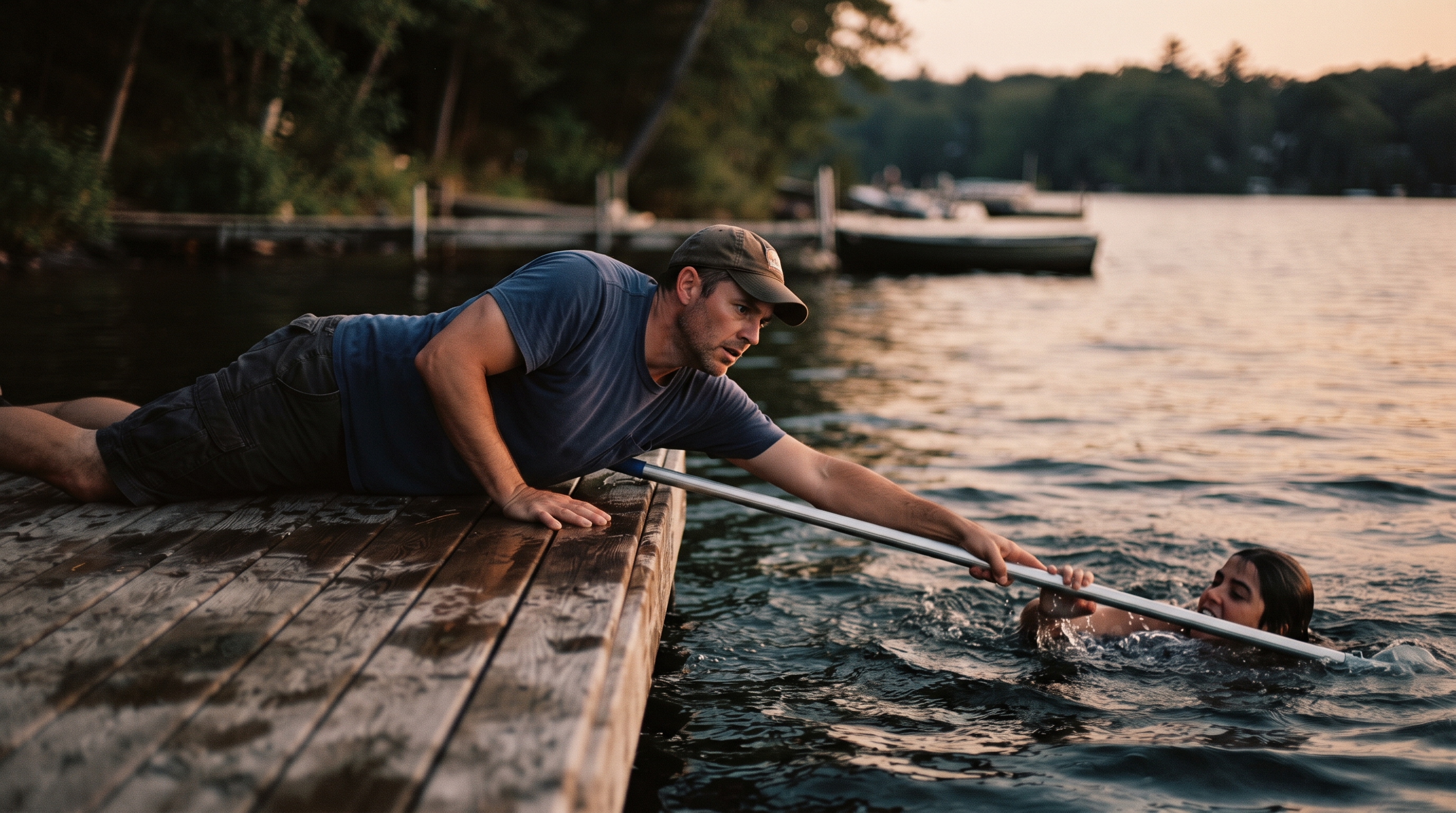
Reach. Lie flat on your stomach on the dock, deck, or shore so you can't be pulled in. Extend anything you've got: a pole, an oar, a branch, a towel, even your leg if the person is close enough. Brace yourself, tell them to grab on, and pull them to the edge.
Throw. If they're too far to reach, throw them something that floats. A life ring is ideal, but a cooler lid, a boogie board, a full jug, or a rope with anything buoyant tied to the end all work. Aim to land it right next to them, not on top of them.
Around a pool, keep a reaching pole and a throwable float within a few steps of the water at all times. The middle of a crisis is a bad time to go hunting for gear. And no matter what else you do, get someone to call 911 immediately. If you're alone, make the call yourself before you attempt anything.
If You Have No Choice But to Enter the Water
Sometimes there's nothing to reach with, no one else around, and a person going under in front of you. If you decide to go in, and this is only for people who are strong, confident swimmers, do it as smart as you can.
Take something buoyant with you. A life jacket, a boogie board, a floatation cushion, anything you can push out ahead of you so the person grabs the object instead of your neck. Keep it between you and them. Approach from behind when possible, so they can't wrap you up. Talk to them the whole time, tell them to hold the float, and tow them back rather than trying to carry them.
If at any point they start climbing on you, let go and back off. You cannot help anyone from the bottom. A rescuer who becomes a second victim doubles the tragedy and ties up the help that's coming. When in doubt, stay out and keep throwing.
Once They're Out: Breathing, CPR, and Rescue Breaths
Get the person onto a firm, flat surface as fast as you can and check whether they're breathing. Drowning is different from a heart attack in one important way: the problem started with a lack of air, so oxygen is exactly what the body is starving for.
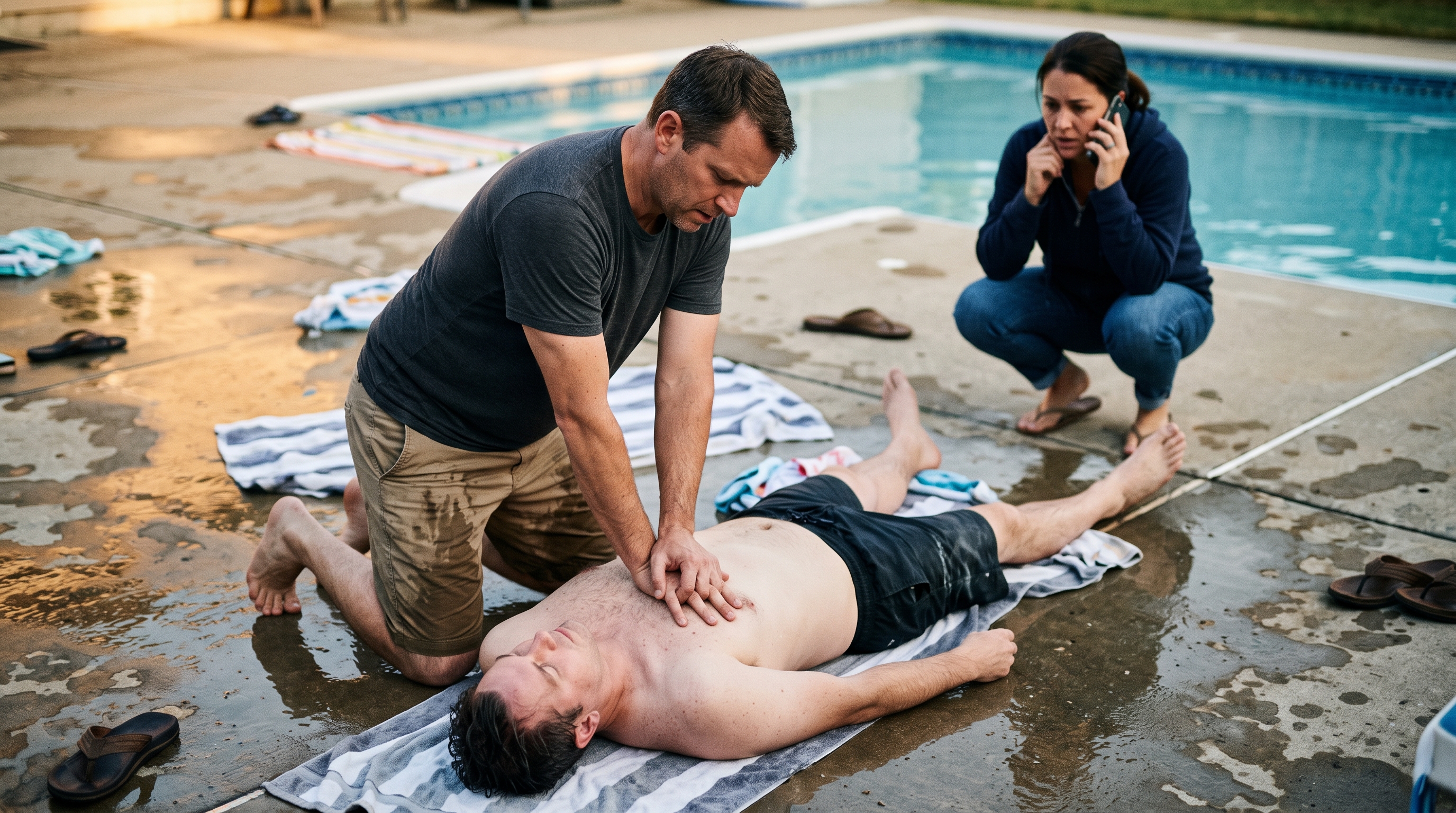
If they're not breathing normally, start CPR right away and include rescue breaths. This is one case where breaths really matter, more than in a typical cardiac arrest. Don't waste a single second trying to press water out of their lungs or slap them on the back. That's an old idea that does nothing but delay the help that works. Give 30 chest compressions, then 2 breaths, and keep the cycle going. If you need a refresher on compressions, our guide to hands-only CPR covers the rhythm and hand position.
Send someone for an AED if one is nearby and use it as soon as it arrives. Dry the chest first, since you're working around water. Keep going until the person starts breathing, help takes over, or you physically can't continue. People have been brought back from drowning after long stretches underwater, especially in cold water, so don't quit early.
If they are breathing but unconscious, roll them onto their side in the recovery position so any water or vomit drains out instead of choking them. Managing an airway is its own skill, and the same principles show up in our piece on choking response.
After a Drowning Rescue: Why "Fine" Isn't Always Fine
Here's something that trips people up. You might hear the terms "dry drowning" or "secondary drowning" thrown around, usually in scary headlines. Doctors have retired both terms, because they described things that don't happen the way the stories claim. Nobody drowns hours later on the couch from a splash at the pool.
What is real, and worth watching for, is this: if someone inhaled water during the struggle, their lungs can get irritated and cause breathing trouble over the next several hours. So after any real drowning scare, even one where the person seems fully recovered, keep an eye on them. If they develop a persistent cough, trouble breathing, chest pain, unusual sleepiness, or confusion within about eight hours, get them to a doctor or the ER. Those are signs the lungs took on water and need attention. When you're unsure, have them checked. The downside of an unnecessary ER visit is small. The downside of ignoring it is not.
Before It Happens: Water Safety That Prevents the Emergency
The best rescue is the one you never have to make. Prevention around water works in layers, so that if one thing fails, another catches the person.
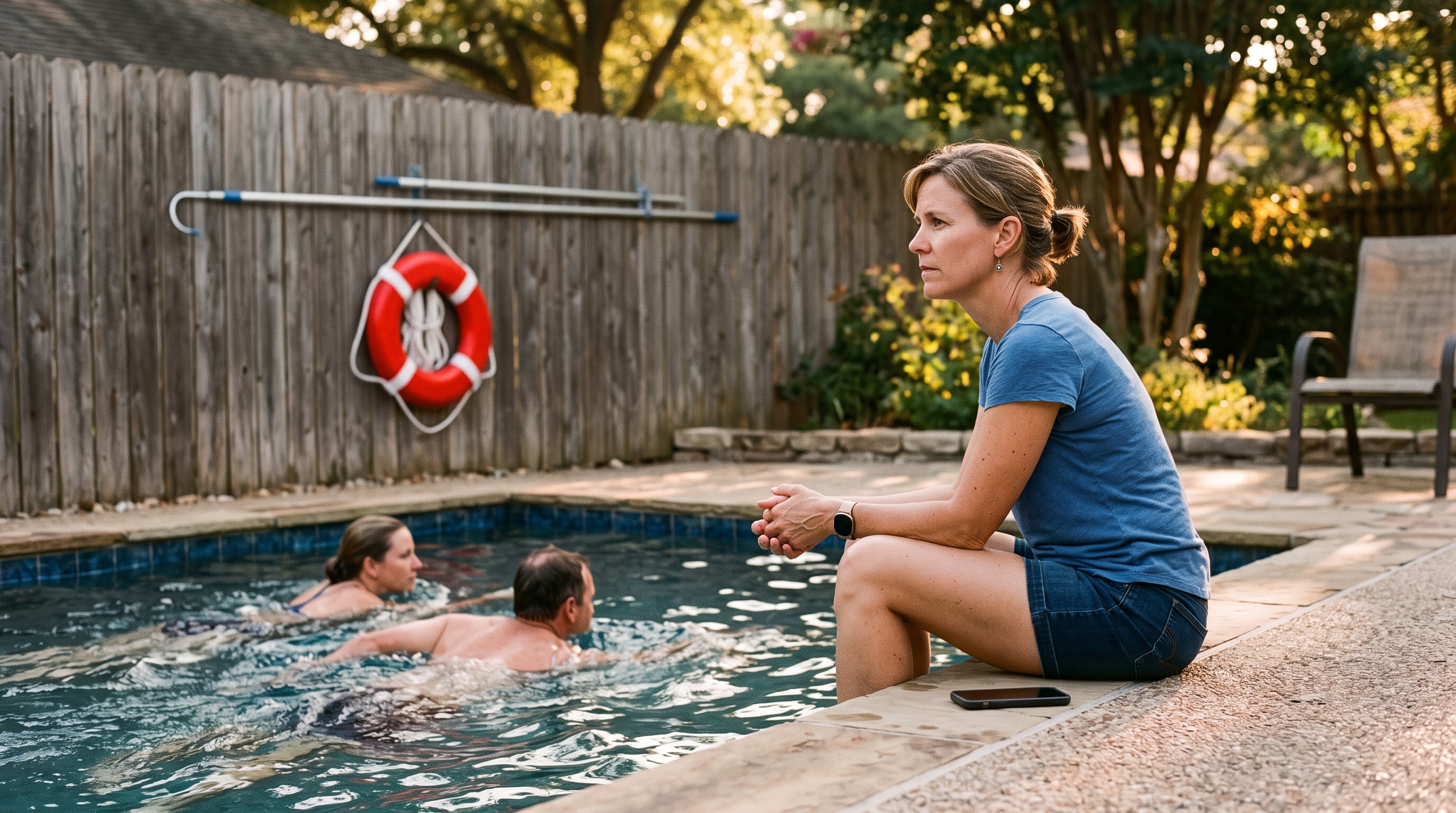
Watch the water, not your phone. Assign one adult as the designated water watcher who does nothing else, and rotate the job so no one gets complacent. Put life jackets on weak swimmers and kids, real Coast Guard approved ones, not pool toys or floaties. Fence pools on all four sides with a self-latching gate. Learn to swim, and get your kids lessons early. And keep rescue gear, a reaching pole and a throwable float, stationed right at the water's edge.
Preparation at home matters too. A near-drowning can leave cuts, hypothermia, or someone who needs monitoring, and a stocked home first aid kit covers the aftermath. It also helps to have already talked through who does what in an emergency, which is exactly what a family emergency plan is for. Deciding these things on a calm afternoon beats figuring them out at the edge of a pool with your heart pounding.
Water gives almost no warning, so the person who saves a life is usually the one who knew the plan before they needed it. Keep something to reach or throw within arm's length of the water this summer, and keep the first-aid gear close for what comes after. The 1stHour Trauma Kit packs 82 pieces of serious first-aid supplies into one grab-and-go case, so the tools are ready before the emergency is. See what's inside the kit.
This content is for informational purposes only and does not constitute medical advice. Drowning is a life-threatening emergency. Always call 911 and follow the guidance of trained medical professionals.


