Cold Water Shock: Why Falling In Kills Before Hypothermia Does

Most people think the danger of falling through ice or tipping out of a boat is freezing to death. It is not, at least not at first. Cold water shock is the part that kills in the opening minute, and it does so to people who swim fine in a pool. If you fish, boat, hunt near water, or paddle in spring and fall, this is worth knowing before you ever need it. Here is what happens inside your body, why swimming is the wrong first move, and what to do instead.
What Cold Water Shock Does to Your Body in the First Minute
When cold water hits the skin of your chest and torso, the temperature sensors there fire a signal your brain cannot override. You gasp, hard, and you cannot stop it. If your face is under or near the surface when that gasp comes, you inhale water.
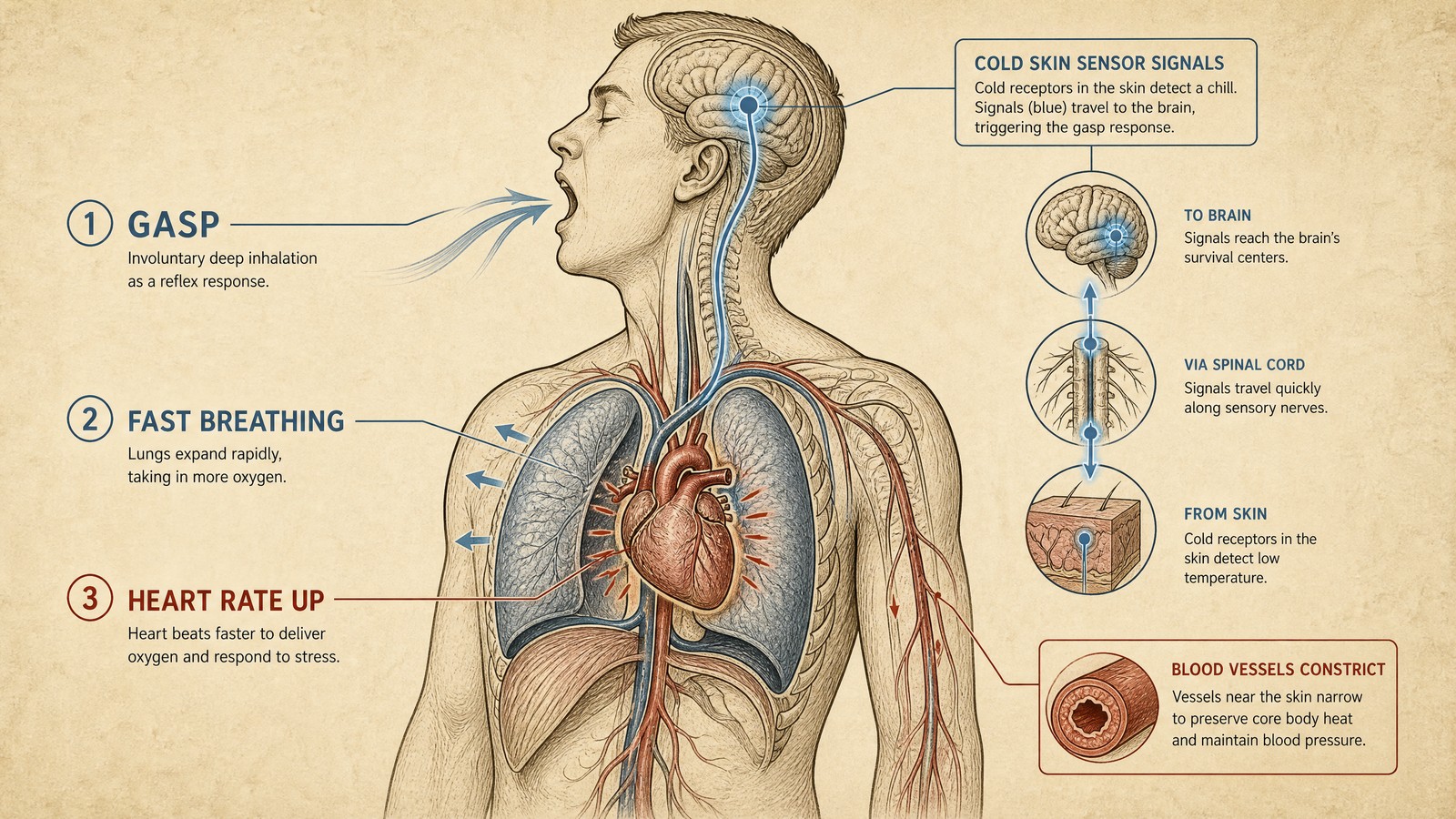
The gasp is only the first piece. According to the RNLI, breathing can speed up as much as tenfold, your blood vessels clamp down, and your heart rate and blood pressure jump. That combination can bring on panic, and it raises the odds of pulling water into your lungs. The RNLI also notes the strain can cause heart attacks, even in young and healthy people. They put it bluntly: only about half a pint of water in an adult's lungs can be enough to drown.
The good news is that the reaction is brief. The RNLI says the initial effects pass in less than a minute. Everything in the rest of this post is about getting through that minute with your airway clear.
Why Strong Swimmers Drown in Cold Water
Water does not have to be icy. Washington State Parks points out that even water temperatures in the 70s can trigger the response, and their own lakes and rivers rarely climb out of the mid-50s. The usual threshold quoted for serious risk is water below 59°F.
Swimming ability does not protect you the way you would expect. Hyperventilation makes it hard to coordinate a breath with a stroke. Then comes what water-safety groups call swim failure. Sea Tow describes a second phase, roughly 3 to 30 minutes in, when cold blood vessels and nerves cut muscle power in the arms and legs. Your hands stop gripping. Your stroke falls apart. You can be fully conscious, a decent swimmer, and still unable to make it ten yards to shore.
That is why the instinct to start swimming right away works against you. Fighting the water with a racing heart and a gasping chest spends your best minutes on the one thing your body cannot do well yet.
Cold Water Shock vs Hypothermia: The 1-10-1 Rule
Hypothermia gets all the attention, and it is real, but it is slow. Cold water shock is fast. A simple way to hold the timeline in your head is the 1-10-1 rule, which Washington State Parks lays out like this:
- 1 minute: Control your breathing and resist the urge to thrash. Float on your back to keep your nose and mouth clear.
- 10 minutes: Once breathing settles, you have a short window of useful movement. Use it to self-rescue or reach something that floats.
- 1 hour: This is when hypothermia becomes the main threat, and what keeps you alive is staying afloat and getting help.
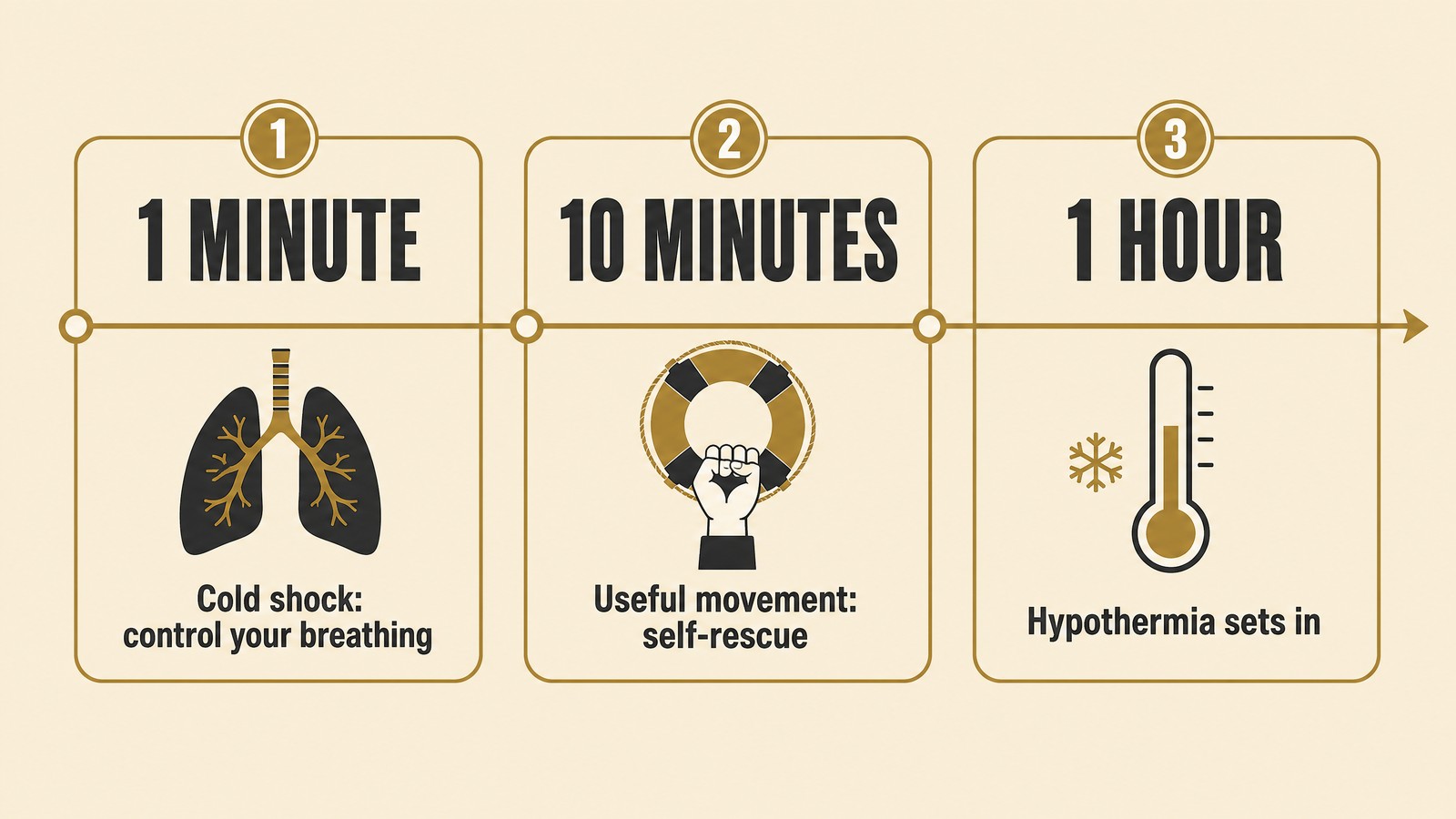
Notice that the order matters. If you do not survive minute one, hypothermia never gets a chance. Our guide to hypothermia first aid covers the later stage, once someone is out of the water and cooling down. This post is about the part that comes first.
What to Do in the First Minute: Float First
If you go in unexpectedly, do the opposite of what feels natural.
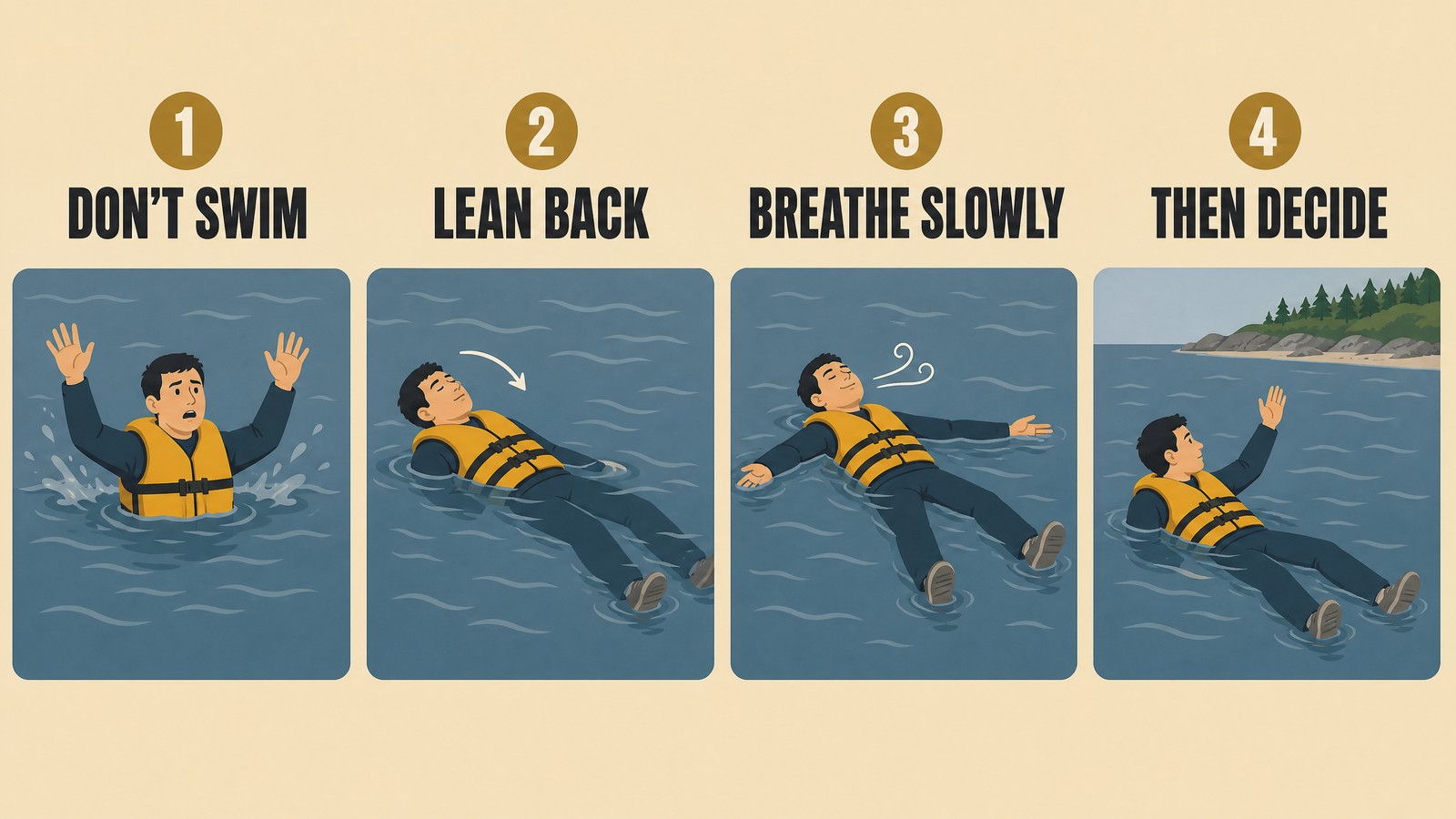
- Do not swim yet. Give the gasp reflex time to fade. Fight the urge to thrash or yell.
- Lean back and float. Roll onto your back and spread your arms and legs. Keep your mouth and nose clear of the water. Most people float better than they expect, especially in a life jacket.
- Breathe slowly. Count a few slow breaths in through the nose and out through the mouth. The panicky, fast breathing eases within about a minute.
- Then decide. Once your breathing is back under control, call for help, signal, or kick toward the nearest solid thing. If you are wearing a life jacket, keep it on and stay put.
If you are in a group and someone goes in, do not jump in after them. Throw something that floats and call for help. Our piece on how to help a drowning person without becoming a victim walks through reaching and throwing rescues. If the person is out of the water and not breathing, start compressions right away with hands-only CPR and send someone to call 911.
How to Prepare Before You Get Near Cold Water
Almost everything that helps here happens before the fall.
- Wear a life jacket. Washington State Parks calls a properly fitted one the single most important step, because it keeps your head above water during the gasp phase. The one in the dry-bag at the back of the boat does nothing for you.
- Dress for the water, not the air. A warm sunny day on a spring lake can sit on top of water in the 40s. A wetsuit or drysuit softens the shock, and wool layers help with the cold that follows.
- Enter cold water slowly when you choose to. Wading in gives your breathing time to adjust. Jumping in does not.
- Tell someone your plan. Say where you are going and when you will be back.
- Carry waterproof communication. A phone in a sealed case or a whistle on your jacket is worth the few dollars.
- Bring a buddy. Two people on the water is a different situation than one.
It also helps to think through the fall once, ahead of time. Our post on why your brain freezes in an emergency explains why a rehearsed plan beats trying to improvise in the cold.
After the Scare: Getting Out and Getting Warm
Surviving the first minute and the first ten does not end the problem. Once you are out, get out of wet clothes, get insulated from the wind and the ground, and warm up gradually. Sea Tow also describes a risk during or after rescue, when a sudden change in blood pressure can cause collapse, so move a chilled person gently and keep them lying flat rather than pulling them upright. Call 911 if anyone was submerged, is confused, or is shivering hard and not stopping.
Cold water emergencies are over fast, and the first hour is when preparation pays off. See what's inside The 1stHour Trauma Kit, gear and guidance built for the first hour of whatever happens next.
This content is for informational purposes only and does not constitute medical advice. If someone has been submerged in cold water, call 911 and seek emergency medical care.


