Whiplash Symptoms After a Car Accident: When It's More Than Soreness

You walked away from the crash. Maybe the other car tapped you at a red light, and you told the officer you felt fine. Then you wake up the next morning and can't turn your head to check the mirror. Whiplash symptoms after a car accident are famous for showing up late, and that delay is exactly why people shrug them off. Here is why it happens, which signs are ordinary and which are not, and what to do in the first hour and the days after.
Why Whiplash Symptoms After a Car Accident Show Up Late
Whiplash is a neck injury caused by the head snapping backward and then forward with force. According to Mayo Clinic, it most often happens in a rear-end collision, though sports and falls can cause it too. The muscles and ligaments in your neck get stretched past their normal range in a fraction of a second.
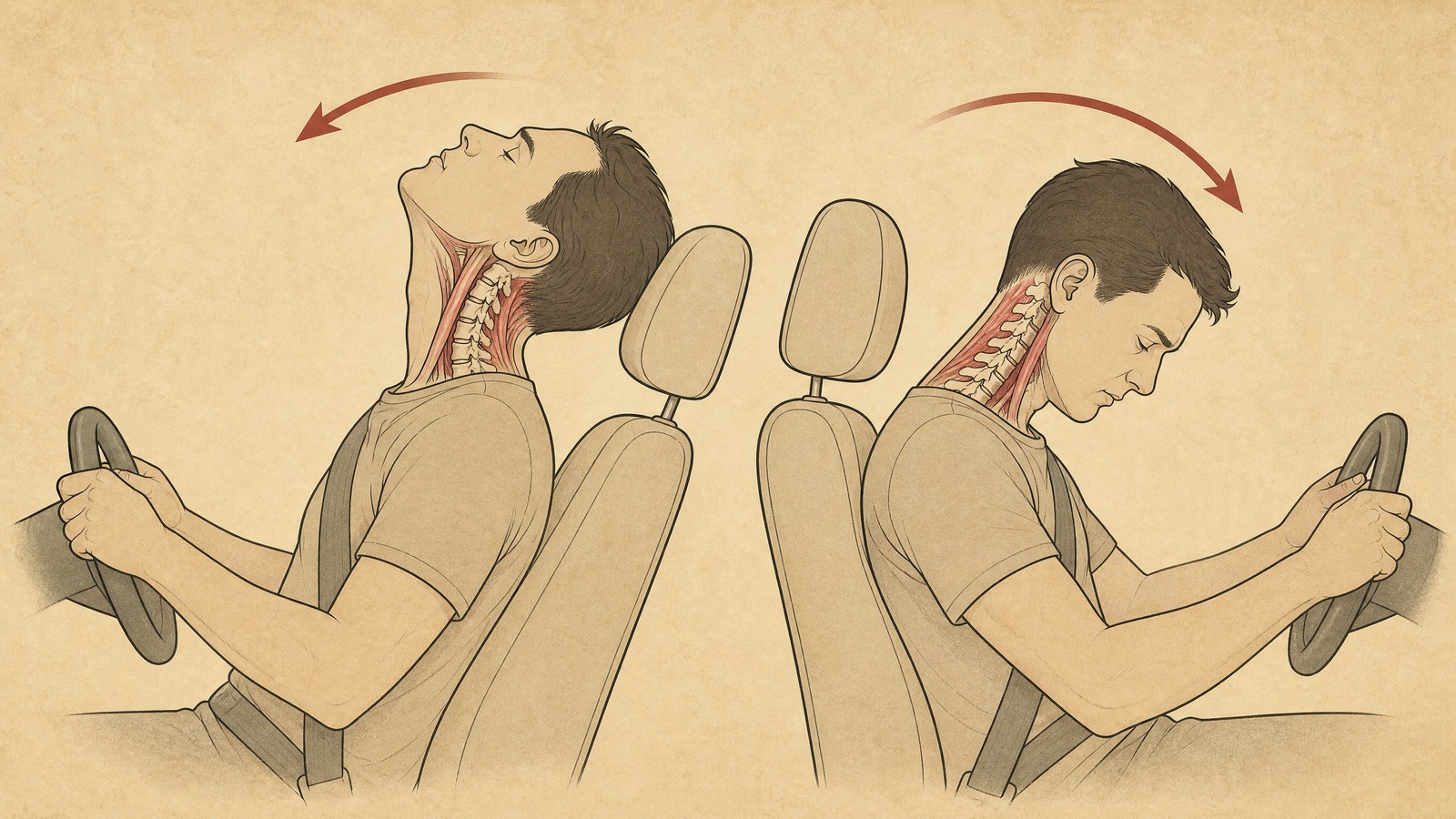
At the scene, adrenaline masks a lot. Your body is flooded with stress hormones, and pain signals take a back seat. Then the hormones fade, the stretched tissue swells and tightens, and the soreness arrives. The NHS says it can take several hours for symptoms to start, and the National Institute of Neurological Disorders and Stroke notes that neck pain may be delayed for several days.
So "I feel fine" at the scene tells you very little. A day or two later is when most people find out what the crash did.
The Common Signs of Whiplash in the First Few Days
Most whiplash is a soft tissue injury, painful but not dangerous. The usual picture, according to Mayo Clinic, includes:
- Neck pain and stiffness that gets worse when you move your head
- Less range of motion, such as not being able to look over your shoulder
- Headaches, most often starting at the base of the skull
- Pain or tenderness in the shoulders, upper back, or arms
- Tiredness and dizziness
Some people also report blurred vision, ringing in the ears, trouble sleeping, irritability, or difficulty concentrating. Those can show up with whiplash, but they also overlap with a concussion. If you hit your head or feel foggy and confused, read our guide to concussion warning signs as well.
Whiplash Symptoms After a Car Accident That Mean Get Checked Now
Here is the line that matters. Ordinary whiplash hurts, but it stays in the neck and shoulders and eases with time. The NHS lists the signs that point to possible nerve involvement and call for urgent medical advice:
- Tingling or pins and needles on one or both sides of the body
- Weakness in the hands, arms, or legs
- Trouble walking or keeping your balance
- A sudden electric-shock feeling that runs from the neck into the limbs
- Severe pain that over-the-counter medication does not touch
Treat any of these as an emergency visit, not a "see how it feels Monday" situation. Add a few more reasons to go straight to the ER: loss of consciousness during the crash, a severe headache that keeps getting worse, repeated vomiting, or pain in the belly or chest. A hard crash can hurt more than the neck, and internal bleeding after blunt trauma can hide behind a calm first few hours.
Soreness or Something More: How to Tell
A simple way to sort it out is to ask where the symptoms are and which way they are heading.
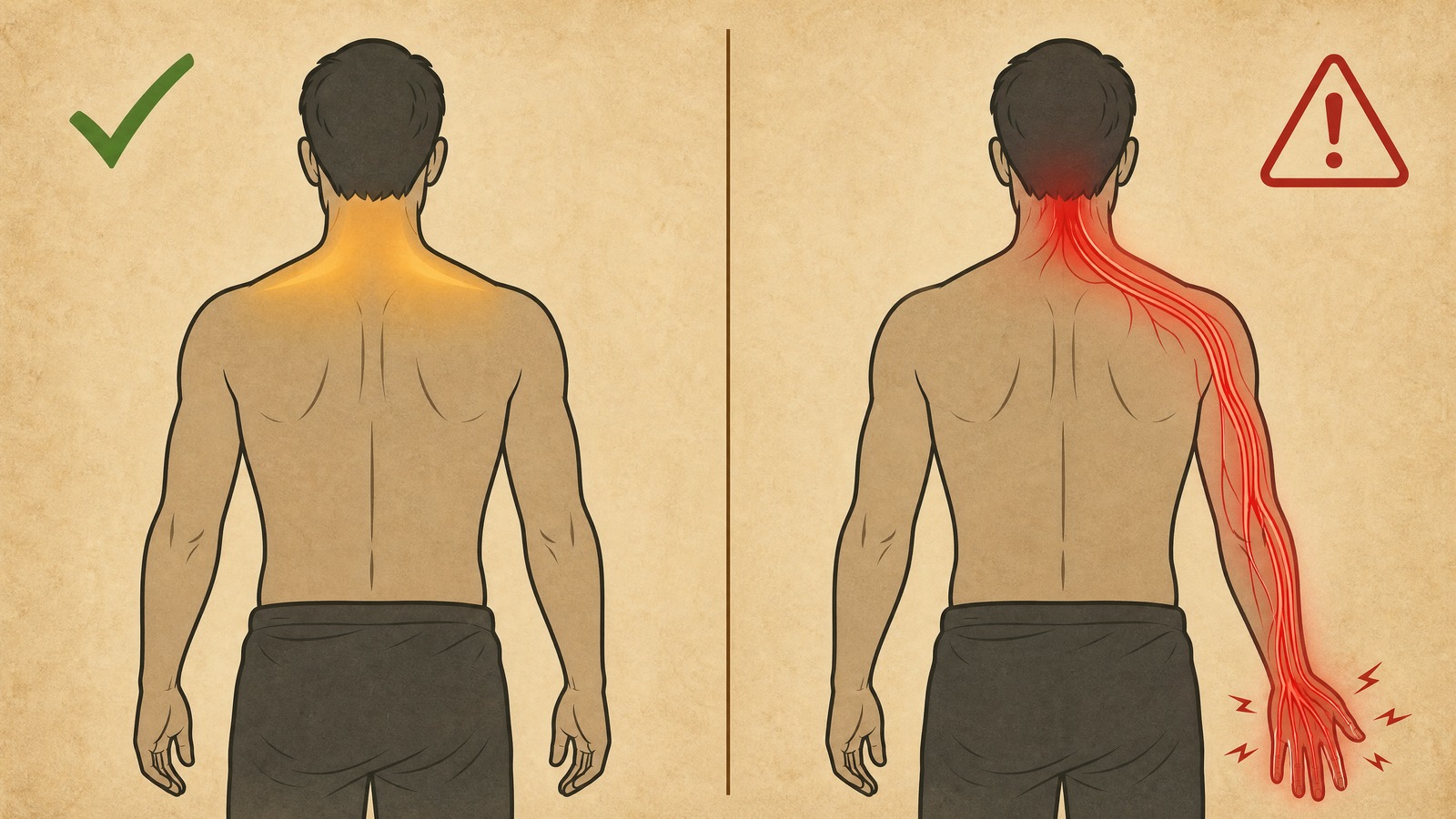
Leans toward routine soreness: the pain is in the neck and upper shoulders, it hurts most when you turn or tilt, it feels like a pulled muscle, and it is slowly easing day by day with gentle movement.
Leans toward something more: symptoms travel down an arm, the hands feel numb or clumsy, your legs feel odd, the pain is getting worse instead of better, or a headache is growing. Mayo Clinic also lists severe neck pain and pain that spreads into the arms as signs of a slower recovery, so those deserve a proper exam either way.
If you are unsure, get checked. Imaging and a physical exam are cheap compared with a missed injury.
What to Do in the First Hour and the First Week
At the scene, if the neck hurts a lot, stay still and wait for paramedics rather than climbing out of the car. Our guide to car accident first aid walks through what to do before help arrives. If you walked away and felt fine, here is the plan once the soreness begins.

- Get examined within a day or two, even if the pain is mild. Mayo Clinic stresses a quick diagnosis to rule out serious damage underneath.
- Use over-the-counter pain relief as directed on the label, and ask a pharmacist if you take other medications. The NHS names paracetamol or ibuprofen.
- Try gentle heat. NINDS notes that supplemental heat may relieve muscle tension.
- Keep moving, gently. The NHS advises continuing everyday activities even if it hurts a little, because it speeds recovery. Skip heavy lifting and sudden twisting.
- Sleep with one supportive pillow, not a stack, so the neck stays in a neutral line.
- Write down your symptoms and when they started. It helps the doctor, and it helps any insurance claim.
Collars are a point where sources differ. The NHS says a neck brace does not help and that you should avoid long periods of keeping the neck still. NINDS lists a cervical collar, usually worn for 2 to 3 weeks, among treatment options. Let your doctor decide, and do not buy a collar and wear it all day on your own.
What to Tell the Doctor and What Recovery Looks Like
Tell the doctor how the crash happened, how fast the vehicles were going, whether your head hit anything, and every symptom you have noticed, even the odd ones like ringing in the ears or trouble concentrating. If you had neck or back pain before the crash, say so. According to Mayo Clinic, a history of neck pain, a previous whiplash injury, and older age are linked to a longer recovery.
The outlook is mostly good. NINDS says most people recover within three months, and the NHS gives two to three months, though some people have lingering neck pain and headaches. Go back to the doctor if the pain has not improved after a week or the medication is not working. Persistent headaches are worth their own look, and our piece on headache red flags explains which ones need prompt care.
A few minutes of preparation helps long before a crash. Keeping a basic kit in your trunk, as covered in our car emergency kit essentials list, means you are not starting from zero on the side of the road.
Most whiplash is not an emergency, but the first hour after any collision sets the tone for everything that follows. See what's inside The 1stHour Trauma Kit, gear and guidance built for the first hour of whatever happens next.
This content is for informational purposes only and does not constitute medical advice. If you have been in a car accident, seek prompt medical attention, and call 911 for severe neck pain, numbness, weakness, or loss of consciousness.


