Internal Bleeding Symptoms After Blunt Trauma: The Signs You Can't See
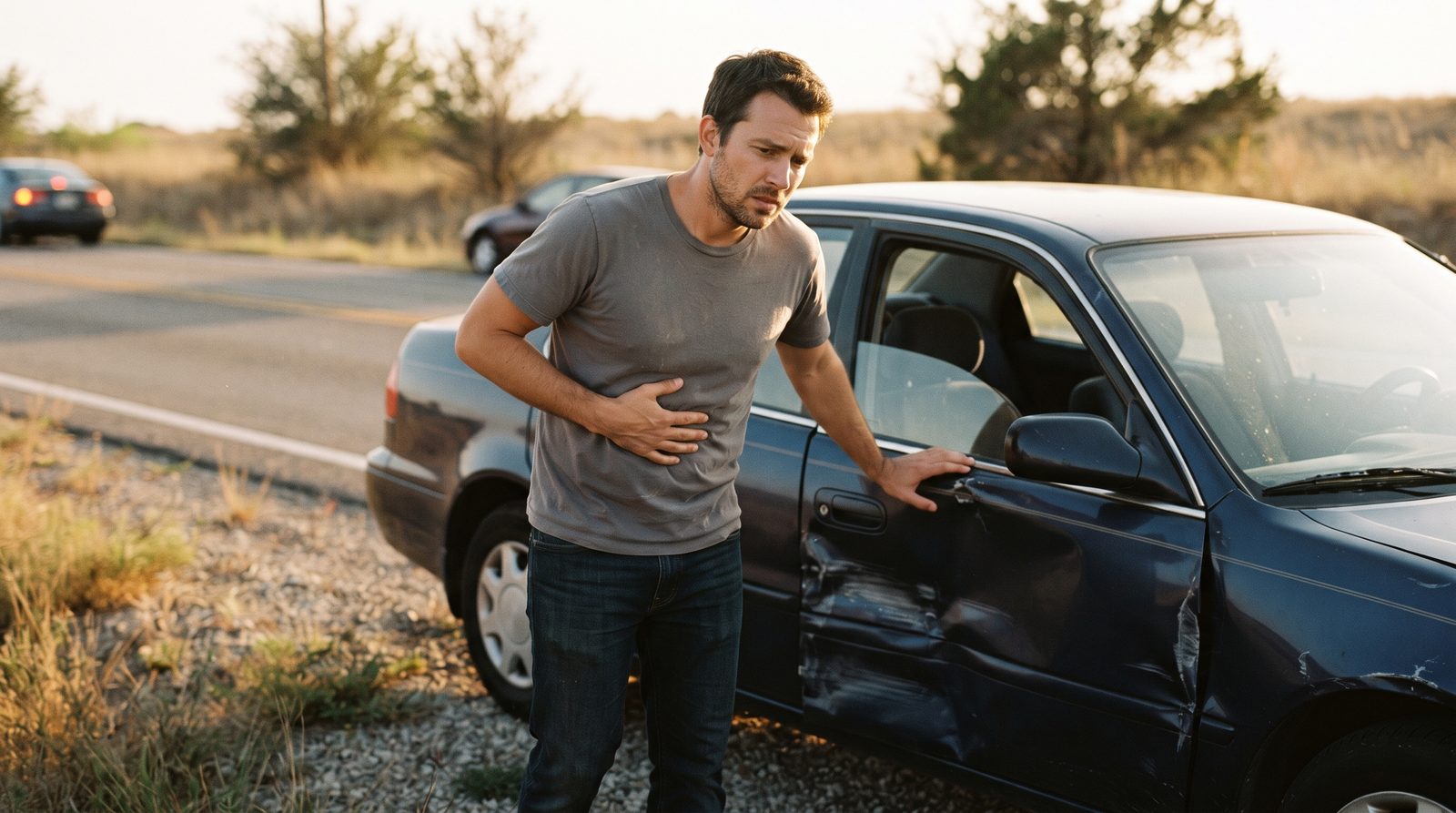
You walked away from the crash. You finished the game. You got up after the fall and brushed yourself off, and other than some soreness, you feel more or less fine. That's exactly the moment internal bleeding is most dangerous, because it doesn't need a visible wound to kill you, and the first hour after a hard hit is often the one where the warning signs are easiest to miss.
What Counts as Blunt Trauma (and Why Internal Bleeding Hides)
Blunt trauma is any injury caused by impact without a cut or puncture: a steering wheel against the chest, a tackle in a football game, a fall down a flight of stairs, a bicycle handlebar driving into the stomach. No blade, no bullet, nothing that breaks the skin. That's precisely what makes the resulting bleeding so easy to overlook.
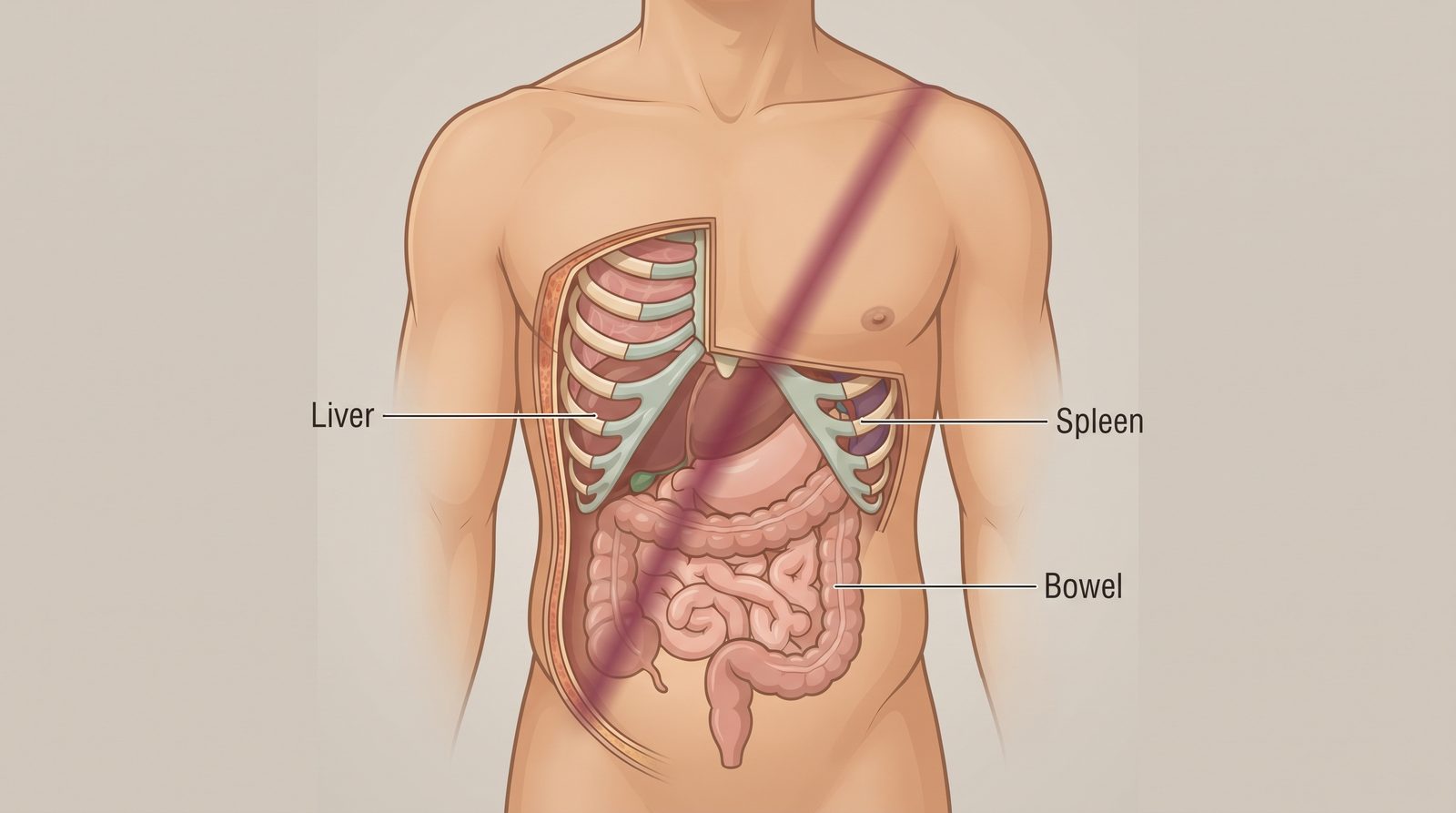
When an organ like the spleen, liver, or a major blood vessel tears from the force of an impact, the blood doesn't show up on your shirt. It pools inside your chest or abdomen, where you can't see it. A bruise on the surface might be the only outward clue, if there's any clue at all.
According to Cleveland Clinic, car accidents are among the most common causes of this kind of hidden bleeding. No type of internal bleeding is ever something to just wait out.
Internal Bleeding Symptoms to Take Seriously
The symptoms of internal bleeding often show up as a cluster rather than one obvious sign, and they can look a lot like ordinary shock or exhaustion at first:
- Dizziness or lightheadedness, especially when standing up
- A heart rate that's noticeably faster than normal
- Shortness of breath or rapid breathing
- Abdominal pain, tightness, or visible swelling
- Skin that feels cool, clammy, or looks unusually pale
- Nausea or vomiting
- A severe headache or sudden vision changes, particularly after a hit to the head
- Deep bruising that keeps spreading rather than settling down
Any one of these on its own after a hard hit is worth paying attention to. Two or more together, especially dizziness paired with a fast heart rate, is a reason to get evaluated now rather than waiting to see if things improve on their own.
The Seatbelt Sign: A Bruise That's Actually a Warning
There's a specific bruise worth knowing by name. If a seatbelt leaves a clear red or purple line across your abdomen or chest after a crash, doctors call this the seatbelt sign, and it's one of the more reliable outward clues that something serious might be happening underneath.
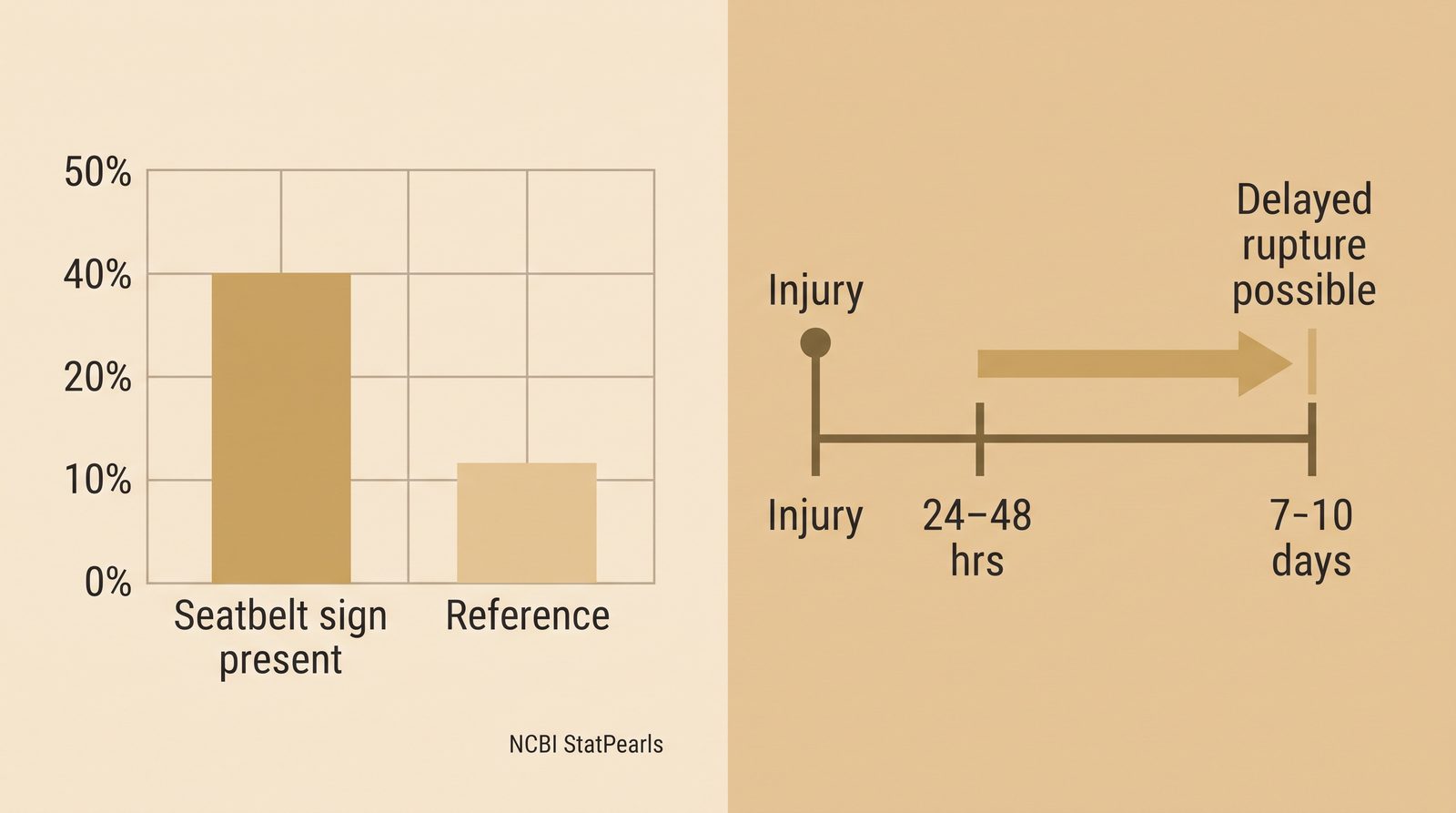
Research summarized by NCBI's StatPearls reference puts the odds of a confirmed internal injury at roughly 40 percent when a seatbelt sign is present. That's not a bruise to shrug off as "just where the belt caught me."
The same crash that leaves that mark can tear the bowel, damage the tissue that holds it in place, or crack a bone in the lower spine. None of that shows up just by looking at the skin.
If you see that line after any collision, mention it specifically to whoever evaluates you. It changes how seriously the exam gets taken, and it should.
Why Internal Bleeding Symptoms Can Take Hours or Days to Show Up
One of the more unsettling facts about internal bleeding is that it doesn't always show up right away. The spleen is the organ most often hurt in blunt abdominal trauma, and car crashes cause 50 to 75 percent of those injuries, according to StatPearls.
A tear there can bleed slowly. A person can feel essentially normal in the ER, get sent home, and then rupture fully 24 to 48 hours later, sometimes as far out as 7 to 10 days after the original injury.
That delay is the real danger. It's why athletes get pulled from games for a "hard hit" that looked fine, and why an ER doctor might ask you to come back for a recheck even when your first scan looked clear. Feeling okay six hours after a crash or a fall doesn't rule out bleeding that's still building.
Who's Most at Risk: Car Accidents, Contact Sports, and Falls
Three groups run into this most often, each for a different reason. Car accident survivors face the steering wheel, seatbelt, and dashboard all delivering concentrated force to the chest and abdomen in a single moment, which is why knowing what to do right after a crash matters as much as the drive to the hospital.
Contact-sport athletes take repeated blunt hits over a season, and a rib that cracks from a tackle can do more than just hurt when you breathe. A broken rib sits directly next to the spleen and liver, and a fractured rib edge is a documented cause of exactly the kind of organ laceration described above.
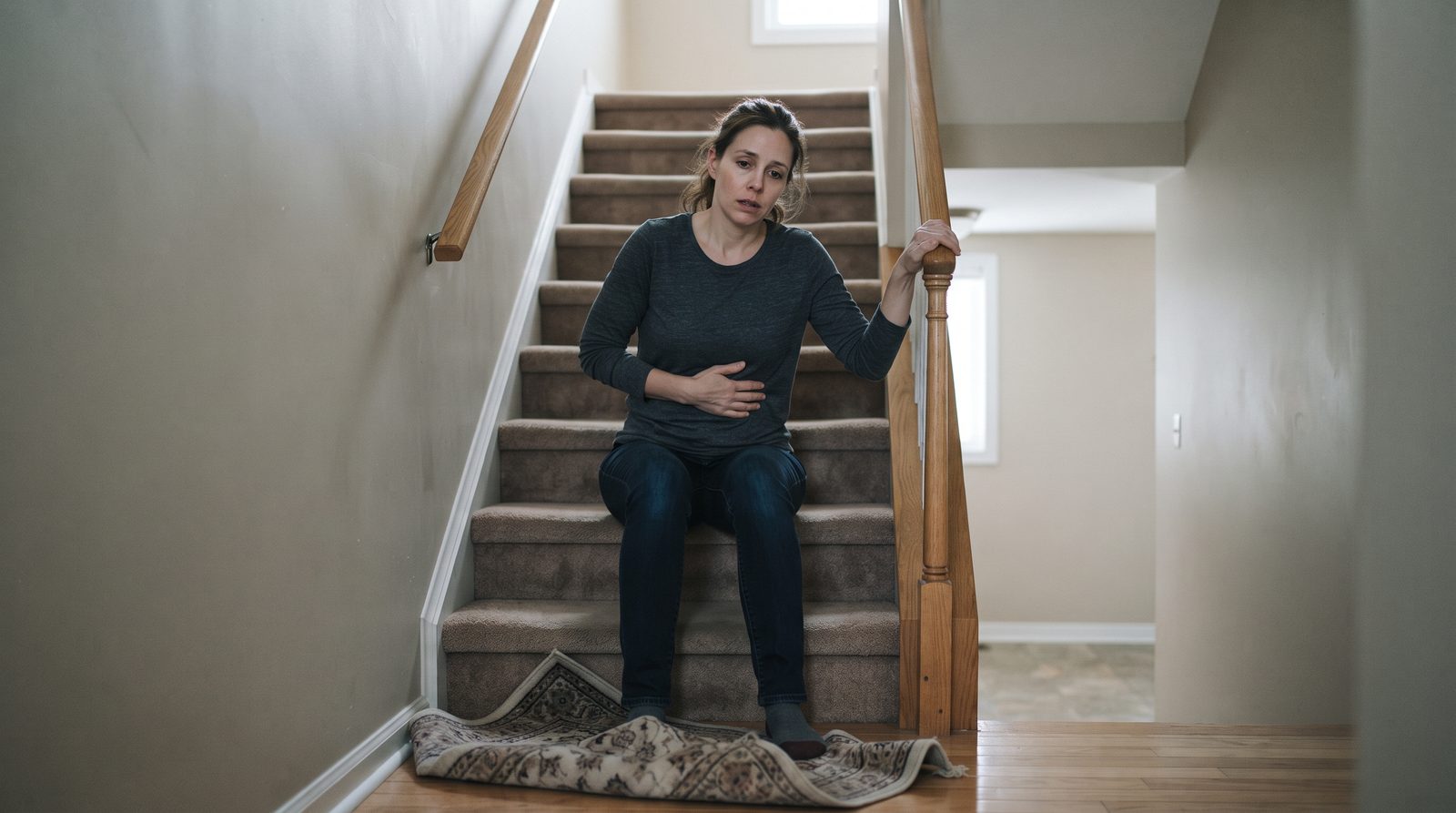
Fall victims, particularly older adults and anyone falling from a height or onto a hard surface, often assume a fall is "just a fall" once they're back on their feet. What matters is the force involved, not how the fall looked. A hard fall onto the side or back can bruise the kidneys or spleen the same way a car crash can.
If the fall involved a hit to the head, it's also worth reviewing the warning signs of a concussion. Head and torso injuries often happen together in the same fall.
What Happens at the ER
If internal bleeding is suspected, the standard first step is a FAST exam, a quick bedside ultrasound that checks for free fluid (blood) around the heart and in the abdomen. It takes minutes and can be done immediately on arrival. Depending on what it shows, the next step is usually a CT scan with contrast, which gives doctors a detailed look at solid organs like the spleen, liver, and kidneys.
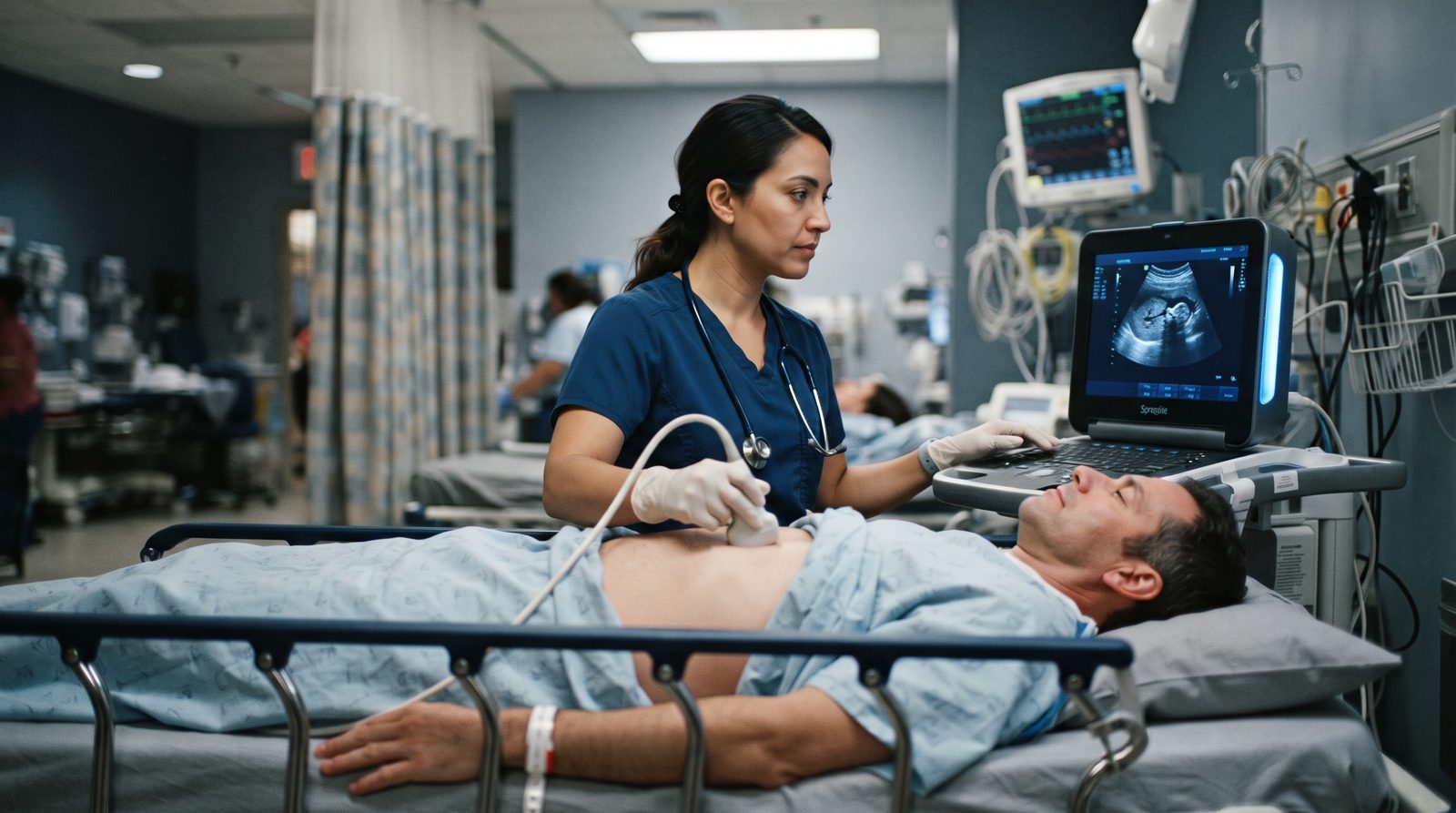
Treatment depends on how much bleeding is happening and where. Some injuries are managed with close monitoring alone: repeat scans, repeat vitals, and a hospital stay to watch for the delayed rupture described above. Others need a procedure to stop the bleeding directly, or surgery if it won't stop on its own.
None of that is a call to make yourself. If you've had a hard hit to the head, chest, or abdomen and any of the symptoms above show up, even hours later, that's a reason to call 911 or get to an emergency room. Don't wait and monitor it at home.
None of this is about panicking after every minor bump. Most bruises are just bruises. What matters is knowing the specific pattern, a hard hit followed by dizziness, a racing heart, abdominal pain, or a seatbelt-shaped bruise, that turns an ordinary "I'll be sore tomorrow" into something worth an ER visit tonight.
A first aid kit built for real emergencies won't stop internal bleeding on its own, but having the right gear and a clear plan for the first hour after any injury changes what you're able to do while help is on the way. See what's inside The 1stHour Trauma Kit, built for exactly the minutes right after something goes wrong.
This content is for informational purposes only and does not constitute medical advice. If you or someone near you has symptoms of internal bleeding after a hard hit, fall, or crash, call 911 or seek emergency care immediately.


