What to Do If You Are Choking Alone: How to Help Yourself
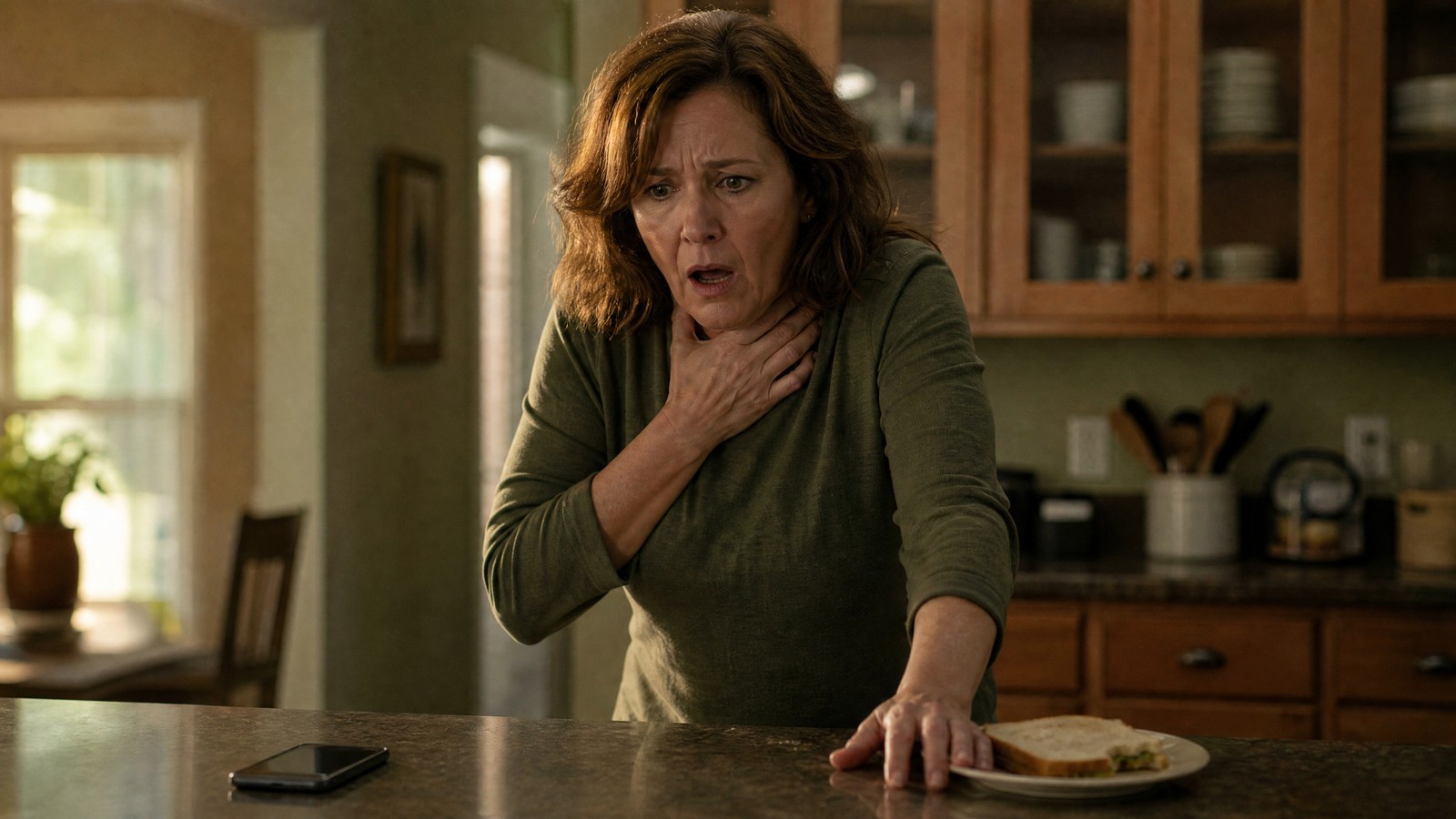
You are home on a quiet afternoon, eating lunch at the counter, and a bite goes down wrong. Nobody is in the next room. Nobody hears you. Choking alone is one of the situations people dread most, and almost no one has rehearsed it. The good news is that the steps are short, and your body already knows how to do part of them. This guide covers what to do if you are choking alone, in the order you will need it.
What to Do If You Are Choking Alone: The First 10 Seconds
The first decision is whether air is still moving. A person who can cough hard, make noise, or talk is only partly blocked. Forceful coughing is the body's own best tool, so keep coughing and do not start thrusting yet.
A full blockage looks and feels different. You cannot cough, you cannot speak, and you make little or no sound. Your hands go to your throat. At that point you have very little time, so move in this order:
- Call 911 first. Mayo Clinic's first aid guidance says that if you are alone and choking, call 911 or your local emergency number right away, then give yourself abdominal thrusts.
- Stay on the line if you can. Even if you cannot speak, dispatchers can likely trace the call, according to Parkview Health, and help can start heading to you.
- Set the phone down, on speaker, and start thrusts.
Do not waste time on the front door, a glass of water, or a search for the right instructions. If your phone is in your hand, use it. If it is across the house, start the thrusts and keep them going.
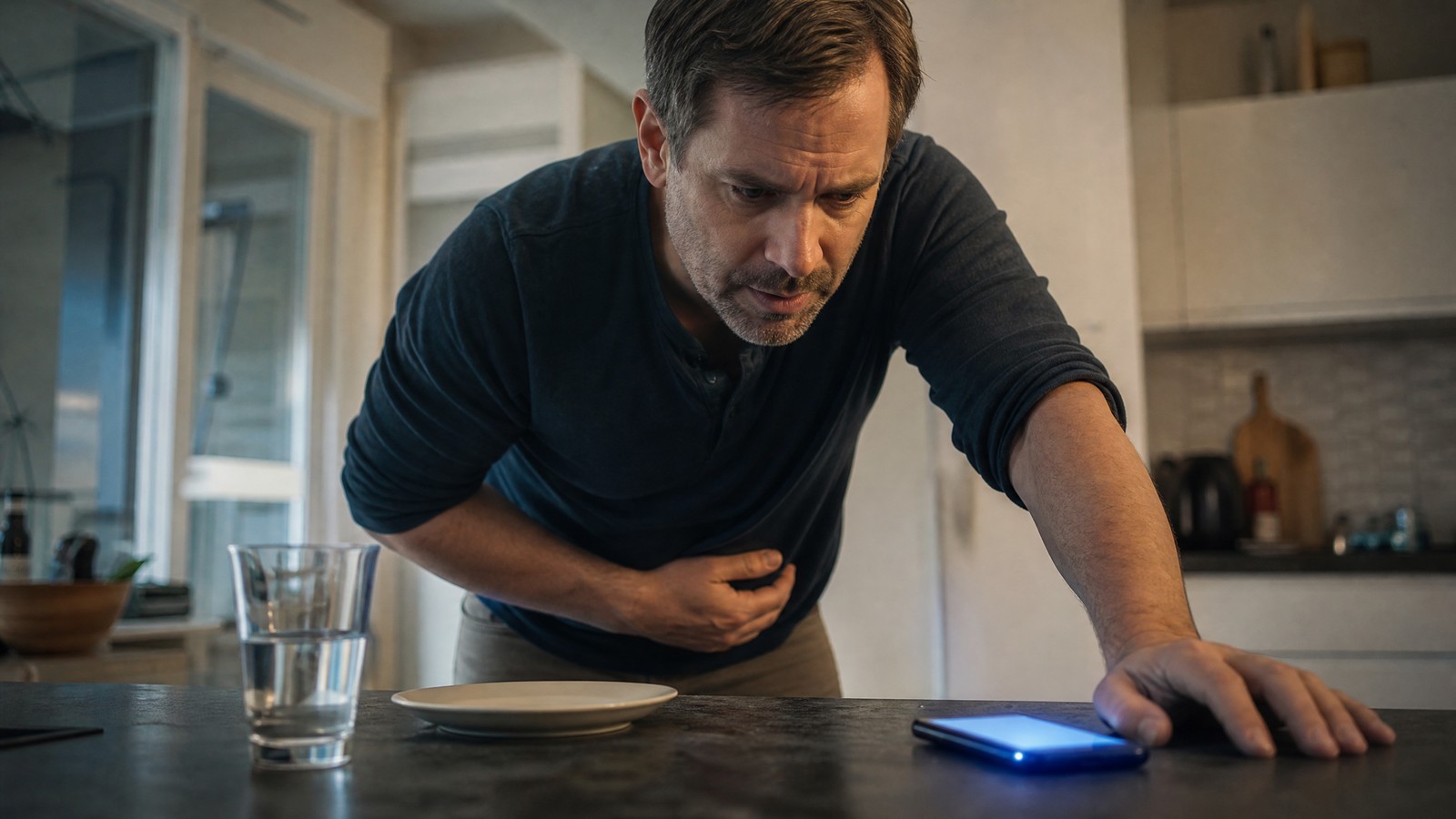
If you have not yet saved the number for texting emergency services, read our guide on how to text 911. It is not for a choking emergency, since you need your hands and your voice may be gone, but it is worth knowing for other situations.
How to Give Yourself Abdominal Thrusts
Abdominal thrusts, often called the Heimlich maneuver, work on yourself almost the same way they work on someone else. You are pushing air up from your lungs to force the object out.
Here is the fist method:
- Make a fist with one hand.
- Place the thumb side of the fist just above your belly button and well below your ribcage.
- Grasp that fist with your other hand.
- Pull sharply inward and upward, as if you were trying to lift yourself off the ground.
- Repeat quick, hard thrusts until the object comes out.
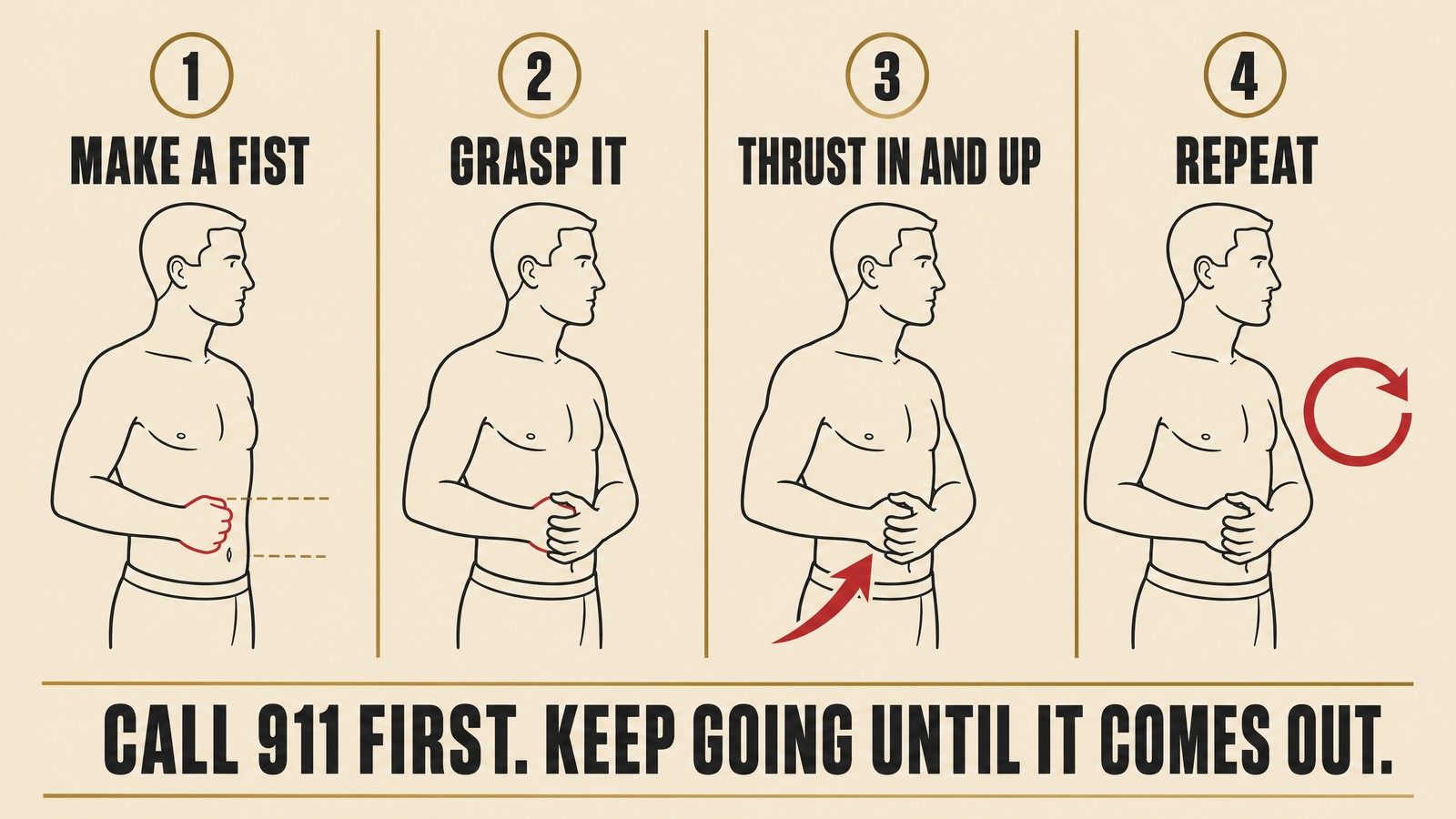
The thrusts should be firm and fast, not gentle. A soft push does not move enough air. Do not hit yourself on the back, which is hard to do with any force and can push the object deeper. Do not stop to check whether it worked after each push. Thrust, then thrust again, and you will know when the object is out because you will be able to breathe or cough.
The Chair Back and Counter Edge Method
Sometimes your hands are not enough, especially if you are weaker, older, or panicking. That is when furniture helps. A firm edge gives you something to push against with the weight of your body.
Lean over the back of a sturdy chair, a kitchen counter, or the arm of a couch so the edge presses into your abdomen above the navel. Then throw your weight forward and down against that edge in a quick motion. Repeat until the object clears. Parkview Health's guidance says to keep thrusting until the object dislodges, and that is the rule to remember.
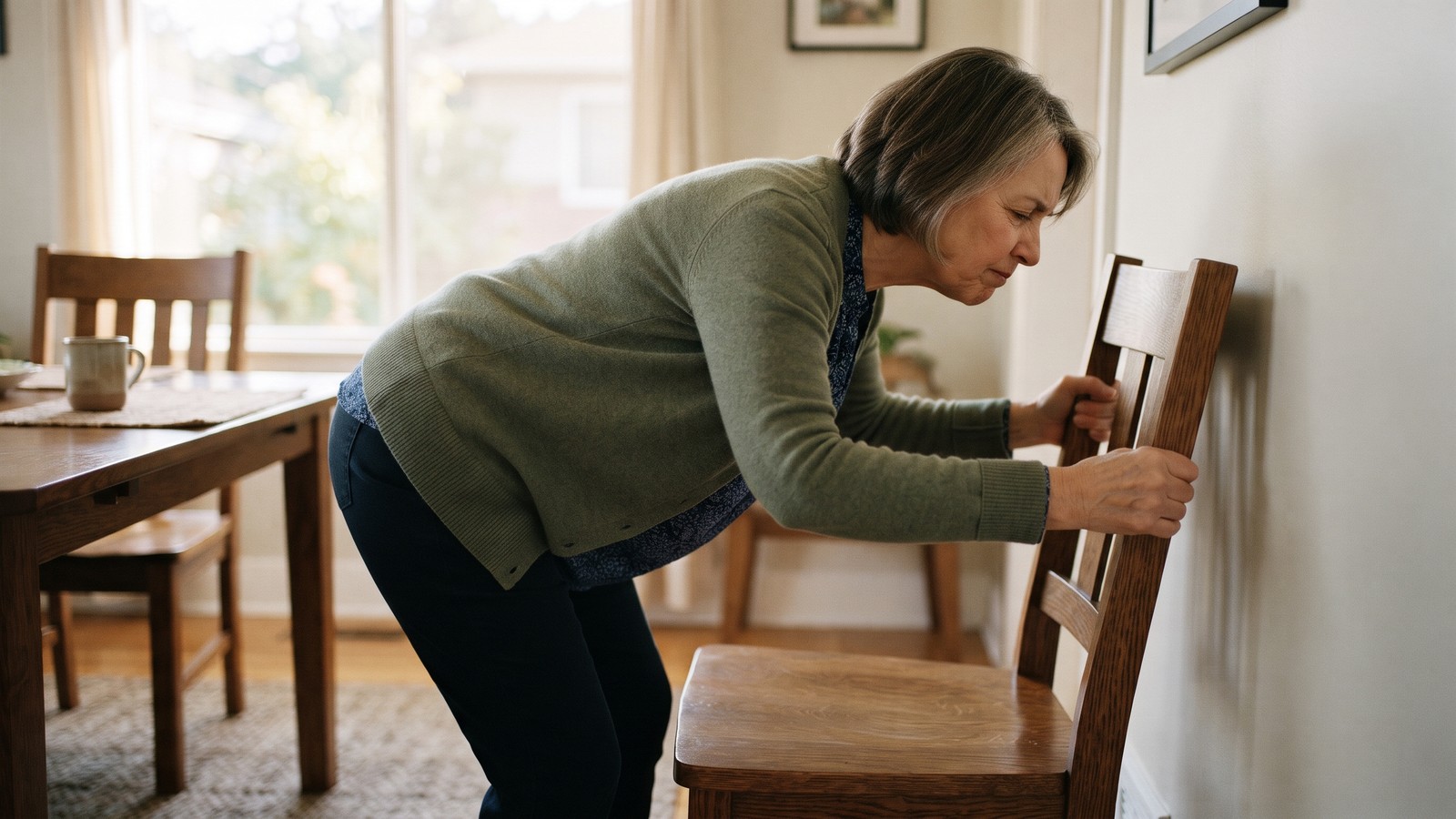
A few practical notes:
- Pick the closest firm edge. A counter you are already standing at beats a chair across the room.
- Make sure the chair will not slide. If you can, brace it against a wall.
- Press above the navel, not on the ribs and not low on the belly.
- If you are pregnant, place your hands higher, at the base of the breastbone, and thrust there instead.
What to Do If You Are Choking Alone and Start to Feel Faint
Without air, most people have only a short time before they lose consciousness. If you feel the room tilt, keep thrusting for as long as you can. Some people drop to the floor mid-thrust, and the fall alone can dislodge the object.
If you are still on the phone, that open line matters. A dispatcher who cannot hear you will still send help to your address, and responders are trained to start CPR on someone who has collapsed. Unlocking the front door helps only if it takes a few seconds, so do not make it a priority. This is a good reason to talk to the people you live with, or a neighbor, about checking in on you. Our family emergency plan guide includes simple check-in routines.
After the Object Comes Out
Once you can breathe, sit down and stay calm. Your body will likely be shaking, and that is normal. Call 911 back if you hung up, or tell the dispatcher it is cleared.
Get medical care even if you feel fine. Strong abdominal thrusts can bruise the abdomen or injure internal organs, and a piece of food can leave irritation or a fragment behind in the airway. Go to an urgent care or emergency room, or let the responders check you before they leave. Cough that does not settle, pain in the chest or belly, trouble swallowing, or a wheeze all call for a prompt visit.
If you ever see someone else choking, our choking response guide covers back blows and thrusts for adults, children, and infants. If anyone collapses and stops breathing, start hands-only CPR.
How to Lower Your Chances of Choking
Most choking happens at meals, and a few habits make a real difference:
- Cut food into small pieces and chew it well.
- Eat sitting upright, not lying down or walking around.
- Do not talk, laugh, or swallow while your mouth is full.
- Slow down with alcohol, which dulls the swallow reflex.
- Take extra care with tough meat, dry bread, nuts, hard candy, and whole grapes.
- If you have trouble swallowing, ask your doctor about it, since it is a common cause.
If you live alone, rehearse the steps once. Stand at your own counter and walk through where the edge is, where your phone sits, and how you would lean. It takes a minute, and you will not be starting from zero if it ever happens.
If you ever feel faint after the scare, our guide to fainting first aid covers what to do next.
When help is minutes away, what you can do in the first hour changes everything. See what's inside The 1stHour Trauma Kit, built for the moments before help arrives.
This content is for informational purposes only and does not constitute medical advice. If you cannot breathe, call 911 immediately. This article is not a substitute for hands-on first aid training.


