Trench Foot (Immersion Foot): Early Signs and First Aid
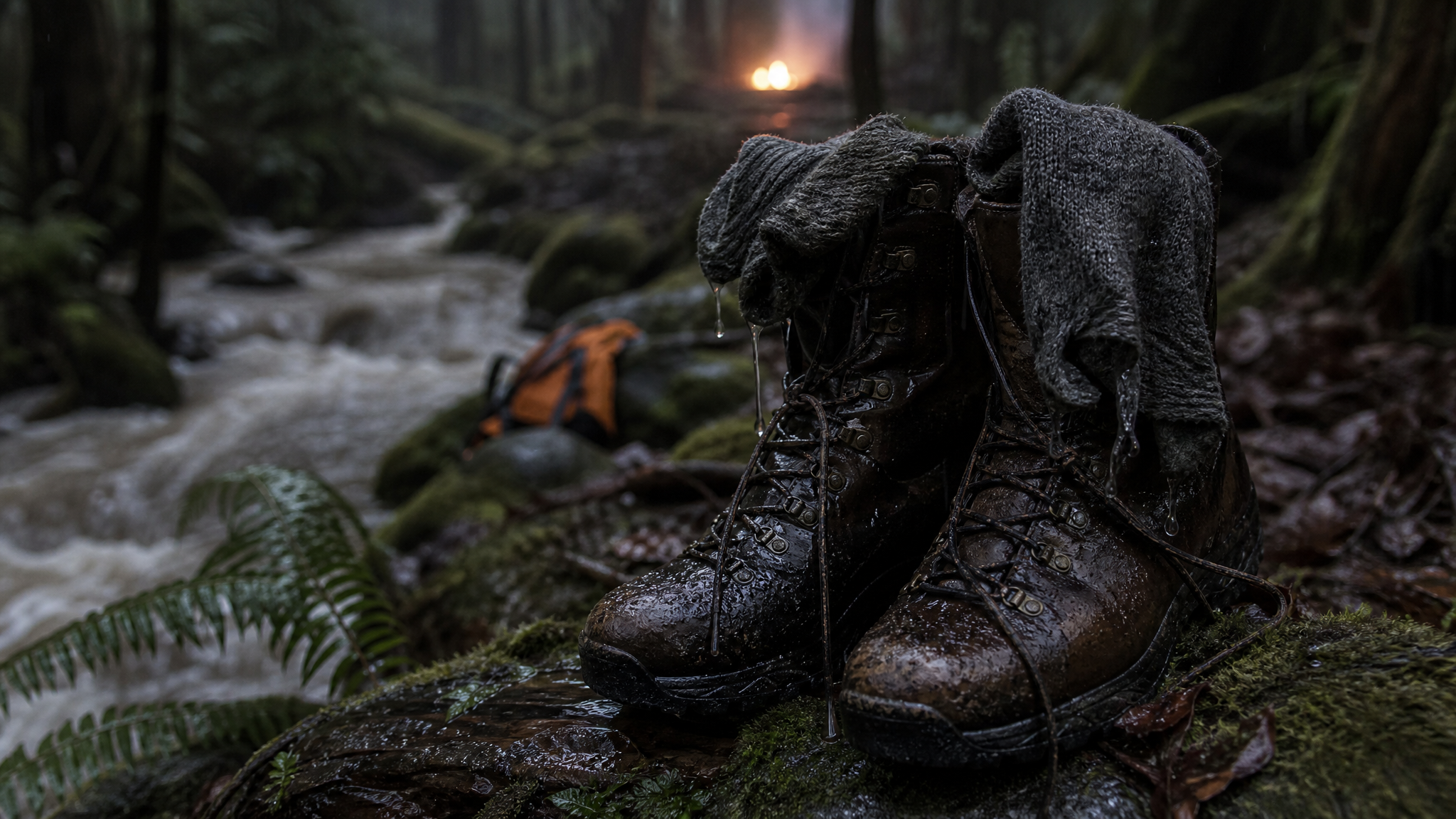
You don't need freezing weather for trench foot. A long day in soaked boots at 50 degrees will do it, and plenty of hunters, hikers, and outdoor workers learn that the hard way. Trench foot, also called immersion foot, is damage to the skin, nerves, and blood vessels of feet that stay wet and cool for too long. The early warning signs are easy to write off as "just cold feet," which is exactly why people keep walking.
This guide covers what trench foot symptoms look like at each stage, what to do in the field, and how to keep it from happening on the next wet trip.
What Trench Foot Is and How Wet Feet Cause It
The name comes from the First World War, when soldiers stood for days in flooded trenches. The cause is the same today. When feet stay wet, the body narrows the blood vessels in them to hold heat in the core. Skin that is soaked and starved of blood flow begins to break down, and nerves stop working properly.
According to the Cleveland Clinic, most cases take one to three days of cold, wet conditions, though it can develop in as little as 10 to 14 hours. It usually happens in temperatures above freezing, up to about 60°F (16°C). That is a cool spring morning, a rainy elk camp, or a flooded basement cleanup.
Sweat counts too. A boot with no breathability and a pair of damp cotton socks can do the same job as a creek crossing.
Trench Foot Symptoms: What the Early Stages Look Like
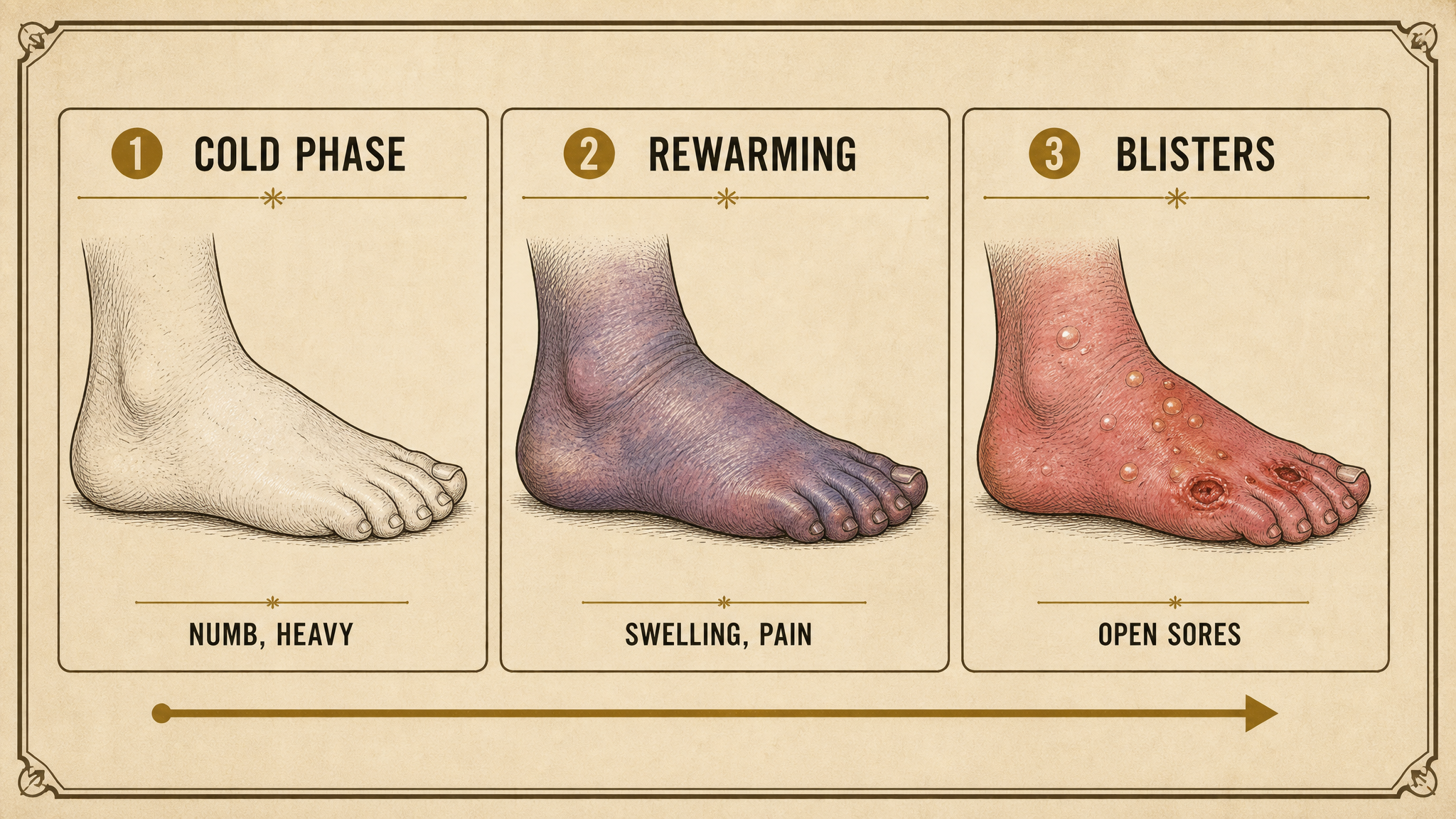
The first stage is quiet. Your feet feel cold, then prickly or itchy. After a while the itch fades into numbness, and many people describe their feet as heavy, like blocks of wood. That numbness is the dangerous part, because it hides pain you would normally act on.
Look at the skin when you take your boots off. During the cold phase it can look bright red at first, then turn pale, clammy, and waxy white as blood vessels clamp down. The skin may be wrinkled and soft, much like a long bath, but more extreme.
Other early signs to watch for:
- Tingling or itching that doesn't go away when you move
- Cold, blotchy skin
- A feeling that your feet are swollen inside your boots
- Trouble feeling the ground when you walk
If you notice any of these on a wet day, stop and deal with your feet before the next mile. Ten minutes now can save weeks of recovery.
Trench Foot Symptoms During Rewarming: When Pain Hits
Here is the part most people don't expect. The worst symptoms often show up after you get warm and dry. As blood flow returns, the skin can turn blue or purple, and the feet swell, sometimes to nearly double their normal size. Pain can be sharp, burning, or throbbing, and it can last days.
Blisters may follow, then open sores. Untreated, the damaged skin can become infected. The Cleveland Clinic lists cellulitis, gangrene, and in the worst cases sepsis among the complications. If red streaks, pus, fever, or spreading warmth show up, read our guide to sepsis warning signs and get care the same day.
Open blisters need the same attention as any wound. Our post on whether a cut needs stitches explains how to judge a wound that won't close or keeps leaking.
Trench Foot First Aid: Dry, Rewarm Gently, Elevate
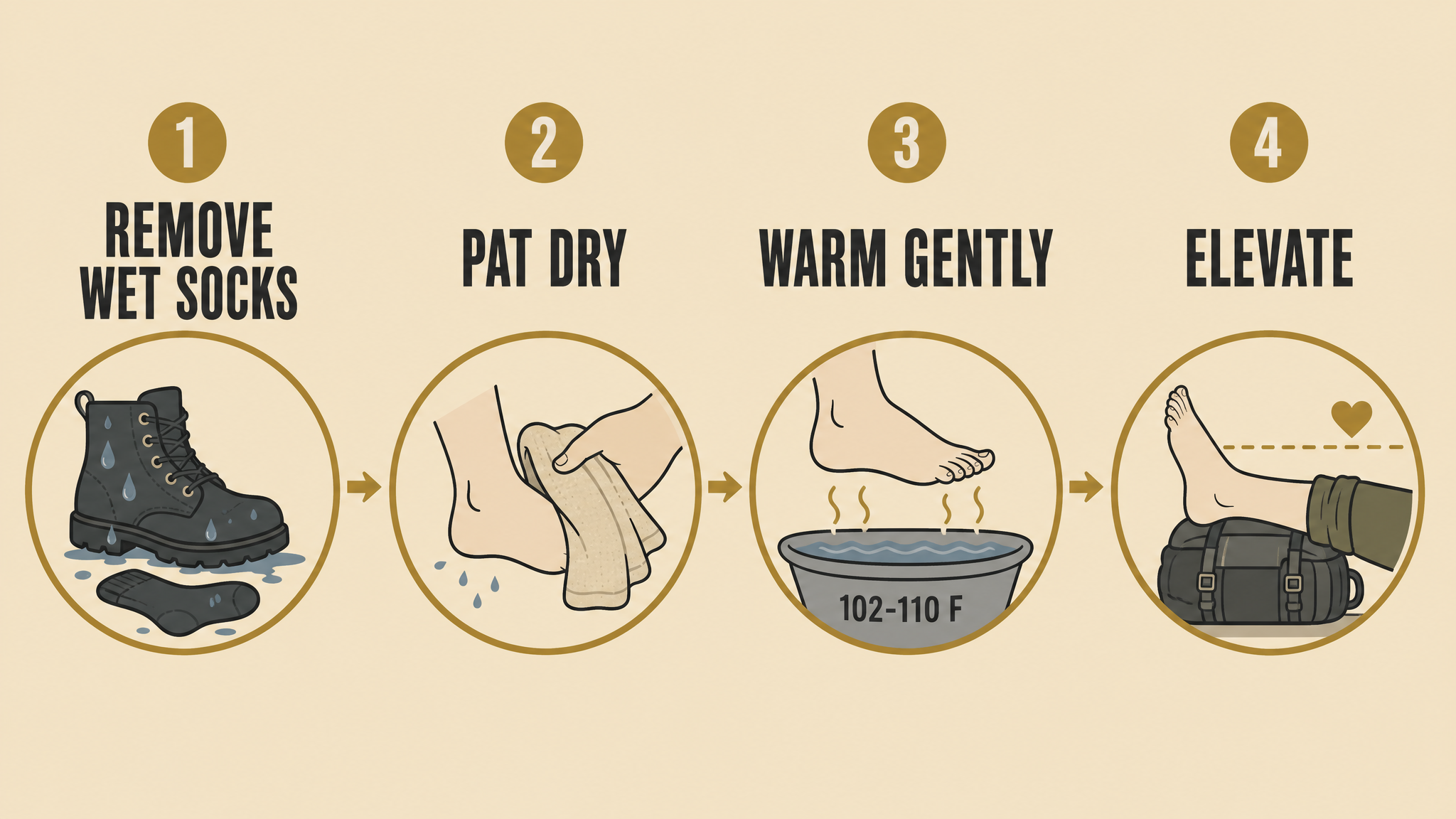
The goal is simple. Get the feet out of the wet, dry them, and bring them back to normal temperature slowly.
- Remove wet boots and socks right away.
- Clean the feet gently and pat them completely dry. Do not rub.
- Put on clean, dry socks. Loose is better than tight.
- Rewarm slowly. The CDC suggests warm packs or a warm soak of about 102 to 110°F for roughly five minutes. Skip hot water, heaters, and fires.
- Raise the feet above heart level when you rest.
- Sleep with socks off and feet uncovered by anything damp.
Rapid rewarming is the common mistake. Numb skin can't judge heat, so a foot held near a campfire can burn without you feeling it. Rewarming too fast also makes the pain far worse.
Over-the-counter pain relievers like ibuprofen or acetaminophen can help with the throbbing. Avoid smoking or nicotine while you recover, since it narrows blood vessels further. Do not walk on the feet more than you have to.
Trench Foot vs Frostbite
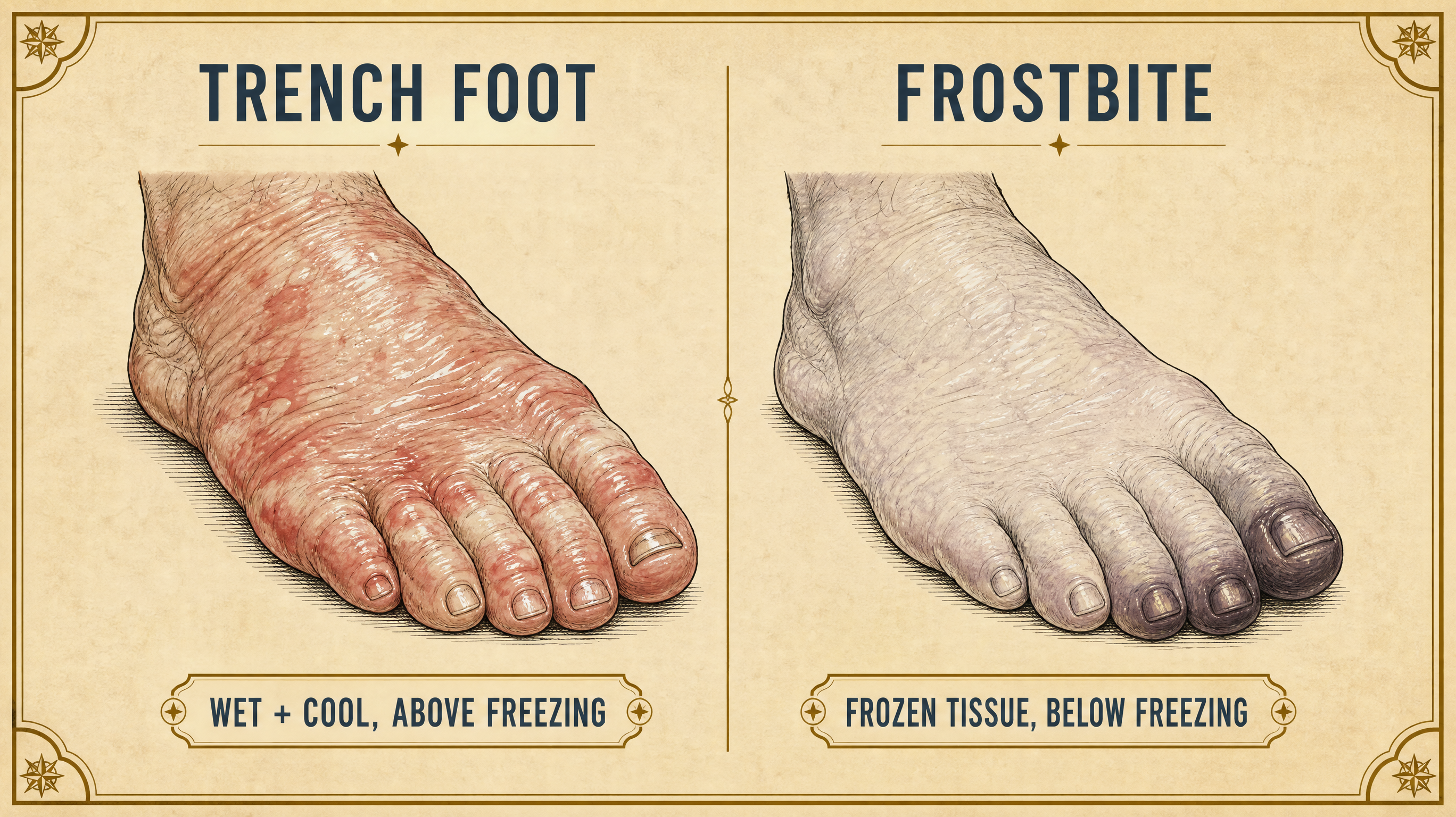
The two get confused, but the difference matters for treatment. Frostbite is tissue that has actually frozen, which needs temperatures below freezing. Trench foot happens above freezing, with prolonged wetness as the driver.
Frostbite skin looks hard, waxy, and white or gray, and it feels solid. Trench foot skin tends to look soggy, blotchy, and swollen. Rewarming rules differ too, and a frozen foot should not be thawed if there is any risk it will freeze again. Our frostbite first aid guide covers that case in detail.
Cold water adds its own danger on top of foot damage. If your wet feet came from a fall into a stream or lake, start with cold water shock and hypothermia first aid before you worry about your socks.
How to Prevent Trench Foot on Wet Trips
Prevention is cheap, and it starts with socks.
- Carry at least one spare pair of socks in a waterproof bag, and change into them at every long stop
- Choose wool or synthetic socks over cotton, which holds water against the skin
- Choose boots that fit with room for a thin liner and a little swelling
- Air your feet out during breaks and dry your boots overnight when you can
- Check your feet at the end of every wet day for numbness, color changes, or soft white skin
If your boots are soaked through, a dry pair of socks inside a plastic bag inside the boot is a rough but workable field fix for a few hours. It is not a plan for a whole day.
When Trench Foot Needs a Doctor
Plenty of mild cases clear up with dry socks and rest. Don't count on it, though. Get medical care if numbness lasts more than a day after warming, if blisters or sores form, if the skin turns dark or black, or if you see signs of infection like spreading redness, pus, or fever.
People with diabetes, poor circulation, or nerve problems should get checked sooner, because they heal more slowly and feel less pain. A doctor can clear infection and check for lasting nerve damage that can leave feet sensitive to cold for years.
Wet-weather emergencies catch people far from help, and the first hour is when a good kit matters most. See what's inside The 1stHour Trauma Kit, gear and guidance built for the first hour of whatever happens next.
This content is for informational purposes only and does not constitute medical advice. If you suspect trench foot, frostbite, or infection, seek care from a medical professional.


